
Table of Contents
Overview
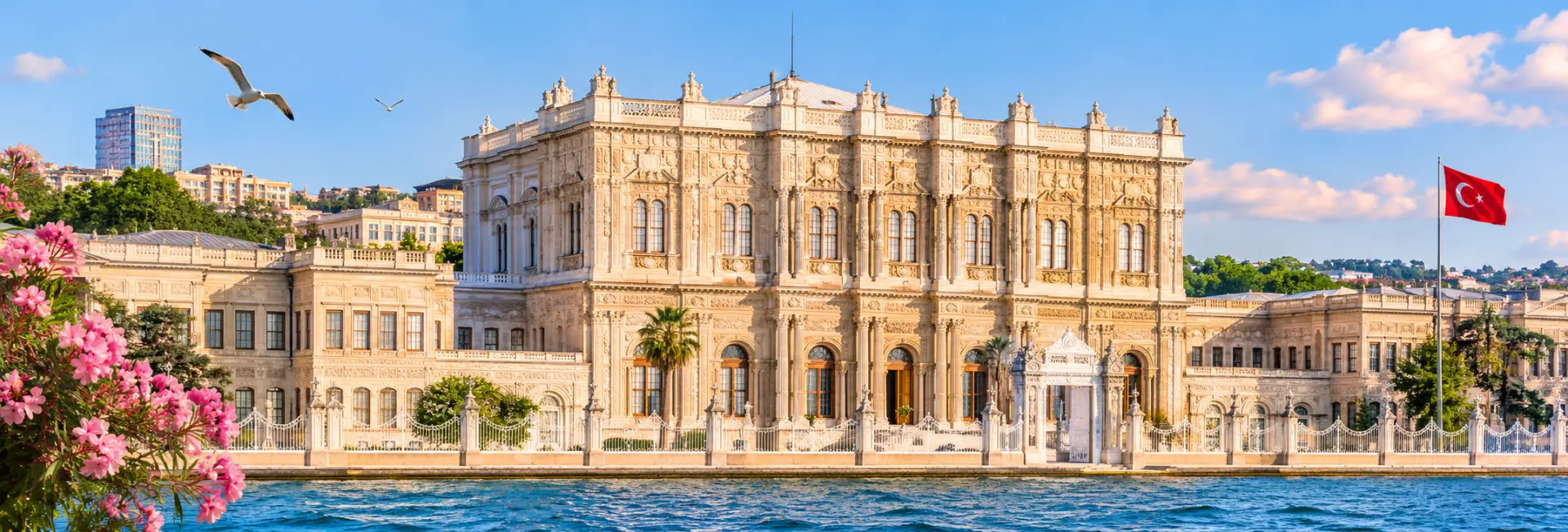
Stretching elegantly along the European shore of the Bosphorus Strait, Dolmabahçe Palace represents the final, dazzling architectural gasp of the Ottoman Empire. Built in the mid-19th century, it is the largest and most lavishly decorated palace in Turkey. If Topkapi Palace represents the secretive, classical, and medieval power of the Ottomans, Dolmabahçe represents their attempt to modernize and present themselves as equals to the great royal houses of Europe.
The scale of the opulence inside Dolmabahçe is almost difficult to comprehend. The palace boasts 285 rooms, 46 halls, and 6 hammams (Turkish baths). Its interiors are a dizzying display of wealth, featuring acres of gold leaf, massive Baccarat crystal chandeliers, intricately woven Hereke carpets, and sweeping staircases made of crystal and mahogany.
Today, the palace serves as a museum that completely immerses visitors in the extravagant lifestyle of the final six Ottoman Sultans. A walk through its grand halls provides a profound visual understanding of the empire's wealth, as well as the crippling debt that such modernization efforts ultimately caused.
History and The Move from Topkapi
The Desire for Modernity
By the mid-19th century, the Ottoman Empire was increasingly looking toward Europe for administrative and cultural inspiration. Sultan Abdulmecid I, who ruled during this period, felt that the medieval, courtyard-style layout of Topkapi Palace was outdated, uncomfortable, and lacked the modern luxury and architectural grandeur necessary to impress visiting European dignitaries.
Building a New Capital
In 1843, Abdulmecid I ordered the construction of a new imperial residence on a site that had previously been a bay on the Bosphorus (the name Dolmabahçe literally means "filled-in garden"). Designed by the prominent Armenian-Ottoman architects Garabet and Nigoğayos Balyan, the construction took 13 years and cost the equivalent of 35 tons of gold. The incredible expense of building and furnishing the palace contributed significantly to the financial ruin of the Ottoman state, leading to state bankruptcy just two decades after its completion.
Architecture and European Influence
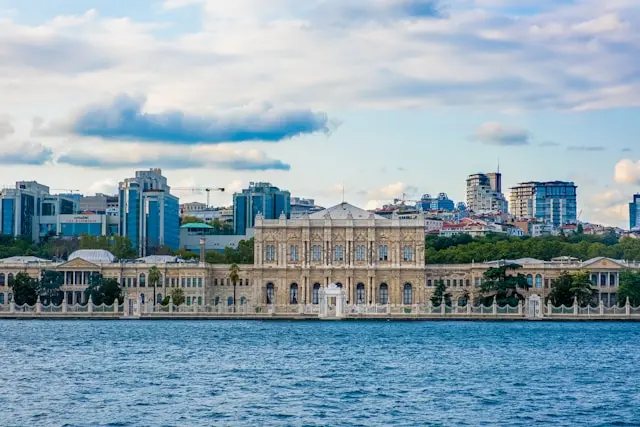
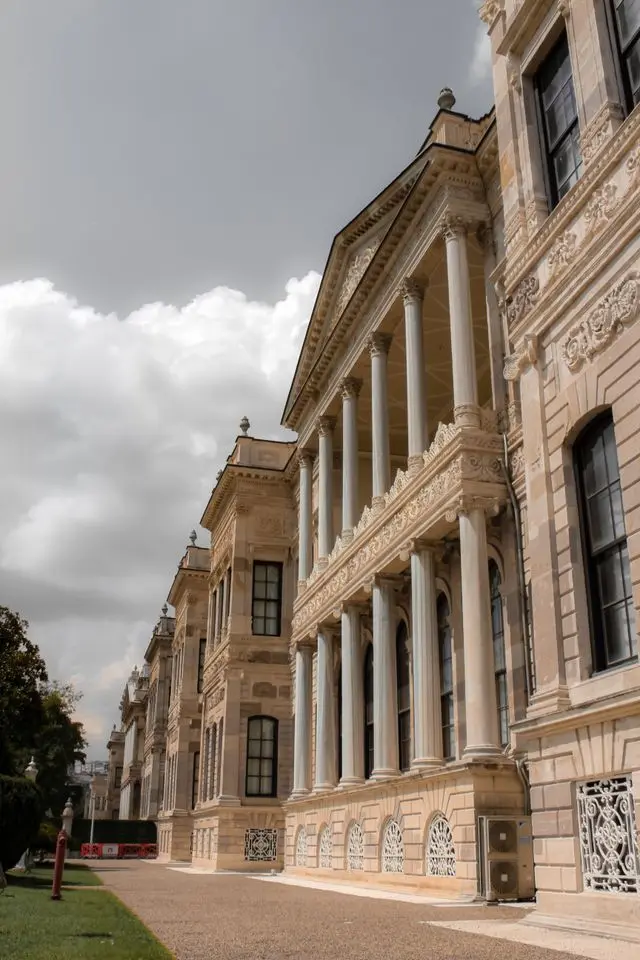
Unlike traditional Ottoman architecture, which focused on internal courtyards and domes, Dolmabahçe Palace was built looking outward, presenting a massive, symmetrical, 600-meter-long neoclassical facade directly to the Bosphorus. The exterior blends elements of Baroque, Rococo, and Neoclassical styles, creating a highly ornate European aesthetic that still retains subtle Ottoman characteristics.
The layout of the palace is strictly divided into three distinct functional zones. The Selamlık was the administrative quarters where state affairs were conducted and male guests were received. The Ceremonial Hall is the grand central space used for major state functions. Finally, the Harem was the strictly private living quarters for the Sultan and his family, accessed through a separate, heavily guarded entrance.
Opulent Interiors and Crystal Collections
Gold and Carpets
The interior decoration of Dolmabahçe was designed to overwhelm. It is estimated that 14 tons of gold leaf were used just to gild the ceilings of the palace. The floors are covered by 131 massive, hand-woven silk and wool carpets produced in the imperial factory in Hereke, including some of the largest single-piece carpets ever made.
The Obsession with Crystal
Perhaps the most defining decorative feature of the palace is its unparalleled collection of crystal. The palace features the world's largest collection of Bohemian and Baccarat crystal chandeliers. The most famous architectural feature is the Crystal Staircase, a sweeping double-horseshoe staircase built entirely of Baccarat crystal banisters, brass, and mahogany, designed to dazzle ambassadors as they ascended to the upper administrative floors.
The Ceremonial Hall
The climax of any visit to Dolmabahçe is the massive Muayede Salonu (Ceremonial Hall). Located exactly in the center of the palace, this space is truly colossal, featuring a dome that rises 36 meters high. It was here that the Sultan hosted foreign monarchs and held grand banquets.
The focal point of the hall is a staggering 4.5-ton Bohemian crystal chandelier, holding 750 lamps. It was historically believed to be a gift from Queen Victoria of the United Kingdom, though recent receipts suggest the Sultan actually paid for it in full. The sheer size of the hall meant it had a unique heating system: hot air was pumped up through vents at the base of the massive pillars to keep the space warm during winter events.
Atatürk and the Republic
Dolmabahçe Palace is not only significant for its Ottoman history; it holds a deeply emotional place in the history of the modern Turkish Republic. Following the abolition of the Sultanate, Mustafa Kemal Atatürk, the founder and first President of Turkey, used the palace as a presidential residence during his visits to Istanbul.
Tragically, Atatürk's health rapidly declined in 1938, and he spent his final days in a relatively modest bedroom within the former Harem section of the palace. He passed away there on November 10, 1938, at precisely 9:05 AM. In his honor, all the clocks within the palace were historically stopped at that exact time, and his bedroom remains a site of profound national respect and pilgrimage for Turkish citizens.
Ways to Experience It
The Guided Audio Tour
To protect the incredibly fragile interiors, visitors are no longer allowed to wander the palace entirely at random. Upon entry, you are provided with a mandatory audio guide (available in numerous languages) and guided along a strictly roped-off route that takes you through the Selamlık, the Ceremonial Hall, and the Harem in a specific sequence. This ensures the crowds keep moving and the carpets and furnishings are protected.
The Palace Gardens and Gates
While the interior is stunning, spend time exploring the highly manicured exterior gardens. The palace is famous for its massive, highly ornate wrought-iron gates that lead directly out to the Bosphorus, where the Sultan would historically arrive and depart by imperial barge. These gates provide one of the most iconic photo opportunities in Istanbul.
Best Time to Visit
Dolmabahçe Palace has a daily limit on the number of visitors allowed inside to protect the building's microclimate and structure. During peak tourist season (summer), this quota can sometimes be reached by early afternoon, causing the ticket offices to close early. Therefore, it is highly recommended to arrive right when the palace opens at 9:00 AM. This not only guarantees entry but allows you to appreciate the opulent rooms before they become packed with large tour groups.
Visitor Tips and Etiquette
Photography Restrictions
This is a critical rule: **Photography and video recording are strictly prohibited inside all buildings of the palace.** This rule is heavily enforced by security guards stationed in almost every room. If you are caught taking photos, you may be asked to delete them or be escorted out. You are free to take as many photos as you like in the exterior gardens and courtyards.
Shoe Covers
To protect the priceless Hereke carpets and hardwood floors, all visitors are required to wear plastic shoe covers (booties) over their footwear. These are provided free of charge at dispensers located immediately inside the entrance doors.
Nearby Attractions
The palace is situated on a beautiful stretch of the Bosphorus, providing easy access to other waterfront neighborhoods.
- Beşiktaş District: Just a short walk north brings you into the heart of Beşiktaş, a vibrant, local neighborhood packed with excellent cafes, fish markets, and the famous Naval Museum.
- Ortaköy Mosque: A short bus or taxi ride further up the Bosphorus takes you to Ortaköy, where you can see the stunning neo-baroque mosque sitting right on the water under the Bosphorus Bridge.
- Taksim Square: You can take the nearby funicular from Kabataş directly up the steep hill to Taksim Square, the modern commercial heart of Istanbul.
FAQs about visiting Dolmabahçe Palace
Is Dolmabahçe Palace included in the Istanbul Museum Pass? +
No, it is not. Dolmabahçe Palace is administered by the Directorate of National Palaces, not the Ministry of Culture, so the standard Museum Pass does not cover entry. You must purchase a specific ticket for the palace.
Can I take photos inside? +
No, photography is strictly forbidden inside all of the palace buildings. This rule is heavily enforced to keep the crowds moving and protect the artifacts. You can take photos outside in the gardens and at the gates.
Do I need a separate ticket for the Harem? +
The ticketing structure occasionally changes, but currently, a combined ticket is usually sold that grants access to both the Selamlık (main administrative palace) and the Harem.
How long does a visit take? +
To walk the designated route through the main palace, view the Ceremonial Hall, explore the Harem, and walk through the gardens, you should plan for about 2 to 2.5 hours.
Is the palace accessible for wheelchairs? +
Due to its historic nature, accessibility is limited. While the gardens and the ground floors can be navigated, the most spectacular rooms (including the Crystal Staircase and upper halls) require climbing stairs, and there are no elevators available for public use inside the historic structure.
Do I have to join a guided tour? +
Live guided tours are no longer mandatory. Instead, all visitors are provided with a free, comprehensive audio guide device at the entrance and can walk the roped-off route at their own pace.
