
Table of Contents
Overview
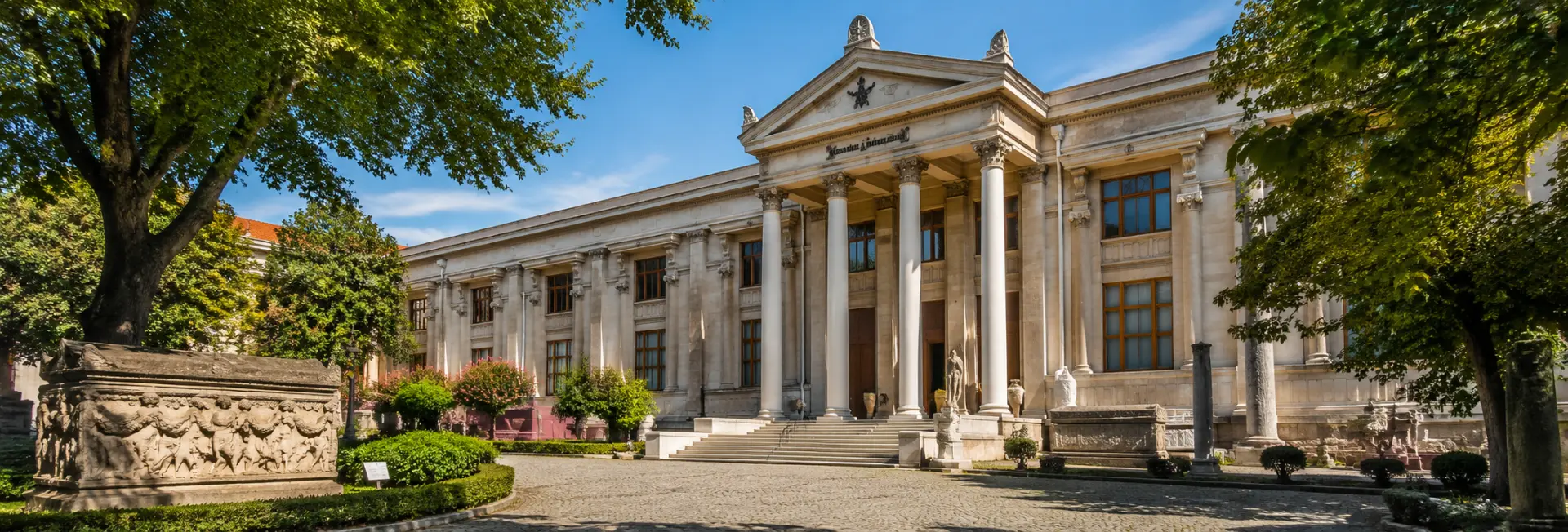
Located just down the hill from the First Courtyard of Topkapi Palace, the Istanbul Archaeological Museums (İstanbul Arkeoloji Müzeleri) constitute one of the largest and most important museum complexes in the world. Often overshadowed by the nearby Hagia Sophia and Topkapi Palace, this sprawling complex is a hidden gem that houses an astonishing collection of over a million artifacts spanning almost all eras and civilizations of world history, from the ancient Near East to the Greek, Roman, and Byzantine empires.
The complex is not a single building, but rather three distinct museums clustered around a beautiful, artifact-strewn neoclassical courtyard: the main Archaeological Museum, the Museum of the Ancient Orient, and the Tiled Kiosk Museum. Because the Ottoman Empire at its peak controlled vast territories across the Balkans, the Middle East, and North Africa, the museum was able to amass an unparalleled collection of antiquities from some of the most historically rich regions on earth.
For lovers of history, classical art, and ancient civilizations, this museum is an absolute paradise. Walking its halls offers a chronological and geographical journey through human history, providing deep context for the ruins and monuments found throughout modern Turkey and the broader Middle East.
History and the Imperial Museum
The Vision of Osman Hamdi Bey
The creation of the museum is largely credited to one remarkable man: Osman Hamdi Bey. In the late 19th century, European archaeologists were aggressively excavating ancient sites across the Ottoman Empire and taking the best artifacts back to museums in London, Paris, and Berlin. Osman Hamdi Bey, a prominent Ottoman intellectual, painter, and archaeologist, convinced the Sultan that the empire needed a world-class institution to protect and display its own heritage.
Building the Complex
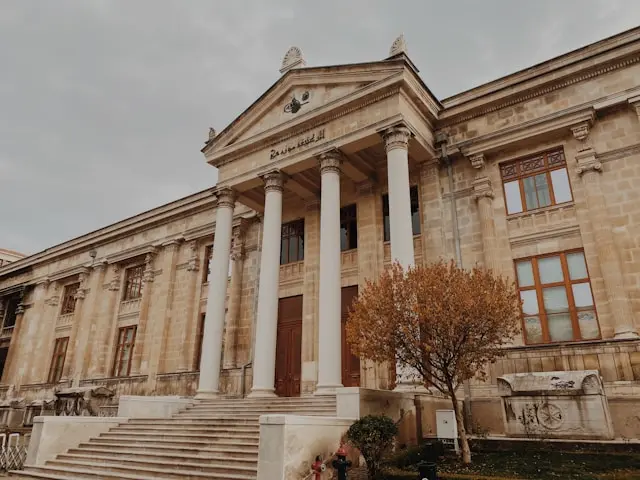
Appointed as the first director of the Imperial Museum in 1881, Osman Hamdi Bey authored strict new laws prohibiting the export of antiquities. To house the incredible discoveries resulting from his own excavations-most notably the Royal Necropolis of Sidon in modern-day Lebanon-he commissioned the main neoclassical building. Designed by the French-Ottoman architect Alexander Vallaury and completed in 1891, the grand building was the first structure in the Ottoman Empire built specifically to serve as a museum.
The Three Museums
The complex is divided into three distinct, highly specialized sections.
1. The Museum of the Ancient Orient
Housed in a late 19th-century building that originally served as a fine arts school, this museum holds the oldest artifacts in the complex. It features monumental statues, cuneiform tablets, and daily objects from the pre-Islamic, pre-classical civilizations of the Near East, including the Sumerians, Babylonians, Assyrians, and Hittites.
2. The Tiled Kiosk Museum (Çinili Köşk)
This is the oldest secular Ottoman building in Istanbul, constructed in 1472 by Sultan Mehmed the Conqueror as a pleasure pavilion for watching sports. The building itself is a masterpiece of Persian-influenced architecture, covered in stunning blue and turquoise tiles. Today, it houses a magnificent collection of Islamic art, focusing on exquisite Iznik ceramics and Seljuk pottery.
3. The Main Archaeological Museum
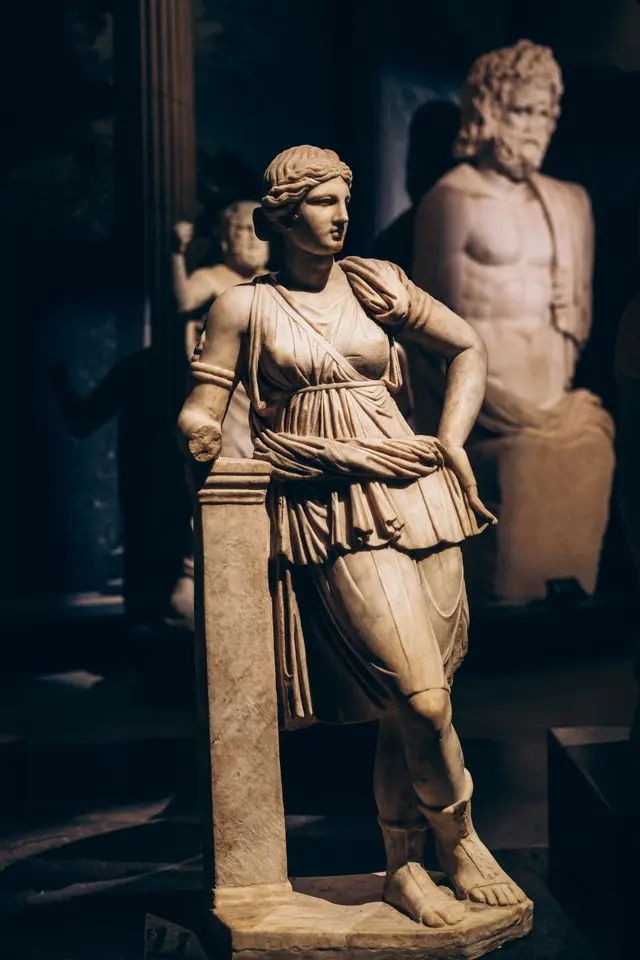
The grand neoclassical building houses the core classical collection. The ground floor is dedicated to ancient sculpture, featuring an incredible array of Hellenistic, Roman, and Byzantine statues, grave steles, and architectural fragments. The most famous exhibits, however, are the magnificent sarcophagi displayed in the vast halls of the left wing.
The Alexander Sarcophagus
The undisputed crown jewel of the entire museum complex is the Alexander Sarcophagus. Discovered by Osman Hamdi Bey in the Royal Necropolis of Sidon in 1887, it is considered one of the greatest masterpieces of ancient Hellenistic art ever found.
Despite its name, it is not the tomb of Alexander the Great. It is believed to have been the sarcophagus of Abdalonymus, the King of Sidon, who was appointed by Alexander. The massive marble tomb is famous for its exceptionally high-relief carvings. One side depicts a chaotic, violent battle scene between Greeks and Persians, showing Alexander the Great on horseback wearing a lion-skin headdress. The other side depicts a peaceful, multi-cultural lion hunt. Remarkably, traces of the original bright paint can still be seen on the figures, completely dispelling the modern myth that classical marble statues were left plain white.
The Treaty of Kadesh
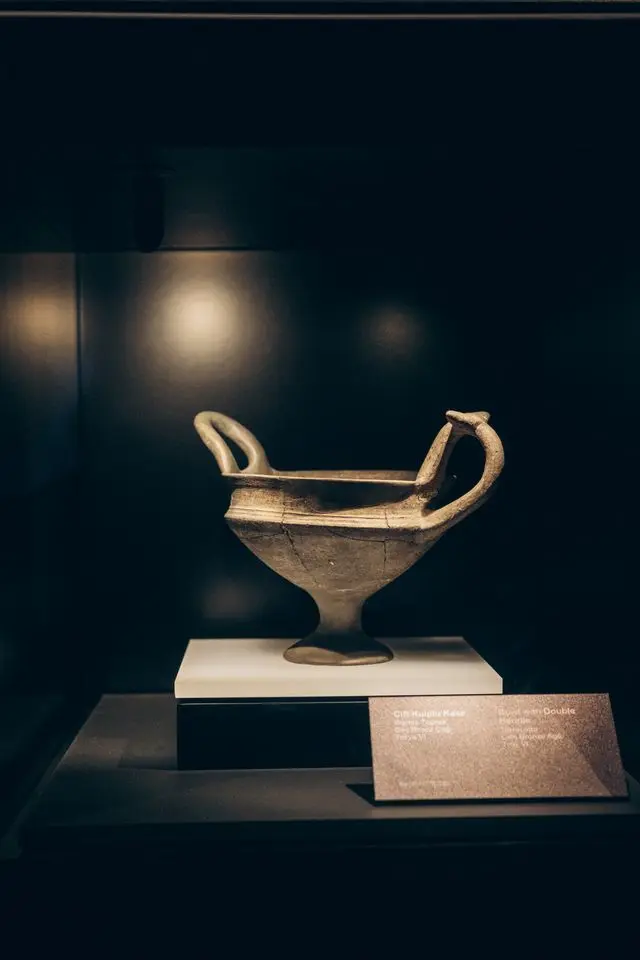
Located in the Museum of the Ancient Orient is one of the most historically significant documents in human history: the Treaty of Kadesh. This unassuming baked clay tablet, inscribed with cuneiform script, is the oldest known surviving peace treaty in the world.
Dating to 1258 BC, the treaty was signed between Ramses II (Pharaoh of the Egyptian Empire) and Hattusili III (King of the Hittite Empire) after the massive, bloody Battle of Kadesh in modern-day Syria. The treaty established a lasting peace, mutual defense pacts, and the extradition of refugees. It is considered such a foundational document for international diplomacy that a massively enlarged replica of this exact tablet hangs proudly at the headquarters of the United Nations in New York.
Ways to Experience It
Thematic Exploration
Because the complex is so massive, trying to read every plaque will lead to serious museum fatigue. It is best to approach the museum thematically. If you love classical sculpture, focus heavily on the ground floor of the main building and the sarcophagi. If you are fascinated by ancient history, spend your time in the Museum of the Ancient Orient viewing the massive glazed brick lions from the Ishtar Gate of Babylon and the Hittite sphinxes.
The Courtyard Café
Do not rush through the outdoor spaces. The courtyard connecting the three buildings is a beautiful, peaceful oasis, scattered with massive ancient columns, statues, and sarcophagi that wouldn't fit inside. The café located in this courtyard is one of the most pleasant places in the Sultanahmet area to rest, drink a Turkish tea, and escape the crowds of the nearby Topkapi Palace while surrounded by millennia of history.
Best Time to Visit
Unlike the Hagia Sophia and Topkapi Palace, the Archaeological Museums are rarely packed with massive tour groups. However, to enjoy the profound silence of the classical sculpture halls and to get unobstructed photos of the Alexander Sarcophagus, it is best to arrive right when the museum opens in the morning. Note that the museum is usually closed on Mondays.
Visitor Tips and Logistics
Ticketing and Museum Pass
The Istanbul Archaeological Museums are operated by the Ministry of Culture and Tourism and are fully included in the Istanbul Museum Pass. Using the pass allows you to skip the ticket queue, which can occasionally be long during the peak summer months. If you do not have the pass, you can purchase tickets at the gate.
Ongoing Renovations
The main building has been undergoing a massive, multi-year, phased renovation project. While this means the newly opened halls are spectacularly lit and curated, it also means that certain wings or specific exhibits may be temporarily closed off to the public. If you are coming to see a specific artifact, it is wise to check the museum's current status online before your visit.
Nearby Attractions
The museum's location makes it a perfect addition to a day spent exploring the imperial center of the city.
- Topkapi Palace: The museum is located essentially within the outer gardens of Topkapi Palace. You can easily visit the palace in the morning and the museum in the afternoon.
- Gülhane Park: The museum complex is bordered by this massive public park. Walking through Gülhane Park is the most scenic way to approach or leave the museum.
- Hagia Irene: Located right next to the museum entrance, this ancient Byzantine church (which was never converted into a mosque) is often open for visits or classical music concerts.
FAQs about visiting the Istanbul Archaeological Museums
Is the museum included in the Istanbul Museum Pass? +
Yes, the Istanbul Archaeological Museums are fully covered by the official Istanbul Museum Pass. You can scan your pass directly at the turnstiles to enter.
How much time should I spend at the museum? +
Because it is actually three separate museums, you need a significant amount of time. To see the highlights of all three buildings comfortably, plan for an absolute minimum of 2.5 to 3 hours. True history enthusiasts can easily spend half a day here.
Are the museums wheelchair accessible? +
The courtyard and the ground floor of the main Archaeological Museum (which houses the sarcophagi and classical statues) are accessible. However, because these are late 19th-century historic buildings, the upper floors of the main building and access to the Tiled Kiosk Museum can be difficult or impossible for wheelchair users to navigate due to stairs and a lack of elevators.
Can I take photos inside? +
Yes, photography is allowed in all three museums for personal use. However, flash photography and tripods are strictly prohibited to protect the pigments on the ancient artifacts and to keep the walkways clear.
Is the Alexander Sarcophagus really Alexander the Great's tomb? +
No, despite its name, it is not his tomb. It is believed to be the sarcophagus of Abdalonymus, a local king of Sidon who was appointed by Alexander. It earned its name because of the highly detailed carvings depicting Alexander the Great in battle on its sides.
Where is the entrance to the museum? +
The entrance is slightly hidden. It is located on the Osman Hamdi Bey Yokuşu, a cobblestone slope leading down from the First Courtyard of Topkapi Palace toward Gülhane Park. Follow the signs from the Topkapi ticket booths.
