
Table of Contents
Overview
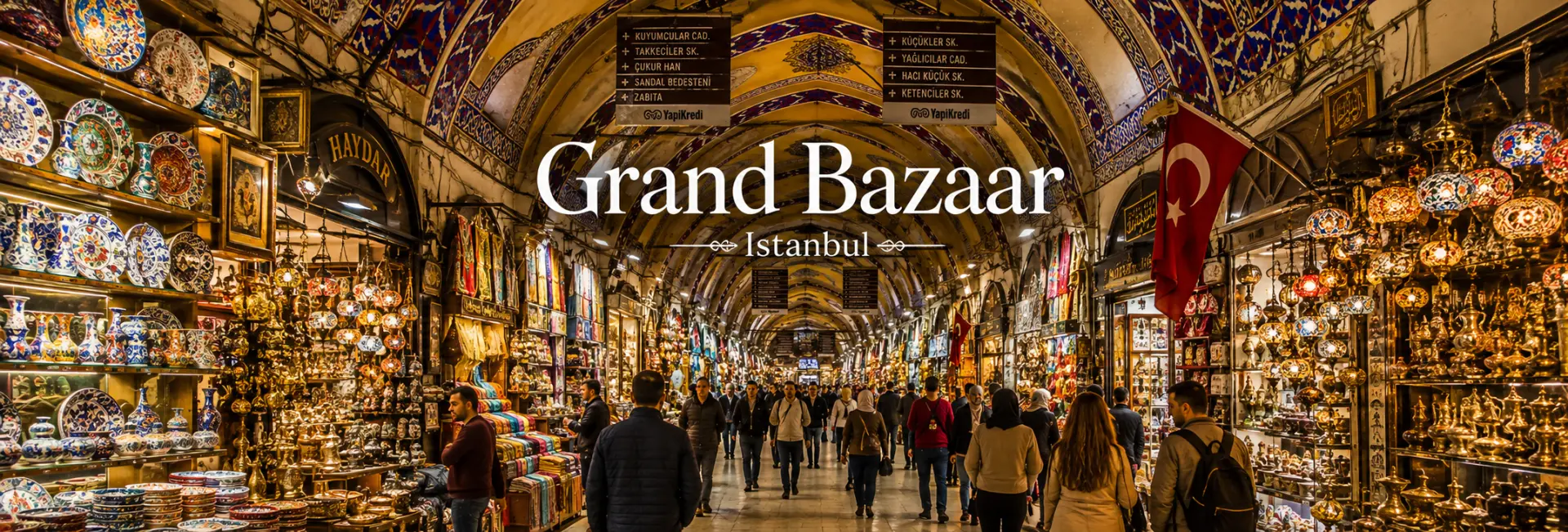
The Grand Bazaar (Kapalıçarşı) in Istanbul is not just a market; it is a sprawling, sensory-overloading city within a city. Recognized as one of the largest and oldest covered markets in the entire world, it consists of a dizzying labyrinth of 61 covered streets and over 4,000 individual shops. For centuries, it has served as the commercial heart of Istanbul, drawing merchants from across Europe, Asia, and North Africa to trade their wares.
Stepping into the Grand Bazaar is an assault on the senses in the best possible way. The vaulted ceilings echo with the shouts of vendors and the hum of thousands of conversations in dozens of languages. The air is thick with the scent of leather, roasting coffee, and sweet apple tea, while the narrow alleys are ablaze with the colors of glowing mosaic lamps, stacked Turkish carpets, and glittering gold jewelry.
While modern shopping malls exist throughout Istanbul, the Grand Bazaar remains an essential cultural experience. It is a place where the ancient traditions of Silk Road commerce are still practiced daily, offering visitors a thrilling, chaotic, and utterly unforgettable taste of historic Turkish trade.
History and Architecture
Built by the Conqueror
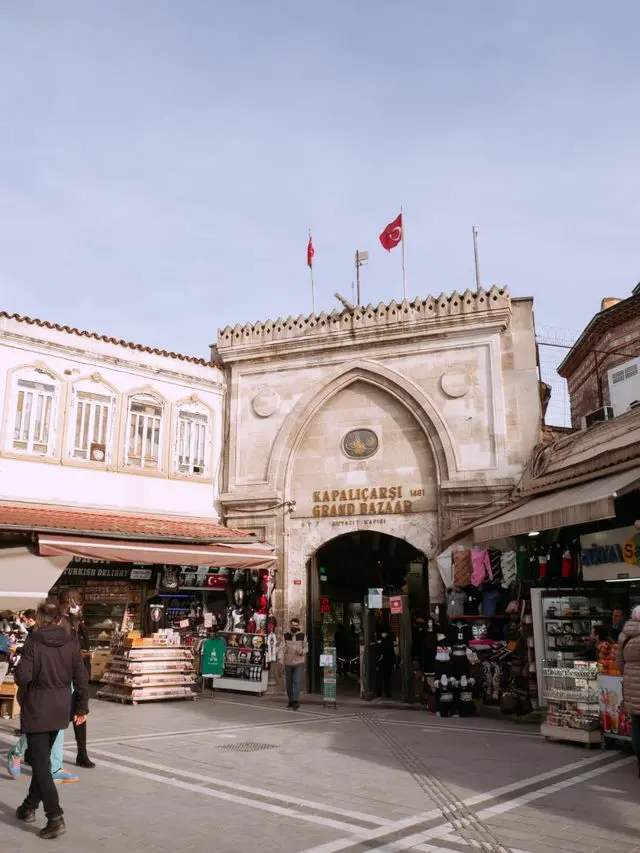
The origins of the Grand Bazaar date back to 1455, shortly after the Ottoman conquest of Constantinople. Sultan Mehmed II ordered the construction of two massive stone buildings (known as bedestens) to stimulate trade and generate income for the newly converted Hagia Sophia. These original, thick-walled structures-the Cevahir Bedesten (Inner Bedesten) and the Sandal Bedesten-were highly secure vaults used for trading the most valuable goods, like jewels and fine textiles.
Centuries of Expansion
Over the following centuries, the market organically expanded outward from these two core buildings. Merchants began setting up stalls in the alleys between the bedestens. Eventually, these alleys were covered with vaulted roofs to protect shoppers and goods from the weather, creating a vast, interconnected covered market. Despite suffering devastating fires and severe earthquakes throughout its history, the bazaar was continually rebuilt and expanded, taking on its current massive footprint by the late 19th century.
The Layout of the Labyrinth
The Grand Bazaar is notoriously easy to get lost in, but that is entirely part of the fun. Historically, the bazaar was strictly organized by guilds, meaning that all shops selling a specific type of good were grouped together on a specific street. Many of the street names still reflect this history-you will find Kalpakçılar Caddesi (the street of the fur cap makers) or Kuyumcular Caddesi (the street of the jewelers).
While this strict organization has loosened somewhat to cater to modern tourism, the market still largely follows thematic zones. The main arteries are lined with glittering gold and silver jewelry shops. The deeper, narrower alleys are where you will find the carpet merchants, leather goods, hand-painted ceramics, and traditional textiles. The ancient Cevahir Bedesten in the very center remains the place to find high-end antiques and vintage weapons.
What to Buy: Treasures of the Bazaar
The sheer variety of goods available in the Grand Bazaar is staggering. While there are certainly shops selling cheap tourist souvenirs, the market is primarily known for high-quality, traditional Turkish crafts.
- Turkish Carpets and Kilims: Buying a hand-woven rug is a quintessential Turkish experience. The bazaar houses hundreds of dealers offering everything from heavy, ornate wool carpets to flat-woven, tribal kilims.
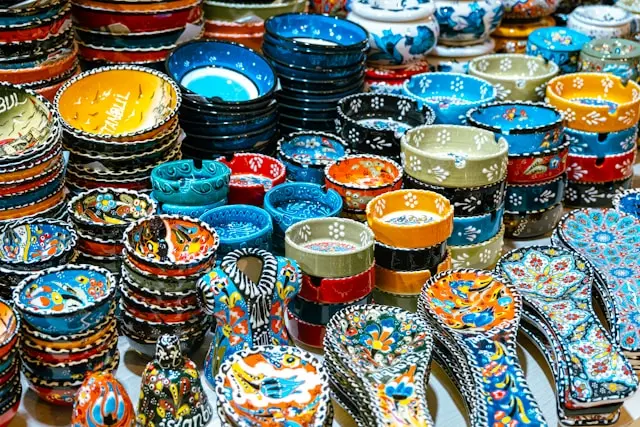
- Ceramics and Iznik Tiles: You will find beautiful, hand-painted bowls, plates, and tiles featuring the classic tulip and carnation motifs in vibrant blues and reds, continuing the centuries-old Iznik pottery tradition.
- Jewelry: The Grand Bazaar is a major hub for gold. The jewelry streets are lined with dazzling displays of 22-karat gold bracelets, intricate filigree work, and precious gemstones.
- Textiles and Leather: Turkish cotton is world-renowned. Look for high-quality pestemals (hammam towels), silk scarves, and excellent leather jackets and bags.
- Lamps and Metalwork: The glowing, multi-colored glass mosaic lamps provide much of the bazaar's magical atmosphere, alongside intricate copper and brass tea sets and trays.
The Art of Haggling
Haggling is an expected and essential part of shopping in the Grand Bazaar. It is not an argument, but rather a traditional social interaction and a game of negotiation. The first price offered by a merchant is almost never the final price.
When you show interest in an item, especially a high-ticket item like a carpet or leather jacket, you will likely be invited to sit down and offered a glass of Turkish tea. Accept the tea; it shows goodwill. Decide beforehand what you are willing to pay. A common strategy is to counter the merchant's initial offer with a price roughly 40-50% lower, and then slowly negotiate to meet somewhere in the middle. Always maintain a polite, friendly demeanor, and remember that walking away is your strongest negotiating tactic-the merchant will often call you back with a better price as you leave.
Ways to Experience It
Wandering and Getting Lost
The absolute best way to experience the Grand Bazaar is to enter through one of the main gates, put your map away, and simply allow yourself to get lost. Wander down the narrowest alleys, duck into the small, hidden courtyards (hans) where artisans still practice their crafts, and follow your nose to the small tea stands. The joy of the bazaar lies in the unexpected discoveries you make when you leave the main, crowded avenues.
Taking a Break in a Han
Scattered around the edges of the bazaar are several historic "hans" (caravanserais)-multi-story courtyards that historically served as inns and storage for traveling merchants. Today, they are slightly quieter havens away from the main aisles. Finding a small café in a han, like the famous Zincirli Han, is a perfect way to escape the chaos, drink a strong Turkish coffee, and watch the market function from a distance.
Best Time to Visit
The Grand Bazaar is almost always bustling. To experience it at a slightly more relaxed pace, arrive right when it opens in the morning (around 9:00 AM) before the large tour groups arrive. Alternatively, visiting in the late afternoon offers a different atmosphere as merchants begin to wind down. Note that the Grand Bazaar is completely closed on Sundays and on the first day of major religious holidays.
Visitor Tips and Logistics
Navigating and Exiting
With 22 different gates, it is very easy to exit the bazaar in a completely different neighborhood than where you entered. If you need to meet someone, pick a specific, numbered gate (like Gate 1 near the Nuruosmaniye Mosque or Gate 7 near Beyazıt Square). If you feel completely lost, look up; there are signs pointing toward the major gates, or simply ask a merchant for the nearest exit.
Security and Payment
While the bazaar is generally safe and heavily patrolled by security, the intense crowds make it a prime location for pickpockets. Keep your valuables secure and bags zipped. When it comes to payment, cash (Turkish Lira, Euros, or US Dollars) will always give you the strongest negotiating power, though almost all larger shops accept major credit cards.
Nearby Attractions
The Grand Bazaar is situated in the Beyazıt neighborhood, surrounded by other historic commercial and religious sites.
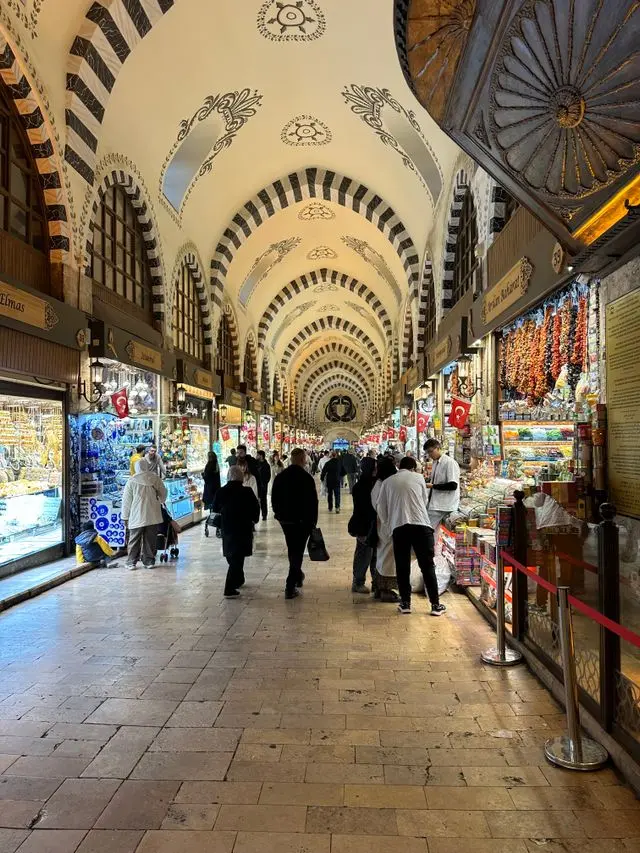
- Spice Bazaar (Egyptian Bazaar): A 15-minute walk downhill towards the water brings you to the Spice Bazaar, a smaller, incredibly aromatic covered market dedicated to spices, teas, and Turkish delight.
- Süleymaniye Mosque: A short walk up the hill leads to this magnificent mosque designed by Mimar Sinan, offering a peaceful retreat from the market and stunning views over the Golden Horn.
- Nuruosmaniye Mosque: Located immediately adjacent to one of the bazaar's main entrances, this beautiful, 18th-century Baroque-style mosque features a massive, light-filled dome.
FAQs about visiting the Grand Bazaar
Is it free to enter the Grand Bazaar? +
Yes, the Grand Bazaar is a public market. There is no entrance fee or ticket required to walk around and explore.
Is the Grand Bazaar open every day? +
No, the Grand Bazaar is completely closed on Sundays. It is also closed on the first days of major Islamic holidays (like Eid al-Fitr and Eid al-Adha) and on Republic Day (October 29). It is open Monday through Saturday from roughly 9:00 AM to 7:00 PM.
Do I have to haggle for everything? +
You should haggle for larger, non-fixed price items like carpets, jewelry, leather goods, and antiques. For very small items like cheap souvenirs, postcards, or food and drinks, the prices are generally fixed, though you can still ask for a small discount if you buy multiple items.
Is it safe to buy gold and jewelry there? +
Yes, the Grand Bazaar has been a center for jewelry trade for centuries, and most shops are highly reputable and regulated. However, you should still exercise common sense, ensure items are stamped with their karat weight, and ask for a receipt.
Can I pay with a credit card? +
Most established shops selling carpets, leather, and jewelry accept major credit cards. However, if you are negotiating a hard bargain, merchants strongly prefer cash (Turkish Lira, Euros, or Dollars) and will often offer a better final price if you pay in cash to avoid credit card fees.
How do I find my way out if I get lost? +
Getting lost is normal! The easiest way out is to simply pick any street and walk straight until you hit an exterior wall or a gate. Alternatively, look for the directional signs painted high on the walls pointing to the major gates (like Beyazıt or Nuruosmaniye).
