
Table of Contents
Overview
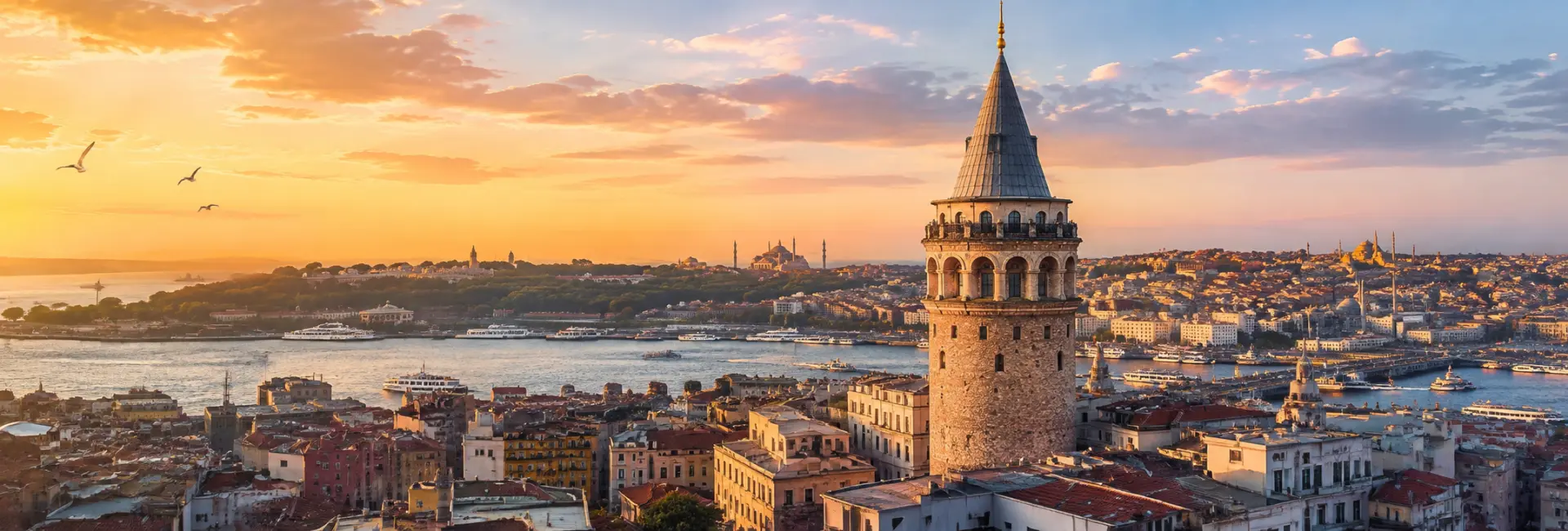
The Galata Tower (Galata Kulesi) is one of the most recognizable and beloved landmarks in Istanbul. Standing high on a hill in the Beyoğlu district, north of the Golden Horn, its distinctive cylindrical stone body and conical roof dominate the skyline of the modern city. For centuries, it has served as a watchtower, a prison, an astronomical observatory, and a fire-spotting post.
Today, the tower functions primarily as a museum and one of the premier viewpoints in the entire city. Because of its elevated position on the Galata hill, climbing to the top of the tower provides a sweeping, unobstructed 360-degree panorama. Looking out from the narrow balcony, visitors can see the minarets of the historical peninsula across the water, the boats navigating the Bosphorus Strait, and the vast expanse of the Asian side of the city.
Beyond the view, the tower acts as the focal point for the vibrant Galata neighborhood. The small, cobblestone square at its base is constantly buzzing with street musicians, cafes, and locals socializing, making a visit to the tower as much about experiencing the surrounding urban energy as it is about the historic structure itself.
Genoese Origins and History
The Tower of Christ
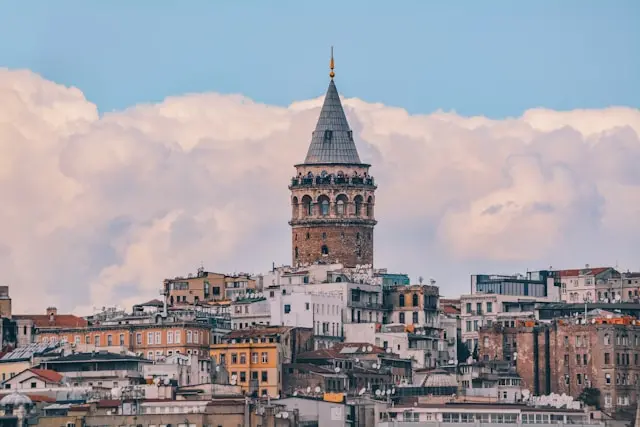
The current tower was built in 1348 by the Genoese-a powerful maritime republic from Italy who had established a semi-independent trading colony in the Galata district, across the water from the Byzantine capital of Constantinople. The Genoese called it the "Christea Turris" (Tower of Christ). It was built as the apex and main keep of a massive fortified wall system intended to protect their lucrative trading settlement from both the Byzantines and potential maritime threats.
Ottoman Transformation
When the Ottomans conquered Constantinople in 1453, the Genoese surrendered the Galata colony without a fight, ensuring the tower survived intact. Under the Ottomans, the tower lost its primary defensive purpose. Throughout the centuries, it was repurposed several times. During the 16th century, it was used as a prison for Christian prisoners of war. Later, it served briefly as an astronomical observatory under the famous astronomer Taqi al-Din.
For most of its Ottoman history, however, it served as a vital fire watchtower. Because Istanbul's houses were predominantly built of wood, fires were a constant, devastating threat. Watchmen stationed at the top of the tower would beat massive drums to alert the city whenever smoke was spotted across the Golden Horn.
Architectural Design
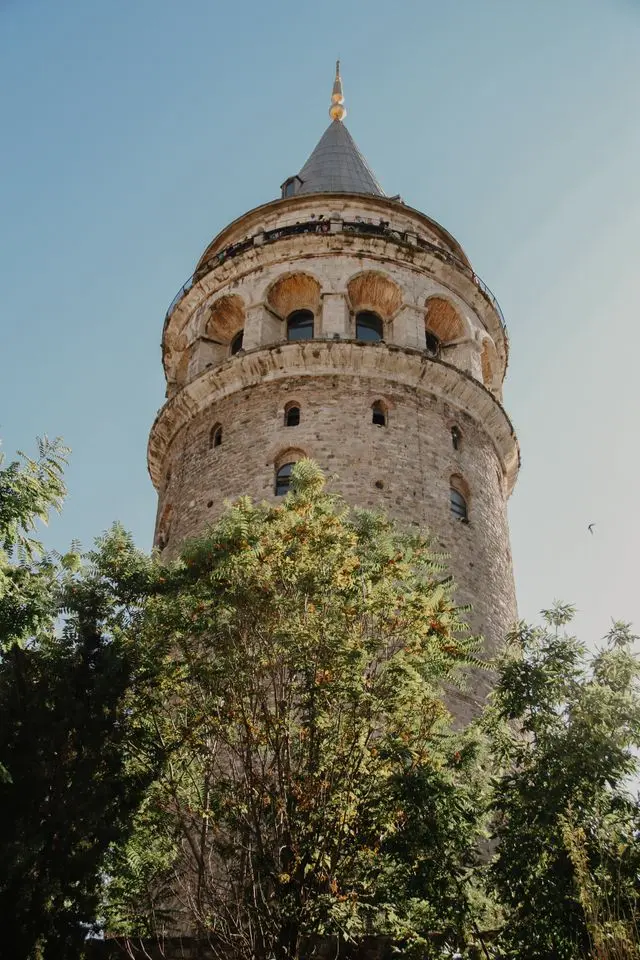
The Galata Tower is an imposing structure, reflecting its origins as a defensive fortress. It stands 62.59 meters (205 feet) tall, excluding the antenna on top. The walls at the base are incredibly thick-measuring a massive 3.75 meters (12 feet) across-which was necessary to support the immense weight of the stone cylinder.
The exterior has undergone several modifications over the centuries, primarily to repair damage from fires and storms that periodically destroyed its roof. The distinctive conical lead roof that we see today is actually a relatively recent addition, reconstructed during a major restoration in the 1960s to return the tower to its historic 19th-century appearance. The interior was recently renovated in 2020, stripping away a 1960s restaurant to reveal the original masonry and transforming the inner floors into a modern museum space.
The Legend of Hezarfen Ahmet Çelebi
The Galata Tower is deeply intertwined with one of Istanbul's most famous and enduring legends. According to the 17th-century Ottoman traveler and writer Evliya Çelebi, an Ottoman aviator named Hezarfen Ahmet Çelebi accomplished one of the earliest successful unpowered flights in history from the top of the tower.
The story claims that in 1632, wearing a pair of artificial wings he had constructed based on his studies of eagles, Hezarfen launched himself from the balcony of the Galata Tower. Caught by the strong winds blowing down the Bosphorus, he supposedly glided entirely across the strait, landing safely in the Üsküdar district on the Asian side-a distance of over 3 kilometers. While modern historians debate the physical possibility of the feat, the legend of the "flying Ottoman" remains a beloved piece of local folklore permanently attached to the tower.
The Panoramic Observation Deck
The primary reason visitors flock to the Galata Tower is for the observation deck on the top floor. After taking an elevator up the main shaft and climbing a short final flight of stairs, you step out onto a narrow, open-air balcony that completely circles the stone cone.
The view is universally regarded as the best in Istanbul. Looking south across the Golden Horn, you have a perfect, elevated view of the Topkapi Palace, the Hagia Sophia, and the Blue Mosque clustered on the historic peninsula. To the east, the Bosphorus Bridge connects Europe to Asia. Watching the ferries crisscross the sparkling water from this vantage point provides a perfect geographical understanding of how the city is laid out.
Ways to Experience It
Climbing the Tower
The standard visit involves purchasing a ticket, taking the elevator to the top to enjoy the view from the balcony, and then walking down the spiraling stone staircase to exit. Following the 2020 renovations, the descent takes you through several museum floors. These floors feature excellent digital displays, artifacts, and animated models explaining the history of the Galata district, the Genoese walls, and the legend of Hezarfen Ahmet Çelebi.
Enjoying the Square
If you prefer not to pay the entry fee or brave the queues, the tower can still be thoroughly enjoyed from the ground. The cobblestone plaza surrounding the base is one of the most vibrant public spaces in Beyoğlu. Grabbing a coffee or a glass of Turkish tea at a nearby café, sitting on the steps, and simply looking up at the illuminated stone structure in the evening is a fantastic experience in itself.
Best Time to Visit
The Galata Tower is incredibly popular, and the queue to enter frequently wraps around the square. To avoid a long wait in the sun, you must arrive 15 to 20 minutes before it opens in the morning. Alternatively, visiting in the late evening (the tower stays open quite late, often until 10:00 PM or 11:00 PM depending on the season) offers a dramatically different experience, allowing you to see the city lights glittering across the Bosphorus and the illuminated mosques on the peninsula.
Visitor Tips and Logistics
Tickets and Access
The Galata Tower is operated by the Ministry of Culture and Tourism, meaning it is usually included in the Istanbul Museum Pass, which allows you to bypass the ticket-buying queue (though you must still wait in the security/elevator line). The elevator takes you most of the way up, but there are a few flights of steep, narrow stairs required to reach the final balcony, meaning the very top observation deck is unfortunately not accessible for wheelchair users.
Safety on the Balcony
The outdoor viewing balcony is quite narrow, and it functions as a one-way circle. During peak times, you will be moving shoulder-to-shoulder with other tourists. Hold tightly to your phone or camera when taking photos over the railing, as it is a long drop to the cobblestones below.
Nearby Attractions
The Galata neighborhood is arguably the trendiest and most atmospheric area in the modern city, perfect for exploration.
- Istiklal Avenue: A short, steep walk up the hill brings you to this massive, pedestrianized shopping avenue, famous for its historic red tram, grand embassies, and bustling nightlife.
- Galip Dede Street: The street leading directly up from the tower is famously known as the "music street," lined with dozens of shops selling traditional Turkish and Western musical instruments.
- Galata Bridge: A ten-minute walk downhill takes you to the famous bridge crossing the Golden Horn, lined with fishermen on the top level and seafood restaurants underneath.
FAQs about visiting the Galata Tower
Is the Galata Tower included in the Istanbul Museum Pass? +
Yes, the Galata Tower is currently managed by the national government and is generally included in the Istanbul Museum Pass. Using the pass allows you to skip the ticket purchasing line, which can save a significant amount of time.
Are there stairs, or is there an elevator? +
There are two modern elevators that take visitors from the ground floor up to the 7th floor. From there, you must climb a short, winding stone staircase (two floors) to reach the outdoor observation balcony. Visitors are then directed to walk down the stairs to exit, exploring the museum exhibits on the lower floors.
Is there a restaurant at the top? +
No, not anymore. For many years there was a restaurant and nightclub on the top floor, but it was completely removed during the 2020 restoration to return the space to a historical museum layout. There are, however, dozens of excellent cafes and restaurants in the square immediately at the base of the tower.
Is the balcony scary if I have a fear of heights? +
The balcony is very high up and quite narrow, which can trigger vertigo for those sensitive to heights. However, it is enclosed by a high, sturdy metal railing, so it is completely safe.
When is the best time to take photos? +
Late afternoon, specifically the hour leading up to sunset (the "golden hour"), provides the most spectacular lighting. The sun setting behind the historic peninsula creates a stunning silhouette of the mosques across the Golden Horn.
How much time does a visit take? +
The actual time spent inside the tower and on the balcony usually takes about 30 to 45 minutes. However, during peak summer months, you should factor in an additional 45 minutes to an hour just waiting in the queue outside to get in.
