
Table of Contents
Overview
Laugavegur is the main street of central Reykjavík and the one most visitors end up on at least once. It runs through the historic heart of the city, lined with Icelandic design shops, outdoor-gear stores, souvenir stands, cafés, restaurants and bars. Depending on the hour, it can feel like a relaxed shopping promenade, a lunchtime meeting point or the start of a long night out.
The name translates roughly as "wash road" or "water road," and it points to the street's practical origins as the route used to carry laundry to hot springs outside the old town. Today, the only things being carried are shopping bags, but the street still holds an important place in the everyday life of the city, which is why locals use it as much as tourists do.
One point of confusion is worth clearing up early: this street shares its name with the well-known Laugavegur hiking trail in the Icelandic highlands. The two come from the same root word and have nothing else in common, and they are located far apart, so make sure you are heading to the right Laugavegur.
Part of the appeal is how easily it fits into a visit. The street is free to walk at any hour, most of the main stretch can be covered in well under an hour at an unhurried pace, and nearly every major sight in the city center is a short stroll from it, including Hallgrímskirkja, the Old Harbour and the shoreline near Harpa.
History: The "Wash Road"
A path to the hot springs
Long before it was a shopping street, the route that became Laugavegur was a path leading east to the geothermal springs in the Laugardalur valley. Women from the small settlement of Reykjavík walked it with heavy bundles of laundry to wash clothes in the naturally hot water. That daily errand gave the road both its name and its early purpose.
The springs lie in the Laugardalur valley, several kilometers east of the town center. Laugardalur is now Reykjavík's largest park and a recreation area, so the destination of that old laundry route has also become a place where residents go for leisure.
Becoming a street in 1885
The street was formally built up in 1885, and from then on it grew alongside the town, becoming the commercial center of Reykjavík as the settlement developed into a capital. Some of the buildings that give the street its character date to the early twentieth century.
Competition and change
When shopping malls such as Kringlan and Smáralind opened elsewhere in the metropolitan area, the street faced new competition and some economic setbacks. It has held on to its appeal as a historic shopping street with a lively social scene, and it is still home to many of the country's more exclusive stores.
Pedestrianization
In recent years the lower, western part of the street has been given over mostly to people on foot, a change that drew some protest from merchants and drivers when it was introduced. Today most visitors experience the main stretch as a pedestrian-friendly area, with limited vehicle access for deliveries at set times.
Streetscape & Architecture
Low-rise and colorful
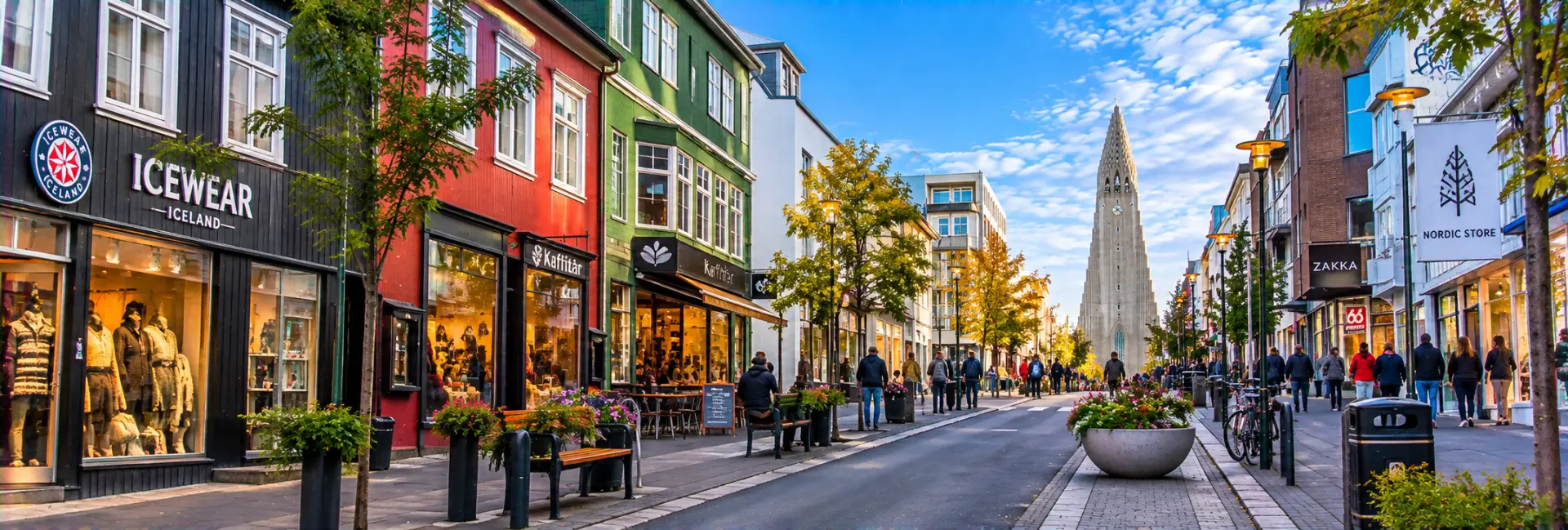
Laugavegur is not a grand boulevard. Its buildings are mostly low-rise, many with brightly painted shopfronts, so a heritage storefront may sit beside a newer, modern one.
Street art and details
Murals and street art appear throughout the area, and outdoor seating spills onto the pavement in the warmer months, which gives the pedestrian section an easy café-terrace feel.
A mix of old and new
The street continues to change, and new construction has occasionally sparked debate about how well modern designs fit with the older streetscape.
Key Stretches of the Street
Bankastræti to the Skólavörðustígur corner
At the western end, Laugavegur meets Bankastræti, a short street climbing from the Lækjartorg area and known for its jewelers and design stores. Here Skólavörðustígur branches off toward Hallgrímskirkja. A short stretch of that street is painted in rainbow colors, a symbol of LGBTQ acceptance and a popular photo spot, with the church tower rising in the background.
The central shopping stretch
Most visitors spend their time between Bankastræti and the middle of the street. This is where you will find the greatest concentration of clothing stores, Icelandic design boutiques, souvenir shops, cafés and restaurants, with side streets offering more places to explore.
Toward Hlemmur
The eastern part is calmer and more local in feel. It leads to Hlemmur Square, which is home to the Hlemmur Mathöll food hall, a convenient place to stop for a meal at the far end of the walk.
Beyond the tourist stretch
Laugavegur technically continues further east, where the road becomes more residential and then connects with Suðurlandsbraut toward the Laugardalur area. Hverfisgata, which runs parallel and is considered somewhat more low-key, makes a natural alternative route for the return walk.
Shopping on Laugavegur
What you will find
- Icelandic design stores selling clothing, homewares, ceramics and jewelry
- Wool goods, including traditional-style sweaters and accessories
- Outdoor and weather-ready clothing from Icelandic brands
- Souvenir shops with postcards, prints and keepsakes
- Galleries, cafés and specialty boutiques
Tips for shopping
Icelandic prices are high by international standards, so it pays to compare. Handmade and locally designed items tend to cost more than imported souvenirs, but they are also less likely to be found in your home country. Visitors from outside the country may be eligible for a VAT refund on larger purchases, so ask about the process in shops before you pay and keep your receipts.
Opening hours
Most shops open daily, typically from about 10:00, with longer hours in summer. Individual stores set their own schedules, so check ahead if you have a specific shop in mind.
Eating, Drinking & Nightlife
Daytime cafés and casual meals
Coffee shops and bakeries are scattered along the whole length of the street, and many have window seats that suit people-watching. Lunch options range from quick bites to sit-down restaurants.
Dinner
The streets around Laugavegur contain a wide selection of restaurants, from relaxed spots to more ambitious kitchens. Booking ahead is sensible on weekends and in summer.
After dark
Reykjavík's bars are heavily concentrated in the city center, and Laugavegur is the backbone of the nightlife scene. Friday and Saturday nights are the busiest, with crowds often staying out until the early hours. The bar crawl tradition known as the rúntur is closely tied to the area.
Ways to Experience It
A relaxed stroll
The simplest option is to walk the main stretch end to end. Most people allow between 20 and 40 minutes for the walk itself, though stops for shopping and food easily turn it into a half day.
A themed walk
Some visitors choose a specific focus, such as design shopping, coffee and pastries, street art or cocktail bars. The compact layout makes it easy to pick a theme and drop into side streets as the mood strikes.
Food-focused visit
Pairing the street with Hlemmur Mathöll gives you a convenient place to eat at the eastern end of the walk.
Guided city walks
Many walking tours of central Reykjavík pass along Laugavegur, which can add historical context about the street and nearby landmarks.
Best Time to Visit
Season by season
The street is lively all year. In summer, the long daylight hours and sidewalk seating create a festive atmosphere, and the pedestrian section is at its most appealing. In winter, the street is quieter and moodier, with warm café interiors to duck into.
Time of day
Mornings and early afternoons suit relaxed shopping. Evenings bring more people for dinner and drinks, and Friday and Saturday nights are the liveliest times.
Weather planning
Icelandic weather can change quickly, but shops, cafés and restaurants are never far away, which makes the street a good option even when it rains or blows.
Visitor Tips
These practical points help you get the most out of the street:
- Walking the street is free, and it is open to pedestrians at all hours.
- Bring a light waterproof layer, since the weather can turn quickly even in summer.
- Check shop hours before you go, especially on Sundays and public holidays.
- Book restaurants in advance for weekend evenings and in the busy summer months.
- Expect crowds and noise late on Friday and Saturday nights if you are staying nearby.
- Look up and down side streets; some of the best cafés, galleries and street art are just off the main route.
- If you are driving, plan to park in a nearby car park and walk, as the lower section is mostly for pedestrians.
Nearby Attractions
Laugavegur sits in the middle of the downtown area, so many of Reykjavík's best-known sights are only a short walk away.
- Hallgrímskirkja: the landmark church at the top of Skólavörðustígur.
- Skólavörðustígur (Rainbow Street): the short, art-filled street that links Laugavegur to the church.
- Old Harbour: a short walk toward the water.
- Harpa Concert Hall and the Sun Voyager sculpture: both on the waterfront, within easy reach of the street.
- Tjörnin and City Hall: the city pond and its lakeside civic building, a short walk from the western end.
- Hlemmur Mathöll: the food hall at the eastern end of the main stretch.
FAQs about visiting Laugavegur
What is Laugavegur known for? +
Laugavegur is Reykjavík's main shopping street, known for its boutiques, cafés, restaurants and bars, and for its heritage storefronts that give the city center much of its character.
What does the name Laugavegur mean? +
It translates as "wash road" or "water road." The street follows the route people once took to carry laundry to the hot springs in the Laugardalur valley.
How long is Laugavegur, and how long does it take to walk? +
Sources describe the main stretch as roughly one and a half to two kilometers, depending on where you start and stop. Most people walk the central section in 20 to 40 minutes, and longer once they stop to shop or eat.
Is Laugavegur a pedestrian street? +
The lower, western part is largely pedestrianized, while other sections are open to vehicles. Rules and delivery hours can change, so look out for signs on the street.
Is Laugavegur free to visit? +
Yes. Walking the street costs nothing, and you pay only for any shopping, food or drinks.
What are the shop opening hours? +
Many shops open daily, often from around 10:00, with longer hours in summer. Each store sets its own schedule, so check ahead for specific places.
Is Laugavegur good for nightlife? +
Yes. Reykjavík's bars are concentrated in the city center, and Friday and Saturday nights are especially busy, with crowds often lasting until the early hours.
Is Laugavegur the same as the Laugavegur hiking trail? +
No. The street in downtown Reykjavík and the hiking trail in the highlands share a name derived from the same Icelandic root, but they are in completely different places and offer entirely different experiences.
What is nearby that I can combine with a visit? +
Hallgrímskirkja and the rainbow-painted Skólavörðustígur are right at the western end, and the Old Harbour, Harpa and Tjörnin are all within an easy walk.
