
Table of Contents
Overview
The National Museum of Iceland (Þjóðminjasafn Íslands) is the country's principal museum of cultural history, set on Suðurgata in central Reykjavík. Founded in 1863, it is the oldest museum in Iceland, and its collections explain how a small settler society in the North Atlantic grew into a modern republic.
The centerpiece is the permanent exhibition Making of a Nation – Heritage and History in Iceland. It covers roughly 1,200 years in a single chronological walk-through, using around 2,000 objects alongside photographs, film and interactive stations. The story begins with the first Norse settlers and the ship that carried them, then moves through the old religion, the conversion to Christianity, the Norwegian and Danish eras and the long road to independence, before finishing in the modern age.
For many travelers it is the best single place to get oriented before heading out to Iceland's landscapes and historic sites, because the objects here give context to much of what you will see elsewhere on the island. The building is close to the city center, welcoming to families and designed with accessibility in mind, which makes it an easy addition to almost any Reykjavík itinerary.
History of the Museum
A collection comes home
The museum was established on 24 February 1863. Until then, Icelandic antiquities had been held in Danish collections. Jón Árnason, a librarian who is also remembered for gathering Icelandic folktales, became the first curator of the Icelandic collection. Within months he was allowed to bring in a second curator, Sigurður Guðmundsson, an artist who had been among the first to argue that Iceland needed an antiquities collection of its own.
The institution was known as the Antiquarian Collection until 1911, when it took the name it carries today.
Decades in the attics
For its first decades the collection had no proper home. Objects were stored in a string of attics around Reykjavík, including spaces in the cathedral, the House of Corrections, the parliament building and the National Bank. The longest stay, about forty years, was in the attic of the National Library building on Hverfisgata, which is now known as the Culture House.
A building of its own
When the Republic of Iceland was founded in 1944, parliament decided that the new nation deserved a museum building of its own. The result was the house on Suðurgata, and the collections moved in during 1950.
Renovation and reopening
Major renovation work began in 1998, and the refurbished museum reopened on 1 September 2004 with new permanent and temporary exhibitions. It was nominated for the European Museum of the Year Award 2006, where it earned a Special Commendation, and that same year the Icelandic disability association Sjálfsbjörg recognized it for the quality of its accessibility.
The museum's work now reaches well beyond its exhibition halls, taking in research and the care of historic buildings around the country, although all public exhibitions are held at the Suðurgata site.
Architecture & Building
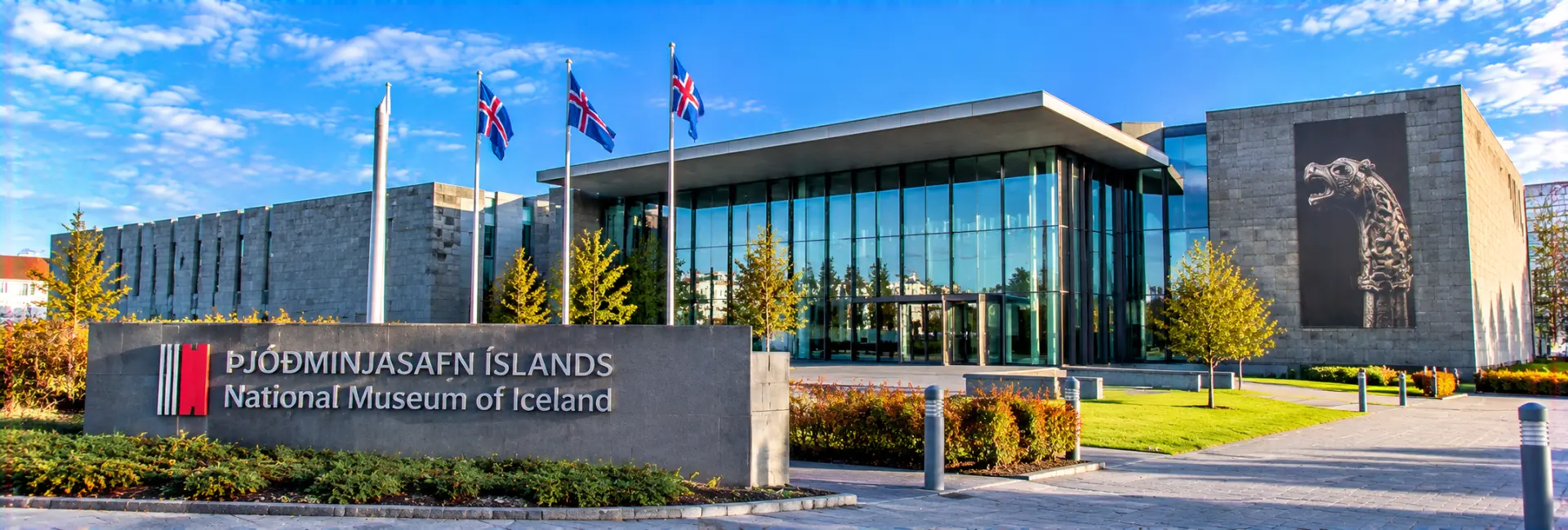
The museum building was commissioned after parliament's 1944 decision and designed by the architect Sigurður Guðmundsson. It was ready for the collections to move in during 1950, and over the decades this substantial public building has become one of Reykjavík's recognizable landmarks. It stands on Suðurgata, between the city center and the Vesturbær district, close to the University of Iceland.
The 2004 transformation
The extensive refurbishment completed in 2004 reworked the interior to meet modern museum standards, and an extension was added on the south side of the building. Accessibility was a stated priority throughout the project, and the result is a museum that wheelchair users, families with strollers and older visitors can move through comfortably.
How the space is organized
The permanent exhibition occupies the upper levels and is laid out as one continuous route, so visitors can follow the story in order without doubling back. Temporary exhibition space, the museum shop and the café are on the ground floor, which makes it simple to split a visit into a main exhibition and a shorter look at whatever is currently on show downstairs.
Collections & Exhibits
Making of a Nation
The permanent exhibition is built as a journey through time. It opens with a ship, standing in for the vessels that carried settlers across the ocean in the late ninth century, and closes in a modern airport, a nod to Iceland's connections with the wider world today. Between those two points, roughly 2,000 objects represent each era and theme of the national story.
What is on display
- Settlement-era material from the Viking Age, including weapons, tools and drinking horns
- Medieval church art such as carved wooden figures, crucifixes, altarpieces and vestments
- Early Icelandic bibles and legal manuscripts that show how central writing was to the culture
- Traditional costume spanning several centuries
- Furniture, tools and household items that reveal how people farmed, fished and got by in a demanding climate
- Photographs and everyday objects from the twentieth century, as the story reaches urban life and independence
Interactive elements
Touch screens, film clips, listening stations and hands-on spaces break up the glass cases. At some stations visitors can pick up a telephone and hear voices from the past, and there are areas where children can play, dress up and try activities tied to the story.
Temporary exhibitions
Alongside the permanent display, the museum stages rotating exhibitions on the ground floor. Past subjects have ranged from historic fishing stations to the working lives of women and the museum's own postcard collection, so it is worth checking what is showing before you go.
Must-See Highlights
The Valþjófsstaður door
The best-known object in the collection is a carved church door from Valþjófsstaður in East Iceland, generally dated to around 1200. Its circular panels show a knight, a lion and a dragon, drawing on a version of the Lion-Knight legend in which a knight slays a dragon and gains a lion as his companion, and a runic inscription accompanies the carving. The door was sent to Copenhagen in 1851 and came back to Iceland in 1930 for the thousand-year anniversary of the Althing, the Icelandic parliament.
The Eyrarland Thor figure
This small bronze, only about five centimeters (two inches) tall, dates to around the year 1000 and is one of the most discussed objects from Iceland's pagan era. It is usually identified as Thor, the god of thunder, though interpretations differ and some read the figure as holding a cross rather than a hammer. That ambiguity suits a piece made during the years when the old gods and the new faith overlapped.
Viking Age weapons and drinking horns
Axes, swords and drinking horns from the settlement period put a physical face on the early centuries of Icelandic life. They are among the displays that tend to draw younger visitors in first.
Medieval church treasures
Wooden crucifixes, altarpieces and vestments trace the shift from Norse belief to Christianity, and they show how much artistic effort went into church life in a country with few other grand buildings.
The modern finish
The route ends with twentieth-century photographs and the airport setting that closes the exhibition. After so many centuries of isolation, the contrast is a clever way to end the walk.
Ways to Experience It
Self-guided with audio
The museum is designed to be explored independently by following the exhibition in order. Audio guidance is available to add background to the displays; ask at the entrance about the current format, since some guides run through your own phone and a pair of headphones is useful.
With children
Hands-on areas, dress-up opportunities and interactive screens make this one of the easier history museums to visit with younger travelers. Children under 18 enter free of charge.
With the Reykjavík City Card
The museum is included in the Reykjavík City Card, which also covers a number of other museums and the city's public buses. If you plan to visit several attractions in a day or two, it is worth comparing the card's cost against individual tickets.
Café and museum shop
The ground-floor café serves coffee, light snacks and pastries, and its hours can be shorter than those of the museum itself. The shop sells books on Icelandic culture, handcrafted items, jewelry and replicas inspired by objects in the collection.
Best Time to Visit
Season by season
Because the museum is entirely indoors, it works in any season. It is an especially good choice on rainy or windy days and during the short daylight hours of winter, when outdoor sightseeing is limited. Summer brings the largest crowds, with tour groups and cruise visitors adding to the numbers.
Time of day
Weekday mornings, particularly right at opening, tend to be calmer than the middle of the day. Late afternoon can also be quiet, but leave enough time to finish the exhibition and visit the shop before closing.
Opening hours
The museum generally opens from 10:00 to 17:00. Hours can differ between summer and winter, and some seasonal schedules include a weekly closing day, so confirm the current times on the official website before you travel.
Visitor Tips
A little planning goes a long way in a museum that covers over a thousand years of history. These practical points help make the visit smoother:
- Allow around two hours for the permanent exhibition; anyone who likes to read every label may want longer.
- Follow the exhibition in order from the settlement period onward, since the story is built chronologically.
- Children under 18 and people with disabilities have free admission; check the current ticket prices for everyone else on the official website.
- Bring headphones if you plan to use a phone-based audio guide.
- Check the temporary exhibitions on the ground floor, as they change regularly.
- Visit the museum shop before closing time if you want to browse for gifts.
- Wear comfortable shoes, as the route covers a lot of ground across multiple galleries.
Nearby Attractions
The museum's location, between the city center and the university area, makes it easy to pair with other sights on foot.
- University of Iceland: the main campus is close by, and the surrounding streets are pleasant for a short stroll.
- Nordic House: the cultural center in the nearby Vatnsmýri area was designed by the Finnish architect Alvar Aalto and is of interest to architecture fans.
- Tjörnin: the city pond lies a short walk toward the center and is a favorite place for watching birdlife.
- Hallgrímskirkja: Reykjavík's best-known church is roughly a fifteen-minute walk away and has a tower with views over the city.
- The Culture House: the former National Library building on Hverfisgata, where the museum's collection once spent four decades in the attic.
FAQs about visiting the National Museum of Iceland
What is the National Museum of Iceland known for? +
It is Iceland's oldest museum and the main place to see the nation's story told through objects, from the Viking-age settlement to the present. The best-known pieces are the carved Valþjófsstaður church door and the small bronze Thor figure from Eyrarland.
How long should I spend at the museum? +
Most visitors need around two hours for the permanent exhibition. If you enjoy reading every label, trying the interactive stations and browsing the temporary exhibitions, you could comfortably spend longer.
Is the National Museum of Iceland free? +
Admission is free for children under 18 and for people with disabilities. Other visitors pay a ticket price, which can change, so check the museum's website for the current rate. The Reykjavík City Card also includes entry.
What are the opening hours? +
The museum is generally open from 10:00 to 17:00. Seasonal differences are possible, including a weekly closing day in the quieter months, so confirm the hours for your travel dates before heading over.
Is it a good museum for kids? +
Yes. Children get in free, and the museum has hands-on areas, dress-up activities, touch screens and Viking-age objects that tend to hold young visitors' attention.
How do I get to the National Museum of Iceland? +
The museum is at Suðurgata 41, roughly a ten-minute walk from the city center and about fifteen minutes from Hallgrímskirkja. City buses stop nearby, and parking is available in the area.
Is the museum accessible for wheelchair users? +
Yes. Accessibility was a priority in the building's 2004 renovation, and the museum has been recognized by an Icelandic disability association for it. Visitors who need specific assistance can contact the museum in advance.
Should I read about Icelandic history before visiting? +
It is not necessary. The exhibition is designed for general visitors and explains each period as you go, so you can arrive with no background and still follow the story.
