
Table of Contents
Overview
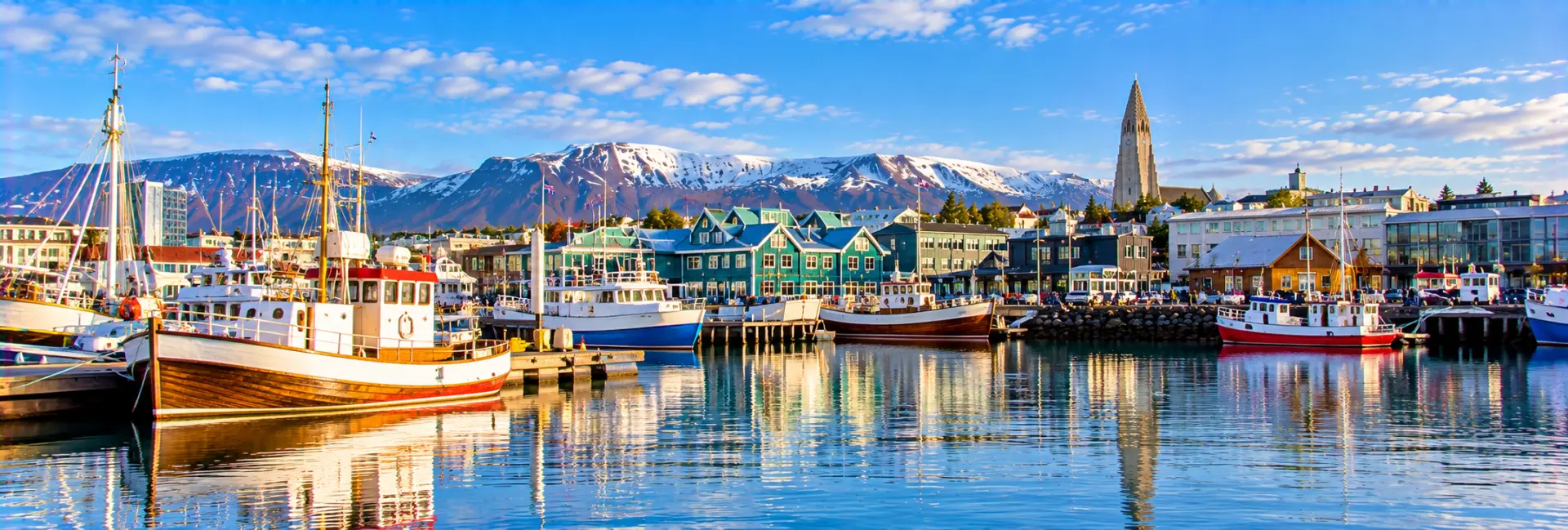
The Old Harbour, or Gamla höfnin in Icelandic, is the working waterfront on the north side of downtown Reykjavik. It has been the heart of the city's fishing industry for more than a century, and today it is also the busiest place in town for sea-based adventures. Colorful fishing boats, whale-watching vessels and yachts share the quays, and old warehouses and fish sheds have been turned into cafes, restaurants, galleries and shops.
The setting is a big part of the appeal. Across the water Mount Esja rises over Faxaflói Bay, seagulls wheel above the piers, and the glass facade of Harpa Concert Hall glitters at the harbor's edge. It is a place where you can watch a trawler unload, eat fresh seafood within sight of the boats and then step aboard a tour to look for whales.
The harbor is free to explore at any hour, so it works as a quick stroll, a lunch stop or the starting point for a half-day at sea.
History of the Old Harbour
A Town Without a Harbor
Reykjavik was founded beside a good natural harbor, which is one reason the first settler, Ingólfur Arnarson, chose to live here. The cove is sheltered by the islands of Engey and Örfirisey, and Örfirisey is joined to the mainland by the Grandi isthmus. Yet by the mid-19th century the town still had no proper port facilities. Ships had to anchor out in the bay, and cargo and passengers were brought ashore in small rowing boats.
The Biggest Project of Its Time
That changed in the early 20th century. After years of debate over where the harbor should be and who should control it, construction began on 8 March 1913, led by the Danish engineer N.C. Monberg. It was the largest construction project in Icelandic history up to that point. Two German-built steam locomotives were imported to haul rock from the nearby hills of Skólavörðuholt and Öskjuhlíð, and the harbor was formally opened on 16 November 1917.
From Fishing Port to Visitor Hub
Within a few years Reykjavik had become Iceland's main center for imports, exports and fishing, and in the early 20th century it was one of the hubs of the country's trawling industry. Over recent decades fishing has given way to tourism, whale watching and dining, but the harbor remains a busy and important port. Much of the modern waterfront stands on landfill, and the original shoreline ran roughly where Hafnarstræti street is today.
Whale Watching & Boat Tours
The Old Harbour is the main departure point for sea tours from Reykjavik, and Faxaflói Bay is one of the easiest places in Iceland to look for whales without leaving the capital. Trips are led by crews and guides who know the local waters, and boats range from large comfortable vessels to small fast RIBs.
- Whale watching: tours run through much of the year, weather permitting, and commonly spot minke whales, humpbacks, white-beaked dolphins and porpoises
- Puffin watching: short boat trips head out to nearby islands during the breeding season, which generally runs from spring through late summer
- Northern Lights cruises: in the dark months some operators run evening boat trips away from the city lights
- Sea angling: boats take small groups out to fish in the bay
- Ferry to Viðey Island: in summer, ferries run to this small island just offshore, with departures from Harpa and other piers
Sightings are never guaranteed, since the animals are wild, but many operators offer a free repeat trip if no whales are seen. The sea can be rough, so people prone to seasickness may want to choose a calm day.
Museums & Attractions
The area around the harbor has become one of Reykjavik's main cultural districts, and several museums sit within a short walk of the piers:
- Reykjavik Maritime Museum, housed in a former fish freezing plant and telling the story of Iceland's fishing industry and seafaring life
- Óðinn, a former coast guard ship moored beside the Maritime Museum and open for tours
- Whales of Iceland, an exhibition with life-size models of the whales found in Icelandic waters
- Flyover Iceland, a flight-simulation ride that gives an aerial tour of the country's landscapes
- The Grandi area on the western side of the harbor, a former fishing district now filled with restaurants, shops and galleries
- Minør, one of the original steam locomotives used to build the harbor, which is displayed by the waterfront during the summer season
Opening hours and ticket details vary, so check each venue before you plan your day.
Food & Drink
Because the harbor is right beside the sea, it is a natural place to try seafood. Fish soups, grilled catch of the day, langoustine and smoked and cured fish are all common on local menus, and several restaurants occupy converted warehouses and fishing sheds with views of the boats. For a more casual bite, you will also find long-standing local favorites such as a classic hot dog stand, a traditional harbor cafe and an ice cream parlor close to the Maritime Museum.
On weekends, the Kolaportið flea market in a nearby hall has a food section where you can sample Icelandic specialties, along with second-hand goods and souvenirs.
Restaurants at the harbor can be busy at lunch and in the evening, particularly in summer and when cruise ships are in port, so book ahead if you want a particular table.
The Waterfront Walk
The harbor is part of a longer waterfront route that links Reykjavik's best-known seaside sights. Starting at the Maritime Museum in the Grandi district, you can stroll along the quays toward Harpa Concert Hall, then continue east along the shore path to the Sun Voyager sculpture and beyond.
Along the way you will pass fishing boats and moorings, public art, benches facing the bay and viewpoints toward Mount Esja. The path is mostly flat, so it suits most visitors, and the views change with the weather and the time of day. Allow 30 to 60 minutes for a relaxed walk, longer if you stop to eat or browse.
Ways to Experience It
There are many ways to spend time at the Old Harbour, depending on your interests and the season:
- Stroll the quays and watch the boats come and go
- Join a whale-watching or puffin tour for a few hours at sea
- Visit the Maritime Museum and step aboard the Óðinn
- Eat seafood in one of the waterfront restaurants
- Walk the shore path to Harpa and the Sun Voyager
- Take a ferry to Viðey Island in summer
- Come back at night in winter for a Northern Lights cruise or a quiet walk by the lit harbor
Plan for an hour if you are just walking and eating, and three to four hours if you add a boat trip.
Best Time to Visit
By Season
Summer is the busiest and brightest time, with long days, puffin trips and lively restaurant terraces. Spring and early autumn are calmer, with good chances of whales and fewer crowds. In winter the harbor is quieter and colder, but the lights over the water are beautiful and Northern Lights cruises are available. Whale-watching trips run through much of the year, though weather can cause cancellations.
By Time of Day
Mornings are peaceful, with fishing boats at work and soft light over the bay. Tours cluster in the morning and afternoon, so the quays are busiest then. Evenings are good for dinner and for a stroll along the water as the sky changes color, and in summer the light lasts until very late.
Visitor Tips
- Dress warmly and in layers for boat trips, because it is much colder and windier on the water than in town, and many operators provide thermal overalls on board.
- Book tours in advance in summer, and check the weather, because trips can be canceled or rescheduled in rough seas.
- Check which pier your tour leaves from, as departure points vary between operators.
- Bring a camera with a zoom lens for whales and puffins, and sunglasses on bright days.
- If you are prone to seasickness, consider tablets or a larger, more stable vessel.
- Larger cruise ships dock at a terminal outside the center, while some smaller ones tie up at the Old Harbour, so expect extra crowds on port days.
- The harbor area is free to enter at any time, but individual museums, attractions and tours have their own opening hours and prices.
Nearby Attractions
The Old Harbour sits at the edge of the city center, so there is plenty to see within a short walk:
- Harpa Concert Hall, the glass-fronted concert hall on the harbor's eastern edge
- The Sun Voyager sculpture, a pleasant walk along the shore path
- Laugavegur and the central shopping streets, a few minutes inland
- Hallgrímskirkja, the landmark church on the hill above the city
- Tjörnin pond and the old town area around City Hall
FAQs about visiting the Reykjavik Old Harbour
What is the Old Harbour? +
It is Reykjavik's historic harbor, built between 1913 and 1917. Once the center of the fishing industry, it is now a lively waterfront with restaurants, museums and boat tours.
Can I see whales from the Old Harbour? +
Yes. Whale-watching tours depart from the harbor and head into Faxaflói Bay. Minke whales, humpbacks, dolphins and porpoises are among the animals people often see, though sightings are never guaranteed.
When is puffin season? +
Puffin trips run in the breeding season, which generally lasts from spring to late summer. Check with the tour operator for exact dates.
Is it free to visit? +
Yes. You can walk around the harbor at any time without paying. Museums, boat tours and attractions charge their own fees.
What can I do there besides boat trips? +
You can visit the Maritime Museum and the Óðinn ship, see the Whales of Iceland exhibition, eat seafood, browse the shops and galleries in the Grandi area and walk along the shore path to Harpa and the Sun Voyager.
How long should I allow? +
Plan one to two hours for a walk and a meal, and three to four hours if you include a boat tour.
How do I get there? +
The harbor is a short walk from the city center and right next to Harpa Concert Hall. Many hotels and attractions in the old town are within walking distance.
Is it suitable for children and wheelchair users? +
The quays and waterfront paths are mostly flat and easy to walk, which suits families and many wheelchair users, but check accessibility with individual tour operators and museums.
