
Table of Contents
Overview
Árbær Open Air Museum (Árbæjarsafn) is the largest open-air museum in Iceland and the historical museum of the city of Reykjavík. Set on the grounds of an old farm in the eastern suburb that takes its name from it, the museum gathers more than 20 historic buildings into a small settlement made up of a town square, a village and a working-style farm. Most of the houses were moved here from central Reykjavík.
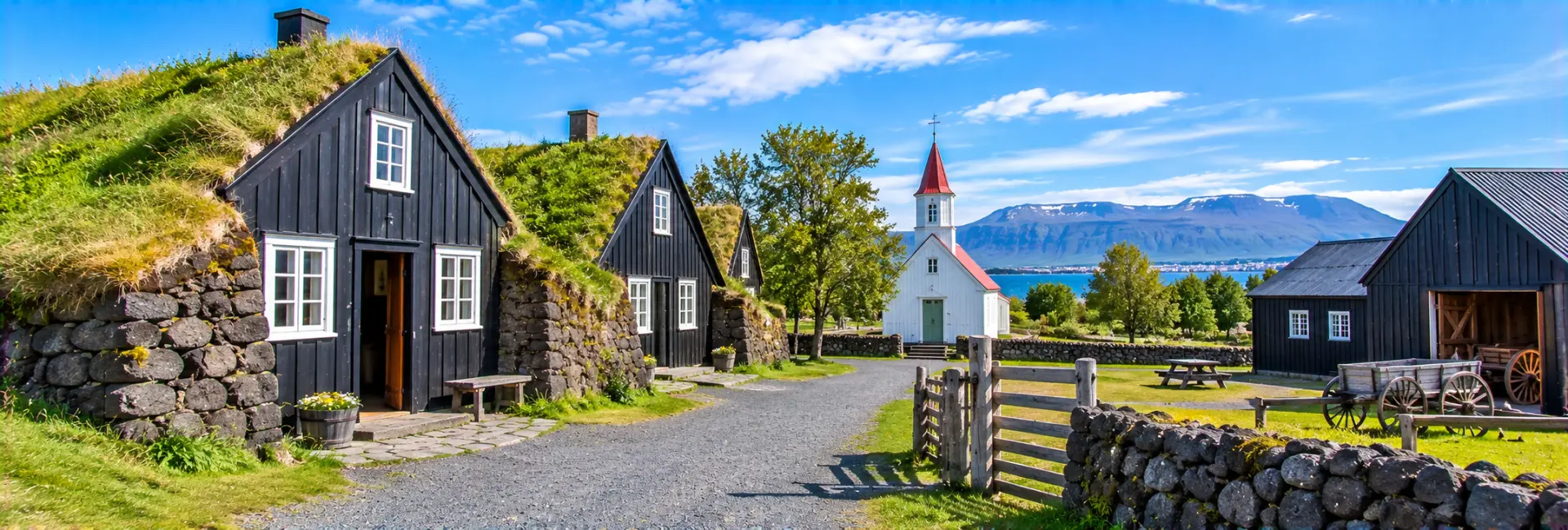
Walking between them is like moving through different decades of the capital's development. Turf-roofed farm buildings sit alongside timber houses, a general store, workshops, a church and a family home from the early twentieth century, and many of the buildings contain exhibitions or furnished interiors from a specific period.
The museum aims to show how people in Reykjavík lived, worked and spent their free time in the nineteenth and twentieth centuries, from the days of scattered farms to the growth of a modern capital. It is part of the Reykjavík City Museum, and it works well for families, history lovers and anyone curious about everyday life in Iceland's past.
History of the Museum
The farm of Árbær
The site was a real farm well into the twentieth century. Árbær was a popular stopping place for travelers heading to and from Reykjavík, and the first written records of a farm here are said to date back to 1464. The turf buildings visible today were built between about 1890 and 1918 and have been maintained and rebuilt over the years. The farm was left empty in the late 1940s, and by the 1950s the old buildings had suffered from weather and vandalism.
Saving old Reykjavík
By the middle of the twentieth century there was growing concern that the old character of Reykjavík was disappearing. Efforts to found a museum began in the early 1940s, and the city's archives and historical collection were officially established in 1954. In 1957 the city council agreed to create a public park and open-air museum with old houses of historical value at Árbær, and it opened in August of that year.
Growing with the city
When the museum was founded it sat a short distance outside the built-up area. Since then the capital has grown far beyond it. In 1968 the Reykjavík Historical Museum and Árbæjarsafn were merged, and today the site is one of five places that make up the Reykjavík City Museum. Over the decades, more buildings have been moved in to save them from demolition as downtown Reykjavík changed.
Layout & Architecture
A square, a village and a farm
The buildings are arranged in three main groups. The town square is lined with houses and shops that once stood in central Reykjavík. A village area shows how simple wooden and part-stone homes were used by laborers, and the farm area has traditional turf buildings with grass-covered roofs. Together they illustrate how architecture and living conditions changed between the nineteenth and twentieth centuries.
Turf houses
The turf buildings are among the highlights. Built from turf, stone and timber, they offered insulation in a cold climate but needed constant upkeep. The Árbær farm is the only building in the museum still standing on its original spot, and it sits next to the museum's church.
Wood, stone and corrugated iron
Other buildings reflect the shift to timber houses and part-stone homes in the late nineteenth and early twentieth centuries. A World War II Nissen hut is also among the structures, a reminder of the wartime period when British and later American troops were stationed in and around the city.
The church
The museum church is a turf-roofed building modeled on an old church from northern Iceland and built in the twentieth century using timber salvaged from the old farm. It is a consecrated church, and services such as weddings and Christmas events are still held there.
Key Buildings
Árbær farm
The original farm is the heart of the site and the one place where a house still stands where it always did. Inside, the rooms and turf passages show the practical details of rural life, from cramped sleeping spaces to the work areas that kept the household going.
Suðurgata 7
This house was built in 1833 and later extended in stages until it reached its current appearance in 1883. It now shows what a Reykjavík home looked like around 1925, giving a sense of how comfortable middle-class and wealthier families lived in the growing town.
Hábær and Efstibær
These smaller homes show the other side of the picture. Hábær explores the conditions of a poor family around 1950, while Efstibær is a nineteenth-century laborer's cottage that has been used to tell the story of working life.
The general store and workshops
The Krambúðin general store, originally from Lækjargata, sells traditional sweets and small goods in season. Workshops such as the smithy and a typical city stable show the trades and animals that supported daily life before cars.
Dillonshús
The museum's café is in Dillon's House, one of the larger timber buildings on the square. It is a pleasant place to rest with coffee and baked goods, particularly during the Christmas events.
Landakot
Landakot, built in 1897 as the first Catholic church in Iceland since the Reformation, was later used as a gym. Its upstairs exhibition tells the story of both chapters in the building's life.
Exhibitions
A museum of many small museums
Many buildings hold their own exhibition, so each visit can feel different depending on what is open. The programme changes over time, but the following themes give a sense of what the museum covers.
- Vaxtaverkir: an immersive exhibition about the world of schoolchildren in Reykjavík between 1898 and 1974.
- Fornar rætur Árbæjar: an exhibition about the archaeological research on the old farm site.
- Hábær 1950: a look at the lives of a poor family around 1950.
- Neyzlan: a view of Reykjavík in the twentieth century, an era of rapid change.
- Farfi og fegurð: a history of house painting, from lime and tar to oil paint.
- Kerruöldin: a story of transport, from the pack saddles used from the Settlement era to the arrival of wheeled carts.
- Komdu að leika: games and toys that Reykjavík children played with in the twentieth century.
- Húsagerð höfuðstaðar 1840–1940: the history of building techniques in the capital.
Why they matter
Because the exhibitions focus on ordinary life, they reveal details that grander museums often miss: how people painted their houses, what children played with, how families got by on small incomes, and how changing technology reshaped daily routines.
Living History, Animals & Facilities
Costumed staff and demonstrations
In summer, staff in period clothing bring buildings to life with demonstrations of traditional crafts and domestic tasks. They are knowledgeable and happy to answer questions, which gives context to what you see.
Farm animals
Domestic animals, including sheep, goats, horses and poultry, appear around the grounds in the warmer months, adding color and sound to the farm area. Children often enjoy seeing them.
Café, shop and play area
There is a café in one of the old houses, a museum shop with souvenirs and Icelandic treats, and a playground for younger visitors. Some facilities, such as the café, may not operate in winter, so check ahead.
Accessibility
The site is mostly laid out with gravel paths, and many houses have steps and thresholds because of their age. Visitors with limited mobility should check the museum's accessibility information before planning a visit.
Ways to Experience It
Free guided tour
A guide leads visitors through the main houses and tells their stories in a tour that is mostly in English and lasts just over an hour. It runs daily at 13:00, with a few exceptions on public holidays such as Christmas Day, New Year's Day, Good Friday and Easter Sunday. No booking is needed.
Self-guided wandering
You can also explore at your own pace, using the information in the buildings. Allow one to two hours to see the main sites, and longer if you like to read everything or if the weather is good enough for a long walk around the grounds.
Christmas program
On selected Sundays in December, the museum hosts a Christmas program that shows how the season was celebrated in old Reykjavík. Visitors can watch laufabrauð (leaf bread) being cut, wool being carded and spun, and traditional foods being prepared. Costumed Yule Lads entertain, there is a service in the church and people gather to sing around the tree on the square.
With the City Card
Children and people with disabilities enter free. Reykjavík City Card holders also benefit from free entry to the city's museums, so check whether it suits your plans.
Best Time to Visit
Summer
From June to August the museum is open daily with fuller operations: more buildings are open, staff in period dress are on hand and animals are in the fields. It is the best time for a complete experience, although it can also be busier.
Winter
Between September and May the museum has shorter hours, and some houses and facilities may be closed. The daily guided tour continues, and the quieter atmosphere appeals to history fans who prefer fewer crowds. Snow on the turf roofs makes for striking photographs.
December
The Christmas program turns the museum into a seasonal village with music, food and old traditions, and is a popular day out for families in Reykjavík.
Opening hours
Opening hours vary by season and event, so check the official website before you visit.
Visitor Tips
These points will help you plan:
- Check the official website for current hours; they change between summer and winter.
- Time your arrival for the 13:00 guided tour to get the stories behind the buildings.
- Wear sturdy, weatherproof shoes, as paths are gravel and can be muddy or icy.
- Dress in layers; this is an outdoor museum, and weather can change fast.
- Expect steps and thresholds in the older houses.
- Bring cash or a card for the café and shop, and check which facilities are open in winter.
- Free parking is available on site, and city buses stop within a short walk.
- Admission is free for children and people with disabilities; check the current price for other visitors.
Nearby Attractions
The museum lies in the Árbær suburb, a 10 to 20 minute drive from downtown Reykjavík. Several other places make good pairings.
- The Settlement Exhibition: another Reykjavík City Museum site, built around a Viking-age longhouse in the city center.
- Reykjavík Maritime Museum and Reykjavík Museum of Photography: further City Museum sites near the old harbor.
- Elliðaárdalur valley: a green river valley close to the suburb, good for a walk before or after your visit.
- Laugardalur: Reykjavík's largest park, with a thermal pool and the family park and zoo.
- Downtown Reykjavík: shops, cafés and landmarks such as Hallgrímskirkja and Harpa.
FAQs about visiting Árbær Open Air Museum
What is Árbær Open Air Museum? +
It is Iceland's largest open-air museum, made up of more than 20 historic buildings arranged as a town square, a village and a farm. Most of the houses were moved from central Reykjavík.
Where is the museum located? +
It is at Kistuhylur 4 in the Árbær suburb of eastern Reykjavík, roughly 7 to 8 kilometers from the city center. By car it takes about 10 to 20 minutes, and city buses stop near the entrance.
How long should I allow for a visit? +
Plan on one to two hours. The guided tour alone lasts just over an hour, and you may want extra time for the café, animals and wandering the grounds.
Is there a guided tour? +
Yes. A free tour mostly in English runs daily at 13:00 and takes in the main houses. It does not run on a few public holidays, such as Christmas Day, New Year's Day, Good Friday and Easter Sunday.
Is the museum open in winter? +
Yes, but with shorter hours and fewer open buildings than in summer. The daily guided tour continues, and the museum hosts a Christmas program in December. Check the official website for current times.
Is it suitable for children? +
Yes. Children enter free and the museum has farm animals in summer, a playground and toy exhibitions, along with a museum shop and café.
Do I have to pay to enter? +
Admission is free for children, people with disabilities and some pass holders. Other visitors pay a ticket price that can change, so check the current rate on the official site.
Is the museum accessible? +
The grounds are mostly gravel paths, and many old houses have steps and thresholds. If you have mobility needs, check the museum's accessibility information before you go.
