
Table of Contents
Overview
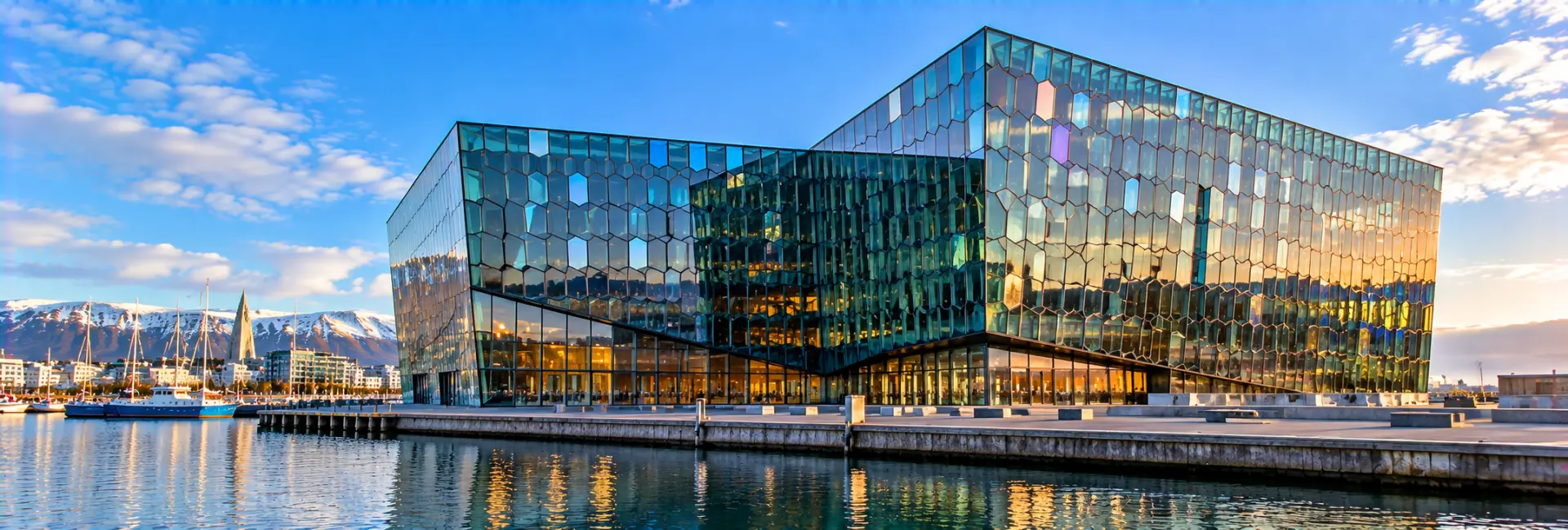
Harpa is Reykjavik's concert hall and conference center, and one of the most eye-catching buildings in Iceland. It stands right on the Old Harbour, wrapped in a shimmering shell of glass that reflects the sea, the sky and the mountains across the bay. In bright weather it sparkles like a cut crystal, and at night it glows with colored light.
The building is far more than a pretty facade. It is the home of the Iceland Symphony Orchestra and the Icelandic Opera, and its halls host everything from classical concerts to pop shows, festivals, conferences and comedy. The foyer, shops and cafes are open to everyone, so you can step in, look up through the glass and enjoy the architecture without buying a ticket.
The building is run by Portus, a company owned by the Icelandic state and the City of Reykjavik, which reflects its role as a shared public venue rather than a private project.
Harpa has also become a symbol of national pride. It was built during one of the toughest periods in Iceland's modern history and is now a favorite stop for visitors who want to see how the country blends art, design and nature.
History of Harpa
A Long-Awaited Concert Hall
Reykjavik had dreamed of a proper concert hall for many years. The idea was part of a wider plan to revive the Old Harbour area and give the city a landmark cultural building on its waterfront. Construction began in 2007, with the Danish firm Henning Larsen Architects working with the Icelandic office Batteríið Architects and the artist Ólafur Eliasson.
Crisis and Completion
In 2008 Iceland's banks collapsed, and the half-built hall suddenly seemed like a symbol of excess. Work stalled, and there was real doubt about whether it would ever be finished. In the end the Icelandic government and the City of Reykjavik stepped in to complete the project, and the building became one of the few large construction sites in the country during the lean years that followed.
Opening and Recognition
The building was officially named Harpa on 11 December 2009, which was the Day of Icelandic Music. The name means harp in Icelandic and is also the name of the first month of summer in the old Icelandic calendar. The hall opened in May 2011, with an inaugural concert on 4 May by the Iceland Symphony Orchestra conducted by Vladimir Ashkenazy, with pianist Víkingur Ólafsson as soloist. In 2013 Harpa won the European Union Prize for Contemporary Architecture, known as the Mies van der Rohe Award, and it has been praised by music critics as one of the notable concert halls of the 21st century.
Architecture & the Glass Facade
Harpa's most famous feature is its facade. Made of steel and glass, it is built from a twelve-sided modular system that the designers call the quasi-brick, and more than a thousand of these units make up the southern front. Each one is slightly different, and the way they stack and tilt makes the surface seem to shift and ripple as you move around the building.
The design was inspired by Iceland's landscape, especially the hexagonal basalt columns found along the coast, and by the shimmer of the northern lights. Ólafur Eliasson, the Danish-Icelandic artist known for working with light, glass and water, created the facade in close collaboration with the architects. Some of the glass panels are colored, so the building appears to change tone from clear to green to gold as the weather and the sun's angle shift.
After dark, LED lights embedded in the facade turn the building into a slow-moving light display. Eliasson created the original lighting works, and in 2021, for the tenth anniversary, he produced twelve new ones, one for each month of the year. Harpa and the city have also invited artists to submit proposals for the facade, so the display is refreshed by new creative projects. Even if you only have a few minutes, it is worth walking right up to the glass and looking at the pattern of the individual cells.
The acoustics of the main hall were designed by Artec Consultants, and the interior, with its dark, rugged surfaces and the glowing red of the main auditorium, contrasts strongly with the bright glass exterior.
The Halls Inside
Harpa has four main performance halls, each with its own character:
- Eldborg, the main concert hall, named after a volcanic crater and seating up to about 1,800 people in a dramatic red auditorium
- Silfurberg, a mid-sized hall named after Iceland spar, used for concerts, conferences and talks
- Norðurljós, or Northern Lights, a flexible hall on the second floor suited to amplified music, events and exhibitions
- Kaldalón, the smallest hall, a more intimate space for chamber music, lectures and smaller shows
Besides the concert halls, there are meeting rooms and event spaces on the upper floors with views over the harbor, the fjord and the surrounding mountains. The open foyer is a place to wander, with huge windows that frame the city and the sea.
Music, Events & Festivals
Harpa hosts well over a thousand events every year, which means there is almost always something happening. It is the home of the Iceland Symphony Orchestra, which gives regular concerts through the season from September to June, and of the Icelandic Opera, which moved here in 2011. The Reykjavík Big Band and other ensembles also call it home.
The program is not limited to classical music. International pop and rock acts, jazz, electronic music, comedy, family shows, festivals and film events fill the calendar, and the building also functions as a major conference center. Checking what is on during your visit is the best way to turn a quick sightseeing stop into a memorable evening.
Tickets for performances are sold separately, so book ahead for popular shows. The program is published on Harpa's website. Many visitors find that even a short concert in one of the smaller halls is a memorable way to hear the acoustics for themselves.
Dining, Shopping & Volcano Express
You do not need a ticket to enjoy the ground floor. Harpa has restaurants and cafes with harbor views, along with shops selling Icelandic design, books, music and souvenirs, and they are open to anyone who walks in during opening hours.
The lower level also houses Volcano Express, an immersive cinematic attraction that opened in March 2025. It uses film and effects to tell the story of Iceland's volcanoes, and it makes a good rainy-day addition if you have time. Check the current schedule and ticket information before you plan around it.
Ways to Experience It
There are several ways to experience Harpa, depending on how much time you have:
- Walk around the outside to see the facade from different angles and enjoy the harbor views
- Step into the foyer to look up through the glass and explore the shops and cafes
- Join a guided tour, offered daily, for a look at the architecture, the acoustics of Eldborg and the story of the building
- Attend a concert or performance, from a symphony to a stand-up show
- Visit in the evening to watch the facade light up
- Combine it with a stroll along the Old Harbour and the seafront promenade
A quick visit takes 30 minutes to an hour, while a tour or a performance will take longer.
Best Time to Visit
By Season
Harpa is a good stop all year round. In winter, when the days are short and the weather can be harsh, it is a warm and bright place to take shelter, and the evening light show looks especially striking against the dark sky. In summer the long days give you plenty of time to see the facade in daylight, and the harbor around it is lively.
By Time of Day
Daytime is best for seeing the glass sparkle, particularly when the sun is out. Evenings are best for the lighting display and for concerts. The building is generally open every day of the year apart from some public holidays, though opening times for the foyer and shops can vary, so check the schedule if you are planning a specific time.
Visitor Tips
- Entry to Harpa's public areas is free during opening hours, while tickets are needed for performances, guided tours and attractions such as Volcano Express.
- Check the event calendar before you arrive, because some areas may be closed for rehearsals, conferences or private events.
- Book tickets in advance for popular concerts and for guided tours, which run in several languages.
- Wear warm clothing if you plan to walk the harbor, as the wind off the sea can be cold even in summer.
- Bring a camera and try different angles: the reflections change with the light and the weather.
- The building is a short walk from the city center, so you can easily include it in a stroll between the old town and the harbor.
- Restaurants and shops are open to the public, but opening times may differ from the building's general hours.
Nearby Attractions
Harpa sits at the meeting point of the city center and the waterfront, so you can easily extend your visit:
- The Old Harbour, a lively area with restaurants and boat tours
- The Sun Voyager sculpture, a short walk along the seafront promenade
- Reykjavík Art Museum's Hafnarhús, a gallery in the former harbor warehouse
- Laugavegur and the central shopping streets, with cafes, boutiques and bars
- Hallgrímskirkja, the landmark church on the hill above the city
FAQs about visiting Harpa Concert Hall
What does Harpa mean? +
Harpa is the Icelandic word for harp. It is also the name of the first month of summer in the old Icelandic calendar.
Is it free to enter? +
Yes, you can enter Harpa's public areas for free during opening hours. You need tickets for concerts, guided tours and some attractions.
Who designed Harpa? +
The building was designed by Henning Larsen Architects in collaboration with Batteríið Architects and the Danish-Icelandic artist Ólafur Eliasson, who created the glass facade.
What is the facade made of? +
It is made of steel and glass in a twelve-sided modular system known as the quasi-brick. The design was inspired by Iceland's basalt columns and northern lights.
Can I see a concert at Harpa? +
Yes. Harpa hosts classical, pop, jazz, opera, comedy and many other events throughout the year. Check the program and buy tickets in advance for popular shows.
Are there guided tours? +
Yes, guided tours of the building are offered daily and give a behind-the-scenes look at the architecture and acoustics. Check availability and book ahead.
How long should I spend there? +
Allow 30 minutes to an hour for a visit to the foyer and the exterior. Add more time for a tour, a meal or a performance.
When is the facade lit up? +
The facade is lit in the evening and after dark, and the lights are most visible in the darker months. Check the time of sunset and plan accordingly.
