Table of Contents
Overview
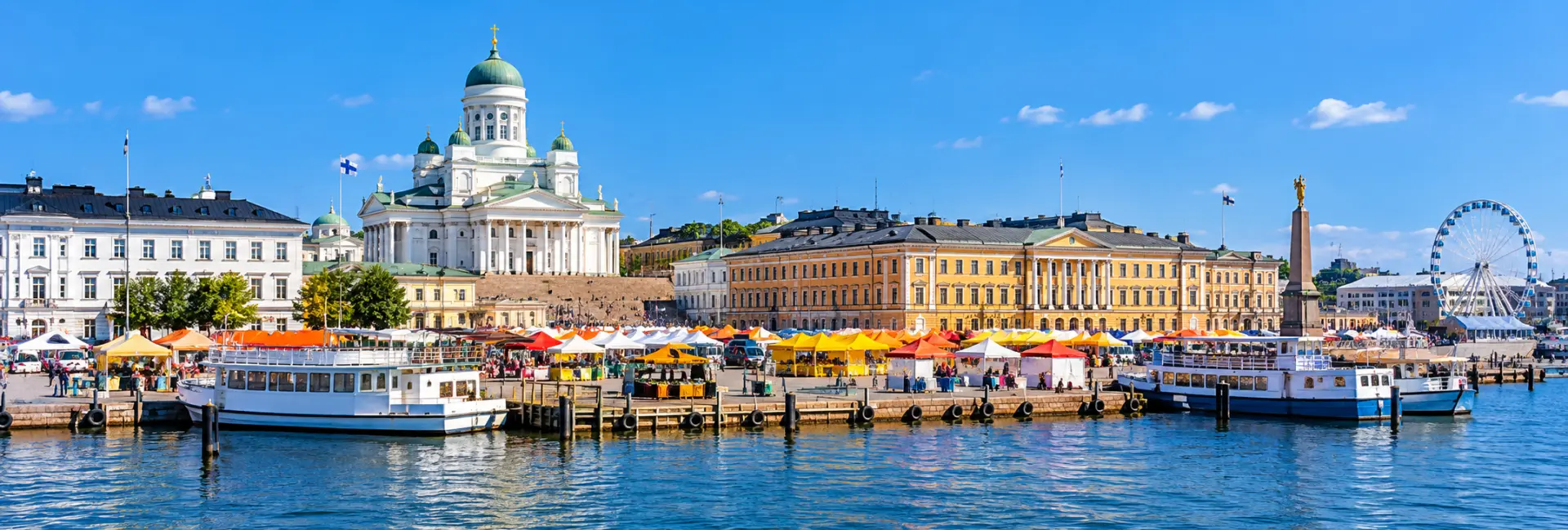
Kauppatori, known in English as Market Square, sits where the city of Helsinki meets the sea. It occupies a strip of reclaimed shoreline at the foot of the Esplanadi park, right on the edge of the South Harbour, and for two centuries it has functioned as the city's front door: the place where boats tie up, fish gets sold, and visitors get their first taste of Finland.
Unlike a monument built for a single purpose, the square is defined by everyday use. Farmers, fishmongers and craftspeople still set up stalls here much as they did in the nineteenth century, while the buildings ringing the square, among them the Presidential Palace and Helsinki City Hall, place it at the political and civic centre of the country as much as its commercial one.
History
From Muddy Bay to City Square
Until the early 1800s the site was simply the shallow, muddy end of a bay called Kaupunginlahti, where local fishermen moored small boats and sold their catch directly from the water's edge. The city's real marketplace at that time stood further inland, on the site of today's Senate Square. Land reclamation around the bay began in 1813, and by 1818 the food market itself had been relocated to roughly where the square stands now.
Paving followed gradually rather than all at once: cobblestones were laid across the square through the early 1830s, giving it much of the surface visitors still walk on today.
Growth, Rail Lines and Royal Visits
By the 1890s the harbour beside the square had grown busy enough to justify a rail connection to the Katajanokka district across the water. Two swing bridges were built so trains could cross the mouth of the harbour basins without blocking boat traffic, and tracks ran along the square's edge for close to a century before the line was dismantled in the 1980s; a short stretch of rail is still visible embedded in the cobblestones today.
Over the same period the square became Helsinki's default stage for greeting visiting heads of state arriving by sea. The Swedish king Gustaf V landed here in 1925 for the first official state visit to independent Finland, and later arrivals included Queen Elizabeth II aboard the royal yacht Britannia in 1976 and 1994, and U.S. President George H. W. Bush, who greeted crowds at the square in 1990.
A Modern Backdrop for State Visits
The tradition of greeting dignitaries at the water's edge has continued into the twenty-first century. French President Emmanuel Macron and Finnish President Sauli Niinistö were photographed sharing coffee at one of the square's stalls in 2018, an image that circulated widely and underlined the square's ongoing role as an informal stage for diplomacy as much as commerce.
The square is not immune to the sea it borders: in January 2005, a severe storm surge pushed water levels in Helsinki roughly 146 centimetres above normal, flooding the square and serving as a reminder that, for all its permanence today, Kauppatori remains built on reclaimed land at the harbour's edge.
Landmarks and Buildings at the Square
The Empress' Stone
At the centre of the square stands a red granite obelisk topped with a bronze globe and the double-headed eagle of imperial Russia. Known as the Empress' Stone, it was designed by the architect Carl Ludvig Engel and raised in 1835 to mark the first visit to Helsinki by Empress Alexandra, wife of Tsar Nicholas I. It is considered the oldest public monument in the city, and its imperial eagle was famously torn down by sailors during the revolutionary upheavals of 1917 before being restored decades later.
Havis Amanda
A short walk from the obelisk, at the square's western corner, stands the bronze statue of Havis Amanda, a nude female figure rising from the sea and ringed by fish and sea lions. Unveiled in the early twentieth century, she has become one of Helsinki's most recognisable public sculptures and a fixture of the city's annual graduation-day celebrations, when students traditionally wash her and place a white cap on her head.
Old Market Hall and Surrounding Buildings
On the square's southern edge sits the Old Market Hall, an indoor hall built at the end of the 1880s that let traders keep selling meat, fish and cheese through the winter months when the open-air stalls could not operate; its interior has changed remarkably little since it opened. Facing the water on the opposite side stands the Presidential Palace, originally built as a merchant's townhouse before becoming the official residence of Finland's head of state, alongside Helsinki City Hall and the Swedish Embassy, which together give the square its unusually formal backdrop for what is, at ground level, a produce market.
Stora Enso Headquarters
On the square's eastern side, facing the water, stands the white marble headquarters of the forestry company Stora Enso, designed by the influential Finnish architect Alvar Aalto and completed in the early 1990s. Its stark, modern form contrasts deliberately with the square's older buildings, and it remains one of the few twentieth-century additions to a streetscape otherwise dominated by nineteenth-century architecture.
The Market Today
From spring through autumn the square fills with open-air stalls selling the produce of the season: soft fruit and berries in high summer, root vegetables as the weather turns, and fried fish served straight from portable griddles nearly year-round. Alongside the food, vendors sell handicrafts, knitwear, and souvenirs, and a handful of heated tent cafés keep serving hot coffee and pastries through the coldest months.
- Fried vendace (small lake fish) and salmon soup are among the most ordered dishes at the square
- Reindeer meat, in soup or sausage form, is a popular cold-weather specialty
- Handicrafts on sale include Lapland-made textiles, wooden goods, knives and jewellery
The square's mix of vendors shifts through the week and the year: weekday mornings tend to draw more locals doing their weekly shopping, while weekends bring a heavier mix of tourists and cruise passengers looking for a quick taste of Finnish food alongside souvenirs to take home.
Seagulls have become an occasional hazard of eating at the square, swooping in to snatch food from unattended hands, so most regulars keep a close eye on their plate rather than leaving it unattended.
Baltic Herring Market and Other Traditions
The Baltic Herring Market
Each October the square hosts the Baltic Herring Market, a festival built around the herring boats that tie up at the harbour to sell their catch directly to the public. Its roots reach back to 1743, making it one of the oldest continuously held public events in Finland, and it now draws tens of thousands of visitors over the course of a few autumn days.
Classic Cars and Other Gatherings
On the first Friday of every month, owners of vintage American cars bring their vehicles to the square for an informal display that has become a small tradition in its own right. The square has also long served as an informal gathering point for major civic and political moments, from wartime rationing years to modern state visits, cementing its role as Helsinki's most public open space.
Gateway to the Archipelago
Market Square doubles as Helsinki's main departure point for the sea. A public ferry, maintained year-round by the city's transport authority, runs from the square to the fortress island of Suomenlinna, a UNESCO World Heritage Site a short crossing away across the harbour.
In summer, additional private operators run sightseeing cruises around the surrounding archipelago and longer routes to towns such as Porvoo, making the square a practical starting point for exploring the coastline beyond the city centre as well as a destination in itself.
Trams and buses stop close to the square as well, making it as much a transport hub on land as it is on water, which is one reason it has remained the natural starting point for visitors setting out to explore Helsinki's islands and harbour.
Best Time to Visit
The square is at its liveliest from late spring to early autumn, when the largest number of stalls are open, the outdoor cafés fill their terraces, and produce is freshest. Early mornings, shortly after the market opens, tend to be calmer and less crowded than midday, when tour groups and cruise passengers converge on the square.
Winter visits trade the open-air stalls for a quieter, more local atmosphere, with only a core of vendors and heated tents remaining, but the square stays accessible and interesting year-round rather than closing down entirely.
Visitor Tips
- Come hungry in the morning; the freshest fish and produce tend to sell out earliest in the day
- Keep food close and watch overhead; the square's seagulls are experienced at grabbing unattended snacks
- Bring cash or a card with contactless payment, since small stalls vary in how they process card purchases
- Wear sturdy, flat shoes; the square's cobblestones can be uneven and slippery in wet or icy weather
- Check ferry schedules in advance if a Suomenlinna visit is planned for the same day, since departures are more frequent in summer than winter
Nearby Attractions
- Suomenlinna sea fortress, reachable by the year-round ferry departing from the square
- Helsinki Cathedral and Senate Square, a short walk north through the old town
- Uspenski Cathedral, overlooking the harbour from neighbouring Katajanokka
- Esplanadi park, running west from the square through the city centre
- The Presidential Palace and Helsinki City Hall, both directly bordering the square itself
FAQs about visiting Market Square (Kauppatori)
What is Kauppatori and why is it famous? +
Kauppatori, or Market Square, is Helsinki's central harbourfront marketplace, known for its open-air food stalls, the Empress' Stone monument, and its role as the city's main departure point for ferries to Suomenlinna.
Is there an entrance fee to visit Market Square? +
No, the square itself is free and open to the public at all times; you only pay for food, goods or ferry tickets bought from individual vendors and operators.
What is the best time of year to visit? +
Late spring through early autumn is the liveliest period, with the most stalls open and produce at its freshest, though the square stays active with a smaller set of vendors through the winter as well.
How much time should I plan to spend there? +
Most visitors spend thirty minutes to an hour browsing the stalls and grabbing something to eat, though it's easy to linger longer if you're combining the visit with a ferry departure or a stop at the nearby Old Market Hall.
How do I get to Suomenlinna from Market Square? +
A public ferry operated by the city's transport authority runs from the square to Suomenlinna year-round, with additional private cruise operators adding routes in summer.
Is Market Square suitable for visitors with limited mobility? +
The square is largely flat and open, though the cobblestones can be uneven and become slippery when wet or icy, so wheelchair users and anyone unsteady on their feet should take extra care, particularly outside summer.
What should I watch out for while eating there? +
Keep food close and be alert overhead, as the square's seagulls are known for swooping down and snatching pastries or fish straight out of visitors' hands.