Table of Contents
Overview
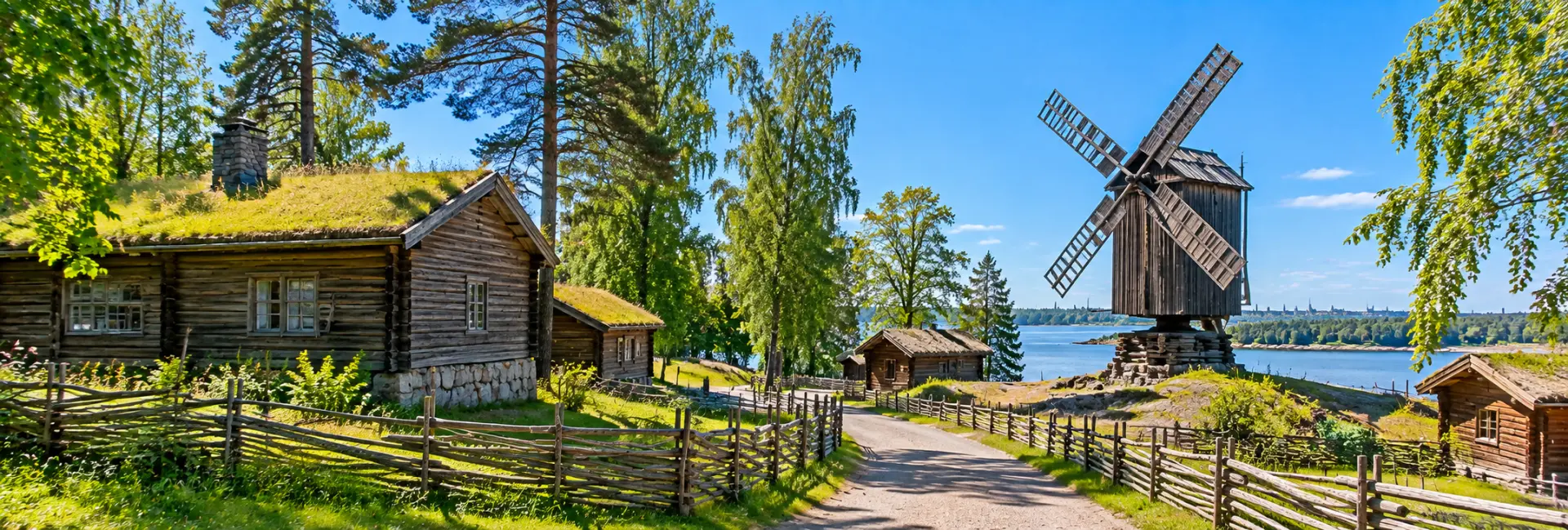
A short bus ride from central Helsinki, the wooded island of Seurasaari holds one of Finland's oldest and largest open-air museums, a collection of roughly 87 historic buildings gathered from across the country and reassembled among its pine forests and rocky shoreline. Farmhouses, manors, windmills and a seventeenth-century church stand scattered through the island's paths, giving visitors what is often described as rural Finland in miniature.
Seurasaari is as much a public park as a museum. The island itself is free to enter and open year-round, popular with Helsinki residents for walking, swimming and picnicking, while the fenced open-air museum within it charges admission and keeps shorter, seasonal hours.
History
From Cow Pasture to National Museum
The City of Helsinki bought the island, then known by its Swedish name Fölisön, in the 1870s. Before that it belonged to the nearby Meilahti Farm and was used simply as pasture for cattle. Its transformation into a museum began in 1909, when the ethnographer Axel Olai Heikel founded what became Finland's national open-air museum, part of a wider wave of open-air museums built across Scandinavia in the years before the First World War as expressions of Romantic nationalism, at a time when Finland was still a grand duchy of the Russian Empire.
The museum's first building group, the Niemelä Tenant Farm, arrived on the island in 1909, the same year the museum was founded. Further buildings, representing farmhouses, manors, windmills and workshops from every part of Finland, were added steadily over the following decades, with the most recent structures moved to the island in 2002.
A National Institution
Seurasaari was among the first of Scandinavia's open-air museums, following the model pioneered by Sweden's Skansen museum in Stockholm a couple of decades earlier. It marked its 110th anniversary in 2019, and management of the site today falls under the National Museum of Finland, alongside other institutions dedicated to the country's collective cultural heritage.
The Buildings
Karuna Church
The oldest structure in the museum is Karuna Church, a small wooden church built in the mid-1680s for the noble Horn family in Sauvo, in southwest Finland. It was moved to Seurasaari in 1912, shortly after a new stone church replaced it at its original site, and it remains a popular venue for summer weddings and concerts today.
Farmsteads and a Manor
Several farmsteads illustrate different regional building traditions, including the Antti, Ivars and Kurssi farmsteads, the last of which shows how weaving was once a common summer occupation in parts of Finland before textile factories took over the trade. The red-façaded Kahiluoto Manor House, furnished in period style, offers a contrasting look at the country's landed gentry, while the Halla house from Hyrynsalmi, in the Kainuu region, recalls the tradition of forest farmhouses that kept an open door for itinerant loggers, hunters and reindeer herders.
Windmills, a Sawmill and a Parsonage
Elsewhere on the island stand a scatter of windmills, a tar boat from the Oulu region, a water-powered sawmill dating to the seventeenth century, and a country store from 1871. A parsonage relocated from Iisalmi, complete with its garden, now houses the museum shop and is itself part of the visitor route.
Craft and Trade Demonstrations
Throughout the summer, museum staff occasionally demonstrate traditional forest trades once common across rural Finland, including log floating and other techniques tied to the water-powered sawmill and tar-boat exhibits elsewhere on the island, giving the static buildings a working context they would otherwise lack.
Wildlife and the Island Setting
Beyond its buildings, Seurasaari is known for its wildlife almost as much as its museum. Tame ducks, swans and geese gather around the white wooden bridge that connects the island to the mainland, and the surrounding forest is home to red squirrels and hares that have grown thoroughly accustomed to visitors, though feeding them anything beyond what is intended is discouraged. The island also has a beach, split into separate nude bathing sections for men and women, with mixed, swimsuit-required use on Wednesdays and Sundays.
A more recent addition, the Kalevalakehto installation from 2010, sits on the island's south bank; created by architecture and design students from Finland and the United States, it offers a quiet spot for reflection rather than a historic exhibit, showing that Seurasaari's landscape continues to gather new layers alongside its historic buildings.
Midsummer at Seurasaari
Seurasaari draws its largest crowds of the year at Midsummer, when a large bonfire is built on a small islet just off the coast and lit by a newlywed couple in a tradition that predates the museum itself. Thousands of visitors and locals watch the fire from the island's shore and from boats anchored nearby, making it one of the most distinctive Midsummer celebrations in the Helsinki region.
Visiting Today
The open-air museum operates on a seasonal schedule, typically open from mid-May to mid-September, with an entrance fee that is reduced outside peak summer months; the wider island itself remains free and accessible throughout the year. Guided tours in English generally run daily in summer, with tours in Finnish, Swedish and German offered as well, and a restaurant and café on the island serve visitors spending a full day exploring the grounds.
Best Time to Visit
Summer is the museum's high season, when all of the buildings are open, staff in period dress demonstrate traditional crafts, and the island's beaches and picnic areas are in full use. Visitors focused on the buildings themselves should plan around the mid-May to mid-September opening window, while those simply after a quiet walk can visit the island at any time of year, including in winter, when the snow-covered buildings take on their own charm.
Visitor Tips
- Cross the white wooden bridge from the mainland on foot; the island itself has no car access
- Wear comfortable shoes, since the museum's paths cover uneven ground through forest and rocky shoreline
- Join one of the daily guided tours for context on the buildings that individual signage does not always provide
- Keep some distance from the squirrels and waterfowl; they are used to visitors but should not be hand-fed
- Check opening months in advance, since the museum itself closes for winter while the island stays open
Nearby Attractions
- Tamminiemi, the former residence of Finnish President Urho Kekkonen, a short walk from the museum
- Helsinki Zoo on Korkeasaari island, reachable across the city by public transport
- The wider Seurasaari nature park and beaches surrounding the museum grounds
- Central Helsinki's museums and Market Square, a short bus ride from the island
FAQs about visiting Seurasaari Open-Air Museum
What is Seurasaari Open-Air Museum? +
It is Finland's national open-air museum, founded in 1909 on Seurasaari island, with about 87 historic buildings, including farmhouses, manors, windmills and a 1680s church, relocated from across the country.
Is there an entrance fee? +
The wider island is free to visit year-round, but the fenced open-air museum area with the historic buildings charges an admission fee, reduced outside the summer season.
When is the museum open? +
It typically operates from mid-May to mid-September; outside these months the buildings are closed, though the island itself remains open for walking.
How do I get to Seurasaari? +
The island is reached on foot across a white wooden bridge from the mainland, with bus number 24 and city bikes offering the easiest connections from central Helsinki.
Is Seurasaari suitable for children? +
Yes, the mix of tame wildlife, open meadows, a beach and hands-on demonstrations makes it a popular destination for families, alongside its historical exhibits.
What is the oldest building in the museum? +
Karuna Church, a wooden church built in the mid-1680s and moved to Seurasaari in 1912, is the museum's oldest structure.
What happens at Seurasaari on Midsummer? +
A large bonfire is lit on a small islet just off the coast by a newlywed couple, a tradition that draws thousands of spectators from the island's shore and from boats nearby.