
Table of Contents
Overview
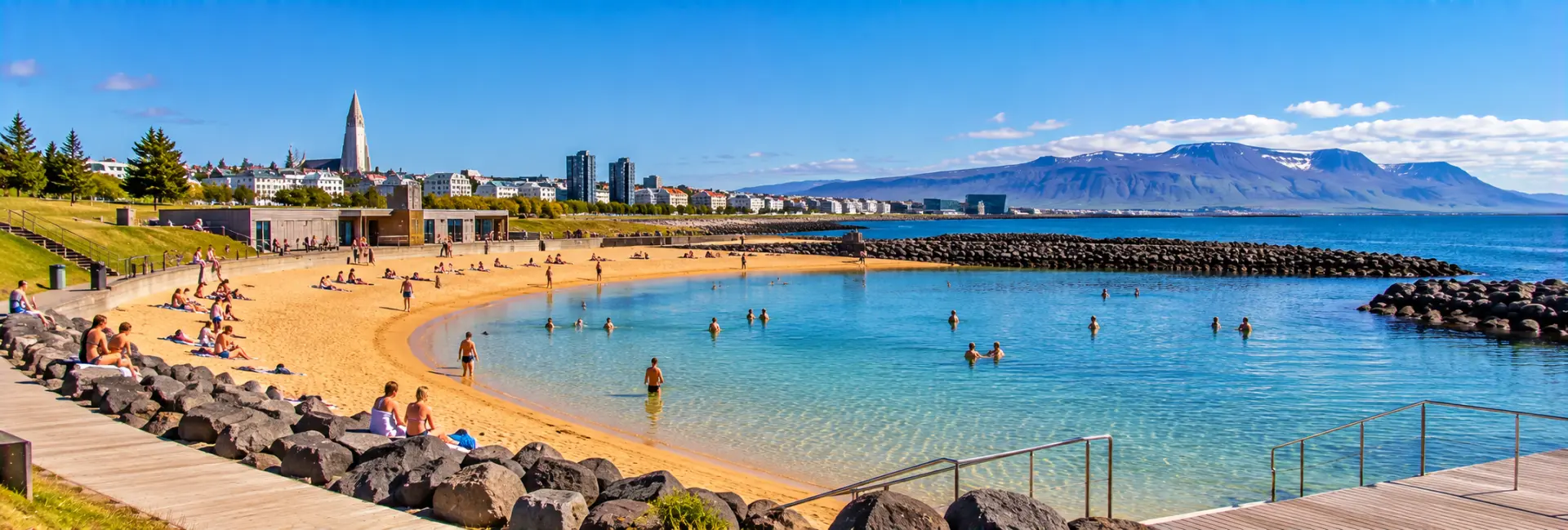
Nauthólsvík Geothermal Beach, known locally as Ylströndin, is a purpose-built beach on the southern shore of Reykjavik where geothermal hot water meets the cold North Atlantic. Golden sand, a sheltered lagoon and a row of hot tubs give the cove an unexpectedly Mediterranean feel, even though the open sea just beyond the seawall stays chilly all year.
The beach is run by the City of Reykjavik and is popular with residents as much as visitors. Locals come for summer sunbathing and winter sea swims, while visitors treat it as a relaxed alternative to the country's big spa complexes.
Together, the lagoon, hot tubs, steam bath and café-style kiosk make it easy to spend a short dip or a full afternoon here, right inside the city and close to the wooded hill of Öskjuhlíð.
History of the Beach
From Seaplane Base to Bathing Spot
Nauthólsvík has a longer story than its modern beach suggests. The bay once hosted facilities for seaplanes during the Second World War, when they played a role in the Battle of the Atlantic, and a memorial to that period stands beside the service building. The name itself means roughly bull hill bay.
Creating the Geothermal Beach
The geothermal beach was formally opened in 2000, with the service building following a year later. The idea was to bring back the sunbathing and sea bathing that people in Reykjavik had enjoyed in earlier decades. Designers built substantial seawalls to enclose a section of the bay and brought in golden sand to line the shore inside them.
Warm Water from the City
The warmth comes from the city's hot water supply, which feeds the hot tubs and flows into the bay. The enclosure is open to the fjord, so the tides mix hot water with seawater, which is why the temperature changes through the day and the year. Since opening, the beach has been refined with outdoor showers, paths and rest areas, and it now welcomes several hundred thousand visitors a year.
Design & How It Works
A Designed Landscape
Although it looks like a natural cove, the beach is a carefully engineered piece of landscape design covering roughly 4,000 square metres. Landscape architects at Landmótun led the design, working with engineers on the seawalls and with the architecture studio Arkibúllan on the service building. Their aim was to create a place for sunbathing, sea bathing and time outdoors that echoed the way people had used the bay in earlier decades.
Where the Hot Water Comes From
The beach makes use of overflow from the city's hot water tanks on Öskjuhlíð, the hill behind it. In summer the sea in the bay is usually only around 10 degrees, while the surplus hot water is considerably warmer, so combining the two produces a noticeably gentler swimming area. Reusing water that would otherwise go to waste is a neat example of how Reykjavik uses geothermal energy in everyday life.
How the Lagoon Stays Comfortable
The seawalls limit the exchange of water between the lagoon and the fjord, so the heat is not carried away immediately, while the opening to the bay lets the tides flow in and out and keeps the water fresh. A hot tub at the water's edge also helps to warm the lagoon. Because the mixing changes with the tide and the season, the temperature you feel on a given day can differ from the typical figures quoted for summer.
The Lagoon, Hot Tubs & Facilities
The Sea Lagoon
The lagoon sits inside the stone seawall and is the heart of the beach. In summer its temperature averages about 15 to 19 degrees Celsius, noticeably gentler than the open sea. It is heated only during opening hours in the summer months, so outside those times the water returns to the temperature of the bay.
Hot Tubs and Wading Pool
A long wading pool in front of the service centre sits at around 38 degrees, making it a warm place to sit and chat. A hot tub at the water's edge ranges between roughly 30 and 39 degrees depending on the mix of hot water and sea, and it also helps keep the lagoon warm. Moving between the cold sea and the hot tubs is a large part of the fun.
Steam Bath and Changing Rooms
The service centre has changing rooms, showers and a steam bath. Towels, swimwear and lockers can be rented on site if you have not brought your own.
Food and Extras
A kiosk sells ice cream, sweets and soft drinks. Gas grills can be booked at the reception desk, and the beach has a volleyball court that visitors can reserve for an hour at a time at no charge.
Ways to Experience It
Lagoon Swimming and Sunbathing
On a warm summer day the sand fills with sunbathers, and the lagoon is busy with people wading, floating and swimming short laps. Even when the air is cool, the combination of warm water and sunshine can feel surprisingly pleasant.
The Hot and Cold Routine
Many regulars alternate between the steam bath, the hot tub and the cold sea. A common approach is to warm up first, dip briefly in the cooler water and then return to the heat, always listening to your body and keeping sessions short.
Cold-Water Sea Swimming
Nauthólsvík is one of the best-known places in Reykjavik for open sea swimming, and a committed community of swimmers uses it all year. The sea can be close to freezing in winter, and the beach staff do not supervise swimming outside the seawall, so this is an activity for experienced swimmers who follow the safety guidelines.
Sailing and Group Activities
The neighbouring Siglunes Sailing Club, run by the city, offers summer sailing courses for children and a club for experienced teenagers. Groups from schools and youth clubs can also book visits to the beach.
Setting & Surroundings
The beach lies in a calm cove on Fossvogur bay, beneath the forested slopes of Öskjuhlíð hill. On one side you have forest and walking paths, and on the other you can look across the water to the opposite shore of the bay. Reykjavik's domestic airport is close by, so small aircraft occasionally pass overhead.
Despite sitting inside the city, the area feels like an outdoor retreat. Locals use the surrounding paths for walking, jogging and cycling, and the shoreline route connects the beach to other parts of Reykjavik. Reykjavik University is next door, and the Perlan landmark is only a short uphill walk away.
The mix of sand, sea, forest and city skyline is what gives Nauthólsvík its character, and it is especially appealing on long summer evenings when the light stays soft for hours.
Best Time to Visit
Summer
Summer is the busiest and most rewarding season. The lagoon is heated during opening hours, hours are longest, and the long daylight lets you visit in the late evening as well as during the day. Warm, still days attract large crowds, so expect a lively atmosphere.
Autumn, Winter and Spring
The beach stays open outside summer, but on a shorter schedule, and the lagoon is much colder because it is not actively heated. The hot tubs and steam bath remain the main attractions, and they feel wonderful on a crisp day. Winter also suits experienced sea swimmers who enjoy the contrast.
By Time of Day
Midday and sunny afternoons are the busiest. If you prefer a quieter soak, aim for shortly after opening or for the final hours before closing, though hours vary by season.
Visitor Tips
The beach is easy to enjoy, but a few rules and practical points are worth knowing before you go.
- Check the current hours and prices: opening times change between summer and the rest of the year and around public holidays, and the entrance fee schedule was revised in 2026, so confirm details on the official website.
- Shower first: as at all Icelandic pools, wash without swimwear before entering the hot tubs.
- No diving into the hot tubs: and keep soaks to a sensible length, drinking water between sessions.
- Children: kids under 10 must be accompanied by a swimmer aged 15 or over, and parents remain responsible for their children.
- Stay inside the seawall: lifeguards cover the area within the stone wall during opening hours, while the open sea beyond is unsupervised.
- Cold-water swimming: never swim alone, stay close to the shore, recognise the signs of hypothermia and call 112 in an emergency.
- Keep valuables safe: the beach is not responsible for personal belongings, so use the lockers, and note that photography is strictly prohibited in the changing rooms.
- Accessibility: there is accessible parking, wheelchair access to the service building and adapted toilets, but there is no ramp down to the sand and no step-free access to the steam bath or hot tubs.
- Bring or rent: pack a towel and swimsuit, or rent them at the desk.
Nearby Attractions
Nauthólsvík sits in a green, relaxed part of Reykjavik with several worthwhile stops within walking or cycling distance.
What to Pair with Your Visit
- Perlan: a short uphill walk from the beach, with a viewing deck, exhibitions and views over the city and bay.
- Öskjuhlíð: the forested hill behind the beach, criss-crossed with walking and cycling paths.
- Fossvogur coastal path: a shoreline route popular with walkers, joggers and cyclists, linking the beach with other neighbourhoods.
- Nauthóll restaurant: a nearby restaurant for a meal or coffee after your swim.
- Central Reykjavik: the Old Harbour, Hallgrímskirkja and the main shopping streets are roughly 3 kilometres away.
FAQs about visiting Nauthólsvík Geothermal Beach
What is Nauthólsvík Geothermal Beach? +
It is a man-made golden-sand beach in Reykjavik where hot water from the city's supply warms a seawall-enclosed lagoon, plus hot tubs and a steam bath. It is known locally as Ylströndin.
Where is it located? +
It is at Nauthólsvegur 102 on the southern shore of Reykjavik, below the wooded hill Öskjuhlíð and about 3 kilometres from the city centre.
How warm is the water? +
The lagoon averages about 15 to 19 degrees Celsius in summer, the wading pool is around 38 degrees and the shore hot tub ranges from roughly 30 to 39 degrees. In colder months the lagoon is not actively heated and feels much colder.
Is it free to enter? +
No, an entrance fee applies, with free entry for young children and reduced prices for older kids. Fees were updated in 2026, so check the official website for current prices.
Can I swim there all year? +
Yes, the beach stays open year-round, although with shorter hours outside summer. Cold-water swimmers use it in winter, but the sea outside the seawall is unsupervised and can be dangerous for beginners.
Do I need to bring a towel and swimsuit? +
You can bring your own or rent towels, swimwear and lockers at the service desk. Remember to shower without swimwear before using the hot tubs.
Is it suitable for children? +
Yes, though children under 10 must be accompanied by a swimmer aged 15 or over, and parents are responsible for supervising them.
What else can I do nearby? +
You can walk up to Perlan, explore the forest paths of Öskjuhlíð, follow the Fossvogur coastal path or head into central Reykjavik for sightseeing.
