Table of Contents
Overview
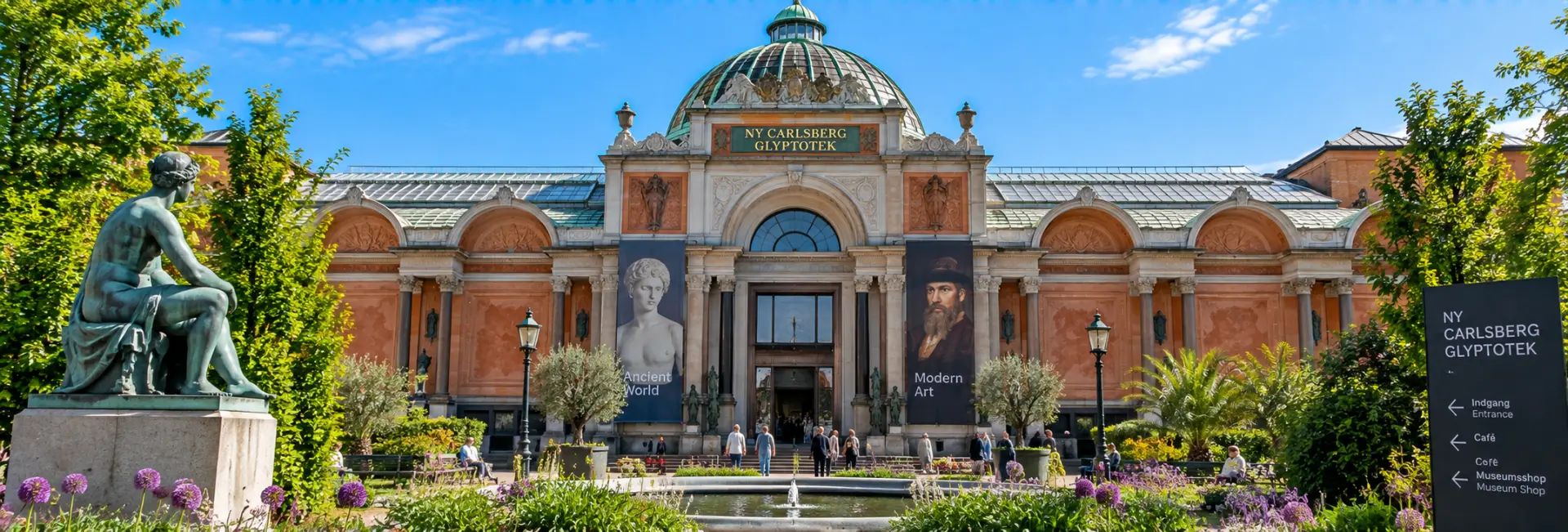
The Ny Carlsberg Glyptotek is one of Copenhagen's finest art museums, built around the private collection of Carl Jacobsen, son of the founder of the Carlsberg brewery. Just south of Tivoli Gardens, its ornate galleries hold one of Northern Europe's largest collections of ancient Mediterranean sculpture alongside 19th-century French and Danish painting and sculpture.
At the heart of the building sits the Winter Garden, a palm-filled, glass-domed courtyard that visitors often remember as vividly as the artworks around it. The combination of serious antiquities, celebrated modern sculpture, and a genuinely striking interior makes the Glyptotek a favorite stop for art lovers and casual visitors alike.
History of the Museum
A Brewer's Private Collection
Carl Jacobsen was a passionate collector of ancient and contemporary art, and by 1882 his private villa's winter garden had become so crowded with sculpture that he opened it to the public that same year. As his holdings kept growing, the house museum expanded repeatedly through the 1880s, eventually spilling well beyond what a private residence could reasonably hold.
A Gift to the Danish People
In 1888, Jacobsen and his wife Ottilia donated the collection to the Danish state on the condition that a dedicated public building be constructed to house it in Copenhagen. An architectural competition followed, and the resulting building, designed by Vilhelm Dahlerup, opened on Dantes Plads in 1897, initially displaying the modern French and Danish works.
Growth Through the 20th Century
As the antiquities collection continued to expand, architect Hack Kampmann added a new wing in 1906 to house the ancient sculpture, along with an enlarged and redesigned Winter Garden connecting the museum's original sections. Nearly a century later, in 1996, architect Henning Larsen added a further modern extension, giving the museum the four connected buildings visitors move through today.
Architecture & Building
The museum's oldest section, designed by Vilhelm Dahlerup, draws on Italian Renaissance palace architecture, with grand staircases and richly decorated galleries suited to the sculpture displayed within. Hack Kampmann's later wing takes a more restrained, monumental approach intended to evoke the ancient world its collections represent, while Henning Larsen's 1996 addition brings a lighter, more contemporary architectural language to the museum's newest rooms.
Linking these different eras of construction is the Winter Garden, a soaring glass-and-iron dome filled with palms and other greenery. Originally inspired by Jacobsen's own private conservatory, it remains the emotional center of the museum, offering a green, light-filled pause between galleries of stone and canvas.
Collections & Exhibits
Ancient Mediterranean Sculpture
The Glyptotek holds one of the largest collections of antique sculpture in Northern Europe, spanning ancient Egypt, Greece, Rome, and the Etruscan civilization. Egyptian galleries include sarcophagi, statuary, and painted mummy portraits, while the Roman collection is particularly known for its extensive series of portrait busts depicting emperors and other notable Romans.
French Sculpture and Painting
Carl Jacobsen had a special enthusiasm for French art, and the museum holds the largest collection of Auguste Rodin's sculpture outside France, alongside an important group of paintings by Paul Gauguin, along with works by Impressionist and Post-Impressionist artists such as Edgar Degas, Paul Cézanne, and Camille Pissarro.
Danish Golden Age and Modern Danish Art
Alongside its international holdings, the museum presents a strong collection of 19th-century Danish painting and sculpture from the so-called Danish Golden Age, tracing the development of a distinctly national artistic style during the same period Jacobsen was actively collecting.
- Etruscan antiquities, among the more extensive collections of their kind outside Italy
- The glass-domed Winter Garden, both an exhibition space and a destination in its own right
- A rooftop terrace in the newer wing, offering views back over the museum and surrounding rooftops
Must-See Highlights
With more than ten thousand objects on display, the Glyptotek rewards visitors who pick a few highlights rather than attempting to see everything in one visit.
- Auguste Rodin's sculptures, including works from the largest Rodin holdings outside France
- Edgar Degas's Little Dancer of Fourteen Years, one of the museum's best-known bronzes
- The extensive Gauguin paintings, offering a rare concentration of his work outside Paris
- Roman portrait busts, giving an unusually direct sense of individual faces from antiquity
- The Winter Garden itself, best appreciated by sitting for a few minutes among the palms
Ways to Experience It
Most visitors move independently through the museum's antiquities galleries before crossing into the French and Danish collections, using the Winter Garden as a natural midpoint to rest.
- Follow a self-guided route through the antiquities wing first, then the French and Danish galleries, to move roughly chronologically
- Join a guided tour or audio guide, when available, for deeper context on Carl Jacobsen's personal collecting choices
- Take a break in the museum café inside the Winter Garden, a popular spot even for visitors not touring the galleries
- Check the museum's current program for temporary exhibitions, which regularly supplement the permanent collection
Best Time to Visit
Because the collections are entirely indoors, the Glyptotek makes a reliable choice regardless of Copenhagen's weather, and its central location near Tivoli Gardens makes it easy to combine with a day exploring the surrounding area. Weekday mornings tend to be the quietest time to visit, particularly outside the summer tourist season.
The museum is closed on Mondays, so visitors should plan around that when building a Copenhagen itinerary, and it is worth checking for any discounted or free admission days offered periodically throughout the year.
Visitor Tips
A little planning helps visitors get the most out of the museum's galleries and its centerpiece courtyard.
- Confirm current opening hours, ticket prices, and any free-admission days on the museum's official website before visiting, since these can change
- Set aside at least two hours to see the antiquities and French and Danish collections without rushing
- The Winter Garden café is a good spot for a coffee break partway through a longer visit
- The museum is close to Copenhagen Central Station, making it a convenient stop right after arriving in the city
- Special exhibitions sometimes require a separate or combined ticket, so check current offerings when planning a visit
Nearby Attractions
The museum's location just south of Copenhagen's main train station puts several other sights within easy walking distance.
- Tivoli Gardens, the historic amusement park and pleasure garden, a short walk to the north
- Copenhagen Central Station, useful both for onward travel and as a landmark for orientation
- Christiansborg Palace and the Danish Parliament, a walk of about ten minutes toward the harbor
- The National Museum of Denmark, within easy reach on foot through the surrounding streets
- Vesterbro's restaurants and cafés, just southwest of the museum around Istedgade
FAQs about visiting Ny Carlsberg Glyptotek
What is the Ny Carlsberg Glyptotek known for? +
It is known for its combination of ancient Mediterranean sculpture, one of the largest Rodin collections outside France, and its glass-domed Winter Garden at the center of the building.
Who founded the museum? +
The museum grew out of the private art collection of Carl Jacobsen, son of the founder of the Carlsberg brewery, who donated it to the Danish state in 1888 on the condition that a public building be built to house it.
How much time should I plan for a visit? +
Around two hours covers the main highlights, though art enthusiasts can easily spend half a day moving through both the antiquities and the French and Danish collections.
Is the museum open every day? +
The Glyptotek is typically closed on Mondays, so it is worth checking current opening hours before planning a visit, especially if a specific day is important to your itinerary.
Is the Winter Garden worth visiting on its own? +
Yes, many visitors consider the glass-domed Winter Garden, with its palms and café, one of the highlights of the museum, distinct from the sculpture and painting galleries around it.
How do I get to the museum? +
It sits close to Copenhagen Central Station and Tivoli Gardens, making it an easy stop on foot for visitors arriving by train or exploring the city center.
Is the museum suitable for children? +
The dramatic ancient sculpture, Egyptian artifacts, and the greenery of the Winter Garden tend to appeal to curious children as well as adult art lovers, making it a reasonably family-friendly museum stop.
What should I combine with a visit to the Glyptotek? +
Its location makes it easy to pair with Tivoli Gardens, Copenhagen Central Station, or a walk toward Christiansborg Palace and the National Museum of Denmark.