Table of Contents
Overview
Östermalms Saluhall, known in English as the Östermalm Food Hall, is one of Stockholm's most celebrated indoor markets, occupying a landmark brick building on Östermalmstorg since 1888. It has long served as a gathering point for the city's best fishmongers, butchers, and delicatessens, drawing both discerning locals doing their weekly shop and visitors after a quick, high-quality bite.
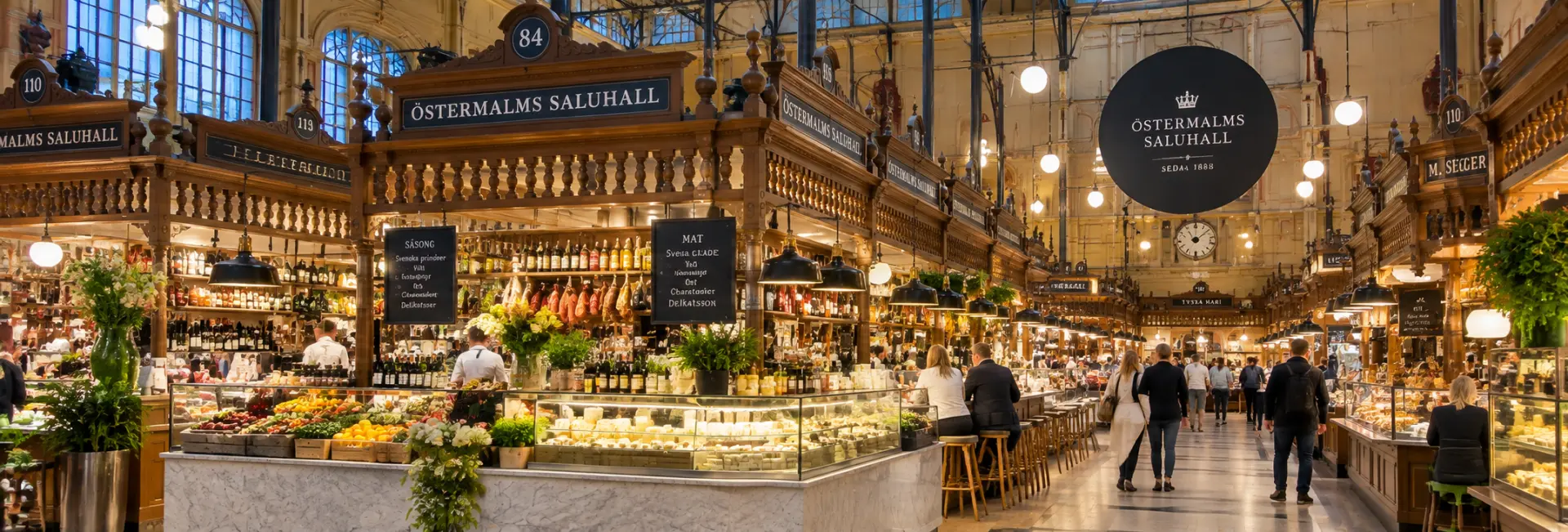
More than a place to buy groceries, the hall functions as a kind of edible museum of Swedish food culture, its wood-paneled stalls and restaurants tucked beneath a striking cast-iron roof. A major renovation completed in 2020 modernized the building while carefully preserving its 19th-century character, keeping it firmly on the list of Stockholm's most distinctive attractions.
History
A Fast-Built Landmark
The newly formed company Östermalm's Saluhallar AB commissioned architects Isak Gustaf Clason and Kasper Salin to design a food hall for the growing city, and remarkably little time passed between idea and opening. The building permit was submitted on March 13, 1888, approved just three days later, and construction was completed in only six months. The hall was inaugurated on November 30, 1888, with King Oscar II in attendance.
A Slow Start
Despite the grand opening, business was slow in the hall's early years, and many of its vendor stalls stood empty for some time. The turning point came in 1914, when the City of Stockholm bought the property and banned open-air food sales on the surrounding square, effectively pushing trade indoors and giving the hall the captive audience it needed to thrive.
Renovation and Renewal
By the 21st century, the aging building needed significant restoration work. Beginning in 2016, the City of Stockholm carried out a four-year renovation project, during which vendors relocated to a temporary pop-up hall across the square. The original building reopened on March 5, 2020, with its historic star-shaped floor plan restored and new dining and retail space added, including a connected hotel that opened the following year.
Architecture & Building
The building's design reflects the architectural fashions its two young architects had just encountered on study trips abroad. Kasper Salin designed the hall's cast-iron interior frame and roof, drawing inspiration from the monumental ironwork he had seen in France, including Gustave Eiffel's tower, then newly built in Paris. Isak Gustaf Clason, meanwhile, designed the exterior brick facade, taking cues from the medieval brick architecture he had studied in northern Germany.
The result is a building that reads as solid and fortress-like from the outside, with a medieval-style tower and red brick walls, while its interior opens into a light, airy hall structured around slender iron columns. It holds the Stockholm City Museum's highest classification for buildings of cultural and historical value, reflecting just how significant its architecture is considered within the city.
What to Find Inside
Stalls and Delicatessens
Around twenty vendors currently trade inside the hall, many of them family businesses that have operated here for generations. Counters are stocked with fresh fish and seafood, cured and smoked meats, aged cheeses, fresh produce, and specialty goods such as game meat, including reindeer and moose, alongside classic Swedish products like pickled herring and lingonberry preserves.
Restaurants and Cafes
Alongside the market stalls, the hall houses several restaurants and cafes where produce bought just meters away often ends up on the plate. Long-standing names like Lisa Elmqvist have been part of the hall's identity for years, serving fresh seafood to a mix of regulars and visitors.
- Fresh fish and seafood counters, including some of Stockholm's best-known fishmongers
- Charcuterie and cheese specialists, several run by the same families for decades
- Restaurants and wine bars serving Swedish and international dishes made from the hall's own ingredients
- Specialty shops selling chocolate, baked goods, and Swedish pantry staples
Must-Try Highlights
A visit built around lunch is one of the simplest ways to get the most out of the hall: pull up a stool at one of the seafood counters for a plate of fresh shrimp or a classic fish sandwich, then wander the stalls afterward with a coffee in hand. Sampling Västerbotten cheese, a Swedish specialty with a devoted local following, is a good way to bring a taste of the visit home.
Even for visitors not planning to buy anything, it's worth pausing to look up at the ceiling, where the cast-iron structure that so impressed the hall's original architects is still fully visible - a direct nod to the Eiffel Tower that inspired it.
Ways to Experience It
Most visitors treat the hall as a stop rather than a destination requiring hours, browsing the stalls, picking up a snack or lunch, and moving on. It works equally well as a quick fish sandwich break during a day of sightseeing or as a slower, sit-down lunch at one of its restaurants.
- Browsing the stalls for specialty ingredients to take home or cook with later
- Sitting down for lunch or dinner at one of the hall's restaurants
- Combining a visit with the surrounding Östermalm district, known for high-end shopping
- Visiting during weekday lunch hours for a quieter, more local atmosphere
Best Time to Visit
The hall is busiest around lunchtime on weekdays and throughout the day on Saturdays, when both locals doing their weekly shop and visitors overlap. Arriving earlier in the morning tends to mean a quieter, less crowded browsing experience, particularly if the goal is simply to see the building and stalls rather than eat.
Because it operates as a working market, the hall follows retail hours rather than typical museum hours, and it's closed on Sundays, so weekday or Saturday visits are the only options.
Visitor Tips
Prices inside the hall run higher than at an ordinary supermarket, reflecting both the location and the quality of what's on offer, so it's worth treating a visit as a food experience rather than a budget grocery run.
- Go hungry - the combination of stalls and restaurants makes it easy to graze your way through a visit
- Weekday mornings tend to be quieter than weekend afternoons
- The hall is closed on Sundays, so plan a visit for Monday through Saturday
- The nearest metro stop is Östermalmstorg, putting the hall within a few minutes' walk of the station
- Combine a visit with a walk through the surrounding Östermalm streets, known for boutique shopping
Nearby Attractions
The hall's location in Östermalm puts it close to several of the district's other notable sights and shopping streets.
- Östermalmstorg - the square the hall faces, home to a statue by sculptor Willy Gordon
- Humlegården - a large park a short walk away, popular with sunbathers and skateboarders alike
- Stureplan - Östermalm's well-known nightlife and shopping hub
- Nybrogatan and the surrounding streets - lined with boutiques and cafes worth a wander after a visit to the hall
FAQs about visiting Östermalm Food Hall
What is Östermalm Food Hall known for? +
It's a historic 1888 market hall known for high-quality fish, meat, cheese, and Swedish delicacies, along with a handful of well-regarded restaurants inside the same building.
How old is the building? +
The hall was built in just six months and inaugurated on November 30, 1888, making it well over 130 years old, though it underwent a major four-year renovation completed in 2020.
Is Östermalm Food Hall expensive? +
Prices run higher than a typical supermarket, reflecting the quality and specialty nature of what's sold, so it's best approached as a food experience rather than a budget shopping trip.
What's the best way to experience the hall? +
Many visitors treat it as a lunch stop, picking up a fish sandwich or seafood plate at one of the counters, then browsing the stalls for ingredients or gifts to take home.
Is Östermalm Food Hall open every day? +
No, it's closed on Sundays, so visits need to be planned for Monday through Saturday.
How do I get there? +
The hall is a short walk from Östermalmstorg metro station, right on the square of the same name in the Östermalm district.
Are there restaurants inside, or just market stalls? +
Both - alongside the fish, meat, and cheese counters, the hall houses several sit-down restaurants and wine bars, some run by long-standing vendor families.
What's nearby if I want to keep exploring? +
Humlegården park, the Stureplan nightlife district, and the boutique-lined streets around Nybrogatan are all within easy walking distance.