Table of Contents
Overview
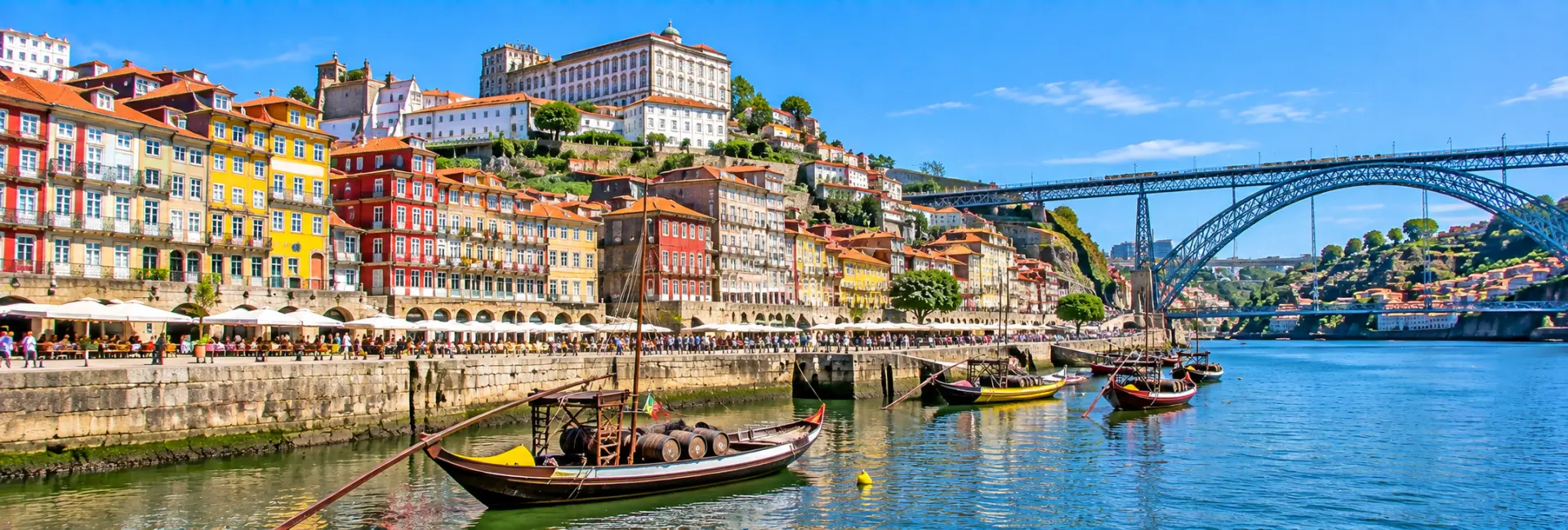
Ribeira is Porto's oldest riverside quarter, a tangle of narrow streets and steep stairways spilling down toward the Douro River. Its tightly packed, brightly painted townhouses and long history as a working port have made it the most photographed and most visited part of the city, forming the core of the historic center that UNESCO recognized as a World Heritage Site in 1996.
The district sits directly across the river from Vila Nova de Gaia and its port wine cellars, connected by the dramatic double-decked Dom Luís I Bridge that frames many of Ribeira's best-known views. Despite its popularity with visitors, the neighborhood remains a genuinely lived-in part of Porto, with residents, small shops, and family-run restaurants tucked between the tourist-facing riverfront and the quieter lanes above it.
History
A medieval trading quarter
Ribeira has been settled and worked since at least the Middle Ages, when its riverside position made it the natural center of Porto's trade, fishing, and shipbuilding activity. The name Ribeira simply means riverbank in Portuguese, and for centuries the quarter served as the point where goods, including wine destined for export, were loaded and unloaded along the Douro.
Wine, walls, and the Casa do Infante
Traditional flat-bottomed rabelo boats once carried barrels of port wine down the Douro from vineyards upriver to be stored and aged in the cellars across the water in Vila Nova de Gaia, a trade that shaped Ribeira's economy for generations. Remnants of the city's medieval defensive walls, known as the Muralha Fernandina, still stand in parts of the district, including along the stretch known as the Muro dos Bacalhoeiros. The Casa do Infante, a historic building in Ribeira long associated with the birth of Prince Henry the Navigator, served for a time as a customs house tied to this same riverfront trade.
A recognized World Heritage center
Ribeira's historic fabric, together with the wider old town of Porto, the Dom Luís I Bridge, and the Monastery of Serra do Pilar across the river, was inscribed as a UNESCO World Heritage Site in 1996 under the name Historic Centre of Oporto. The listing recognized the district's continuity as a living urban center shaped by centuries of trade along the river, rather than a preserved but abandoned relic.
Architecture & Streetscape
Ribeira's streets climb steeply away from the river, lined with tall, narrow townhouses in faded ochre, blue, and green, many finished with traditional glazed tiles known as azulejos. The density and irregularity of the layout, shaped by centuries of organic growth rather than formal planning, is part of what gives the district its distinct character compared to Porto's more orderly downtown streets.
Rising above the district, the Dom Luís I Bridge was completed in 1886 and designed by Théophile Seyrig, an engineer who had worked with Gustave Eiffel, its double-deck iron structure carrying both road traffic and the city's metro line across the Douro. The Guindais Funicular, first built in 1891 and rebuilt in 2004, offers a quick descent down the steep hillside between the upper town at Batalha and the riverside at Ribeira, following the line of the old medieval walls along the way.
Key Landmarks
- Praça da Ribeira, the district's central square, is marked by a modern bronze water feature known locally as O Cubo and lined with some of the neighborhood's most popular bars and restaurants.
- The Casa do Infante, tied to the traditional birthplace of Prince Henry the Navigator, offers a glimpse into Porto's medieval trading history.
- The Cais da Ribeira riverside promenade runs along the water's edge, giving direct views across to the port wine cellars of Vila Nova de Gaia.
- The Dom Luís I Bridge frames the view from almost anywhere along the waterfront and can be crossed on foot for views back over the district.
Food, Wine & Local Life
Ribeira holds one of the largest concentrations of bars and restaurants in Porto, many specializing in traditional Portuguese dishes such as bacalhau, or salt cod, alongside fresh seafood pulled from the nearby coast. Riverside tables along the Cais da Ribeira fill quickly in the evening, particularly in summer, when the promenade becomes one of the liveliest spots in the city after dark.
Because of its historic role in the port wine trade, the district also makes a natural starting point for exploring the wine culture across the river, with several companies offering short boat trips or tastings that begin from Ribeira's waterfront.
Ways to Experience It
- Walk the riverside promenade at your own pace, taking in views of the bridge and the colorful facades along the water.
- Climb the steep streets away from the river to see the quieter, more residential side of the district beyond the main tourist strip.
- Join a walking tour, widely available in Porto, for context on the district's medieval history and trading past.
- Take a short river cruise from Ribeira's docks, a popular way to see the district's waterfront and the six bridges of Porto from the water.
- Ride the Guindais Funicular between Ribeira and the upper town for a quick, scenic alternative to the steep stairs.
Best Time to Visit
Late spring through early autumn brings the warmest weather and the liveliest atmosphere along the riverfront, though this is also when Ribeira is at its most crowded with visitors. Early morning is the quietest time to walk the district's streets and photograph its facades before the day's crowds and restaurant tables fill the waterfront.
Evenings, particularly around sunset, are popular for the views across the river toward Gaia and the bridge, when the light on the colorful buildings and the port wine cellars opposite is at its best.
Visitor Tips
- The steep, cobbled streets and stairways throughout Ribeira mean comfortable, sturdy footwear is essential.
- Restaurant prices directly on the riverside square and promenade tend to be higher than those just a block or two uphill, so it is worth exploring slightly further from the water for better value.
- The Guindais Funicular offers a practical way to avoid the steepest climbs between Ribeira and the upper town, for a small fare.
- Mind personal belongings in the busiest parts of the district, as with any popular tourist area with dense crowds.
- Crossing the lower deck of the Dom Luís I Bridge on foot gives some of the best photo angles back over Ribeira's rooftops.
Nearby Attractions
- Vila Nova de Gaia and its port wine cellars sit directly across the Douro, reachable on foot via the Dom Luís I Bridge.
- The Porto Cathedral stands on the hill just above Ribeira, a short but steep walk from the riverside.
- São Bento Railway Station, known for its tiled murals, is a short walk uphill from the district.
- The Stock Exchange Palace, or Palácio da Bolsa, sits just at the edge of Ribeira, within easy walking distance of the riverfront.
FAQs about visiting the Ribeira District
Why is the Ribeira district famous? +
It is Porto's oldest riverside quarter, known for its colorful medieval streets, its role in the historic port wine trade, and its status as the core of a UNESCO World Heritage-listed historic center.
Is the Ribeira district free to visit? +
Yes, walking through the district, along the riverside promenade, and across the Dom Luís I Bridge is free, though individual attractions, tours, and restaurants within it charge separately.
How do I get from Ribeira to Vila Nova de Gaia? +
The Dom Luís I Bridge connects the two directly, either on foot across its lower deck or via the metro line that runs along the upper deck.
What is the fountain in Praça da Ribeira? +
It is a modern bronze water feature known locally as O Cubo, designed by artist José Rodrigues, standing in the district's central riverside square.
Is Ribeira safe to visit at night? +
Yes, it is one of Porto's busiest nightlife areas, with the riverside promenade remaining lively into the evening, though visitors should take the usual precautions common to any crowded tourist district.
How long should I spend exploring Ribeira? +
Most visitors spend one to two hours walking the district's main streets and riverfront, though it is easy to spend longer with a meal, a river cruise, or a wander up into the quieter side streets.
Is the Ribeira district hilly? +
Yes, the streets rise steeply from the riverside toward the upper town, and comfortable footwear is recommended for exploring beyond the flat waterfront promenade.