Table of Contents
Overview
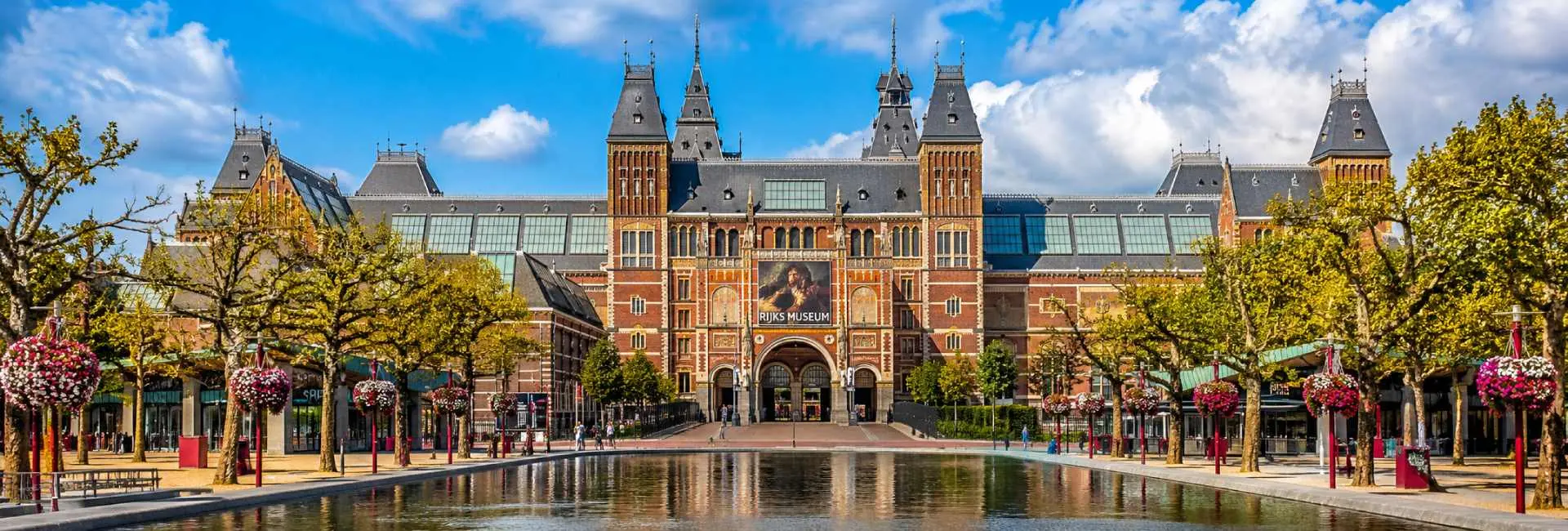
The Rijksmuseum is the Netherlands' national museum of art and history, and the single most visited museum in the country. Housed in a grand 19th-century building on Amsterdam's Museumplein, it tells the story of Dutch art and culture across 800 years, from medieval objects to contemporary design.
Its centerpiece is an unmatched collection of Dutch Golden Age painting, including Rembrandt's The Night Watch and works by Vermeer, Hals, and Steen, but the museum's reach extends to decorative arts, Asian art, historical artifacts, and one of the world's great print collections.
History
Founding and Early Years
The Rijksmuseum traces its origins to 1798, when the national art collection was first established in The Hague under the Batavian Republic. In 1808, King Louis Napoleon Bonaparte moved the collection to Amsterdam and installed it in the Royal Palace on Dam Square, then still known as the town hall.
The museum's very first acquisition, a modest painting called The Swan by Jan Asselijn, remains part of the collection today. As Amsterdam's holdings grew through donations and bequests, it became clear that a purpose-built national museum was needed.
Building the Cuypers Museum
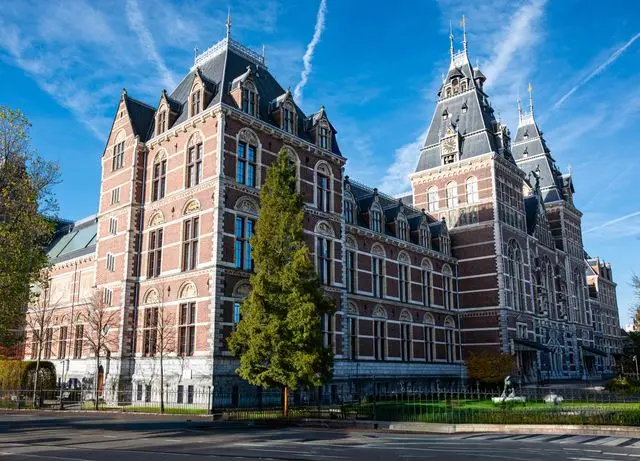
After a lengthy and contested design competition, architect Pierre Cuypers was chosen to design the new building. Construction began in 1876, and the museum officially opened on 13 July 1885. Cuypers combined Gothic and Renaissance elements with rich national symbolism, a style so church-like that critics in the largely Protestant Netherlands nicknamed it "Cuypers' Cathedral."
The design proved controversial enough that King William III reportedly refused to attend the opening, said to have dismissed the building as looking like a convent. Despite the early criticism, the building became a beloved Amsterdam landmark and was designated a national monument in 1970.
Growth Through the 20th Century
Through the early 1900s, the Rijksmuseum's galleries expanded and its holdings diversified, laying the groundwork for specialist departments such as Asian art. During the Second World War, the museum closed and evacuated its most valuable works for safekeeping, reopening once the country had been liberated.
The 2003–2013 Renovation
By the early 2000s the building needed a major overhaul, and the museum closed most of its galleries for a decade-long renovation led by Spanish architects Cruz y Ortiz. The project restored much of Cuypers' original layout and decoration, uncovering painted ceilings and walls that had been covered over for decades, while adding a modern underground entrance atrium and a new wing for Asian art.
The Rijksmuseum reopened on 13 April 2013 to enormous public interest, and has drawn more than two million visitors a year in most years since.
Architecture & The Building
Cuypers' Original Design
Pierre Cuypers designed the Rijksmuseum as two large squares, each built around an inner courtyard and framed by towers, with a passage running straight through the middle of the building. He also designed the ornamentation throughout, from stained-glass windows to painted murals celebrating Dutch history, art, and craftsmanship.
The building's neo-Gothic and neo-Renaissance styling, along with its overt national symbolism, was intended as a statement about a unified, modern Dutch identity, even though its heavily churchlike appearance unsettled many at the time.
The Cruz y Ortiz Renewal
The 2003–2013 renovation by Cruz y Ortiz stripped back later additions to reveal Cuypers' original spatial plan and decorative details, while reworking the museum for modern use. The most visible change was the creation of a bright, open entrance atrium beneath the building's central passage, along with the glass-roofed Asian Pavilion added to the south side.
French interior architect Jean-Michel Wilmotte, known for his work at the Louvre, chose the interior color palette and gallery furnishings, drawing inspiration from Cuypers' original scheme.
Notable Interior Features
- The Gallery of Honour, a soaring central hall leading to The Night Watch
- The Cuypers Library, a historic reading room with cast-iron balconies, one of the largest art history libraries in the world
- Restored ceiling paintings and mosaics uncovered during the renovation
- Stained-glass windows depicting scenes from Dutch history and the arts
The Night Watch
The Painting
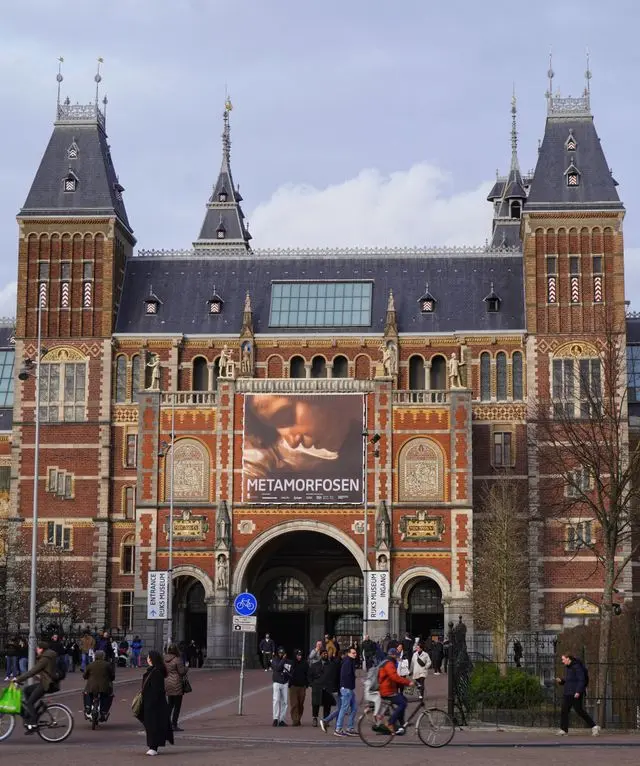
Rembrandt completed The Night Watch in 1642 as a group portrait of an Amsterdam civic militia company, commissioned for their guild hall. Rather than posing the subjects formally, Rembrandt depicted them in dynamic motion, using dramatic light and shadow, an approach that broke sharply from convention and cemented the painting's reputation as a masterpiece.
The painting has had an eventful history: it was trimmed on all sides in 1715 to fit a new location, damaged by a knife attack in the 1970s, and remains, technically, on permanent loan from the City of Amsterdam rather than owned outright by the museum.
Operation Night Watch
Since 2019, the Rijksmuseum has carried out the largest research and restoration project ever undertaken on the painting, known as Operation Night Watch. Conducted in a glass-walled studio in full view of visitors, the project has used high-resolution imaging, scientific analysis, and artificial intelligence to study the painting's condition and even digitally reconstruct the sections trimmed away in 1715.
The painting remains on public display for most of the project, letting visitors watch the conservation work in progress alongside the finished masterpiece.
Collection Highlights
Dutch Golden Age Painting
The Rijksmuseum's core strength is 17th-century Dutch painting, with rooms dedicated to Rembrandt, Johannes Vermeer, Frans Hals, and Jan Steen. Beyond The Night Watch, highlights include Vermeer's The Milkmaid and Woman Reading a Letter, and Hals' lively group portraits.
Decorative Arts and Design
Alongside painting, the museum holds extensive collections of furniture, silverware, ceramics (including Delft Blue pottery), glasswork, and historical costume, tracing Dutch craftsmanship from the medieval period into the 20th century.
Asian Art
The dedicated Asian Pavilion, added during the 2013 renovation, houses sculpture, ceramics, and decorative objects from China, Japan, India, and Southeast Asia, reflecting centuries of trade and cultural exchange through the Dutch East India Company.
History and Prints
The museum's history galleries cover ship models, weaponry, and objects tied to major events in Dutch history, including the country's colonial past. Its print room holds one of the world's largest collections of works on paper, from Rembrandt etchings to historical maps.
Key Areas & Galleries
The Gallery of Honour
This grand processional hall on the first floor forms the spine of the Golden Age collection, lined with masterworks that build up to The Night Watch, displayed in its own dedicated space at the far end.
Chronological Floors
The museum's permanent collection is arranged as a single chronological journey: the ground floor covers 1100 to 1600, the first floor is devoted to the 17th-century Golden Age, and the second floor spans the 18th to 20th centuries, including Art Nouveau, Art Deco, and early modern design.
The Asian Pavilion
Reached via an underwater passage from the main building, this glass-and-stone pavilion is a self-contained gallery for the museum's Asian art collection, designed to feel like a separate architectural experience within the visit.
Philips Wing
A separate wing used for major temporary exhibitions, often featuring loaned works or thematic shows that run alongside the permanent collection.
The Rijksmuseum Gardens
Surrounding the building is a 14,500-square-metre historic garden, based on an 1901 design by Pierre Cuypers and restored during the 2013 renovation. Free to enter without a museum ticket, it functions as an open-air sculpture garden, with fragments of historic Dutch buildings, statues, fountains, and a pond set among formal hedges and lawns.
The gardens are a quiet spot to rest between gallery visits and offer some of the best photo angles of the building's towers and façade.
Ways to Experience It
Most visitors explore the museum independently, but there are several ways to go deeper into the collection depending on time and interest.
- Self-guided visit using the free museum app or floor plan, focusing on personal highlights
- Official audio tour, available in multiple languages, covering key masterpieces in detail
- Guided group tours, including specialized themes such as the Golden Age or Asian art
- Rijksstudio, the museum's online platform for exploring high-resolution scans of the collection before or after a visit
- Family-oriented trails and activity backpacks designed to engage children with the collection
Best Time to Visit
By Season
The Rijksmuseum is a year-round destination, but spring and summer bring the heaviest crowds, in line with Amsterdam's broader tourist season. Late autumn and winter, aside from major holidays, tend to be quieter and more comfortable for unhurried gallery viewing.
By Time of Day
Arriving right at opening time or in the final couple of hours before closing generally means smaller crowds, particularly around The Night Watch and the Gallery of Honour. Midday, especially on weekends, is consistently the busiest period.
Visitor Tips
- Book timed-entry tickets online in advance; the museum is one of Amsterdam's most visited sites and walk-up queues can be long
- Check the official Rijksmuseum website for current opening hours, ticket prices, and any age-based discounts, as these are reviewed periodically
- Photography without flash is generally permitted in the permanent collection, but rules can vary for temporary exhibitions
- Plan for at least two to three hours to see the main highlights, longer if visiting the Asian Pavilion and temporary exhibitions as well
- The museum is fully accessible, with lifts, accessible restrooms, and wheelchairs available on request
- Large bags and luggage typically need to be checked in at the cloakroom before entering the galleries
Nearby Attractions
The Rijksmuseum sits on Museumplein, Amsterdam's cultural square, putting several major sights within easy walking distance.
- Van Gogh Museum, home to the world's largest collection of Van Gogh's work
- Stedelijk Museum, Amsterdam's museum of modern and contemporary art
- Vondelpark, the city's largest and most popular public park
- Concertgebouw, one of the world's leading classical concert halls
Frequently Asked Questions
What is the Rijksmuseum known for? +
It's the Netherlands' national museum, best known for its collection of Dutch Golden Age painting, including Rembrandt's The Night Watch and works by Vermeer and Hals, alongside decorative arts, history, and Asian art collections.
How much time should I plan for a visit? +
Most visitors need two to three hours to see the main highlights. Art lovers or those also visiting the Asian Pavilion and a temporary exhibition should allow closer to half a day.
Do I need to book tickets in advance? +
Yes, timed-entry tickets booked online in advance are strongly recommended, since the museum is among the most visited attractions in Amsterdam and walk-up availability is not guaranteed.
Is the Rijksmuseum suitable for children? +
Yes. The museum offers family trails, activity backpacks, and child-friendly explanations throughout the galleries, making it manageable for families with kids of various ages.
Can I see The Night Watch right now, or is it being restored? +
The painting remains on public display for most of the ongoing Operation Night Watch restoration project, which takes place in a glass-walled studio visitors can view directly.
What's the best time to avoid crowds? +
Arriving close to opening time or in the last couple of hours before closing tends to be quieter than midday, especially on weekends and during the spring and summer tourist season.
What else is nearby worth visiting? +
The Van Gogh Museum, Stedelijk Museum, and Vondelpark are all within a short walk on and around Museumplein.