Table of Contents
Overview
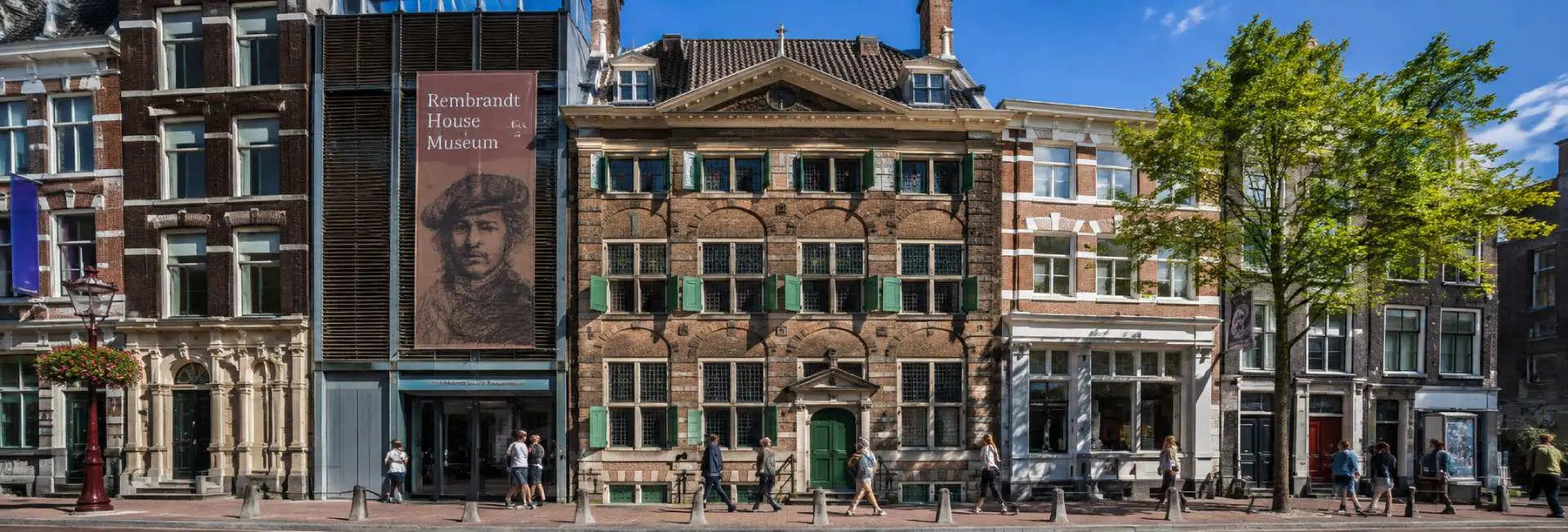
The Rembrandt House Museum, known in Dutch as Museum Het Rembrandthuis, is the Amsterdam townhouse where the painter Rembrandt van Rijn lived and worked at the height of his career. Rather than a conventional gallery, it is a reconstructed 17th-century home, complete with the artist's living quarters, studio, and the possessions listed when his belongings were auctioned off after his bankruptcy.
Set on Jodenbreestraat in the heart of the old Jewish quarter, the museum pairs an intimate look at Rembrandt's domestic life with one of the largest collections of his etchings in the world. It's a chance to stand in the actual rooms where paintings like The Night Watch took shape.
History
A Golden Age Purchase
Built in 1606, the year of Rembrandt's own birth, the house stood in what was then a fashionable and up-and-coming part of Amsterdam. Rembrandt bought it in 1639 for the considerable sum of 13,000 guilders, moving in with his wife, Saskia Uylenburgh, a burgomaster's daughter from Leeuwarden.
Life, Loss, and Legacy
The house was the setting for major turns in Rembrandt's personal life. His son Titus was born there, and Saskia died in one of its rooms in 1642. Over nearly two decades in residence, Rembrandt produced some of his most celebrated works and led a busy workshop of pupils in the studios upstairs.
Bankruptcy and Departure
Rembrandt's lavish spending on art and curiosities eventually outpaced his income, and by 1656 he could no longer pay his creditors. He filed for bankruptcy, and officials drew up a detailed inventory of the house's contents ahead of a public auction. He left the house for good around 1658, moving to a smaller rented home in the Jordaan district, where he died in 1669.
From Ruin to Museum
For roughly 250 years after Rembrandt's departure, the house passed through a string of private owners and fell into disrepair. Spurred by the 1906 tercentenary of Rembrandt's birth, the city of Amsterdam bought the building in 1907 and restored it under architect Karel de Bazel. It opened as a museum on 10 June 1911, with Queen Wilhelmina among its first visitors.
Architecture & Interior Reconstruction
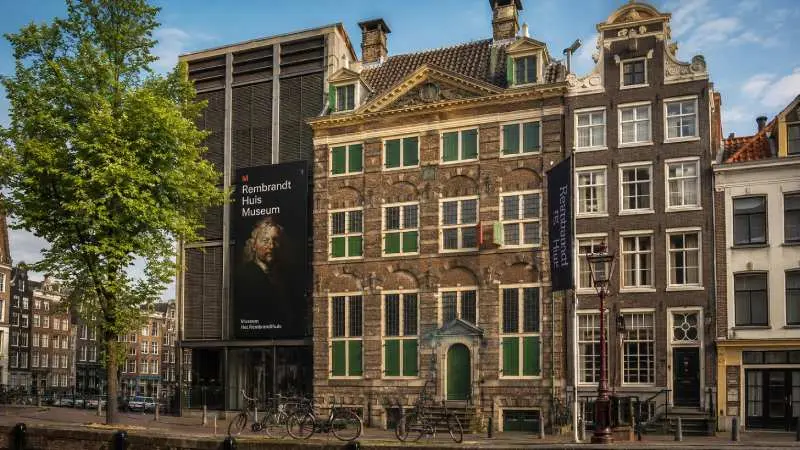
The house itself is a tall, double-width Dutch Golden Age townhouse, still marked with its 1606 construction date in gold on the facade. Its generous footprint, built across two adjoining plots, reflects the wealth Rembrandt was chasing when he bought it.
Almost none of the original furniture survived, but the bankruptcy inventory drawn up in 1656 gave curators an unusually precise record of what each room once held. Using that document, the museum's rooms have been furnished with close period equivalents, recreating the sitting room, the art cabinet, and Rembrandt's studio as they would have looked in his day. A modern extension, added alongside the historic house in 1998, houses additional galleries and visitor facilities without altering the original building.
Collections & Exhibits
The Etchings
The museum holds a near-complete collection of Rembrandt's etchings, numbering more than 250 prints across the various states and editions he produced. Seeing them displayed in the rooms where many were created gives a rare sense of continuity between the art and its origins.
Paintings and the Wider Circle
Alongside the etchings, the museum shows a small number of paintings and drawings by artists who shaped Rembrandt's own development, including his teachers and the pupils who trained in his workshop. These works help place Rembrandt within the artistic community that surrounded him in Amsterdam.
Temporary Exhibitions
The 1998 extension gave the museum a dedicated wing for temporary exhibitions, often focused on Rembrandt's contemporaries or artists he influenced, adding a changing layer to the permanent house tour.
The Studio & Etching Demonstrations
Rembrandt's reconstructed studio is one of the highlights of a visit, filled with ground pigments, brushes, and an etching press typical of the period. It's set up to look as though the artist has just stepped away, with natural light falling across the workspace much as it would have in the 1640s.
The museum regularly runs live etching demonstrations in this space, where staff explain and show the printmaking techniques Rembrandt himself relied on. These sessions are a good way to understand the physical, hands-on side of his art beyond the finished prints on the walls.
Ways to Experience It
- Self-guided visit through the historic house and studio at your own pace
- Audio tours available in multiple languages, covering the history of individual rooms and objects
- Live etching demonstrations included with general admission
- Focused art history tours for visitors who want deeper context on specific works
- Temporary exhibitions in the modern wing, rotating throughout the year
Best Time to Visit
The museum tends to be quieter than Amsterdam's largest attractions, so long queues are rarely an issue, but visiting early in the day still means smaller crowds in the compact historic rooms. Weekday mornings are generally the calmest time to explore the studio and living quarters without feeling rushed.
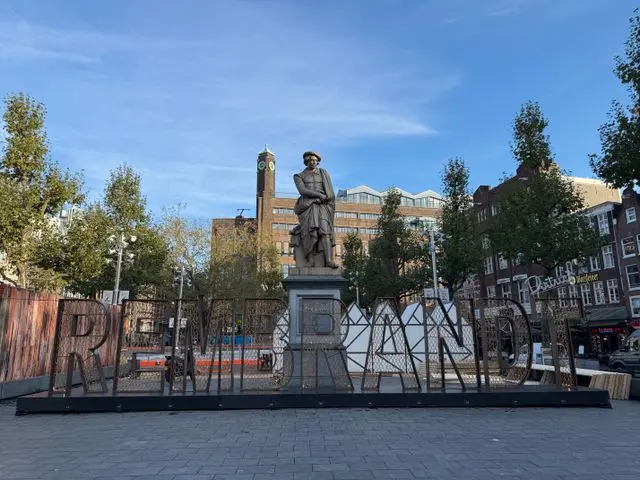
Because it's an indoor museum, it works well as a rainy-day option or a midday break from walking Amsterdam's canals. Combining it with a morning at the nearby Waterlooplein market makes for an easy half-day itinerary in the old Jewish quarter.
Visitor Tips
- Rooms and staircases are narrow and historic, so allow extra time and expect some low doorways and steep steps
- Check the official website before visiting, as opening hours and admission prices can change and the museum closes or shortens hours on certain public holidays
- Booking tickets online in advance can help you skip the ticket line, especially in summer
- Pets are not permitted inside, with the exception of service animals
- The etching demonstrations run at set times, so check the daily schedule if that's a highlight for you
Nearby Attractions
- Waterlooplein flea market, Amsterdam's oldest open-air market, just steps from the museum
- Jewish Historical Museum and the Portuguese Synagogue, both within the historic Jewish quarter
- Nieuwmarkt square, with cafes, restaurants, and the medieval Waag building
- Amsterdam Centraal Station, roughly a 15-minute walk away, with onward tram and metro connections
Common Questions about Rembrandt House Museum
What is the Rembrandt House Museum? +
It's the Amsterdam house where the painter Rembrandt van Rijn lived and worked between 1639 and around 1658, now restored and reopened as a museum showing his living quarters, studio, and etchings.
How much time should I plan for a visit? +
Most visitors spend around 1 to 1.5 hours moving through the historic house, studio, and etching collection, plus extra time for any temporary exhibition in the modern wing.
Do I need to book tickets in advance? +
It isn't always required, but booking online ahead of time is recommended, particularly in busy summer months, since it can help you avoid waiting in the ticket line.
Is the museum suitable for children? +
Yes, especially with the live etching demonstrations, though the narrow staircases and low doorways in the historic house are worth keeping in mind for very young children or strollers.
Is the house wheelchair accessible? +
Parts of the historic building have narrow stairs and doorways that limit full accessibility, so visitors with mobility needs should check current accessibility details on the official website before visiting.
How do I get there? +
The museum sits on Jodenbreestraat in central Amsterdam, within a five-minute walk of the Waterlooplein and Nieuwmarkt tram and metro stops, and about 15 minutes on foot from Amsterdam Centraal Station.
What's the best time of day to visit? +
Weekday mornings tend to be the quietest, since the museum doesn't draw the same crowds as some of Amsterdam's larger attractions.
What can I combine this visit with? +
The Waterlooplein market, the Jewish Historical Museum, and Nieuwmarkt square are all within easy walking distance, making it simple to build a half-day around the museum.