Table of Contents
Overview
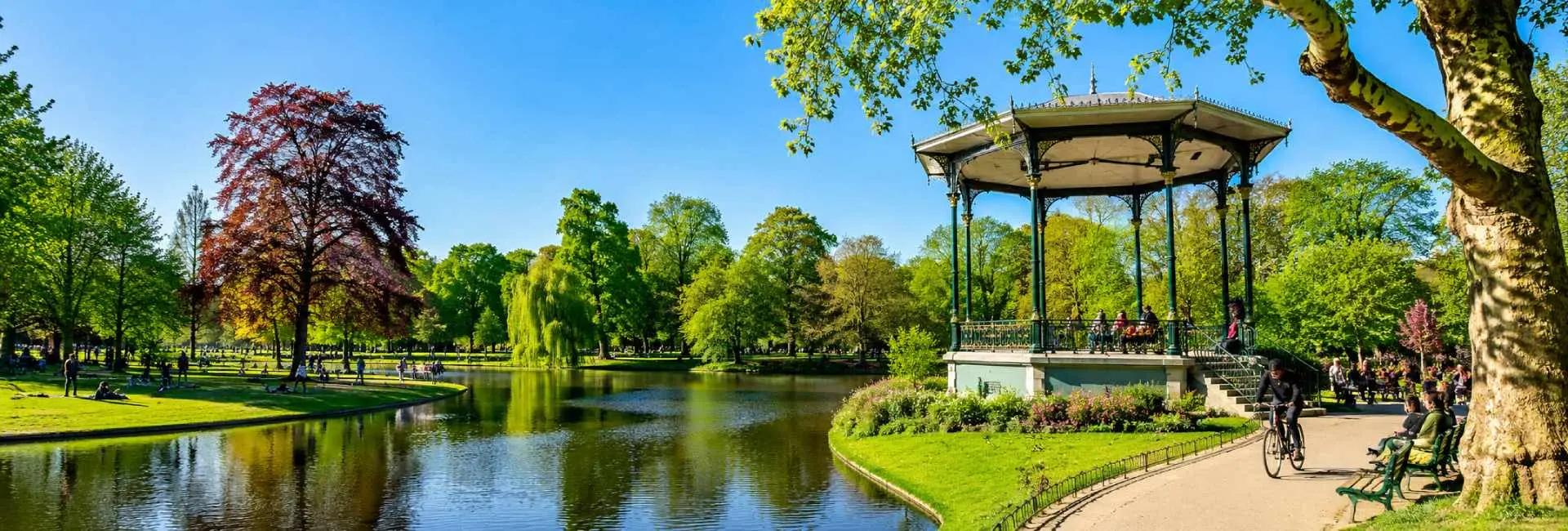
Vondelpark is Amsterdam's largest and most visited public park, a sprawling 47-hectare green space just west of the Museumplein and Leidseplein. Laid out in the 19th century in the fashionable English landscape style, it draws around 10 million visitors a year, making it one of the busiest urban parks in Europe.
The park is free to enter and open 24 hours a day, and functions as much as a living room for the city as it does a tourist attraction. Locals jog, picnic, cycle, and gather here alongside travelers who come to see its ponds, sculptures, and open-air theatre.
History
Founding and Early Years
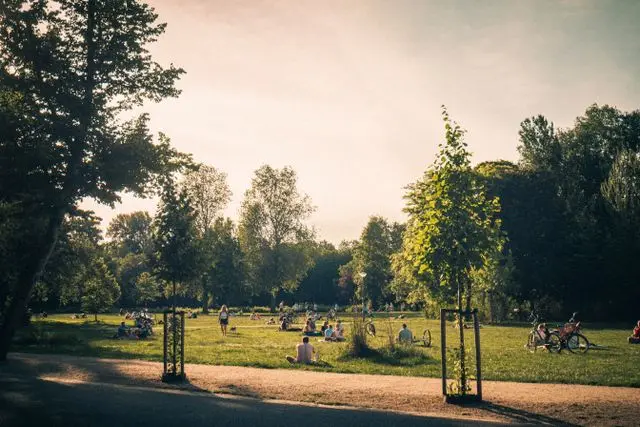
In 1864, a committee of prominent Amsterdam citizens set out to give the growing city a proper public park. They purchased peat meadowland just outside the Singelgracht, then Amsterdam's outer canal, and hired landscape architect Jan David Zocher, along with his son Louis Paul Zocher, to design it.
The first section opened to the public on 15 June 1865 under the name Nieuwe Park, or "New Park," offering paths for walking and horseback riding.
Growth and Renaming
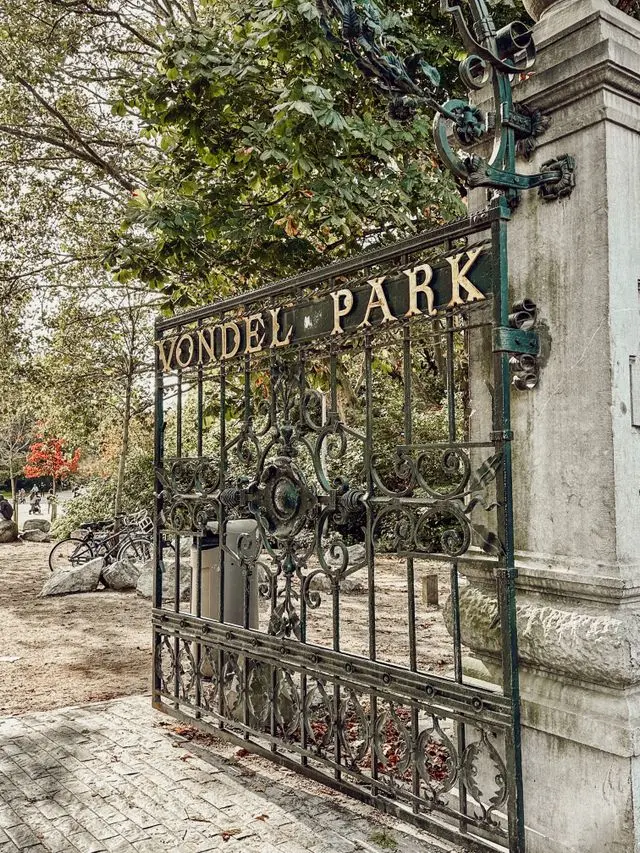
In 1867, a bronze statue of the celebrated Dutch poet and playwright Joost van den Vondel was placed in the park, and it was renamed Vondelpark in his honor. As the park's popularity grew, the committee raised further funds to expand it, and by 1877 it had reached its present-day size of 47 hectares.
Financial pressures eventually made the park too costly for its founding association to maintain, and ownership passed to the City of Amsterdam in 1953, which has managed it as public parkland ever since.
National Monument Status
In 1996, Vondelpark was designated a Rijksmonument, or national monument, becoming one of the first city parks in the Netherlands to receive this recognition. The listing reflects both the cultural-historical value of Zocher's original landscape design and the park's enduring role in Amsterdam's civic life.
Despite more than a century of growth around it, the park's structure has remained largely faithful to its 19th-century layout, which is part of why the designation still holds meaning today.
Design & Layout
Zocher designed Vondelpark in the English landscape style, popular across 19th-century Europe for its deliberately informal, natural-looking scenery. Winding paths, ponds, and clusters of trees were arranged to create the illusion of untouched countryside, offering city residents a sense of escape without ever leaving Amsterdam.
The park stretches roughly 2 kilometers in length and 400 meters in width, threaded with footpaths and wide cycling lanes; motorized traffic is not permitted inside. An unusual quirk of the design is that the park's peat soil has gradually sunk over time, leaving its ponds sitting around 2.5 meters below sea level.
Key Areas & Landmarks
The Pavilion
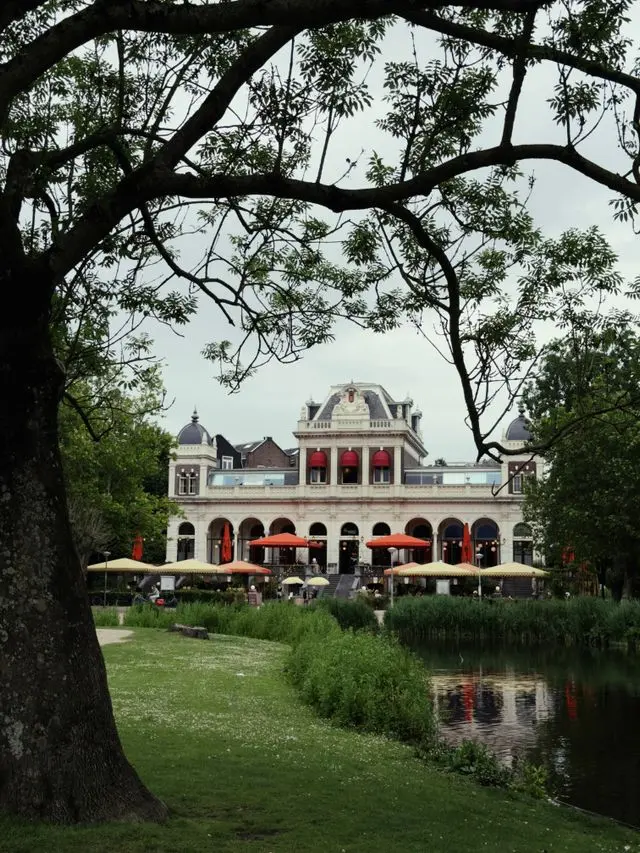
Built in 1878 and designed by architect W.H. Hamer Jr., the Pavilion is one of the park's oldest structures. It has been reimagined over the years and today houses a restaurant with a terrace overlooking the pond, popular for dining with a view.
Blauwe Theehuis
The Blauwe Theehuis, or "Blue Tearoom," is a round modernist building completed in 1937 by the architectural office Baanders. Its distinctive circular shape and elevated terrace make it a favorite meeting spot, especially in warmer months.
Open-Air Theatre
From May to September, the Openluchttheater hosts free concerts, dance, and theatrical performances against a backdrop of trees and greenery, drawing crowds throughout the summer festival season.
Rose Garden
Created in 1936 at the center of the park, the rose garden adds a splash of color and structured planting among the more naturalistic surrounding landscape.
Art in the Park
- A bronze statue of poet Joost van den Vondel, sculpted by Louis Royer in 1867, with a pedestal designed by Pierre Cuypers
- "The Fish," an abstract concrete sculpture from 1965 by Pablo Picasso
- "Mama Baranka," a 1985 bronze by Amsterdam sculptor Nelson Carrilho depicting a Caribbean woman
These works, scattered along the park's paths, turn a stroll through Vondelpark into an informal outdoor sculpture walk as much as a nature escape.
Ways to Experience It
- Walk or jog the winding paths that loop through ponds, lawns, and tree-lined avenues
- Cycle along the wide, car-free bike paths that cross the length of the park
- Picnic or sunbathe on the open lawns during warmer months
- Catch a free performance at the open-air theatre between May and September
- Relax at one of the park's cafes, kiosks, or the Blauwe Theehuis terrace
- Bring children to the playgrounds and paddling pool near the Groot Melkhuis
Best Time to Visit
Vondelpark is open all year and has something to offer in every season, but late spring through early autumn is when it's liveliest, with the open-air theatre in full swing and lawns filled with picnickers. Weekday mornings tend to be quieter than weekend afternoons, which draw the biggest local crowds.
Visiting in autumn or winter offers a calmer, more contemplative side of the park, with fewer people and a different kind of scenery as the trees change and the ponds still reflect the surrounding landscape.
Visitor Tips
- Entry is free and the park never closes, so it can be visited at any hour, though it's best enjoyed in daylight
- Trams and bicycles share paths with pedestrians, so stay aware while walking or cycling through
- Bring a picnic or pick up food from one of the park's small cafes and kiosks rather than expecting formal dining options everywhere
- Cash isn't always necessary, but carrying a card for the cafes and kiosks is a good backup
- Keep noise levels considerate, especially in the evening, since the park is also a residential neighborhood's backyard
- Combine a visit with nearby museums to make the most of a day in this part of the city
Nearby Attractions
- Museumplein, home to the Rijksmuseum, Van Gogh Museum, and Stedelijk Museum
- Leidseplein, Amsterdam's lively square packed with restaurants, bars, and theatres
- Concertgebouw, the city's renowned classical music concert hall
- De Pijp neighborhood, known for the Albert Cuyp Market and diverse dining scene
FAQs About Vondelpark Amsterdam
What is Vondelpark best known for? +
It's Amsterdam's largest and most visited public park, known for its 19th-century English landscape design, open-air theatre, and role as a central gathering spot for both locals and visitors.
Is Vondelpark free to visit? +
Yes, entry is completely free and the park is open 24 hours a day, year-round.
How much time should I spend at Vondelpark? +
An hour or two is enough for a relaxed walk through the main areas, but visitors who want to picnic, catch a performance, or explore at a slower pace often spend half a day or more.
What's the best time of day or year to visit? +
Late spring through early autumn brings the liveliest atmosphere, including free performances at the open-air theatre, while weekday mornings offer a quieter experience in any season.
How do I get to Vondelpark? +
The park sits within easy walking distance of the Museumplein and Leidseplein, and several tram lines stop near its edges, making it simple to reach from most parts of central Amsterdam.
Is Vondelpark suitable for children? +
Yes, the park has playgrounds and a paddling pool near the Groot Melkhuis, along with wide, flat paths that make it easy to navigate with strollers.
Are bikes allowed in Vondelpark? +
Yes, wide cycling paths run through the park and motorized traffic is not permitted, making it a popular route for cyclists as well as pedestrians.
What should first-time visitors know before going? +
The park can get very crowded on sunny weekends, so arriving earlier in the day or visiting on a weekday offers a more relaxed experience, and it's worth bringing cash or a card for the small cafes and kiosks scattered throughout.