Table of Contents
Overview
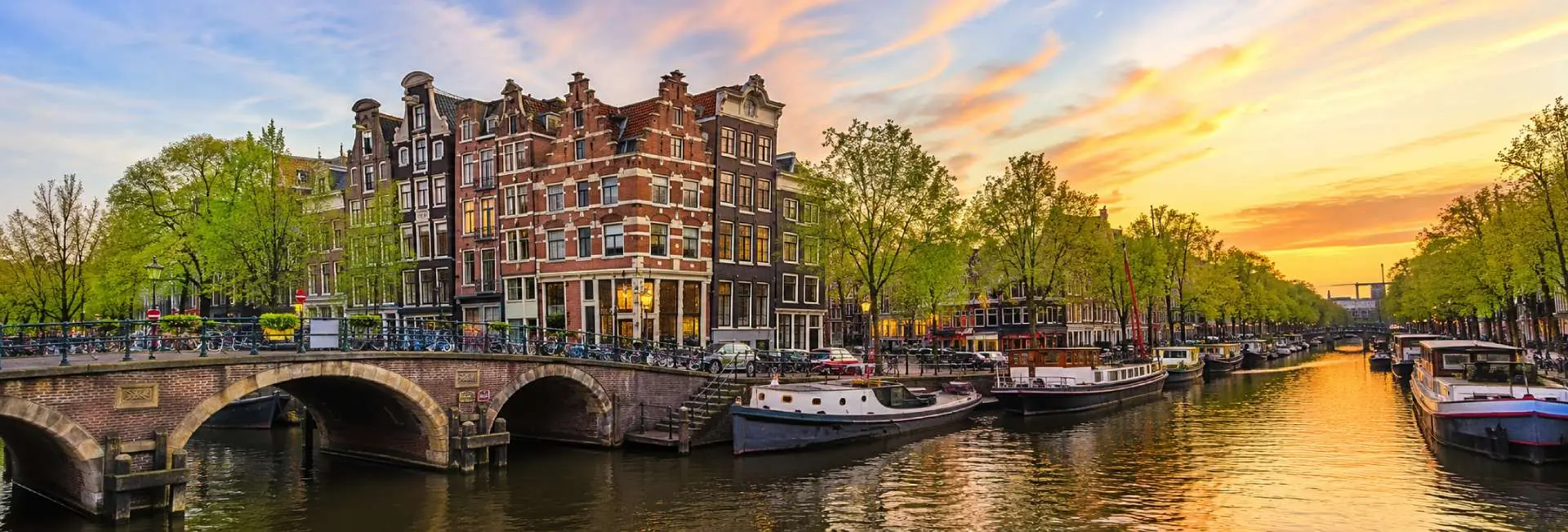
Amsterdam's Canal Ring, known locally as the Grachtengordel, is the network of concentric waterways that curls around the city's historic centre. Dug largely in the 17th century, it was one of the most ambitious urban planning projects of its time, combining housing, defence, drainage, and transport into a single coordinated design.
Today the ring still functions much as it was originally intended, lined with more than 1,500 protected canal houses, tree-shaded quays, and hump-backed bridges. It remains the postcard image of Amsterdam and the area most visitors spend their time exploring on foot, by bike, or by boat.
History
Amsterdam's Canal Ring, known locally as the Grachtengordel, is the network of concentric waterways that curls around the city's historic centre. Dug largely in the 17th century, it was one of the most ambitious urban planning projects of its time, combining housing, defence, drainage, and transport into a single coordinated design.
Today the ring still functions much as it was originally intended, lined with more than 1,500 protected canal houses, tree-shaded quays, and hump-backed bridges. It remains the postcard image of Amsterdam and the area most visitors spend their time exploring on foot, by bike, or by boat.
UNESCO World Heritage Status
In 2010, UNESCO added the Amsterdam Canal Ring to its World Heritage List under the official name "Seventeenth-Century Canal Ring Area of Amsterdam inside the Singelgracht." The listing recognises it as an outstanding example of large-scale urban planning from the era, still functioning largely as designed four centuries later.
- Inscribed in August 2010
- Covers the ring of canals inside the Singelgracht, including Herengracht, Keizersgracht, and Prinsengracht
- Recognised for its hydraulic engineering, town planning, and architectural coherence
- Includes more than 1,500 individually listed monumental buildings
The Three Main Canals
Herengracht
Herengracht, the "Gentlemen's Canal," was the first and most prestigious of the three, home to the city's wealthiest merchants, bankers, and regents. Its grandest stretch, the Golden Bend, is still lined with some of the most impressive private facades in the city.
Keizersgracht
Keizersgracht, the "Emperor's Canal," runs between Herengracht and Prinsengracht and is the widest of the three main waterways. Named after Holy Roman Emperor Maximilian I, it mixes grand residences with smaller merchant houses and now hosts several small museums.
Prinsengracht
Prinsengracht, the "Princes' Canal," is the longest and outermost of the three, named for the Prince of Orange. It has a more relaxed, everyday character than its inner neighbours, with houseboats, cafes, and the Westerkerk and Anne Frank House among its landmarks.
Architecture & Canal House Design
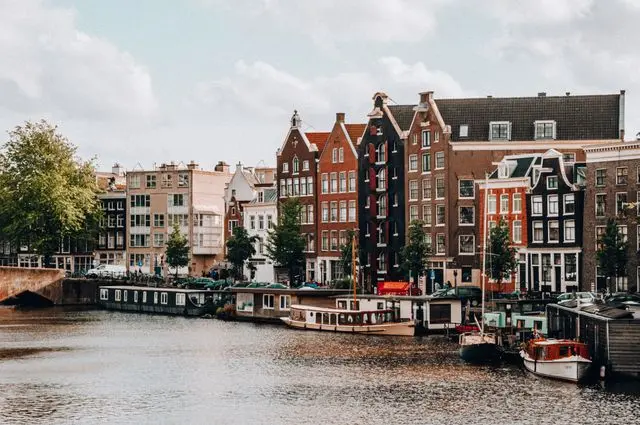
Canal houses were built on narrow, deep plots, which is why so many Amsterdam facades look tall and slender from the street. Early building regulations limited each family to a single plot, forcing architects to build upward and backward rather than outward, giving the ring its distinctive rhythm of narrow, gabled fronts.
Gables and Facades
The decorative gable at the top of each house was as much a status symbol as it was practical, disguising the roofline and giving merchants a way to show off their wealth and taste. Styles evolved over the centuries from simple stepped gables to more ornate neck and bell gables, and later to flatter, classically inspired cornices.
Practical Details
Many houses lean slightly forward, an intentional feature that made it easier to hoist furniture and goods up to the higher floors using a beam and hook near the roofline, since staircases inside were often too narrow and steep for large items.
The Golden Bend
The Golden Bend, or Gouden Bocht, is the curve of Herengracht between Leidsestraat and Vijzelstraat, and it is the single richest stretch of architecture in the entire Canal Ring. When the city expanded its fortifications in the 1660s, planners set aside wider plots here specifically for Amsterdam's most affluent residents.
Buyers with enough money could purchase two or three plots side by side, resulting in unusually wide, double-fronted mansions with grand staircases, carved pediments, and classical detailing inspired by ancient Greek and Roman architecture. Many of these houses now serve as offices, consulates, or small museums rather than private homes, but their facades remain largely intact.
Notable Landmarks
- Westerkerk – a 17th-century church on Prinsengracht with the tallest church spire in Amsterdam, near a small statue commemorating Anne Frank
- Anne Frank House – the canalside building where Anne Frank and her family hid during the Second World War, now a museum
- Reguliersgracht – the "Canal of Seven Bridges," where seven bridges line up in a single view
- Magere Brug (Skinny Bridge) – a narrow wooden drawbridge over the Amstel, one of the most photographed bridges in the city
- Het Grachtenhuis – a small museum on Herengracht dedicated to the history of the canals themselves
Ways to Experience It
The Canal Ring rewards slow exploration, and there is no single "right" way to see it. Most visitors combine a couple of these approaches over the course of a visit rather than relying on just one.
- Walking – the most flexible option, letting you pause at gables, bridges, and small museums at your own pace
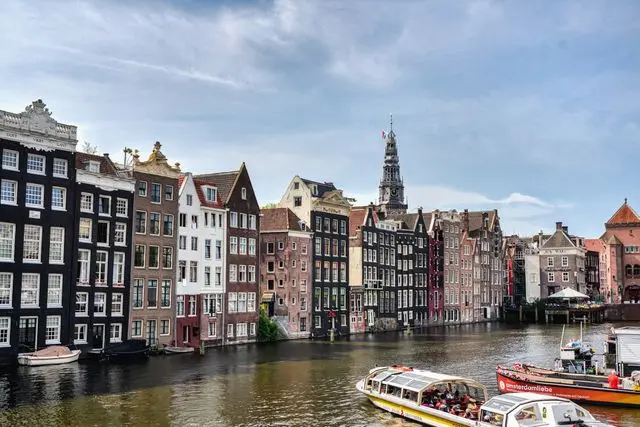
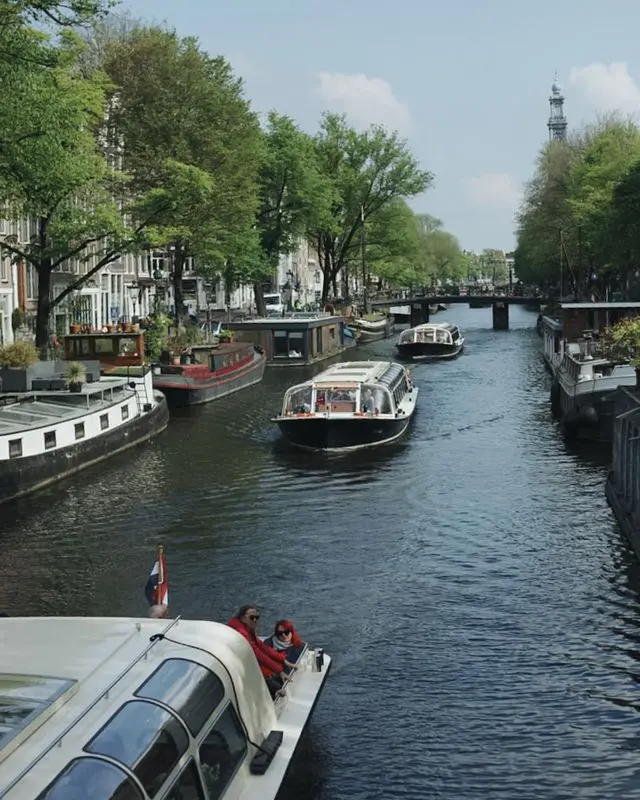
- Canal cruise – gives the water-level view the original 17th-century residents would have had, and is an easy way to cover a lot of ground
- Cycling – a common local way to get around, though it takes some confidence to navigate narrow bridges and cobblestones
- Guided walking tour – useful for understanding the history and spotting architectural details a first-time visitor might miss
Best Time to Visit
The Canal Ring is worth visiting in any season, but spring and early summer bring blooming trees along the water and long daylight hours for evening walks. Early morning is a good time to see the canals quiet, before boat traffic and crowds build up.
Winter has its own appeal, with fewer tourists and, in rare cold snaps, the possibility of frozen canals used for skating. Whatever the season, current opening hours, canal cruise schedules, and any special events should be checked against official sources closer to the date of the visit.
Visitor Tips
- Wear comfortable shoes; cobblestones and old bridges make for uneven walking
- Watch for cyclists when crossing streets and bridges, as bikes have the right of way in much of the city
- Book popular sights like the Anne Frank House well in advance, since tickets are timed and sell out
- Look up as you walk; many of the most interesting architectural details are near the rooflines
- Consider pairing a canal walk with the Jordaan neighbourhood just outside the ring for a quieter, more local atmosphere
Frequently Asked Questions
Why is Amsterdam's Canal Ring a UNESCO World Heritage Site? +
It was inscribed in 2010 for being one of the best-preserved examples of large-scale 17th-century urban planning in the world, still functioning much as it was originally designed.
How many canals make up the Canal Ring? +
The core of the ring is formed by three main canals: Herengracht, Keizersgracht, and Prinsengracht, built in concentric arcs around the older Singel canal.
What is the Golden Bend? +
The Golden Bend, or Gouden Bocht, is a stretch of Herengracht between Leidsestraat and Vijzelstraat where the city's wealthiest merchants built the grandest, widest canal houses in Amsterdam.
How old are the canal houses? +
Most of the canal houses still standing date from the 17th and 18th centuries, though many have been restored or had their interiors modernised over the years.
Can you visit the inside of canal houses? +
Most canal houses are private homes, offices, or consulates and aren't open to the public, but a handful, including small museums like Het Grachtenhuis, do welcome visitors.
What's the best way to see the Canal Ring? +
Walking gives the most flexibility to stop and look closely, while a canal cruise offers the water-level perspective the original residents had; many visitors combine both.
How long does it take to walk the Canal Ring? +
A relaxed walk covering the main highlights can take a couple of hours, though the district rewards a slower pace over a half-day or more if time allows.
Is the Canal Ring the same as the Jordaan? +
No. The Jordaan is a separate, more low-key neighbourhood just outside the formal Canal Ring, originally built as a working-class district for artisans and labourers.