Table of Contents
Overview
The Van Gogh Museum in Amsterdam holds the largest collection of Vincent van Gogh's work anywhere in the world, with more than 200 paintings, some 500 drawings, and around 750 letters. Rather than being a generic art museum that happens to own some van Goghs, the entire institution is built around telling the story of one artist's life and evolution, from his dark, earthy early studies in the Netherlands to the blazing colour and turbulent brushwork of his final years in France.
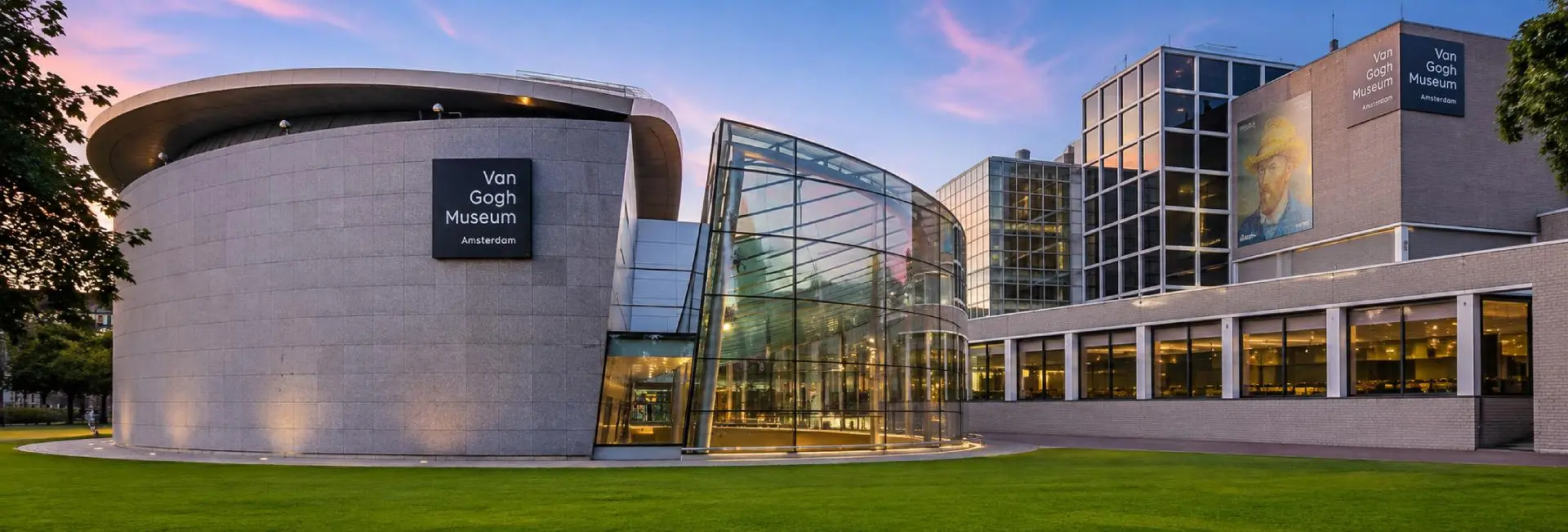
Located on Museumplein in Amsterdam South, alongside the Rijksmuseum, the Stedelijk Museum, and the Concertgebouw, the museum is one of the most visited art institutions in the world. Visitors move chronologically through the galleries, seeing not just the finished paintings but the letters, sketches, and personal history that shaped them, making it as much a biography as an art collection.
History
A Family Collection
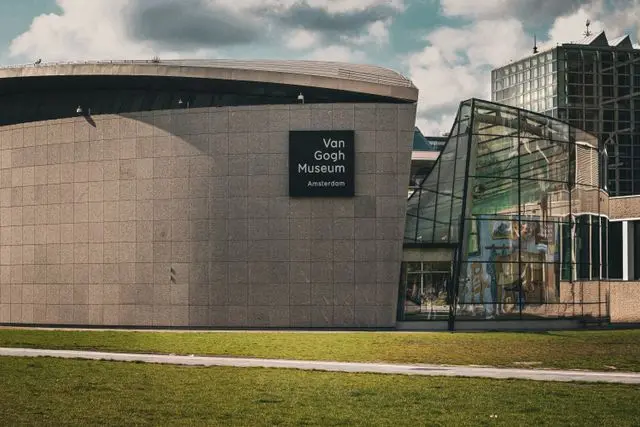
When Vincent van Gogh died in 1890, most of his work passed to his brother Theo, who died just six months later. The paintings and letters then passed to Theo's widow, Jo van Gogh-Bonger, who spent decades promoting and selling Vincent's work, gradually building his posthumous reputation. Her son, Vincent Willem van Gogh, inherited the remaining collection and, wary of it being scattered through sales, chose instead to keep it intact and made it publicly accessible on loan to Amsterdam's Stedelijk Museum for years.
Founding the Museum
In 1962, the family transferred the entire collection, over 200 paintings, roughly 500 drawings, and hundreds of letters, to a newly created Vincent van Gogh Foundation. In exchange, the Dutch state agreed to construct and operate a dedicated museum so the works would remain permanently and publicly accessible. Architect Gerrit Rietveld was commissioned to design the building in 1963, but he died the following year, and construction continued without him.
Opening and Expansion
The museum finally opened its doors on 2 June 1973, in a ceremony attended by Queen Juliana of the Netherlands. Growing visitor numbers soon outgrew the original building, so in 1999 an elliptical exhibition wing designed by Japanese architect Kisho Kurokawa was added for temporary shows. A further glass-fronted entrance hall, connecting the two structures, opened to the public in September 2015.
The Collection
The permanent collection is arranged chronologically, allowing visitors to trace van Gogh's development as an artist alongside the events of his life. Highlights include The Potato Eaters, the dark, socially conscious painting van Gogh considered his first true masterpiece, and Sunflowers, one of the most recognisable still lifes in Western art. Also on display are The Bedroom, depicting his room in the Yellow House in Arles, and Almond Blossom, painted to celebrate the birth of his nephew and namesake.
Van Gogh's Contemporaries
Beyond van Gogh's own work, the museum holds paintings by artists he admired or worked alongside, including Paul Gauguin, Henri de Toulouse-Lautrec, Camille Pissarro, and Claude Monet. These works are displayed in dialogue with van Gogh's own paintings, showing the artistic influences that shaped his style, including his fascination with Japanese woodblock prints.
Letters and Drawings
The museum's holdings of van Gogh's letters, most written to Theo, are considered one of the richest surviving records of any artist's inner life, documenting his technique, ambitions, and struggles in his own words. Alongside the letters, hundreds of drawings and sketches reveal the working process behind his finished paintings.
Architecture: Two Buildings, One Museum
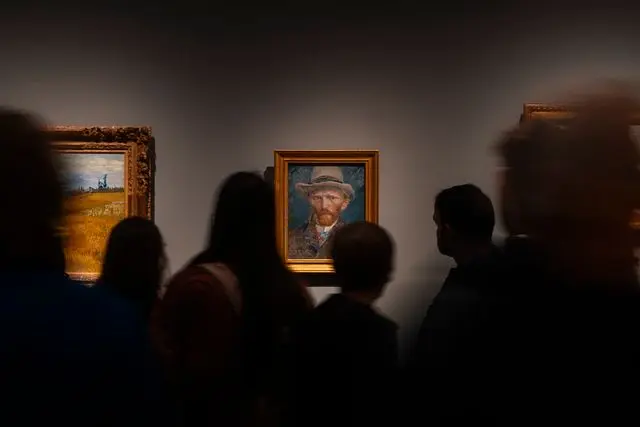
The museum's main building was designed by Gerrit Rietveld, a leading figure in the De Stijl movement known for clean geometric forms, and completed in 1973 after his death. This building houses the permanent collection across four floors, moving visitors chronologically through van Gogh's career.
Behind it stands a strikingly different structure: an elliptical exhibition wing designed by Japanese architect Kisho Kurokawa and opened in 1999, used for temporary exhibitions. Its curved, asymmetrical form was designed as a deliberate contrast to Rietveld's rectilinear cube, reflecting Kurokawa's interest in blending Japanese and European architectural traditions. In 2015, a new steel-and-glass entrance hall was added to link the two buildings and give the museum a unified public entrance.
Notable Landmarks Nearby: Museum Square
The Van Gogh Museum sits on Museumplein (Museum Square), one of the most concentrated cultural districts in Europe. Within a short walk are the Rijksmuseum, the Netherlands' national museum of art and history, and the Stedelijk Museum, dedicated to modern and contemporary art.
- Rijksmuseum – Dutch masterworks including Rembrandt and Vermeer
- Stedelijk Museum – modern and contemporary art and design
- Concertgebouw – one of the world's leading classical concert halls
- Vondelpark – Amsterdam's largest and best-known city park
Ways to Experience It
Most visitors explore the permanent collection independently, following the chronological route from the ground floor upward, though the museum also offers guided and audio tours for those who want deeper context on individual works.
- Self-guided visit through the permanent collection, floor by floor
- Multimedia guide covering the stories behind key paintings and letters
- Temporary exhibitions in the Kurokawa wing, often pairing van Gogh with other artists or movements
- Family-oriented activities and trails designed for younger visitors
Best Time to Visit
The museum draws large crowds year-round, and timed-entry tickets are required, so the time of day matters more than the season for a comfortable visit. Early morning slots, right at opening, and late afternoon slots tend to be noticeably quieter than the midday rush.
Weekdays are generally calmer than weekends, and visiting outside the peak summer holiday months of July and August can mean shorter waits, though the museum stays busy throughout the year given its popularity.
Visitor Tips
- Book timed-entry tickets online in advance; the museum does not sell tickets at the door
- Arrive close to your allotted entry time, since slots are strictly enforced
- Allow at least two hours to see the collection without rushing
- Photography without flash is generally permitted in the permanent collection, but check current signage, as rules can vary by exhibition
- Combine your visit with the nearby Rijksmuseum or Stedelijk Museum, both within walking distance
- Confirm current opening hours and ticket prices on the official website before your trip, as these change periodically
FAQs about Van Gogh Museum
What is the Van Gogh Museum known for? +
It holds the largest collection of Vincent van Gogh's paintings, drawings, and letters in the world, including famous works like Sunflowers, The Bedroom, and The Potato Eaters.
How much time should I plan for a visit? +
Most visitors spend around two hours moving through the permanent collection, though art lovers or those joining a guided tour may want to allow longer.
Do I need to book tickets in advance? +
Yes, the museum operates on timed-entry tickets that must be booked online beforehand, as walk-up tickets are not sold at the door.
Is the Van Gogh Museum suitable for children? +
Yes, the museum offers family trails and activities designed to engage younger visitors, though the artwork itself and its themes are aimed primarily at a general adult audience.
Is the museum accessible for visitors with mobility needs? +
The building is equipped with lifts and step-free routes between floors, making the permanent collection and temporary exhibition wing accessible to wheelchair users.
What else is nearby that I can combine with my visit? +
The museum sits on Museumplein alongside the Rijksmuseum, the Stedelijk Museum, and the Concertgebouw, and is a short walk from Vondelpark, making it easy to pair with other Amsterdam highlights in one day.
When is the best time to visit to avoid crowds? +
Early morning or late afternoon time slots tend to be quieter than midday, and weekdays outside the July–August peak season are generally calmer.
Can I take photos inside the museum? +
Non-flash photography is generally allowed in the permanent collection, though rules can vary for temporary exhibitions, so it's worth checking signage on the day.