
Table of Contents
Overview
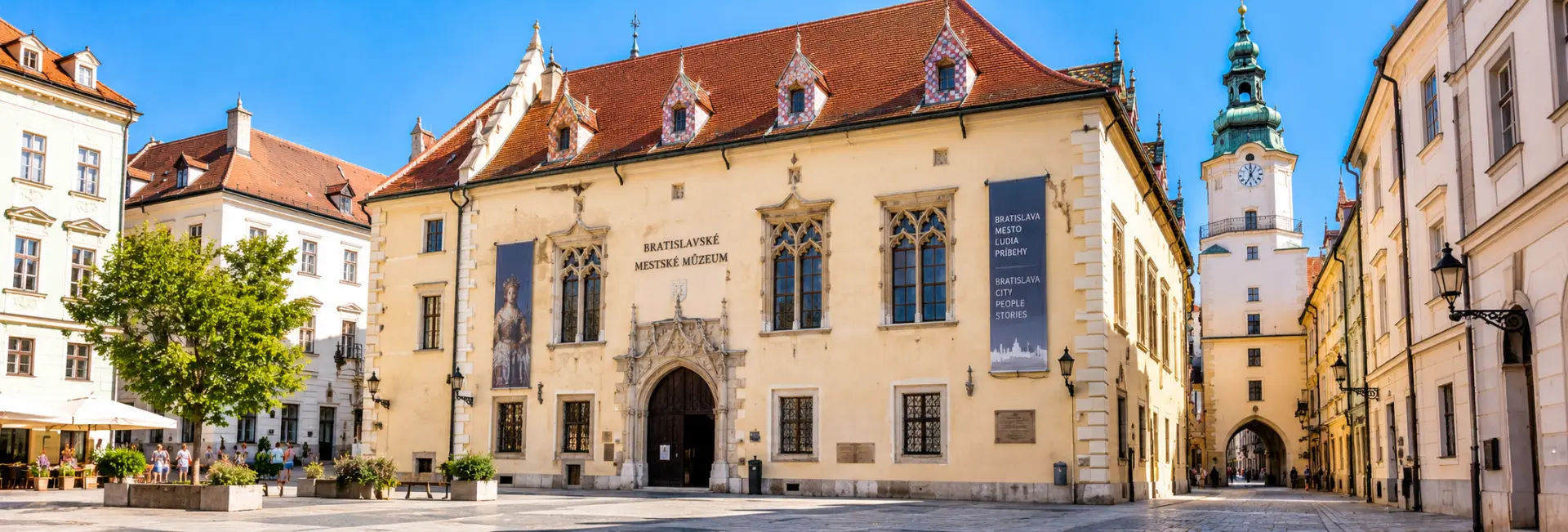
Bratislava City Museum, known in Slovak as Múzeum mesta Bratislavy, introduces the city through the experiences of people who lived, worked and governed here. Its best-known location is the Old Town Hall, a remarkable collection of interconnected buildings in the historic centre. A visit combines the atmosphere of an old civic landmark with objects and stories explaining how Bratislava changed across the centuries.
The museum was founded in 1868 and is among Slovakia's longest-running museum institutions. Rather than focusing on a single ruler or artistic movement, it looks at many dimensions of urban life: commerce, crafts, administration, culture and ordinary households. This broad approach makes it a useful first stop for travellers who want to understand the streets and monuments they will see elsewhere in the city.
There is an important distinction between the institution and its principal exhibition building. Bratislava City Museum manages several historic sites across the city, including Devín Castle and Michael's Tower. The Old Town Hall is the central visitor experience for an introduction to city history, but it represents only one part of the museum's wider work.
History of the Museum
Beginnings in the Nineteenth Century
The museum began in 1868, during a period when cities across Central Europe were becoming increasingly interested in documenting their own past. Its early collections grew through gifts from local residents, civic groups and institutions. By 1869, objects were already being shown in rooms of the Old Town Hall, establishing a connection between the museum and the building that continues today.
Collecting was initially broad, covering subjects such as archaeology, ethnography, fine art and books. This reflected the ambition to preserve evidence of the city in many forms rather than to build a collection limited to one discipline. As older guilds and associations disappeared, the museum also became a place where traces of their activities could survive.
Growth and Professionalisation
During the late nineteenth and early twentieth centuries, curators developed more systematic ways of recording and presenting the holdings. The museum took part in a major exhibition in Budapest in 1896, while subsequent decades brought cataloguing efforts and new displays. The First World War and the dissolution of Austria-Hungary changed the political setting in which the museum operated.
In the interwar period, exhibition rooms expanded into the nearby Apponyi Palace. Displays included paintings, arms, archaeological material and the history of wine. The museum's subject matter evolved as Bratislava itself acquired new roles and identities within Czechoslovakia.
A Living Civic Institution
Through political changes, restoration projects and new approaches to interpretation, the museum continued to develop. Today it uses historic buildings, original objects and public programmes to connect the city's past with questions relevant to contemporary residents. Its exhibitions are therefore not simply repositories of old things; they are attempts to explain how a city becomes what it is.
Architecture and Historic Interiors
A Town Hall Built Over Centuries
The Old Town Hall did not begin as one unified building. Its core developed from medieval townhouses, including a residence associated with a city official named Jacobus. Additional neighbouring houses were incorporated as municipal needs expanded, producing the irregular plan that visitors encounter today.
The building became an official town hall in the early fifteenth century. Later construction introduced Renaissance features, including courtyard arcades, while the tower received Baroque alterations in the eighteenth century. The result is an architectural record in which Gothic, Renaissance and Baroque elements can be examined within a single complex.
Rooms That Retain Their Civic Character
Historic chambers were once used for council meetings, record-keeping and judicial business. Their significance lies not only in surviving decoration but also in the decisions made within them. Standing in these rooms helps visitors imagine the workings of a medieval and early modern municipality, when city privileges and local institutions shaped daily life.
Restoration work has uncovered details that earlier alterations had concealed. Painted surfaces, masonry and other architectural fragments now form part of the museum experience. Instead of treating the building as a neutral container, the displays encourage visitors to see the rooms themselves as historical evidence.
The Courtyard and Tower
The courtyard offers a different view of the complex, revealing how separate wings meet and how architectural styles coexist. Above them rises the familiar town hall tower, one of the most recognisable features of Bratislava's Old Town. Its elevated outlook also helps visitors connect the museum's historical explanations with the street layout below.
Collections and Permanent Exhibitions
The Exhibition of City History
The permanent city-history exhibition examines Bratislava's inhabitants, institutions and changing social world. The visitor route concentrates especially on the early modern period through the first decades of the twentieth century, using selected artefacts and original rooms to illustrate broader themes. This approach provides a human scale for events that might otherwise appear only as dates on a timeline.
Municipal government, crafts, trade and industry all feature in the story. The exhibits also explore education, theatre, social associations and the importance of the Danube. Together, these subjects show how the city depended on networks of people, goods and ideas that reached well beyond its walls.
Objects from Everyday Life
Household items, tools, documents and decorative objects can be especially revealing because they show how residents organised their routines and expressed their status. The museum's broader collections preserve evidence of urban occupations and changing tastes, from traditional craftsmanship to later civic life. Such material complements the city's grand palaces and churches by drawing attention to less celebrated inhabitants.
Temporary Exhibitions and New Perspectives
Alongside the permanent displays, the museum stages exhibitions on particular eras, communities and cultural developments. These change over time and may examine subjects that do not fit neatly into a conventional chronological history. Checking the current programme can help visitors decide whether to allow extra time for a topic of personal interest.
Highlights of the Old Town Hall
Historic Council and Court Spaces
Among the most memorable parts of the museum are rooms associated with city administration and justice. They offer an opportunity to consider how disputes were handled, how officials worked and how civic authority was represented through architecture. Original features give these spaces a sense of continuity that reconstructed settings cannot fully reproduce.
The Former City Prison
The visitor route can include the old prison areas, a reminder that the town hall served functions far beyond ceremonial meetings. These spaces provide a contrast to the more decorated chambers upstairs. Access to individual rooms may change for conservation, events or operational reasons.
Views from the Tower
Climbing the Old Town Hall tower rewards visitors with views across the compact historic centre. From above, the Main Square, surrounding roofs and nearby landmarks are easier to place in relation to one another. It is particularly satisfying after exploring the museum because the panorama turns the city itself into a continuation of the exhibition.
Architectural Details Worth Noticing
Look for changes in stonework, window shapes, courtyard arches and interior decoration as you move between rooms. These differences are clues to successive periods of construction and restoration. Taking time to notice them makes the Old Town Hall more than a backdrop for the collections.
The Museum Beyond the Old Town Hall
Bratislava City Museum is a network of historic places rather than a single exhibition hall. Several branches provide a deeper look at particular subjects, periods or parts of the city. Travellers with a strong interest in history can build a varied itinerary around them.
- Apponyi Palace: adjoining museum spaces associated with the city's cultural history and traditions of viticulture.
- Michael's Tower: a surviving historic gate tower that offers a different perspective on the fortified medieval city.
- Devín Castle: dramatic ruins above the meeting of the Danube and Morava rivers, with archaeological and medieval significance.
- Ancient Gerulata: remains connected with the Roman frontier in the Rusovce district, forming part of the wider UNESCO-listed Danube Limes.
- Memorial House of J. N. Hummel: a site associated with the Bratislava-born composer.
- House at the Good Shepherd: a distinctive historic building associated with the museum's clock collections.
These branches are spread across different neighbourhoods, and some require a separate journey or ticket. It is worth checking which are open before planning a museum-focused day. A visit to the Old Town Hall remains the most convenient starting point because it places the other sites in the wider story of Bratislava.
Ways to Experience It
Start with the Permanent Exhibition
For a first visit, follow the permanent exhibition through the historic rooms before heading to the tower. This order helps establish the context of the building and the city. Allow roughly one to two hours for the main displays, with additional time for temporary exhibitions, photographs and breaks.
Explore at Your Own Pace
Independent visitors can spend more time with themes that interest them, whether civic institutions, crafts or the architecture itself. Labels and interpretive materials help make the collection approachable, though language provision can differ between displays. Ask staff about available visitor information if you would like more context.
Look for Programmes and Family Activities
The museum runs educational and cultural activities that may offer a more interactive experience than a conventional gallery visit. Some programmes are designed for school groups or children and may require advance arrangements. The official programme is the best place to check what is happening during your stay.
Make It Part of an Old Town Walk
The museum is ideally located for exploring central Bratislava on foot. A visit can begin at the Main Square, continue through the Old Town Hall and then extend to nearby lanes, palaces and former city gates. The short distances make it easy to combine indoor learning with time outdoors.
Best Time to Visit
Choosing a Season
The museum is an appealing year-round attraction because much of the experience takes place indoors. In winter, it offers a welcome break from cold weather while still providing a close connection to the historic centre. Spring and autumn are comfortable for pairing the visit with longer walks around the surrounding squares.
Summer can bring busier streets and more visitors to the Old Town. The tower is especially pleasant when visibility is clear, although the climb may feel warmer on hot days. Weather conditions are worth considering if the panoramic view is an important part of your plans.
Choosing a Time of Day
Arriving earlier in the day often makes it easier to explore the galleries without rushing. Weekends and holiday periods may be busier, particularly when the city hosts major events. If you want to see both the permanent display and a special exhibition, leave enough time before the last admission.
Check the Programme
Temporary exhibitions, workshops and special events can add considerably to a visit. They can also affect access to particular rooms. Consult the museum's current schedule shortly before travelling rather than assuming every area will be available at all times.
Visitor Tips
- Use the Old Town Hall entrance at Primaciálne námestie 3 for the principal city-history exhibition; the museum institution also has an administrative address on Radničná Street.
- Check current opening times, admission and last-entry rules on the museum's official website before visiting.
- Confirm whether tower access is included in the ticket you choose, as ticket categories and combinations can change.
- Expect steps and historic floor levels in parts of the building. The exhibitions are only partially accessible to visitors with limited mobility.
- Wear comfortable shoes, especially if you intend to climb the tower and continue sightseeing on foot.
- Allow extra time for temporary displays or a visit to adjoining Apponyi Palace.
- Respect any photography restrictions and avoid touching historic surfaces or collection objects.
- Families should check which activities are available for their children's ages; not every special programme is included with general admission.
- Public transport stops around the pedestrianised Old Town are a short walk away, so a car is usually unnecessary for a central-city visit.
Nearby Attractions
The Old Town Hall sits in one of Bratislava's richest areas for sightseeing, making it easy to continue exploring after the museum. Many of the following landmarks are within a few minutes' walk, so they can be combined without complicated transport arrangements.
- Main Square (Hlavné námestie): the historic civic heart of Bratislava, immediately beside the town hall.
- Primate's Palace: an elegant palace known for its historical significance and ceremonial interiors, beside the museum complex.
- Michael's Gate and Tower: a landmark of the old fortifications and another site associated with Bratislava City Museum.
- St. Martin's Cathedral: a major Gothic church connected with the coronations of Hungarian monarchs.
- Hviezdoslav Square: a broad promenade with monuments, cafés and the historic Slovak National Theatre building.
- Bratislava Castle: a prominent hilltop landmark offering wider views of the city and the Danube.
Visitors interested in architecture can also simply wander the smaller lanes between these landmarks. Courtyards, façades and passages reveal the same long urban history explored inside the museum, but in a more informal setting.
FAQs about visiting Bratislava City Museum
Where is Bratislava City Museum located? +
Its principal city-history exhibition is in the Old Town Hall, entered from Primaciálne námestie 3 in Bratislava's historic centre. The museum also operates several other sites.
Is Bratislava City Museum the same as the Old Town Hall? +
No. The Old Town Hall is the museum's main central exhibition location, while Bratislava City Museum is the wider institution managing multiple historic attractions.
What can I see inside the museum? +
You can explore exhibitions about Bratislava's inhabitants and civic history, historic rooms and, when accessible, former prison spaces and the town hall tower.
How long should I allow for a visit? +
Around one to two hours is reasonable for the main museum and tower, with longer needed if you explore special exhibitions or Apponyi Palace.
Can visitors climb the Old Town Hall tower? +
Yes, the tower is a visitor highlight, subject to current opening arrangements and any temporary restrictions.
Is there an admission fee? +
The main exhibitions are ticketed. Prices and ticket combinations can change, so consult the museum's official ticket information before visiting.
Is the museum accessible to wheelchair users? +
Some exhibition areas have limited-mobility access, but the historic building has barriers and the tower involves stairs. Contact the museum about your specific access needs.
Is it suitable for children? +
Yes. The museum offers family-oriented activities at selected times, although the appeal of individual exhibitions varies by age.
What other museum sites can I visit? +
The institution also manages places such as Michael's Tower, Devín Castle, Ancient Gerulata and the Memorial House of J. N. Hummel.
What attractions are close to the museum? +
Main Square and Primate's Palace are immediately nearby, while Michael's Gate, St. Martin's Cathedral and Hviezdoslav Square are within walking distance.
