
Table of Contents
Overview
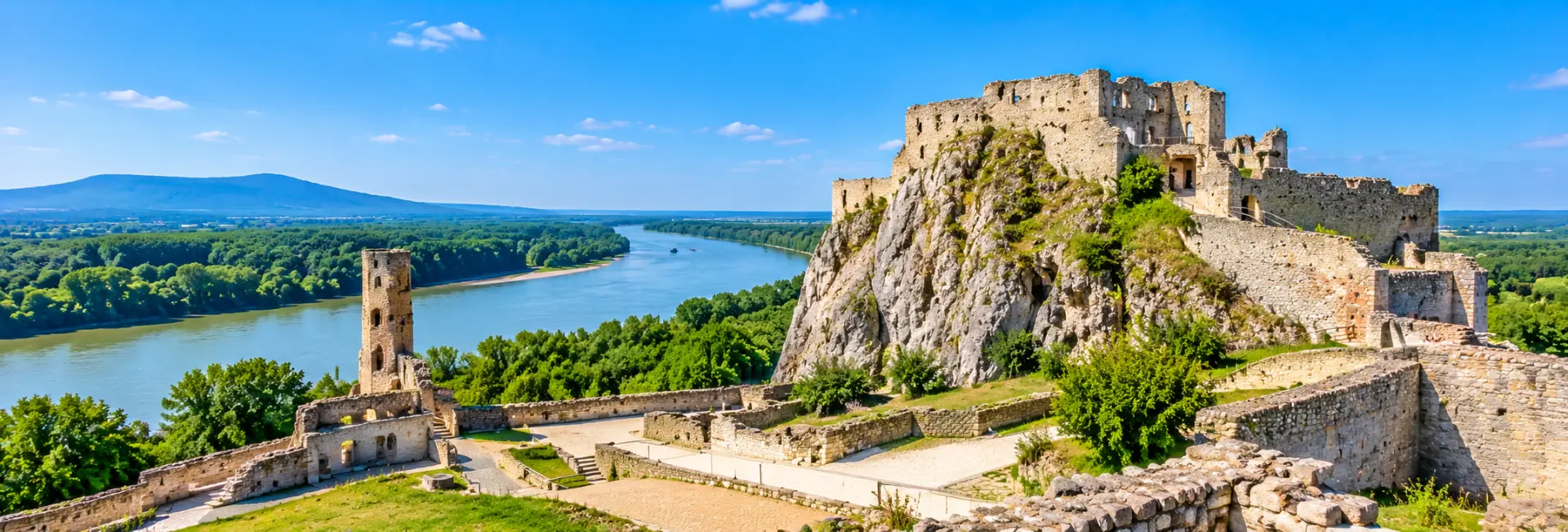
Devín Castle (Devínsky hrad) is a ruined fortress perched on a rocky cliff where the Morava River flows into the Danube, about 12 kilometers from the center of Bratislava. It belongs to the city district of Devín and stands almost on the border between Slovakia and Austria, so the view from the cliff takes in two countries, two rivers and a broad stretch of floodplain.
The site has been fortified in different forms for more than two thousand years. Celtic settlers, Roman soldiers, Great Moravian princes and medieval Hungarian nobles all used the hill for the same reason: whoever held it controlled traffic on one of Europe's key rivers. What remains today is a layered ruin, with walls, towers and foundations from many centuries sitting side by side.
Devín is also a national symbol. Its best-known landmark, the slender Maiden Tower on a rock below the main castle, was once pictured on a Slovak coin, and the castle is often described as a monument to early Slavic history. For visitors it is both a scenic escape from the city and a lesson in how deeply history is embedded in the landscape.
History
Celts and Romans
Archaeological evidence shows that the rock was settled by Celtic people before the Roman era, and that this settlement was destroyed by Germanic tribes in the early decades of the 1st century AD. The Romans later used the site as a frontier outpost along the Danube, which formed part of the empire's northern border, the Limes Romanus. Remains of several Roman stone structures have been uncovered here, and the Roman presence ended around the year 400.
A Great Moravian Stronghold
In the 9th century the hill became a major fortified center of Great Moravia, the early Slavic state ruled by Prince Rastislav. The stronghold occupied a large area protected by an earth rampart and a ditch. Its strategic importance is confirmed by a written record from 864, when a Frankish army besieged the Great Moravian prince in a fortress called Dowina, widely identified with Devín.
The Medieval Castle
People continued to live on the hill after Great Moravia fell, as shown by an early medieval cemetery and a small settlement uncovered on the grounds. After the area became part of the Kingdom of Hungary, a stone castle was built and later expanded, notably in the 13th century. The lower part of the castle was fortified, a polygonal tower and a western gate were added, and a well about 55 meters deep was dug through the rock. Further changes followed in the 16th century.
Destruction in 1809
The castle's long life ended during the Napoleonic Wars. After the siege of Pressburg in 1809, French forces mined the castle and blew it up, apparently to remove a potential stronghold in the area. It has been a ruin ever since.
Rediscovery and Protection
Since the 19th century the ruins have drawn writers, historians and archaeologists, and the site was declared a national heritage monument in 1961. Today the castle is managed by the Bratislava City Museum, which carries out research and maintains the grounds.
Architecture and the Castle Ruins
A Castle in Several Parts
The castle consists of an upper castle on the highest rock, a middle castle on a lower terrace and a lower castle spreading along the slope. This stepped arrangement follows the natural shape of the cliff, which falls steeply toward both rivers and made the site difficult to attack from most sides.
Walls, Towers and the Well
Visitors walk among the remains of gates, defensive walls, residential buildings and towers built at different times. A polygonal tower and a western gate belong to the medieval fortifications, while the deep castle well is one of the site's most curious features. Tradition among visitors is to drop water or a small object into the shaft and listen for how long it takes to reach the bottom.
Older Layers Beneath the Stones
Beneath and between the medieval walls are the traces of older periods, including the foundations of a wooden Roman tower, the outlines of Roman stone buildings and the remains of Great Moravian structures. The oldest stone part of the upper castle may even incorporate an earlier Roman watchtower. Reading these layers is part of the fun of visiting.
The Maiden Tower
The most photographed sight is the slim Maiden Tower, a small polygonal bastion standing on a steep rock above the confluence of the rivers. It was built as a lookout and fortification, and its silhouette against the water has made it the castle's emblem.
Cultural Significance and Legends
A Symbol of Slavic History
Because of its link to Great Moravia, Devín is regarded as an important symbol of early Slavic history and unity. Great Moravia is remembered for developing the first alphabet used for Slavic manuscripts and for translating texts into the Slavic language, which is why the castle holds such emotional weight for many Slovaks.
The Legend of the Maiden Tower
Local legend tells of a king who locked his daughter in the tower to keep her from a young man she loved. Heartbroken, she is said to have leapt from the tower to her death. Several versions of the story exist, but all revolve around love, loss and a dramatic cliff, which suits the setting perfectly.
The Iron Curtain Years
During the Cold War the border between Czechoslovakia and Austria ran right beneath the castle, and the Iron Curtain separated this stretch of the Danube until 1989. This modern chapter gives the site a second layer of meaning as a place associated with the end of division in Europe.
Cultural Life Today
The castle grounds host seasonal events, such as concerts and knightly reenactments, that bring the old walls back to life. These events vary by year, so check the museum's program before you go.
Exhibitions and Highlights
What to See
- The Maiden Tower: the castle's famous symbol, best viewed from the path along the river and from the castle terraces.
- The castle well: a deep shaft cut into the rock, which visitors can peer into.
- The middle castle courtyard: used for seasonal exhibitions about the castle's history and archaeological finds.
- The caves of the upper castle: a permanent exhibition called "Architectural development of Devín Castle," tracing the changes made between the 11th and 19th centuries, where open to visitors.
- Panoramic viewpoints: places on the walls and towers that overlook the Danube, the Morava and the Austrian bank beyond.
Archaeology on Display
Finds from decades of excavation, including everyday objects, tools and pottery from the Roman, Great Moravian and medieval periods, are shown in the castle's exhibitions and tell the story of ordinary life on the rock.
Access to Different Areas
Some parts of the upper castle have been closed at times for stabilization and reconstruction work, while the grounds and lower areas have remained open. Because access changes, confirm which parts are available before you visit.
Ways to Experience It
A Self-Guided Visit
Most visitors explore the castle on their own, following the paths up through the lower and middle sections to the viewpoints. A thorough visit takes about 1.5 to 2 hours, including time for photos and the exhibitions.
Getting There by Public Transport
A city bus runs from Most SNP (the SNP Bridge) in Bratislava to a stop near the castle in around 20 to 30 minutes. The line number has changed over the years, so check a current journey planner. From the stop, a short walk along the river leads to the castle.
By Bike, Boat or Car
Devín can also be reached by bicycle along the Danube cycle path, by boat in the warmer months, or by car in roughly ten minutes from the Old Town. Parking is available below the castle, though rules and fees can change.
Combine With a River Walk
The riverside near the castle is pleasant for walking and photography, and the area around the confluence of the two rivers is home to rich birdlife. Canoe trips on the Morava are another option for active visitors.
Best Time to Visit
By Season
- Late spring and early summer: green hillsides, long days and the castle's best light for photographs.
- Summer: ideal for events and longer opening hours, though the ruins offer little shade and can be hot at midday.
- Autumn: soft light and clear views, with fewer visitors than in summer.
- Winter: a quiet, atmospheric visit, but hours are shorter and cold wind off the river can be sharp.
By Time of Day
Arriving soon after opening gives the calmest experience and the best chance of having the viewpoints to yourself. Late afternoon light is excellent for photographing the Maiden Tower and the rivers.
Weather Matters
Because this is an exposed ruin, the castle may close in bad weather. Check conditions before making the trip.
Visitor Tips
- Check the Bratislava City Museum website for current opening hours and admission, as the castle is usually closed on Mondays and hours change by season.
- Wear sturdy shoes, since paths are steep and uneven and the stones can be slippery after rain.
- Bring water and sun protection in summer, because there is very little shade.
- The ruins are generally unsuitable for wheelchair users and people with limited mobility.
- Take care near cliff edges and drops, and keep a close eye on young children.
- Allow extra time if you plan to combine the visit with the riverside walk or the village of Devín.
- Plan your return journey in advance, as bus frequency can be lower in the evening.
Nearby Attractions
Devín is on the western edge of Bratislava, so combine it with the surrounding area or head back to the city for more sights.
- Devín village: a small riverside community below the castle, with a 13th-century Holy Cross church and quiet streets.
- Danube and Morava riverside paths: scenic walking and cycling routes that pass beneath the castle.
- Devínska Kobyla: a wooded hill of about 514 meters in the nearby Little Carpathians, with hiking trails.
- Bratislava Castle: the city's hilltop landmark, around 10 kilometers away in the center.
- Old Town Bratislava: the historic center, a short drive or bus ride from Devín.
FAQs about visiting Devín Castle
What is Devín Castle? +
It is a ruined fortress above the meeting point of the Danube and Morava rivers in Bratislava's Devín district, with roots reaching back to Celtic, Roman and Great Moravian times.
How far is Devín Castle from central Bratislava? +
It lies about 12 kilometers west of the city center, roughly a 10-minute drive or a 20 to 30 minute bus ride from the Old Town.
How do I get to Devín Castle by public transport? +
A city bus runs from Most SNP to a stop near the castle, followed by a short walk. Check a current journey planner, as the route number and schedule can change.
How much time do I need at Devín Castle? +
Plan on about 1.5 to 2 hours to explore the grounds, see the exhibitions and enjoy the views.
When is Devín Castle open? +
It is a seasonal site that is usually closed on Mondays, with longer hours in the warmer months. Confirm current hours and admission with the Bratislava City Museum before your visit.
What is the Maiden Tower? +
It is the castle's best-known landmark, a small tower on a rock above the river, associated with a legend about a king's daughter and a tragic love story.
Why is Devín Castle important in Slovak history? +
It was a key stronghold of Great Moravia, an early Slavic state, and appears in written records from 864. It is also linked to the Iron Curtain period, when the border ran beneath it.
Is Devín Castle suitable for children and wheelchair users? +
Children usually enjoy exploring the ruins, though they need supervision near drops. The steep, uneven paths make the castle unsuitable for wheelchairs and difficult for people with limited mobility.
