
Table of Contents
Overview
The Slovak National Gallery, known locally as Slovenská národná galéria or SNG, is Slovakia's principal institution devoted to collecting, studying and presenting visual art. Its main Bratislava complex occupies a prominent stretch of the Danube embankment close to the Old Town. Visitors encounter not only paintings and sculpture but also photography, design, architecture and changing interpretations of the country's artistic heritage.
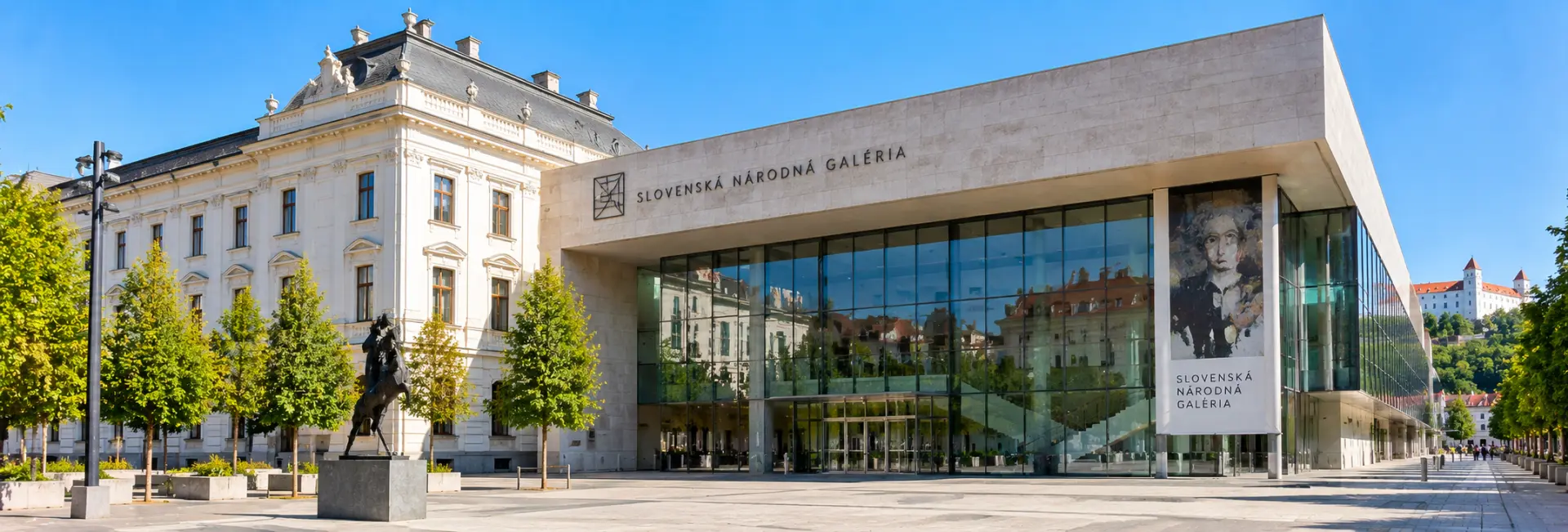
One of the gallery's distinguishing features is the building itself. Historical structures stand alongside an unmistakable twentieth-century bridge-like addition, creating a setting where the history of Bratislava can be read through architecture as well as artwork. The extensively renovated complex reopened in late 2022, bringing exhibition spaces and public facilities together in a more connected setting.
The SNG is more than a single exhibition venue. It operates a national collection, organizes temporary shows, supports research and education, and maintains other sites around Slovakia. A visit is particularly rewarding for travelers who want to understand Slovak cultural identity beyond the city's castles, squares and churches.
History of the Gallery
Founding a National Art Institution
The Slovak National Gallery was established by legislation in 1948, in the years following the Second World War. Its creation reflected a growing determination to build a public institution capable of safeguarding and presenting art associated with Slovakia while also placing it in a wider European context. The initial holdings and administrative resources were modest, but the museum gradually developed a broad collecting and scholarly mission.
Making a Home Beside the Danube
In the early 1950s, the former Water Barracks on the Bratislava riverfront were assigned to the gallery. Following adaptation for exhibition use, the premises opened to visitors in 1955. The location provided a central civic address, but the existing rooms soon proved too limited for the expanding collections and ambitions of the institution.
Expansion in the Twentieth Century
An architectural competition in the 1960s led to the selection of Vladimír Dedeček's proposal for a major extension. His dramatic elevated structure, generally called the Bridge, became the most recognizable part of the complex. New gallery facilities opened in 1977, giving the institution more room for permanent displays and public programs.
Closure, Renewal and Reopening
Technical problems eventually affected the modern extension, and the Bridge's exhibition areas closed in 2001. A long period of planning and rebuilding followed. The renewed complex opened to the public in late 2022 after a substantial project that restored historic elements, upgraded the modern structures and improved circulation through the site.
The story of the SNG therefore parallels changing ideas about public culture in Slovakia: from postwar nation-building to ambitious modernist construction and the recent reconsideration of how historic and contemporary architecture can coexist.
Architecture and Riverside Complex
The Baroque Water Barracks
The former Water Barracks form the historic core of the gallery complex. Originally associated with the riverfront's military functions, the building now provides a contrasting backdrop for exhibitions and public spaces. Its restrained historical façades and courtyard arrangement offer a very different experience from the more experimental structures around them.
Esterházy Palace
Another component is Esterházy Palace, a nineteenth-century building associated with the aristocratic urban fabric of Bratislava. Constructed in 1870, it brings a more formal architectural language to the gallery's collection of spaces. Its inclusion also helps connect the museum with the nearby streets of the historic center.
Dedeček's Bridge
The gallery's signature feature is the elevated modernist wing designed by Vladimír Dedeček. Instead of simply filling the riverfront with a conventional block, the design raises a major volume above the ground, creating a memorable silhouette and framing relationships between the courtyard, historic buildings and embankment. Its assertive geometry remains one of Bratislava's most discussed architectural landmarks.
Renovation and New Connections
The reconstruction retained the complex's different historical periods rather than disguising them as a single architectural style. New circulation areas, renewed exhibition rooms and updated visitor facilities make it easier to move between buildings. The courtyard and transitional spaces are also worth noticing: they reveal how the gallery is designed as a public place, not merely a succession of enclosed rooms.
For architecture enthusiasts, the most interesting experience is often the contrast between the older masonry, the scale of the modern extension and the contemporary interventions that tie them together.
Collections and Exhibitions
Slovak Art Across Centuries
The gallery's holdings trace the development of visual culture in Slovakia from historical religious and secular works to modern experimentation. Paintings, sculpture and objects from different periods show how local artists responded to changing patrons, political circumstances and international movements. The displays provide a useful introduction to artistic traditions that may be less familiar to visitors from outside Central Europe.
European Old Masters and Sacred Art
Historical European painting is another important strand of the institution's work. Sacred images and older paintings illuminate the religious and cultural networks that linked the region with the rest of Europe. Visitors interested in craftsmanship can pay attention to how materials, iconography and presentation changed across periods.
Modern and Contemporary Art
Twentieth-century works offer a different perspective on Slovak society, including the relationship between artistic experimentation and broader cultural change. Contemporary projects and temporary exhibitions introduce new voices and may connect historical collections with current questions. The exact works on display vary, so the current program is more useful than any fixed list of must-see paintings.
Beyond Painting and Sculpture
The SNG also collects and researches design, applied art, photography, stage design, architecture and other visual media. These fields make it possible to consider everyday objects and built environments alongside conventional fine art. The institution's wider collections number many tens of thousands of objects, far more than can be displayed at any one time.
Not every collection area is continuously on view. Some exhibitions are thematic, and works may rotate for conservation, research or curatorial reasons. Checking the gallery's exhibition list before arrival helps visitors choose a visit that matches their interests.
Highlights Worth Exploring
The Building as an Exhibit
Start by looking at the complex from the embankment and then from within its courtyards. The elevated Bridge, historic façades and renewed interior passages are essential parts of the visit. Photography of the exterior can help capture the unusually direct meeting of different architectural eras.
Permanent Collection Displays
Depending on the current installation, visitors may encounter presentations of sacred art, early modern European painting, modern Slovak art and design. These displays are particularly useful for building a chronological understanding of the region's visual culture. Read the introductory panels before concentrating on individual objects; the broader themes often explain why particular works are shown together.
Experimental Presentations
The gallery has also developed playful and interpretive approaches to its collections, including displays connected with the conceptual artist Július Koller and projects that make art history approachable for younger audiences. Such presentations can be rewarding even for visitors who do not usually spend much time in museums.
The Courtyard and Public Areas
Allow time for the shared spaces between exhibitions. The courtyard, café, shop and other public facilities offer a different pace from the galleries themselves. They also make the institution a pleasant stop during a longer walk along the Danube.
Exhibition layouts, room access and public programs can change. Treat these highlights as themes to look for rather than a guarantee that every named display will be available on a particular day.
Learning, Research and Cultural Life
Art Education for Different Ages
The SNG organizes learning activities intended to make artworks accessible to school groups, families and adults. Workshops and guided programs can introduce techniques, artistic movements and questions about how images communicate meaning. For families, an activity-based visit may be more engaging than attempting to see every exhibition room.
Library, Archives and Scholarship
Behind the public galleries is an important research institution. Its art-history library and fine-arts archive support the study of artists, exhibitions and cultural history. The gallery also publishes and develops digital resources that extend access to collections beyond the physical building.
Art Beyond Bratislava
The institution maintains sites elsewhere in Slovakia, including Zvolen Castle, Strážky Mansion and Schaubmar Mill in Pezinok. These venues connect national collecting with different historic buildings and regional settings. Travelers exploring more of Slovakia can use them as a starting point for an art-focused itinerary.
A Living Cultural Venue
Exhibition openings, discussions, screenings and other events give the Bratislava complex a role beyond static displays. The program changes throughout the year, making repeat visits worthwhile. Those who want a particular workshop or guided experience should check the calendar and any booking requirements ahead of time.
Ways to Experience the Gallery
A Focused First Visit
If time is limited, begin with the architecture and choose one or two exhibitions that most closely match your interests. Around ninety minutes can provide a satisfying introduction, particularly if you concentrate on a few galleries rather than trying to inspect every object. Add a short break in the courtyard or café to appreciate the setting.
A Deeper Art Visit
Visitors who enjoy reading exhibition texts and comparing works should allow two to three hours or more. Combining historical collections with modern and contemporary displays gives a richer impression of the gallery's range. Temporary exhibitions may justify additional time, especially when they include extensive interpretive material.
With Children or a Group
For children, choose a small number of visually distinctive objects and make space for questions rather than following a strict route. Check whether a family program or studio session is scheduled. Groups and school parties should arrange any guided visit according to the gallery's current procedures.
Combining Art With the Riverfront
The central location makes the SNG easy to include in a walking day. Visit the galleries, step out onto the embankment and continue toward the Old Town or nearby cultural landmarks. This approach provides a useful balance between indoor viewing and outdoor exploration.
Best Time to Visit
Weekdays and Quieter Hours
A weekday morning is often a good choice for visitors who prefer a calm atmosphere, although school groups and special events can affect crowd levels. The gallery generally opens later on Thursdays, which may suit travelers who spend the earlier part of the day sightseeing. Always check the latest schedule rather than relying on a printed itinerary.
Seasonal Considerations
Because the main attraction is indoors, the SNG works well in any season. It is especially appealing during winter, summer heat or rainy weather when extended outdoor sightseeing becomes less comfortable. In warmer months, the riverside setting adds an enjoyable walk before or after the visit.
Plan Around the Exhibitions
For art enthusiasts, the exhibition calendar matters more than the weather. Temporary shows can be available for only a few months, and individual galleries may close during installation changes. If a particular artist or subject is the reason for visiting, confirm the dates and access arrangements shortly before departure.
Visitor Tips and Accessibility
Practical Planning
- Check the official SNG website for the current opening schedule, ticket categories and any special closures.
- The gallery is generally closed on Mondays, but holiday arrangements and special events can change regular hours.
- Allow at least ninety minutes for a first visit and more if you want to explore several exhibitions thoroughly.
- Use the gallery's current visitor information to identify which entrance and ticket desk are operating.
- Keep food and drinks out of exhibition rooms and follow any photography restrictions posted for particular works.
- For a quieter experience, consider avoiding major exhibition openings and busy public-program sessions.
Getting There
The main gallery stands on Rázusovo nábrežie beside the Danube, within walking distance of the Old Town. Central Bratislava's tram and bus network provides convenient access to the surrounding area. The gallery does not operate a general public car park, so visitors arriving by car should plan for nearby paid parking and local restrictions.
Accessibility and Comfort
The renovated complex provides lifts, accessible toilets and rest areas, and the gallery describes loan stools for visitors who need a break while viewing art. Because the buildings combine different historical levels, visitors with specific mobility needs should review the latest accessibility guidance before arrival. Staff can also advise on suitable routes through the current exhibitions.
Facilities
The complex includes a café and shops associated with books, art materials and reproductions. These facilities can be useful even when you are making a relatively short gallery visit. Services and access conditions may vary with programming, so confirm availability if a particular facility is essential to your plans.
Nearby Attractions
The Slovak National Gallery is exceptionally well placed for combining art with central Bratislava's architecture and public spaces. Most nearby stops can be reached on foot, making it possible to build a flexible half-day route.
- Hviezdoslav Square: a prominent pedestrian square with monuments, cafés and an easy connection to the Old Town.
- Slovak National Theatre's historic building: an elegant cultural landmark at the eastern end of Hviezdoslav Square.
- Bratislava Old Town: streets, courtyards and historic buildings that provide a contrasting outdoor experience after the gallery.
- St. Martin's Cathedral: an important Gothic church linked to the city's coronation history.
- Danube embankment: a pleasant place for a riverside stroll with views toward Bratislava's bridges and the opposite bank.
- Bratislava Castle: a hilltop landmark with city views and exhibitions, reachable by a longer walk uphill.
For a balanced itinerary, start with the gallery while you have energy for the exhibitions, then explore the nearby square and historic center. Visitors particularly interested in architecture can compare the SNG's modernist addition with the city's Baroque and Gothic landmarks.
FAQs about visiting the Slovak National Gallery
What is the Slovak National Gallery famous for? +
It is Slovakia's leading national art institution, known for its broad visual-art collections and the distinctive mix of historic and modern architecture at its Bratislava headquarters.
Where is the Slovak National Gallery located? +
The main gallery is on the Danube embankment at Rázusovo nábrežie in central Bratislava, a short walk from the Old Town.
How much time should I spend at the gallery? +
Allow around 1.5 to 2 hours for a general visit. Art enthusiasts may prefer three hours or longer, depending on the exhibitions.
Is the Slovak National Gallery open on Mondays? +
The regular schedule generally lists Monday as closed. Check the official website for holiday exceptions and current opening times.
Do I need to book tickets in advance? +
Ordinary visits may be possible with tickets purchased on site or online, but special events and group programs can require advance arrangements. Check the current booking guidance.
Can I visit the gallery with children? +
Yes. Families can explore selected exhibitions together, and the gallery offers learning activities and programs that may be suitable for younger visitors.
Is the Slovak National Gallery wheelchair accessible? +
The renovated complex offers accessibility features including lifts and accessible toilets. Check the gallery's visitor information for the best route to specific exhibitions.
What kinds of art are displayed? +
The institution presents Slovak and European art across historical and modern periods, as well as selected design, photography and contemporary projects. The exact displays change.
What is special about the gallery building? +
Its complex combines the historic Water Barracks and Esterházy Palace with Vladimír Dedeček's striking modernist Bridge and later renovations.
What else can I see nearby? +
Hviezdoslav Square, the historic Slovak National Theatre, St. Martin's Cathedral, the Old Town and the Danube riverfront are all convenient additions to a visit.
