
Table of Contents
Overview
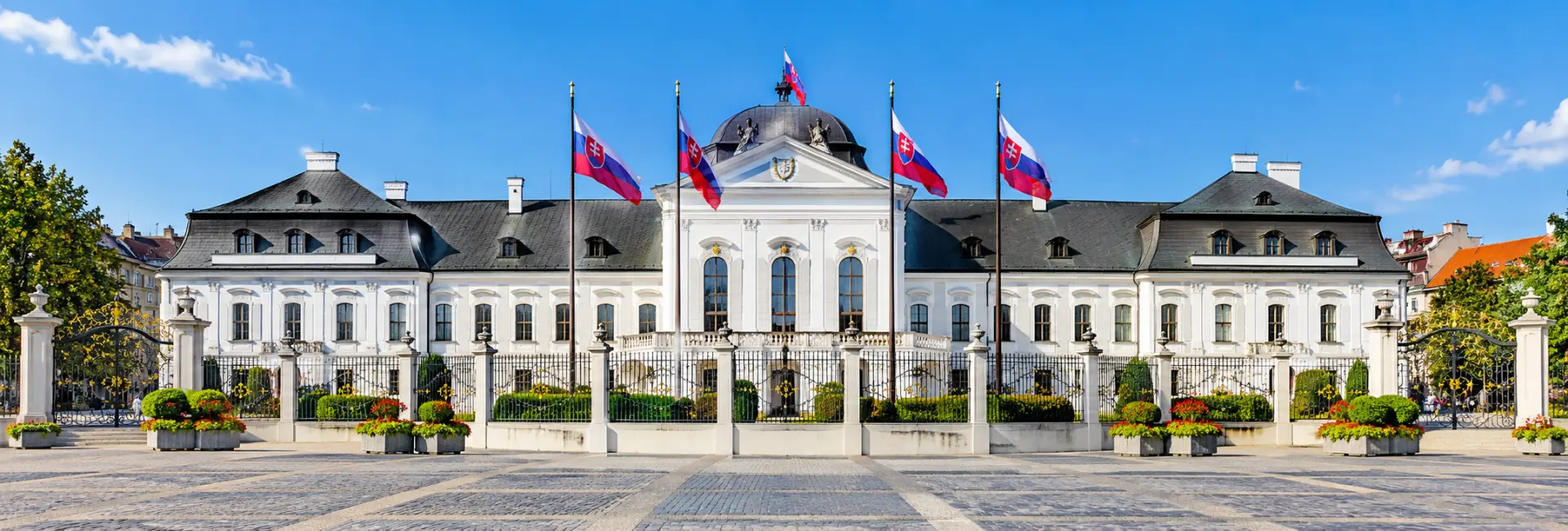
Grassalkovich Palace (Grasalkovičov palác) stands on Hodžovo Square at the northern edge of Bratislava's historic center. Its pale, symmetrical frontage and ornamental detailing give the busy square a distinctly aristocratic backdrop. Although the building began life as a nobleman's summer retreat, it now serves a very different purpose: it is the official residence of the president of Slovakia.
The palace dates to the middle of the 18th century, when Bratislava, then commonly called Pressburg, was an important political and cultural center within the Kingdom of Hungary. Count Anton Grassalkovich built the residence for entertaining and relaxation beyond the old city walls. Balls, musical performances and visits by high-ranking guests made it a fashionable gathering place.
Today the palace itself is normally closed to casual sightseeing because it is an active state residence. Visitors can still admire the exterior, see the ceremonial forecourt and explore the public garden behind the building. That combination of architecture, national symbolism and green space makes it a rewarding short stop on a walking route through central Bratislava.
History
A Summer Residence for Count Grassalkovich
The palace was built around 1760 for Count Anton Grassalkovich, a powerful Hungarian nobleman of Croatian ancestry who rose to lead the Hungarian Royal Chamber. He enjoyed the favor of Empress Maria Theresa and used his wealth and political standing to create an elegant residence outside the crowded medieval town.
Its position was deliberate. A country-style palace close to the city offered room for formal gardens and festivities without sacrificing easy access to court and government affairs. As the city expanded, the once-suburban retreat became part of the central urban landscape.
Music, Balls and Imperial Guests
During the 18th century the palace developed a reputation for lavish social occasions. Aristocrats and members of the imperial circle attended receptions, dances and concerts. Maria Theresa herself visited in 1775, reflecting the owner's standing within Habsburg society.
Composer Joseph Haydn is among the celebrated musicians associated with the palace's musical life. The building's former concert spaces recall a period when private noble residences helped sustain the region's thriving classical music culture.
Changing Residents and Political Eras
At the turn of the 20th century the palace was associated with Archduke Friedrich and his wife Isabella. Its functions changed repeatedly as the Habsburg monarchy gave way to Czechoslovakia and the political landscape of Central Europe was transformed.
During the First World War the building served military administrative purposes. In the Second World War era it became the residence of the president of the wartime Slovak State. Under the socialist system it was used by a pioneer youth organization, a striking contrast with its aristocratic origins.
Restoration and the Modern Presidency
After Slovakia became independent in 1993, the palace was selected for a new national role. Extensive restoration revived its historic appearance and adapted important rooms for state functions. Since 1996 it has been the official seat of the Slovak president, placing an 18th-century landmark at the center of the modern republic's ceremonial life.
Architecture and Notable Interiors
Late Baroque and Rococo Character
Grassalkovich Palace is generally described as a late Baroque or Rococo building. Its carefully balanced facade, rhythm of windows and decorative architectural details convey elegance rather than the imposing defensive character of a castle. The central ceremonial approach emphasizes the building's original function as a prestigious noble residence.
Its arrangement connects a formal entrance courtyard on the square-facing side with the garden to the rear. This relationship between house, court and landscape was central to the design of aristocratic residences in the 18th century. Visitors viewing the facade can appreciate that orderly composition even without entering the building.
The Staircase and Ceremonial Halls
Inside, a grand staircase with sculptural ornament links the entrance area to the principal reception rooms. The main hall preserves elements of gilded stucco decoration and has a history as a concert space. Today it is used for official ceremonies and important diplomatic occasions.
A former music salon serves as a presidential reception room. Historic woodwork and paintings with musical allegories recall the palace's earlier life as a place of performance and entertainment. These interiors are not part of a routine public tour, so their significance is best understood through official descriptions and occasional published photographs.
The Chapel of St. Barbara
One of the building's notable historic spaces is the Chapel of St. Barbara. Restoration revealed Rococo and Classicist frescoes, adding to the evidence of how the palace's decoration evolved over time. The chapel demonstrates that this residence was designed for private ceremonial and spiritual life as well as public display.
Preserving a Working Historic Building
Because the palace is both a heritage structure and an active presidential workplace, conservation and security must operate together. Restoration has sought to protect historic rooms while accommodating receptions, meetings and administrative functions. Visitors should not assume that the historic interior can be entered simply because the surrounding square and garden are accessible.
Grassalkovich Garden
A Formal Garden Behind the Palace
The public garden behind Grassalkovich Palace is one of the most appealing reasons to visit. Originally conceived in the French formal style, it uses paths, lawns, trees and an ordered layout to create a calm counterpart to the busy traffic of Hodžovo Square. The garden remains closely associated with the palace even though it can be enjoyed independently.
The layout reflects the long tradition of aristocratic gardens designed for strolling and outdoor sociability. Rather than being a large wilderness park, it is a cultivated urban space where geometry, planting and decorative features are part of the experience.
Statues, Fountains and Artistic Details
Among the garden's features are an equestrian representation of Empress Maria Theresa and the Fountain of Youth associated with Slovak sculptor Tibor Bártfay. Contemporary sculptural works add further layers to a setting that has changed with successive political eras. These pieces make the garden interesting for visitors who enjoy public art as well as landscape design.
The Avenue of Presidents
The garden also includes a presidential avenue where visiting heads of state have planted oak trees. The tradition gives a living form to diplomatic encounters: as the trees mature, they become reminders of Slovakia's relationships with other countries. This feature distinguishes the grounds from an ordinary city park.
A Place for Everyday Bratislava
Although the palace hosts national ceremonies, the garden has an everyday role for local residents. People come for short walks, a quiet break and time with children at the playground. Access is generally free during designated opening hours, but garden rules apply, including restrictions on dogs and bicycles.
Garden gates are approached from streets behind or beside the palace, including Banskobystrická and Štefánikova. The garden's opening times can change seasonally or because of special circumstances, so check locally before relying on a late-evening visit.
Presidential Role and Cultural Significance
A Symbol of the Slovak Republic
Since 1996 the palace has represented the Slovak presidency in the heart of the capital. The historic building connects the modern state's institutions with a city that once played a major role in the Kingdom of Hungary and the Habsburg world. Its significance therefore extends beyond architecture into the public life of Slovakia.
Official welcomes, diplomatic meetings and treaty-related ceremonies take place within the residence. The public usually encounters this role through the flags, guarded forecourt and news coverage of state events rather than through unrestricted interior access.
The Guard of Honour
The ceremonial guard adds a visible element of state tradition to the square. Visitors may see guards on duty at the forecourt and, when scheduled, a formal changing ceremony. Exact times and arrangements depend on the presidency's current program and security requirements; they should be checked rather than treated as guaranteed daily entertainment.
From Noble Entertainment to Public Institution
Few Bratislava buildings illustrate such a varied sequence of uses. A noble family's festive retreat became a military facility, a residence linked to a wartime regime, a socialist youth venue and finally the seat of a democratic republic's president. Understanding these transitions makes the palace a useful starting point for exploring Slovakia's complicated modern history.
What to See and Ways to Experience It
Start at Hodžovo Square
The clearest exterior view is from the public area of Hodžovo Square, where the facade and ceremonial forecourt can be seen together. Notice the palace's horizontal proportions and the contrast between its refined 18th-century design and the modern streets around it. Allow a few minutes to appreciate the full frontage before moving closer to the permitted viewing areas.
The Fountain on the Square
In front of the palace stands a globe-shaped fountain commonly associated with the theme of peace. It creates a prominent foreground for photographs and helps identify the square as a civic space rather than merely a traffic interchange. The fountain and palace make an especially recognizable pairing in city photographs.
Walk Through the Presidential Garden
Enter the garden from one of its public access points behind the palace. Follow the paths through the formal planting, look for sculptures and the presidential trees, and enjoy the quieter atmosphere away from the square. A leisurely circuit is more satisfying than a quick glance through the gates.
Make It Part of a Central Bratislava Walk
The palace is close enough to the Old Town to include in a self-guided walking itinerary. One pleasant approach is to walk north from Michael's Gate, visit the palace exterior, continue into the garden and then return toward the historic center by a different street. This route gives visitors a sense of how the old walled town gradually developed into the modern capital.
For the exterior and a short garden stroll, many visitors need about 30 to 45 minutes. Those interested in architecture, photography or a longer rest in the park can spend an hour or more. An interior tour should never be assumed unless a specific public-access event has been announced.
Best Time to Visit
Spring and Early Summer
Spring is particularly appealing when the garden's vegetation is fresh and the weather is comfortable for walking. Late spring and early summer offer longer daylight hours, making it easy to combine the palace with nearby Old Town attractions. Weekday mornings can be pleasant for a relatively relaxed visit.
Summer and Autumn
Summer brings leafy shade to parts of the garden, although exposed areas around the square can be hot at midday. Early autumn offers milder temperatures and changing foliage. Both seasons work well for photography, especially when the light is softer in the morning or later afternoon.
Winter and Special Occasions
The palace facade remains worth seeing in winter, when the bare trees can reveal more of the garden's formal structure. However, shorter daylight hours and seasonal gate schedules affect how much time visitors can spend outdoors. National ceremonies or security arrangements may temporarily limit access to areas normally open to the public.
Choosing a Time of Day
Daylight is best for appreciating the architectural details and sculptures. Morning is a sensible choice for a quiet garden walk, while afternoon can be convenient when combining the palace with other central sights. Anyone hoping to see a guard ceremony should consult current official information before planning around a specific hour.
Visitor Tips
- Remember that the palace is a working presidential residence and is normally closed to ordinary interior visits; plan around the exterior and public garden instead.
- Admission to the Presidential Garden is generally free, but access is limited to posted opening hours and may change for maintenance or official events.
- Use the garden entrances on surrounding streets rather than expecting to walk directly through the palace from Hodžovo Square.
- Respect security barriers, guards and any photography restrictions during official ceremonies.
- Hodžovo námestie is a major public transport stop; walking or using public transport is often easier than finding central-city parking.
- Paths in the garden are suitable for a gentle stroll, but check gate access and surfaces if traveling with a wheelchair or stroller.
- Dogs and bicycles are not permitted in the garden under its published visitor rules.
- Bring water during hot weather and allow time for a break in the garden, particularly when sightseeing with children.
- Check the official presidency and Bratislava tourism information for exceptional opening days, garden schedules and any guard-related announcements.
Nearby Attractions
Grassalkovich Palace sits just outside the medieval core, making it easy to connect with other historic and civic landmarks without needing a vehicle. The following places provide useful contrasts with its Rococo style and presidential role.
- Michael's Gate: the surviving medieval city gate and tower, a short walk south toward the Old Town.
- Bratislava Old Town: a compact district of squares, lanes, churches and historic townhouses that can be explored on foot.
- Primate's Palace: a Classicist palace associated with the city's municipal history and notable historic interiors.
- Old Town Hall and Main Square: a central cluster of historic buildings and public spaces that tells the story of Bratislava's civic life.
- Bratislava Castle: the landmark hilltop complex overlooking the Danube, reachable on a longer walk from the palace.
- Slavín Memorial: a prominent hilltop memorial with broad city views, suitable for visitors interested in 20th-century history.
A practical half-day route could start at the Presidential Palace, continue through Michael's Gate and the Old Town, and finish at the castle. The garden is also a worthwhile standalone stop when visitors have limited time between other activities in central Bratislava.
FAQs about visiting Grassalkovich Palace
What is Grassalkovich Palace famous for? +
It is an 18th-century Rococo palace that has served as the official residence of Slovakia's president since 1996.
Can visitors go inside Grassalkovich Palace? +
The interior is normally closed to the public because the palace is an active presidential residence. Special access may occasionally be announced for official open days.
Is the Presidential Garden free to visit? +
Yes, the garden is generally free to enter during its published opening hours, subject to temporary closures.
Where is Grassalkovich Palace located? +
It stands at Hodžovo námestie 1, near the northern edge of Bratislava's historic center.
How long should I spend at the palace? +
Allow around 30 to 45 minutes for exterior photographs and a garden walk, or longer if you want to relax in the park.
How do I get to Grassalkovich Palace? +
Walk north from the Old Town or take public transport to Hodžovo námestie, a major stop served by city routes.
Can I watch the presidential guard? +
The guard can sometimes be seen at the forecourt. Formal ceremonies and their timing depend on current official arrangements, so check before visiting.
Is Grassalkovich Palace suitable for families? +
Yes. Families can view the exterior and use the public garden, which includes a children's play area; children should follow posted garden rules.
What is the best time to visit? +
Spring through early autumn is especially pleasant for the garden, while daylight throughout the year is best for seeing the facade.
