
Table of Contents
Overview
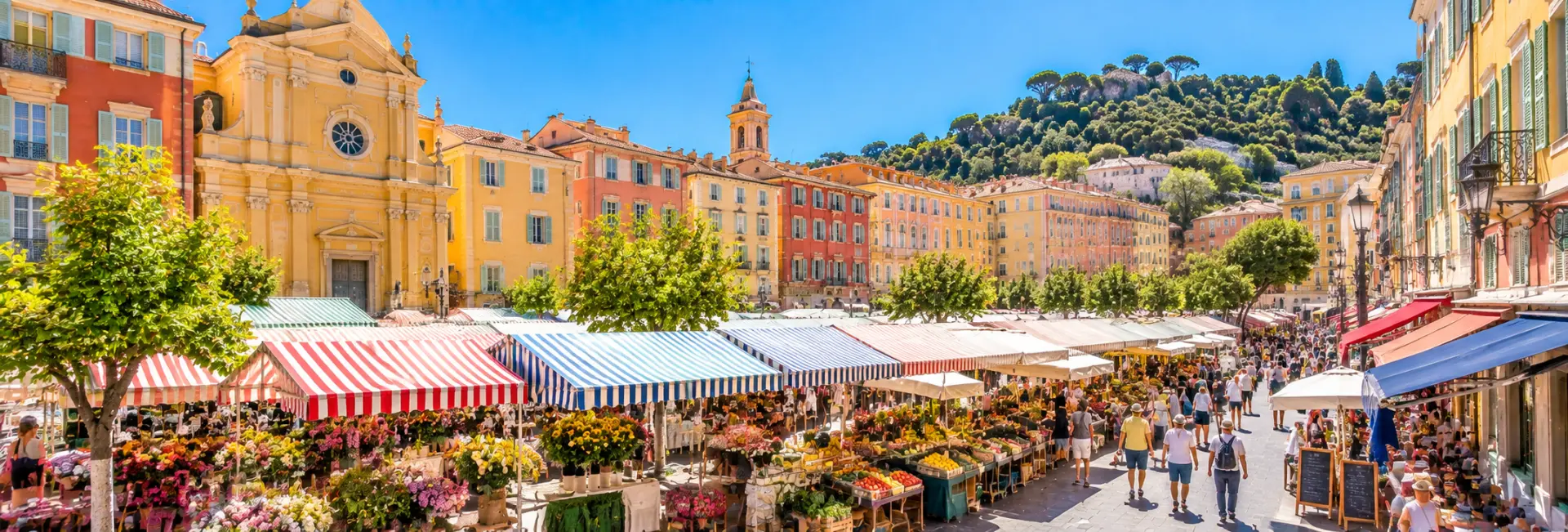
Cours Saleya is the pedestrian market square on the southern edge of Vieux Nice, the old town of Nice on the French Riviera. It is a long, open rectangle of cobbles and pale stone, set one block back from the Mediterranean and framed by ochre, rose and yellow facades with green shutters.
For most of the week the square works as the city's open-air pantry and flower shop in one. Growers bring cut flowers, citrus trees and potted herbs, while producers lay out tomatoes, figs, olives and cheeses beneath striped awnings. On Mondays the produce gives way to antique dealers, and on summer evenings craft stalls take over as the light fades.
Part of the appeal is that residents shop here as seriously as visitors browse. Restaurants and cafés line the sunny side of the square, so a quick errand for a bouquet can easily turn into a long, unhurried lunch. If you only have time for one place to feel the everyday rhythm of Nice, this is the strongest candidate.
History
Salt, Fish and a Ducal Garden
Long before it became a market, this strip of land sat beside the medieval seafront and the harbour gate of Nice. Boats unloaded fish here, and the area served as a storage point for salt, a valuable trade good that travelled inland toward Piedmont along old caravan routes. The name Saleya is generally linked to that salt trade, and the place was once known locally as "Lou Cours".
In the 16th century the Duke of Savoy, Emmanuel-Philibert, built a palace nearby that is now the prefecture, and much of the land that became the square was kept as the duke's private garden.
After the Ramparts Fell
The turning point came in 1706, when the town's fortifications, including the sea wall, were pulled down on the orders of Louis XIV. In the decades that followed, a row of shops and warehouses rose along the former line of the walls, and their flat rooftops were turned into a raised promenade known as the Terrasses. By the late 1730s it was the fashionable place to walk, be seen and look out over the water.
The Birth of the Market
Nice joined France in 1860, and the square took the name Cours Saleya. In 1861 the mayor, François Malausséna, set up a regular market here for flowers, fruit and vegetables. Growers from the surrounding hills and farmland soon began bringing their harvests down to town, and the market has been part of daily life ever since. During the second half of the 19th century the square also hosted the floats of the Nice Carnival before the parades moved to the Promenade des Anglais and later to Place Masséna.
Recognition / Status
Cours Saleya is not a UNESCO site, but it carries plenty of recognition at the national and local level. The local tourism authority counts it among the most picturesque markets in France, and the National Council of Culinary Arts has listed the market among the country's exceptional markets.
Several of its surroundings are also protected in their own right:
- The Chapelle de la Miséricorde on the square has been a registered historic monument since 1921.
- The wider Old Town setting is valued for its Baroque and Piedmontese-influenced architecture.
- The square is an official part of Nice's calendar of regular markets, running through the year rather than only in tourist season.
The fact that the market still serves local households, rather than existing only for visitors, is a big part of why it keeps this reputation.
Architecture & Streetscape
The look of Cours Saleya comes from its long, narrow shape and the uniform warmth of its buildings. Tall townhouses in faded ochre, apricot and pink stand shoulder to shoulder, each with shuttered windows and wrought-iron balconies. The scale feels more Italian than French, a reminder that Nice belonged to the Savoyard realm for centuries before it became French.
The Terraces and the Seaward End
The southern side of the square is backed by the old Terrasses, built on top of the row of warehouses that replaced the ramparts. Today the ground floor is filled with restaurants, bars and small shops, while the elevated promenade above is no longer open for strolling. At the seaward end, an arched passage leads through to the Quai des États-Unis and the pebble beach beyond.
Rooftop Views
For a wider view, climb the steps near Place Pierre Gautier, close to the Ponchettes. From the top you can look back over the awnings and crowds below, with the roofs of the old town and the green slope of Castle Hill beyond. It is one of the best free vantage points for photographing the square.
The Markets of Cours Saleya
Cours Saleya is really several markets sharing one stage, and which one you meet depends on the day and time.
Flower and Produce Market
From Tuesday to Sunday the square fills with flower sellers and fruit and vegetable stalls. The flower stalls are the most photographed, offering bouquets, single stems, plants, soaps and sachets, and many of the sellers are growers who are happy to give advice. The produce stalls trade mostly in the morning and wind down around early afternoon.
Antiques and Brocante Market
On Mondays the food and flowers disappear and the square becomes a brocante market. Furniture, paintings, old books, jewellery, ceramics and general collectibles fill the stalls, with well over a hundred dealers on a typical week. Browsing is free, and early arrivals usually find the best pieces.
Evening Craft Market
During the summer months, an arts and crafts market sets up in the evenings, with handmade jewellery, ceramics, textiles and artwork. Restaurant terraces fill at the same time, so the square takes on a livelier, more festive mood than it has in the morning.
Occasional Specialty Markets
The square also hosts an occasional painting market, typically on the first Saturday of the month. Dates and formats for these extras can shift, so check the current city calendar before building a plan around one.
Notable Landmarks
Chapelle de la Miséricorde
The yellow Baroque chapel on the northern side of the square is the most important building on Cours Saleya. It was built in the mid-18th century to designs by the Turin architect Bernardo Vittone, on the site of the former royal salt stores. Inside, an elliptical nave is surrounded by semi-circular side chapels beneath a painted dome. Public access is limited, so check opening times locally before you plan to see the interior.
Palais Caïs de Pierlas
At the eastern end of the square stands the palace where the painter Henri Matisse lived and worked from 1921 to 1938. The light and rooftop views he found here shaped many of his Nice interiors, and the building is one of the best-known artistic addresses in the old town.
The Ponchettes
The former harbour area at the seaward edge is known as the Ponchettes, and its arches and terrace connect the square to the seafront. A gallery here has long been used for exhibitions, continuing a local tradition of showing art close to the water.
Opera de Nice and Castle Hill
Just beyond the square, the opera house sits on Rue Saint-François de Paule, and the green mass of Castle Hill rises at the eastern end. Both are within an easy walk and give the market its backdrop.
What to Taste and Buy
The best way to understand Cours Saleya is to eat your way through it. Niçois cooking is built on local produce, olive oil and the traditions of the Ligurian coast, and the market stalls give you the raw material as well as ready-to-eat snacks.
- Socca, a thin, crisp pancake made from chickpea flour, usually served hot and peppery.
- Pissaladière, a bread-based tart topped with slow-cooked onions, anchovies and olives.
- Tourte de blettes, a sweet-and-savory Swiss chard pie that is a local oddity worth trying.
- Olives, tapenade and olive oil from nearby groves.
- Lemons and other citrus from the Menton area, along with figs and ripe tomatoes in season.
- Cheeses, charcuterie, dried herbs and local honey for taking home.
Beyond food, small gifts such as lavender sachets, soaps and a small potted herb or citrus plant make easy souvenirs. Vendors will often let you taste before you buy, so ask if you are unsure.
Ways to Experience It
There is no single right way to visit Cours Saleya, and each style gives a different view of the place.
Browse at Your Own Pace
Walking the length of the square takes only a few minutes, but most visitors spend an hour or two stopping at stalls, taking photos and sampling snacks. This is the simplest and most popular option, and it costs nothing.
Eat on the Terraces
Choosing a table on one of the sunny terraces turns the square into your own people-watching spot. Lunch here suits the market schedule, as the stalls are still lively when the restaurants start filling up.
Join a Guided Walk
Walking and food tours of the old town regularly pass through the square. A guide can explain the history, point out what to taste and lead you to quieter streets nearby, which is useful if you want more than a casual stroll.
Picnic by the Sea
Buy bread, fruit and cheese at the stalls, then walk through the arches to the beach for a seaside picnic.
Best Time to Visit
Morning is the best moment for Cours Saleya. Stalls are fully stocked, the light is soft for photography, and the locals are out shopping, which gives the square its most authentic feel. By early afternoon the produce stalls pack up and the square shifts toward its restaurant and café life.
By Day of the Week
Tuesday to Saturday offers the fullest mix of flowers and produce. Sunday mornings are lively but the stalls close earlier. Monday is the day for antiques and brocante rather than flowers and food, so choose it only if collecting is your goal.
By Season
Spring and early autumn bring pleasant temperatures and plenty of seasonal produce without the peak crowds. Summer is the busiest period, but it adds the evening craft market and long, warm nights on the terraces. Winter is quieter and cooler, and often the best time to browse without crowds.
Visitor Tips
- Bring cash in small notes, since not every stall accepts cards, and carry a reusable bag for produce.
- Arrive early for the best selection and softest light, especially if you want photos without crowds.
- Haggling is not typical at the flower and food stalls, but it is expected at the Monday antiques market.
- Check opening times for the market and the chapel locally, since hours change by season and by day.
- Keep an eye on bags and phones in busy moments, as you would in any popular tourist area.
- Wear comfortable shoes, because the cobbles are uneven and the square is entirely pedestrian.
- Reach the square on foot from the old town, or take tram Line 1 to the Opéra - Vieille Ville or Cathédrale - Vieille Ville stops, both a short walk away.
- Pair the visit with Castle Hill, the old town streets or a stroll along the seafront, all within a few minutes.
FAQs about visiting Cours Saleya
What is Cours Saleya and why is it famous? +
Cours Saleya is the main market square of Nice's Old Town, known for its flower market, fresh produce, Monday antiques and lively terraces. It is also one of the best places in the city to see everyday Niçois life.
When is the market open? +
The flower and produce market runs from Tuesday to Sunday, with produce stalls mainly in the morning. On Mondays the square holds an antiques market instead, and in summer a craft market runs on the evenings.
What is the best time to visit? +
Early morning on a weekday offers the best selection, softest light and fewest crowds. Summer evenings are a good second choice if you want the craft market and a festive atmosphere.
How much time do I need? +
One to two hours is enough for browsing the stalls and sampling a snack. Allow more if you plan to sit down for lunch or combine the visit with a walk around the old town.
Is it free to enter? +
Yes, the square is a public pedestrian space and there is no entry fee. You only pay for what you buy or eat.
How do I get there? +
It is a short walk from the seafront and from most central parts of the old town. By tram, take Line 1 to Opéra - Vieille Ville or Cathédrale - Vieille Ville, then walk a few minutes.
Is Cours Saleya suitable for children and visitors with mobility needs? +
The square is flat and car-free, which suits families and strollers, though the cobbles can be uneven for wheelchairs. Crowds can be dense in summer mornings, so it helps to go early.
Can I pay by card and can I haggle? +
Many stalls prefer cash, so bring some with you. Haggling is not usual for flowers and food, but it is common at the Monday antiques market.
What else is there to see nearby? +
Castle Hill, the old town streets, the Baroque chapel on the square and the seafront promenade are all within a few minutes on foot, making it easy to build a half-day around the visit.
