
Table of Contents
Overview
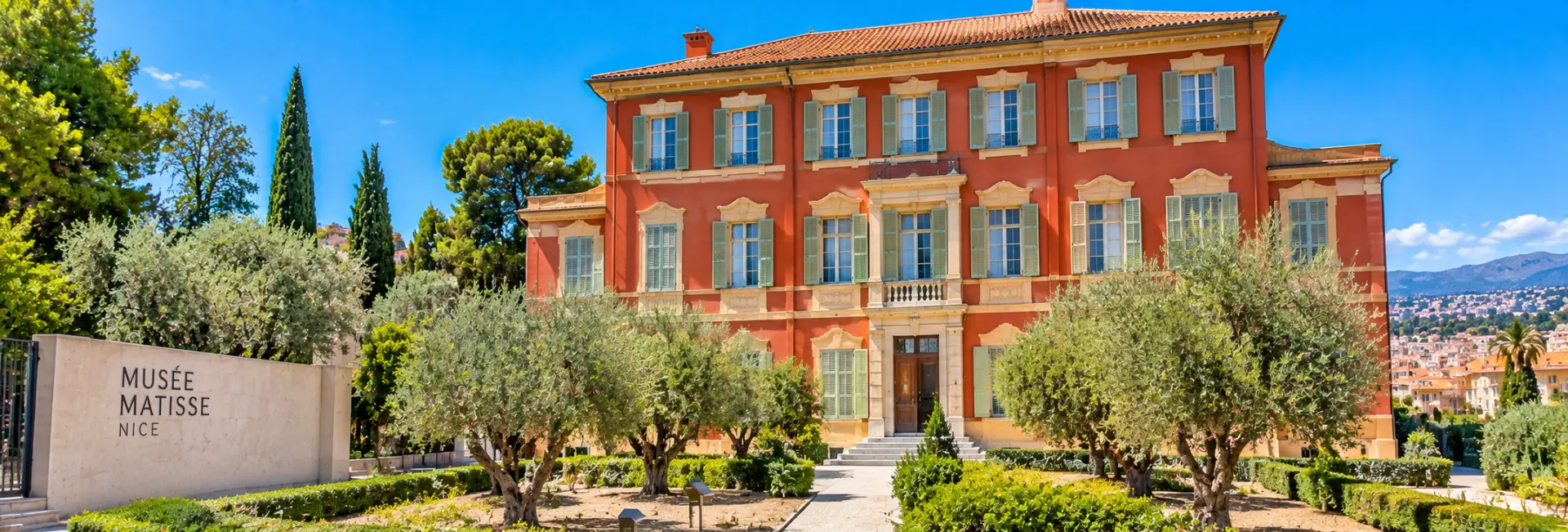
The Musée Matisse is Nice's museum dedicated to Henri Matisse, one of the great colourists of the 20th century. It stands on the green hill of Cimiez, north of the city centre, inside a 17th-century villa painted in warm ochre and surrounded by an olive grove and the remains of a Roman town.
Matisse lived in Nice from 1917 until his death in 1954, and the museum grew out of gifts made by the artist himself and later by his heirs. The result is a collection that follows his work from early experiments to the paper cut-outs of his final years, together with personal objects from his studio that give a sense of how he lived and worked.
What sets this museum apart is its mix of intimacy and breadth. Rather than a single blockbuster painting, it offers a full picture of an artist's evolution, often through works he chose to keep for himself. It is one of the most rewarding art stops on the French Riviera.
History of the Museum
A Gift to the City
The museum's story begins with generosity. Matisse and then his family donated works to the city of Nice, and in 1960 his wife, Amélie Matisse, added a bequest that included paintings such as Nu au fauteuil and nearly a hundred drawings. Further gifts and deposits from the French state have continued to enrich the collection ever since.
Matisse in Nice
Matisse settled in Nice in 1917 and stayed for the rest of his life, apart from a period of several years in nearby Vence. He worked in studios around the city, including one at the Régina on Cimiez hill, only a short distance from where the museum now stands. He died in Nice in 1954 and is buried in the Cimiez cemetery, which explains why the city became the natural home for his legacy.
Opening in the Villa
The city bought the villa in 1950 to protect it, and it took the name Villa des Arènes. The Musée Matisse opened there in 1963, occupying the first floor, while an archaeological museum filled the ground floor.
Expansion and Renewal
When the archaeology collections moved to their own building in 1989, the Matisse museum was able to grow. The architect Jean-François Bodin reworked the interior of the old villa and added a modern wing with a large reception hall, an auditorium and a bookshop. The new museum reopened in 1993. A teaching workshop was added in 2002 and a drawing room in 2003, and a modernisation programme began in 2017. The museum carries the national label Musée de France.
Architecture & Building
The Villa des Arènes is a Genoese-style villa built between 1670 and 1685. It was first known as the Palais Gubernatis, after its owner, Jean-Baptiste Gubernatis, who served as consul of Nice. Its facade, painted in a deep ochre, is a classic example of the Ligurian taste that shaped much of the Nice area during the Savoyard period.
The Villa and the Modern Wing
The museum covers about 2,800 square metres in total, of which roughly 1,200 are exhibition space spread across the old villa and the extension. The contrast works well: the historic rooms keep a domestic scale suited to drawings and smaller works, while the newer spaces handle larger pieces and temporary exhibitions.
The Setting
Outside, the museum sits in the Jardin des Arènes, a spacious public park planted with olive trees and part of a larger heritage area on Cimiez hill. Roman ruins and a monastery lie within walking distance, so the setting adds a sense of layered history to the visit.
Collections & Exhibits
The permanent collection, assembled from the donations of Matisse and his heirs, numbers close to 600 works and more than a hundred personal objects. It covers painting, drawing, printmaking, sculpture and the paper cut-outs of his late career.
Paintings and Drawings
The paintings trace his path from the 1890s onward, including the bright, sunlit interiors he made in Nice in the 1920s. Drawings and prints are an equally important strength, showing the line work that underlies his sense of colour and form.
Sculpture
Matisse thought of himself first as a painter, but he also modelled in clay and bronze. The museum is notable for keeping almost all of his sculpted work, which lets visitors see how three-dimensional experiments fed back into his painting.
Personal Objects and Studio Items
Furniture, textiles, ceramics and other items from his studios are displayed alongside the art. Many of these objects reappear in his paintings, so spotting them is part of the fun.
Cut-Outs and Late Work
The final chapter of his career is among the museum's greatest draws. Too frail to stand at an easel for long, Matisse began cutting shapes from sheets of paper painted in flat colour and arranging them into compositions, a method he called drawing with scissors. The museum holds several of these gouache cut-outs, which show how he distilled his long search for colour and form into a handful of bold shapes.
Temporary Exhibitions
The museum also stages temporary shows throughout the year, often pairing Matisse with other artists or exploring lesser-known aspects of his work. Check the museum's current programme before you go.
Must-See Highlights
With so much to see, it helps to know a few key works to look for.
- Fleurs et fruits, a monumental paper cut-out in cut and painted paper that greets visitors in the main hall.
- Nu bleu IV (1952), one of the best-known cut-outs of his last years, built from simple blue shapes.
- Tempête à Nice (1919-1920), an early Nice painting from the years just after he settled in the city.
- Odalisque au coffret rouge (1927), a richly patterned interior from his Nice period.
- Nature morte aux grenades (1947), a vivid still life from the 1940s.
- Danseuse créole (1950), a late work with strong, simplified forms.
The Vence Chapel Studies
A dedicated room presents material connected to the Chapelle du Rosaire in Vence, the chapel Matisse designed and decorated and considered a crowning achievement. Seeing the studies here makes a good introduction before visiting the chapel itself.
Ways to Experience It
Explore on Your Own
The museum is easy to navigate independently, and the layout follows his career in broad stages. Plan around one to two hours for the permanent collection and a little more if there is a temporary exhibition.
Guided Visits and Workshops
Guided tours are offered at set times, and the museum runs a creative space known as the Matisse Lab with workshops for all ages. Family sessions are open from age four, while older children and teenagers have sketching visits and art courses. Bookings are usually needed, so check the programme in advance.
With Children
Younger visitors receive a playful visit guide at the entrance, and the cut-outs are a natural draw for children because they feel familiar and hands-on. The site is accessible to strollers.
Combine with the Gardens
After the galleries, walk through the olive grove and park around the villa. The setting is one of the best parts of the visit, especially in good weather.
Best Time to Visit
The museum is usually quietest on weekday mornings and again in the later part of the afternoon. School holidays and summer weekends can be busier, so arriving close to opening time is a good habit.
By Season
Spring and autumn are the most pleasant for combining the museum with a walk through the gardens and Roman site. Summer is hot and lively, and the indoor galleries make a good escape from the midday sun. Winter is calm, with shorter days and fewer visitors.
Weather Considerations
The museum is a good rainy-day option in Nice, but remember it is closed on Tuesdays. Opening hours also shift slightly between the summer and winter seasons, so confirm them before you go.
Visitor Tips
- The museum is generally closed on Tuesdays and on some public holidays, so check the official calendar before you plan your day.
- Ticket sales stop around thirty minutes before closing, which means a late arrival can cut your visit short.
- Entry is by paid ticket, and the museum is included in the French Riviera Pass. Confirm current prices and any free-entry categories on the official website.
- The museum is accessible to wheelchair users and strollers, and pets are not allowed inside.
- The shop on the lower level sells books, prints and gifts, and has its own opening hours.
- Reach it by city bus to the Arènes / Musée Matisse stop, by taxi, or by a longer uphill walk from the city centre.
- Allow time for the garden and the nearby Roman site so you do not rush the rest of the hill.
Nearby Attractions
Cimiez is a quiet, green district with plenty of history, and the museum is a natural starting point for exploring it.
- The archaeological site of Cimiez, with the remains of a Roman amphitheatre and baths, sits right beside the museum.
- The Jardin des Arènes, a public park with olive trees that surrounds the villa.
- The Cimiez monastery and its gardens, a short stroll away, with views over the city.
- The Cimiez cemetery, where Matisse is buried with his wife, within walking distance.
- The former Régina building, where Matisse had his studio for many years, a few minutes from the museum.
- Vieux Nice and the seafront, reachable by bus or taxi for an afternoon in the old town.
If the Matisse story captures you, the Chapelle du Rosaire in Vence is the natural next step for a half-day trip from Nice.
FAQs about visiting Musée Matisse
What is the Musée Matisse in Nice? +
It is a municipal museum in the Cimiez district devoted to Henri Matisse, housed in a 17th-century Genoese villa and holding nearly 600 of his works along with personal objects.
What are the must-see works? +
Look for the large cut-out Fleurs et fruits in the hall, Nu bleu IV, Tempête à Nice, Odalisque au coffret rouge and Nature morte aux grenades.
How long should I allow for a visit? +
One to two hours is enough for the permanent collection. Add time if there is a temporary exhibition or if you want to walk through the olive grove and the nearby Roman site.
What are the opening days and hours? +
The museum is generally open daily except Tuesdays, with slightly shorter hours in winter and closures on a few public holidays. Always confirm times on the official website before you go.
How much does it cost? +
Entry requires a ticket, and the price can change from year to year. The museum is part of the French Riviera Pass, and some visitor groups may enter free, so check the current rates before you go.
How do I get to the museum? +
City buses stop at Arènes / Musée Matisse, and taxis are easy from the centre. Walking is possible but involves a steady uphill climb.
Is it suitable for children? +
Yes, the museum offers a playful visit guide for children and a creative space with workshops. Strollers are welcome and the site is accessible.
Is the museum accessible for wheelchair users? +
Yes, the museum is listed as accessible to wheelchair users without assistance, though it is wise to confirm access to temporary exhibition spaces in advance.
What else is there to see nearby? +
The Roman ruins of Cimiez, the monastery gardens, the cemetery where Matisse is buried and the Jardin des Arènes are all close by, making a half-day on the hill easy to plan.
