
Table of Contents
Overview
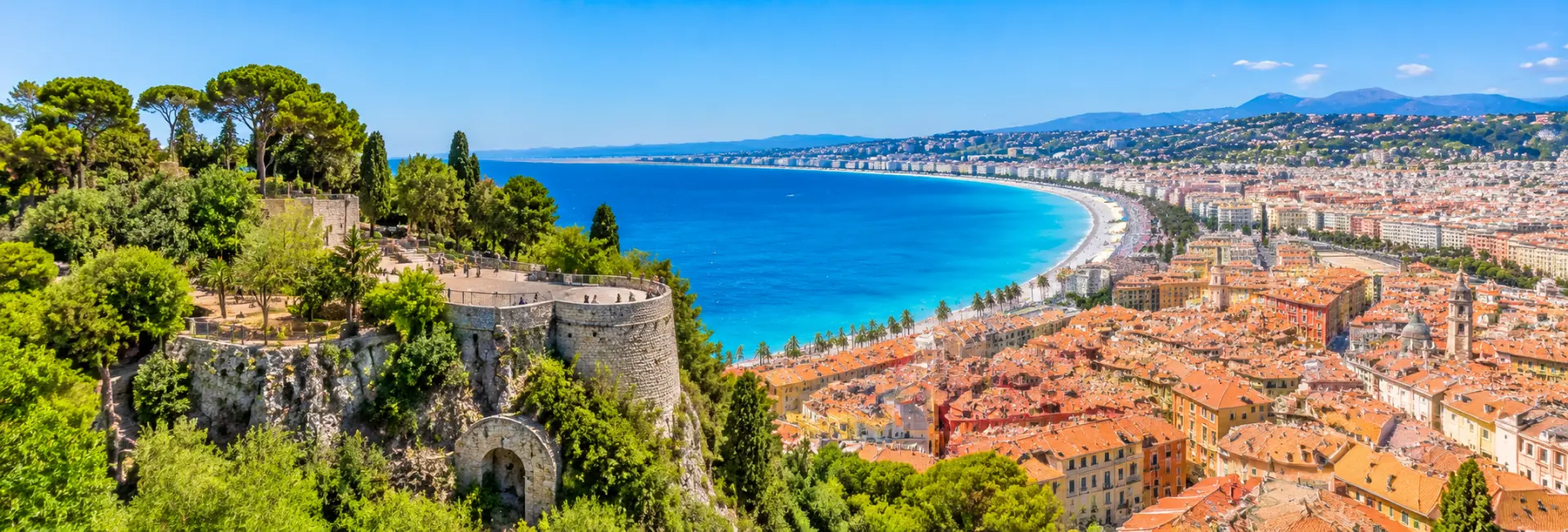
Castle Hill, known locally as the Colline du Château, is a green hilltop park rising about 92 metres above the eastern end of the Old Town of Nice. It stands between the pebble beach and the port, and it is the best place in the city to see how everything fits together: the red-tiled rooftops of Vieux Nice, the curve of the Baie des Anges, and the long line of the Promenade des Anglais.
Despite the name, there is no castle to visit. The medieval fortress that gave the hill its name was demolished more than three centuries ago, and what remains today is a landscaped park of paths, terraces, lawns, and viewpoints, together with a handful of ruins, a tower, and a large artificial waterfall.
Entry is free, and visitors can choose between stairs and a free lift. People come to enjoy the panorama, to walk in the shade of the trees, to let children play, and to learn about the ancient origins of Nice, since the first settlement of the city stood right here.
History
The Greek Beginnings of Nice
The hill is where Nice began. Greek settlers from Massalia, the ancient colony that became Marseille, set up a trading post on this high point overlooking the bay, and the city's ancient name, Nikaia, comes from that settlement. Archaeological digs have also found traces of earlier Celtic and later Roman occupation, which shows how long the position was valued for its view and its defensibility.
A Medieval Citadel
Over the centuries, the hilltop became a fortified stronghold. A castle with origins in the 11th and 12th centuries crowned the summit, and around it stood a citadel with defensive walls, towers, and a cathedral. The town grew in the shadow of this fortress, and for a long time the hill was the military and political centre of Nice.
Destruction in 1706
In the early 1700s, Nice found itself at the centre of a war between France and its rivals. After the city came under French control, Louis XIV ordered the fortress and its walls to be taken apart in 1706 so that it could not be turned against him in the future. The demolition erased much of the old stronghold, and the castle was never rebuilt.
From Ruin to Public Park
In the 19th century, the bare hilltop was gradually turned into a public garden. Trees were planted, paths were laid out, and many exotic species were introduced, giving the slopes the leafy character they have today. The old Saint-Elme tower was rebuilt in 1844 as the Bellanda Tower, and in 1885, the remains of the old keep were turned into a decorative waterfall fed by water brought through a canal. The hill has been a favourite promenade for local people ever since.
Recognition / Status
Castle Hill is a free public park run by the city, and it is part of the historic setting of Nice, a city that UNESCO added to the World Heritage List in 2021 as "Nice, Winter Resort Town of the Riviera". The views from the hilltop take in the Old Town and the seafront that form much of that heritage landscape.
The hill's importance rests on several things:
- It marks the original site of the Greek settlement that became the city of Nice
- It carries the remains of the medieval castle, citadel, and cathedral that once defined the city
- It is the main green space at the edge of the Old Town, used daily by residents
- It offers the most famous viewpoint in the city, a standard stop on visits to Nice
Key Areas & Features
Tour Bellanda
At the southwestern edge of the hill, the Bellanda Tower is the most prominent structure still standing. It occupies the site of an older defensive tower and was rebuilt in the 19th century in the romantic spirit of the new park. Its terrace offers one of the best views of the bay, and the tower is associated with the composer Hector Berlioz, who is said to have drawn inspiration from the setting. A small exhibition inside, known as the Bellandarium, tells the story of the hill through a diorama.
The Waterfall
Near the summit, the artificial waterfall tumbles down a rocky face above a pool. It was built in the late 19th century on the foundations of the old castle keep, and its sound and cool air make it a popular stop on hot days. The viewing terrace above it gives a sweeping outlook over the city.
Ruins and Archaeological Remains
Scattered across the plateau are fragments of walls and foundations from the old castle and cathedral. They are modest, but they help you imagine the scale of the original fortress, and information panels explain what each part once was.
Gardens, Lawns, and Play Areas
The park covers around 19 hectares and includes shaded woodland paths, mosaic-patterned walkways, open lawns, and viewpoints with telescopes. There is a large children's playground and a couple of cafes, and picnics are allowed, so it works well as a family stop.
The Cemeteries
On the quiet northern side of the hill lie historic cemeteries, including Catholic, Protestant, and Jewish sections, dating back to the late 18th century. They are still places of remembrance, so visitors should keep voices low and show respect.
Ways to Experience It
Take the Free Lift
The easiest way up is the free lift at the foot of the Bellanda Tower, next to the seafront. It carries you most of the way in moments and also makes the hill accessible for visitors who cannot manage steps.
Climb the Stairs
For a more rewarding approach, climb the Lesage stairs from the eastern end of the seafront, or one of the other paths from the Old Town. There are hundreds of steps, but landings along the way let you pause to look back at the changing view.
Walk the Park
Once at the top, follow the paths around the plateau at an easy pace. A full circuit takes an hour or two depending on how often you stop, and the different viewpoints show the city, the harbour, and the bay from different angles.
Look in Every Direction
To the west, you see the curve of the Promenade des Anglais and the airport beyond. To the north and east, the view sweeps over the port and the hills behind the city, with the Provençal mountains rising in the distance on a clear day.
Watch the Sunrise or Sunset
The hilltop catches the first light over the port in the morning and the last light over the bay in the evening, so both ends of the day make good photography times.
Ride the Tourist Train
A small tourist train runs from the seafront to the hill, which is a gentle alternative for those who prefer not to walk.
Best Time to Visit
Time of Day
Early morning is quiet and cool, with soft light over the port, while late afternoon is ideal for golden light across the bay. Midday in summer can be hot and bright, although the shade of the park trees helps. The hill is often lit at night, though access follows the park's closing hours.
Time of Year
Spring and autumn are the most comfortable seasons for walking and viewing, with clear air and mild temperatures. Summer brings long days and large crowds, while winter is calm and often sunny, with clearer visibility over the mountains.
Weather
Clear days give the best views, particularly after rain or wind has cleared the haze. Strong winds can make the open terraces uncomfortable, so it is worth checking the forecast before you go.
Visitor Tips
- Entry is free. The park and the lift cost nothing to use, and there is no ticket needed to walk the paths.
- Check opening hours. The park generally closes in the evening, with later closing in summer than in winter, so confirm the current schedule before you go.
- Wear sturdy shoes. The paths include steps, slopes, and uneven stone, and flip-flops are not ideal.
- Bring water and sun protection. Shade is available under trees, but the viewpoints are open and sunny.
- Pack a picnic. Picnics are allowed and the lawns are pleasant, though there are also cafes on the hill.
- No cars. The hill is for pedestrians only, so plan to arrive on foot or by lift.
- Respect the cemeteries. They are active places of remembrance, so keep noise down and avoid photography of people.
- Combine it with the Old Town. The hill is just a few minutes from the lanes and squares of Vieux Nice, which makes a natural pairing.
Hours, services, and the running of the lift or tourist train can change, so check locally for current information.
Nearby Attractions
- Vieux Nice (Old Town) - Narrow lanes, the Cours Saleya market, and Baroque churches at the foot of the hill.
- Promenade des Anglais - The famous seafront boulevard, reached along the Quai des États-Unis from the base of the hill.
- Port of Nice - A working harbour with cafes and a relaxed atmosphere on the eastern side of the hill.
- Place Rossetti and the Cathedral - A lively square within a short walk of the Old Town entrance.
- Place Masséna - The city's grand central square, a pleasant walk west along the seafront.
FAQs about visiting Castle Hill
What is Castle Hill in Nice? +
Castle Hill is a 92 metre hilltop park at the eastern end of the Old Town. It is the original site of Nice and offers panoramic views over the bay, the Old Town, and the port.
Is there still a castle on Castle Hill? +
No. The medieval castle was demolished in 1706 on the orders of Louis XIV and was never rebuilt. Today you will see ruins, the Bellanda Tower, and a landscaped park.
Is it free to visit? +
Yes. Entry to the park is free, and the lift that carries visitors up the hill is also free of charge. Some small attractions or services on the hill may have their own rules.
How do I get to the top? +
You can climb the stairs, take the free lift near the Bellanda Tower, or use the tourist train from the seafront. The stairs involve hundreds of steps, so the lift is the easiest option.
How long should I spend there? +
Allow about one to two hours to take in the views, the waterfall, and the park. If you want to picnic, let the children play, or visit the tower exhibition, plan for longer.
What is the best time to visit? +
Early morning and late afternoon offer the best light and fewer crowds. Spring and autumn give the most comfortable temperatures, while summer middays can be hot.
Is Castle Hill suitable for children? +
Yes. The park has a large playground, open lawns, and shaded paths, and picnics are allowed. Parents should watch younger children near the cliff edges and viewpoints.
Is it accessible for people with limited mobility? +
The lift gives step-free access to the hill, and the park is described as suitable for self-propelled wheelchairs. Some paths and viewpoints still involve slopes or steps, so check conditions beforehand.
What are the main sights on the hill? +
The best-known features are the panoramic viewpoints, the large artificial waterfall, the Bellanda Tower, and the ruins of the old castle. The historic cemeteries on the northern side are also part of the site.
What can I combine with a visit to Castle Hill? +
The Old Town, the Cours Saleya market, the port, and the Promenade des Anglais are all close by and easy to combine on a single day.
