
Table of Contents
Overview
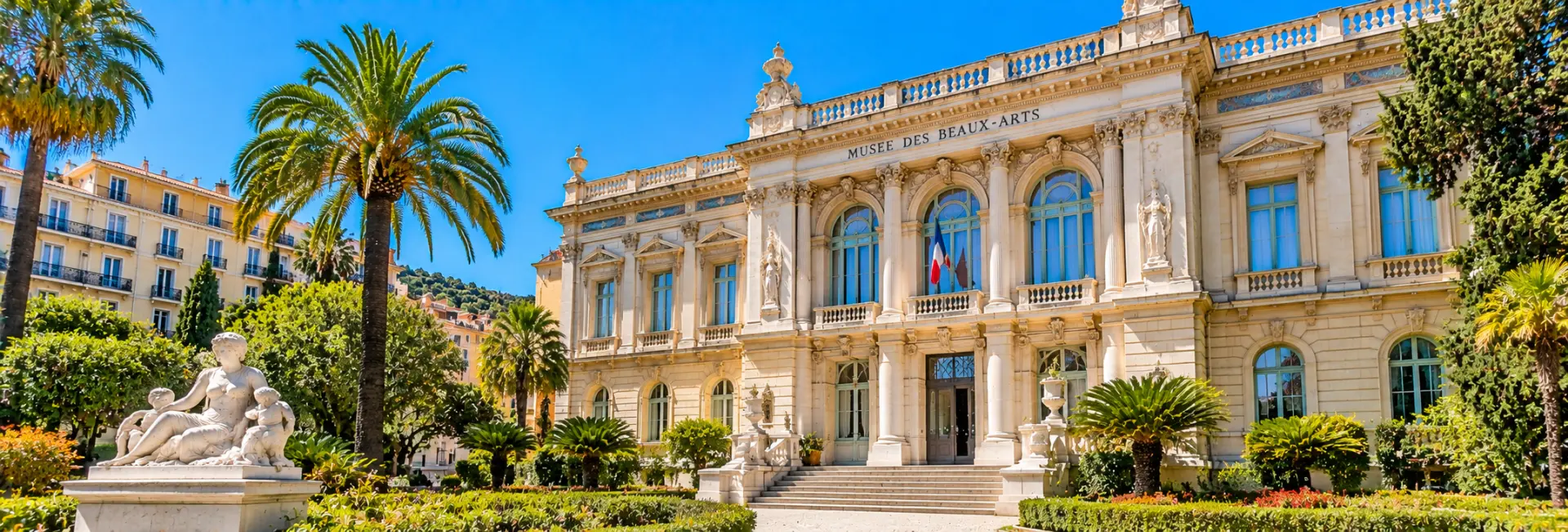
The Musée des Beaux-Arts de Nice, officially the Musée des Beaux-Arts Jules Chéret, is the city's main museum of historic European painting and sculpture. It occupies a grand 19th-century villa on the Baumettes hill, only a short distance from the Promenade des Anglais, and the building is as much a part of the experience as the art inside.
The collection stretches from the 12th to the early 20th century and includes more than 10,000 paintings, drawings, prints, sculptures and decorative objects. You will find Flemish painters, French masters of the 18th century, Impressionist-era landscapes, Symbolist fantasies by a Nice-born artist and a rich group of works by Jules Chéret, the celebrated poster designer who spent his last years on the Riviera.
Because it draws far fewer visitors than the big-name museums on the French Riviera, it is a relaxed place to spend a couple of hours looking at art in a setting that still feels like a private palace.
History of the Museum
A Collection Looking for a Home
After the County of Nice became part of France in 1860, Napoleon III supported the creation of an art collection for the city, first drawn from a deposit of works from the French state. The museum was formally created in 1875 and spent its early decades in the city center, sharing space with other municipal institutions and without a purpose-built home of its own.
A Villa for a Princess
The building that now houses it was begun in 1878 for Princess Elisabeth Kotchoubey, one of the aristocrats from the Russian Empire who made the Riviera a fashionable winter retreat. The villa was completed in 1883 by its next owner, the American James Thomson, which is why you will often see it called the Villa Kotschoubey-Thomson.
From Residence to Museum
The City of Nice bought the villa in the mid-1920s to give its growing art collection a permanent address. The interior was heavily reworked for museum use, but the grand staircase was kept as it had been in the princess's day. The museum opened on 7 January 1928 as the Palais des Arts Jules Chéret, named after the artist who lived in Nice at the end of his life and died there in 1932. The building has long carried heritage protection and was upgraded to the highest classified status in 2023.
Since opening, the museum has grown through legacies and donations from private collectors, which is why its scope is so wide. Rather than focusing on one school or period, it now tells a broad story of European art from the Middle Ages to the early 20th century, with a particular emphasis on artists linked to Nice and the Riviera.
Architecture & Building
The villa is a good example of the grand private houses built in Nice during the Belle Époque. It is often described as neo-classical, with Italian and Genoese-style touches, and it rises over two main levels with generous rooms, high ceilings and a sense of occasion that few modern museum buildings can match.
The centerpiece is the monumental marble staircase that connects the floors. Its walls carry four large paintings by Nicaise de Keyser, created between 1876 and 1878 and left to the museum by the collector Ernest Gambard. Climbing these stairs, with painted figures looking down at you, is a good way to feel what the house was like as a residence. The villa also has large reception rooms and a glass-roofed space that hint at the parties once held here.
Because the museum grew out of a home rather than a purpose-built gallery, many rooms feel intimate. Paintings hang in spaces that still read as salons, and the villa sits back from the avenue in its own small grounds, which adds to the calm.
Collections & Exhibits
Old Masters and Flemish Painting
The earliest works are religious paintings from the 14th and 15th centuries, including a piece by Bronzino dated 1540. Seventeenth-century Flemish painting is another strength, with pieces such as an allegorical work by Jan Brueghel.
French Painting and Sculpture
The 18th century is represented by artists such as Carle Van Loo, whose 1745 painting of Theseus defeating the Marathon bull was designed as a pattern for a tapestry, and Jean-Honoré Fragonard. The 19th century brings the Barbizon School, Impressionist-era landscapes, Orientalist subjects and the Riviera views of Félix Ziem, together with sculpture by Jean-Baptiste Carpeaux and Auguste Rodin.
The Belle Époque and Jules Chéret
The museum holds an important body of work by Jules Chéret, the artist often called the father of the modern poster. Beyond his famous posters, he painted vivid, lighthearted canvases such as a 1904 Déjeuner sur l'herbe. His work sits alongside paintings and sculpture that capture the elegance and entertainment of the era, a period the museum treats as a cornerstone of its collections.
Modern Art and the Riviera
Early 20th-century painters connected to the Mediterranean include Raoul Dufy, Pierre Bonnard, Kees van Dongen, Charles Camoin and Marie Laurencin. Local interest comes from Gustav-Adolf Mossa, the Nice-born Symbolist painter who also served as the museum's curator. He was involved in Nice's carnival traditions, and his father, Alexis Mossa, was an artist too, so the family name is closely tied to the city's artistic life.
Far Eastern Art
A smaller gallery presents 17th- and 18th-century Asian paintings, including a long silk scroll about an imperial inspection tour in southern China and prints from Hokusai's Manga.
With more than 10,000 works in the collection, only a portion can hang at any one time. That is why the displays can feel different from one visit to the next, and why it is worth checking what is currently on show if you have a favorite artist in mind.
Must-See Highlights
Which works are on view can change as the museum rehangs its galleries, but these are the pieces and spaces most visitors look for:
- The monumental staircase and its four paintings by Nicaise de Keyser
- Jules Chéret's colorful paintings, including his 1904 Déjeuner sur l'herbe
- Raoul Dufy's bright Mediterranean interiors, such as the Yellow Console with Two Windows from 1948
- Pierre Bonnard's view over the Seine from 1912
- Carle Van Loo's Theseus and the Marathon bull, a large 1745 canvas
- The Bronzino panel from 1540, one of the oldest standout works in the collection
- Gustav-Adolf Mossa's dramatic Symbolist paintings, a strong local specialty
- Sculptures by Carpeaux and Rodin
- The Far Eastern gallery, including the Qianlong scroll
Ways to Experience It
The museum is compact enough to enjoy in a single visit, and there are several ways to get more from it:
- Self-guided visit: start with the staircase and work through the floors at your own pace
- Guided visits: the museum offers themed tours, including ones tied to its temporary exhibitions and the world of the Belle Époque
- Temporary exhibitions: shows are staged regularly alongside the permanent displays, so there is often something new to see
- Family and children's activities: workshops and family visits are organized, especially during school holidays
- Special programs: evening visits, immersive themed tours and creative workshops are added to the calendar from time to time
- Museum passes: multi-day passes for Nice's municipal museums and the French Riviera Pass can make the visit better value if you plan to see several sites
Most people spend between one and two hours here, a little longer if a special exhibition is on.
Best Time to Visit
By Season
The museum is a pleasant stop all year round. In summer, when the coast is hot and crowded, it offers cool, quiet galleries and a break from the beach. In winter and on rainy days, it makes a good indoor option, and the mild Riviera weather means the walk from the tram or bus is rarely unpleasant.
By Day and Time
Visitor numbers are modest compared with the city's other headline attractions, so you rarely need to plan around crowds. Arriving soon after opening gives you the staircase and main rooms almost to yourself. The museum is closed on Mondays, and opening hours shift between the summer and winter seasons, so check the schedule for your dates. Heritage open days in September sometimes bring special programs to museums across France, so it is worth seeing whether the museum has joined in.
Visitor Tips
- There is no parking close by, so public transport is the best option: bus 38 stops at Musée Chéret, and tram line 2 stops at Centre Universitaire Méditerranéen, with access by stairs.
- The museum is closed on Mondays and on a few public holidays, including 1 January, Easter Sunday, 1 May and 25 December.
- Entry is free for visitors under 18 and for residents of the Nice metropolitan area holding the Nice Museums Pass, and the French Riviera Pass includes the museum.
- Check the official website before you go, as parts of the building are occasionally closed for rehanging or maintenance, which can affect ticket prices.
- The villa has historic staircases, so visitors with reduced mobility should confirm current access conditions in advance.
- Allow one to two hours, and consider pairing the visit with another municipal museum using a multi-museum ticket.
Nearby Attractions
The museum sits in a pleasant residential part of Nice, close to the seafront. Good additions to the same outing include:
- The Promenade des Anglais, a short walk away, for the classic Nice seafront stroll
- Musée Masséna, the municipal museum of the city's history and art in a Belle Époque villa near the promenade
- Musée d'Art Naïf Anatole Jakovsky, another of Nice's municipal museums, in the western part of the city
- MAMAC, the museum of modern and contemporary art, for a striking contrast with the villa's classical collection
- Vieux Nice, the old town, with its markets, baroque churches and narrow streets
- Cimiez, the hillside district that houses the Matisse Museum and the Marc Chagall National Museum
FAQs about visiting the Musée des Beaux-Arts de Nice
Why is the museum named after Jules Chéret? +
Jules Chéret was a painter and poster designer who lived in Nice in his final years and died there in 1932. The museum opened in 1928 as the Palais des Arts Jules Chéret and still carries his name, and it holds an important collection of his work.
What kind of art can I see there? +
The collection covers European painting and sculpture from the 12th to the early 20th century, with highlights including Bronzino, Fragonard, Van Loo, Chéret, Dufy, Bonnard, Mossa, Carpeaux and Rodin, plus a small gallery of Far Eastern art.
How long should I plan for a visit? +
One to two hours is enough for most visitors. Plan a bit longer if you want to see a temporary exhibition or join a guided tour.
Is the museum free? +
Entry is free for visitors under 18 and for residents of the Nice metropolitan area with the Nice Museums Pass, and the French Riviera Pass also includes it. Everyone else pays a standard ticket, and prices and free days can change, so check the official site.
How do I get there without a car? +
Take bus 38 to the Musée Chéret stop or tram line 2 to Centre Universitaire Méditerranéen, which is reached by stairs. The museum has no parking nearby, so public transport is strongly recommended.
Is the building worth seeing on its own? +
Yes. The marble staircase, the large painted panels and the villa's elegant rooms give a good sense of Riviera high society in the late 19th century, and many visitors enjoy the setting as much as the art.
Is it suitable for children? +
Older children and teenagers often enjoy the colorful paintings and the palace-like setting, and the museum organizes family visits and workshops, particularly during school holidays. Under-18s enter free.
How does it compare with the Matisse and Chagall museums? +
Those museums focus on a single artist each, while this one offers a broad tour of European art history. Many visitors combine them for a fuller picture of art in Nice.
