
Table of Contents
Overview
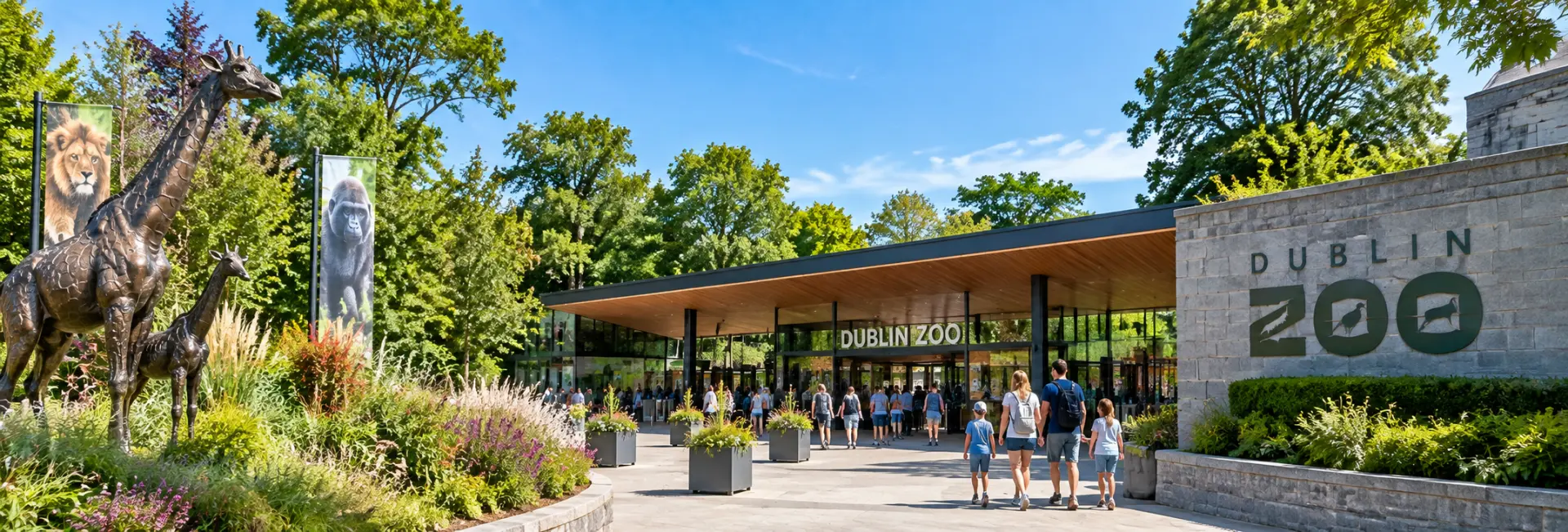
Dublin Zoo sits inside Phoenix Park, one of Europe's largest enclosed city parks, and ranks among the oldest zoos in the world still operating on its original site. Spread across 28 hectares of gardens, lakes and naturalistic habitats, it is home to around 400 animals from roughly 100 species and draws well over a million visitors a year, making it Ireland's most-visited paid attraction.
What began in 1831 as a small Victorian menagerie has grown into a modern conservation-focused zoo, organised into large, naturalistic habitats rather than cages, from the open African Savanna to the dense Gorilla Rainforest. Today Dublin Zoo works alongside zoos worldwide on breeding programmes for endangered species, alongside remaining a firmly loved family day out for Dubliners.
History
A Victorian Menagerie
Dublin Zoo grew out of the Zoological Society of Dublin, founded at a meeting in the city's Rotunda Hospital on 10 May 1830. The zoo opened to the public on 1 September 1831 on a small plot within Phoenix Park, with an initial collection of 46 mammals and 72 birds donated by London Zoo, making it one of the earliest public zoos in the world. Its thatched entrance lodge, built in 1833 for around £30, still stands beside the current entrance.
Opening the Gates to the Public
Entry originally cost sixpence, putting a visit out of reach for many ordinary Dubliners. In 1840 the Zoological Society took the unusual step of charging just a penny on Sundays, a decision that made the zoo genuinely popular across the city and helped secure the public support it still enjoys today.
The Irish Lion Industry and a Hollywood Connection
The zoo bought its first pair of lions in 1855, and their offspring, born from 1857 onward, became so sought after by zoos and animal dealers abroad that Dublin's breeding programme became known as the "Irish Lion Industry" for the best part of a century. One of these Dublin-born lions, named Slats and born in 1919, is believed to have been filmed as the roaring lion used in MGM's opening studio logo between 1924 and 1928.
The zoo's lions drew visitors of their own well beyond Ireland's borders: former United States President Ulysses S. Grant was among the notable figures who came to see Dublin's celebrated lions during a 19th-century visit, a sign of how far the zoo's reputation for successful breeding had already travelled by that point.
Modern Conservation Focus
By the late 1980s, chronic underfunding brought the zoo close to closure, prompting the Irish government to step in with a dedicated annual grant. The decades since have seen a deliberate shift away from the old cage-based menagerie model toward large, naturalistic habitats, alongside a growing role in international breeding and conservation programmes for endangered species.
That shift has also changed how the zoo presents itself to the public: where 19th-century visitors came largely to view animals as curiosities, today's habitats are built around each species' natural behaviour, and the zoo's own materials frame conservation and education, rather than simple display, as its core purpose.
Habitats & Zones
Dublin Zoo is organised into a series of large, themed habitats rather than a simple grid of enclosures, each designed to echo the animals' natural environment as closely as possible.
- African Savanna, the zoo's largest habitat, is home to giraffes, southern white rhinos, zebras and ostriches sharing open plains.
- Kaziranga Forest Trail follows a bamboo-lined route to the zoo's elephant herd, with pools and mud baths built for their bathing and cooling.
- Gorilla Rainforest and the neighbouring Orangutan Forest give western lowland gorillas and Bornean orangutans dense planting and, in the orangutans' case, tall climbing trees to range through.
- Sea Lion Cove houses a colony of California sea lions, while Wolves in the Woods lets visitors watch a pack of grey wolves from several vantage points around a woodland enclosure.
- Zoorassic World pairs a life-size Tyrannosaurus rex skeleton with around a dozen living reptile species, several part of international breeding programmes.
- The Family Farm offers younger visitors a hands-on introduction to domestic animals, and a Nocturnal House recreates night-time conditions for Madagascar's rare aye-ayes.
Newer habitats have generally replaced older, smaller enclosures as the zoo has redeveloped over time, with each redesign aiming to give the animals inside more space and a setting closer to their wild environment than the version it replaced.
Animals & Conservation
Dublin Zoo is a member of the British and Irish Association of Zoos and Aquariums, the European Association of Zoos and Aquaria, and the World Association of Zoos and Aquariums, and takes an active role in coordinated breeding programmes for threatened species.
The zoo manages the European Endangered Species Programme for the golden lion tamarin and the Moluccan cockatoo, meaning it coordinates breeding across zoos on the continent to keep these populations genetically healthy, and it also houses other EEP species such as Goeldi's monkeys and white-faced sakis under programmes led by fellow institutions. Its conservation work is paired with an education programme aimed at both school groups and casual visitors, built around the idea that seeing an animal up close builds support for protecting its wild counterparts.
Individual animals have occasionally drawn attention well beyond Dublin: in 2011, footage filmed at the zoo of a Bornean orangutan rescuing a drowning chick from a pond became a viral sensation online, an unplanned moment that nonetheless reflected the kind of animal behaviour the zoo's naturalistic habitats are designed to allow.
Ways to Experience It
Most visitors explore Dublin Zoo independently on foot, following a looping path past the various habitats, though a safari-style train also carries visitors around parts of the African Plains for those who want to cover ground more quickly or need a rest partway through.
Free keeper talks and feeding demonstrations run daily from March through September, and on weekends the rest of the year, giving a closer look at how individual species are cared for. Bookable workshops on themes such as dinosaurs or birdwatching run throughout the year, and in November and December the zoo transforms after dark for Wild Lights, a seasonal illuminated trail through the grounds.
On-site cafés and restaurants, including an Africa-themed option near the Savanna habitat, mean a visit does not need to be interrupted by a trip outside the gates, and picnic areas are dotted around the grounds for visitors who prefer to bring their own food.
Best Time to Visit
Dublin Zoo is open every day of the year except Christmas Day and St Stephen's Day, though opening and closing times shift with the seasons, generally opening around 9:30am and closing anywhere from mid-afternoon in winter to early evening in summer. Arriving soon after opening tends to offer the best chance of seeing animals such as the gorillas active before an afternoon rest, and weekday mornings are noticeably quieter than weekend afternoons.
Because most of the zoo is outdoors, a dry, mild day makes for a more comfortable visit, though the many indoor houses, such as Zoorassic World and the South American House, give shelter if the weather turns. Visitors keen to see the seasonal Wild Lights display should plan an evening visit specifically during its November-to-December run, since it operates on different hours from the daytime zoo.
School holiday periods and fine summer weekends tend to bring the largest crowds, so travellers with flexible schedules may prefer a weekday visit outside the main Irish school holidays for a noticeably calmer walk around the habitats.
Visitor Tips
- Booking tickets online in advance is usually cheaper than paying at the gate, and helps manage queues on busy days.
- The zoo is large and involves plenty of walking, so comfortable shoes are worth prioritising over anything else.
- Allow two to four hours for a proper visit; families often make a full half-day of it.
- Some individual habitats stop admitting visitors earlier than the zoo's main closing time, so check on arrival if a particular animal is a priority.
- Dublin Zoo has no dedicated visitor car park of its own; the nearby Lord's Walk car park, a two-minute walk away, is the most convenient option for drivers.
- Children under three are usually admitted free, and discounted tickets are available for visitors with additional needs.
Nearby Attractions
Because Dublin Zoo sits inside Phoenix Park, a visit pairs naturally with the rest of the park's attractions, all reachable on foot or by a short journey within the grounds.
- Áras an Uachtaráin, the official residence of the President of Ireland, offers free guided tours on Saturdays.
- The Wellington Monument, a 63-metre obelisk, and the Victorian-era People's Garden are both within easy walking distance.
- The Phoenix Park Visitor Centre, housed in the historic Ashtown Castle, has exhibits on the park's history and wildlife, including its resident herd of fallow deer.
- Farmleigh House, a former Guinness family residence with its own gardens, sits at the park's western end and is open for tours on select days.
Given the size of Phoenix Park, most visitors treat the zoo and the wider park as separate, back-to-back outings rather than trying to combine them into a single rushed visit, since each comfortably fills half a day on its own.
FAQs about visiting Dublin Zoo
How old is Dublin Zoo? +
Dublin Zoo opened to the public in 1831, making it one of the oldest zoos in the world still operating on its original site.
How long does a visit take? +
Most visitors spend two to four hours exploring the habitats, with families often turning it into a half-day outing.
Is Dublin Zoo good for young children? +
Yes, the Family Farm offers hands-on encounters with domestic animals, and a safari-style train ride around the African Plains is popular with younger children who tire of walking.
Is there parking at Dublin Zoo? +
The zoo itself has no dedicated car park; the nearby Lord's Walk car park, a two-minute walk away, is the most convenient option for drivers.
What is Dublin Zoo's Hollywood connection? +
A lion born at Dublin Zoo in 1919, named Slats, is believed to have been filmed as the roaring lion used in MGM's opening studio logo in the 1920s.
What is Wild Lights at Dublin Zoo? +
Wild Lights is a seasonal illuminated evening trail through the zoo held each November and December, run on separate hours from the regular daytime visit.
Is Dublin Zoo open all year round? +
Yes, it is open every day except Christmas Day and St Stephen's Day, though opening and closing times vary by season.
