
Table of Contents
Overview
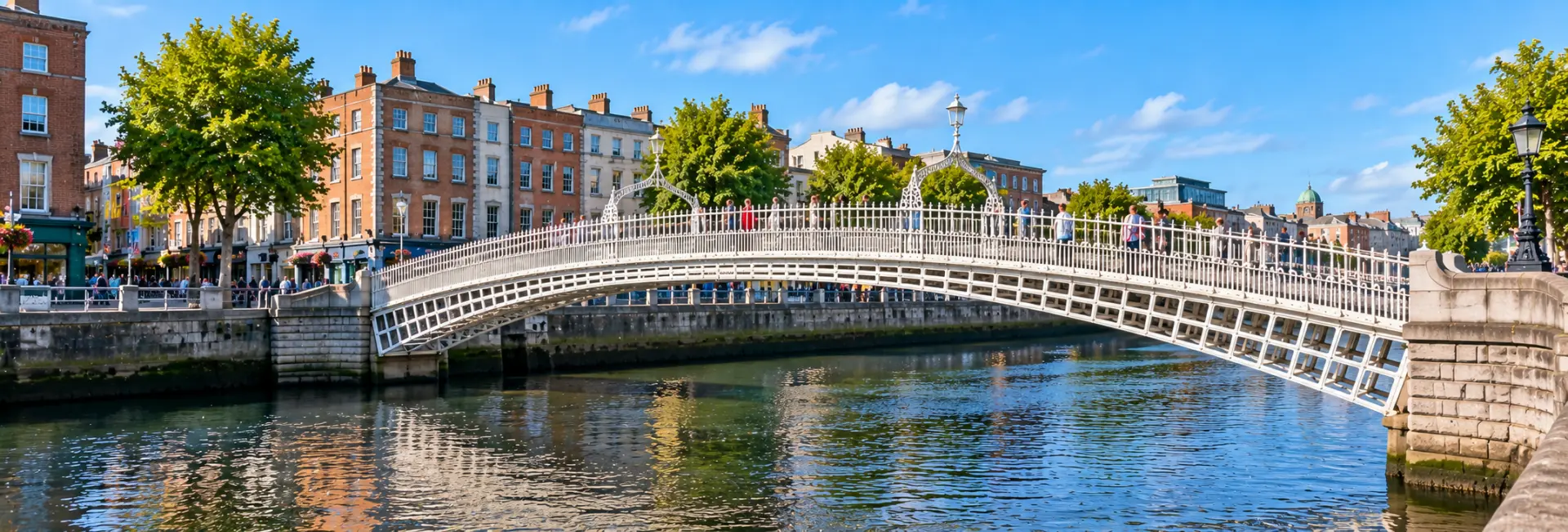
The Ha'penny Bridge is a slender cast-iron footbridge arching over the River Liffey, linking Temple Bar on the south quays with the shopping streets north of the river. Built in 1816, it was Dublin's first dedicated pedestrian bridge and remains one of the most recognisable, and most photographed, landmarks in the city.
Its familiar nickname comes from the half-penny toll once charged to cross it, a small piece of everyday history that has long outlived the fee itself. Officially known as the Liffey Bridge, it's still known to Dubliners and visitors alike simply as "the Ha'penny."
History
Replacing the Ferries
Before the bridge existed, crossing the Liffey at this point meant relying on a ferry service run by a local alderman, William Walsh, which had fallen into poor condition by the early 19th century. Rather than repair the ferries, Walsh proposed a new bridge, and in exchange for giving up his ferry rights he was granted permission to charge pedestrians a half-penny toll to cross it, a right that lasted around a century.
Construction and Naming
The bridge opened in May 1816 as Ireland's first cast-iron bridge, with its ribs cast in 18 sections at the Coalbrookdale foundry in Shropshire, England, using iron ore originally mined in County Leitrim, before being shipped to Dublin for assembly. It was officially named Wellington Bridge, after the Dublin-born Duke of Wellington, and later renamed Liffey Bridge following Irish independence, though the "Ha'penny" nickname, drawn from its toll, never went away.
Restoration for the Modern City
By the turn of the millennium, the bridge was carrying tens of thousands of pedestrians a day, far beyond anything its designers had anticipated, and showing its age as a result. A major restoration completed in December 2001 returned it to its original white colour and lighter appearance, and the bridge has since had to have clusters of "love locks" periodically removed, after the added weight was found to be putting strain on the historic structure.
Architecture & Design
The Ha'penny Bridge is a single-span cast-iron arch bridge roughly 43 metres long and just over 3.5 metres wide, designed by John Windsor and built purely for foot traffic, with no allowance for vehicles then or now. Its shallow arch and slim iron railings give it a light, elegant profile that contrasts with the heavier stone road bridges elsewhere along the Liffey.
- A single cast-iron arch spanning the river in one clear leap
- Ornamental cast-iron lamp standards along the deck
- A wooden and reinforced deck, replacing the bridge's original surface over the years
- Distinctive white paintwork restored during the 2001 renovation
What to See There
The bridge itself is the attraction: a short, level crossing that offers open views up and down the Liffey towards the city's other bridges and quayside buildings. Its ironwork and lamps are popular subjects for photographs, particularly in the evening when the surrounding quays are lit up.
On the Temple Bar side, the bridge opens directly onto the cultural quarter's cobbled streets, while the northern end lands on Bachelors Walk and Liffey Street, close to the busy Henry Street shopping area.
Ways to Experience It
There's no ticket or formal visit required, the Ha'penny Bridge is simply crossed as part of walking around central Dublin, but a few approaches help make the most of it.
- Cross on foot as part of a self-guided walk linking Temple Bar with the northside shopping streets
- Photograph the bridge from one of the neighbouring quays or bridges for a full view of its arch
- Include it as a stop on river-focused walking tours covering Dublin's quays and bridges
- Visit at dusk to see the bridge and river lit up against the city skyline
Best Time to Visit
The bridge is open around the clock and can get busy with foot traffic at almost any hour, particularly during the day when it links two of the city's most walked areas. Early morning or late evening tends to offer a quieter crossing and better light for photographs.
Visitor Tips
- The bridge can be narrow and crowded at peak times, so allow a little patience if crossing with luggage or a group
- The surface can be slippery in wet weather, as with much of central Dublin's older paving
- Don't attach padlocks to the railings, as the council periodically removes them and they add strain to the historic ironwork
- Combine a crossing with a wider riverside walk, since several other notable bridges lie just up and downstream
FAQs about visiting the Ha'penny Bridge
Why is it called the Ha'penny Bridge? +
It's named after the half-penny toll once charged to pedestrians crossing the bridge, a right granted to its builder, William Walsh, in exchange for giving up his previous ferry service.
What is the bridge's official name? +
It's officially called the Liffey Bridge, though it was originally named Wellington Bridge; almost everyone, then and now, simply calls it the Ha'penny Bridge.
Is there a fee to cross the bridge today? +
No, the toll was abolished long ago and crossing the bridge is free, at any time of day.
How long does it take to see the bridge? +
Crossing it takes only a minute or two, though many visitors pause partway across for photographs of the river and surrounding quays.
Is the Ha'penny Bridge wheelchair accessible? +
Yes, the bridge has a level, ramped deck suitable for wheelchairs and buggies, though it can get crowded at busy times.
What's nearby the Ha'penny Bridge? +
Temple Bar sits immediately on its southern side, while the northern end leads towards Henry Street and the O'Connell Street shopping area, making it a natural link between the two.
Is the bridge worth visiting at night? +
Yes, the bridge and surrounding quays are lit up after dark, making it a popular spot for evening photographs of the river.
What's a common mistake visitors make? +
Treating it purely as a photo stop rather than a working crossing: at busy times it carries heavy foot traffic, so it's worth being mindful of other pedestrians if stopping to take pictures.
