
Table of Contents
Overview
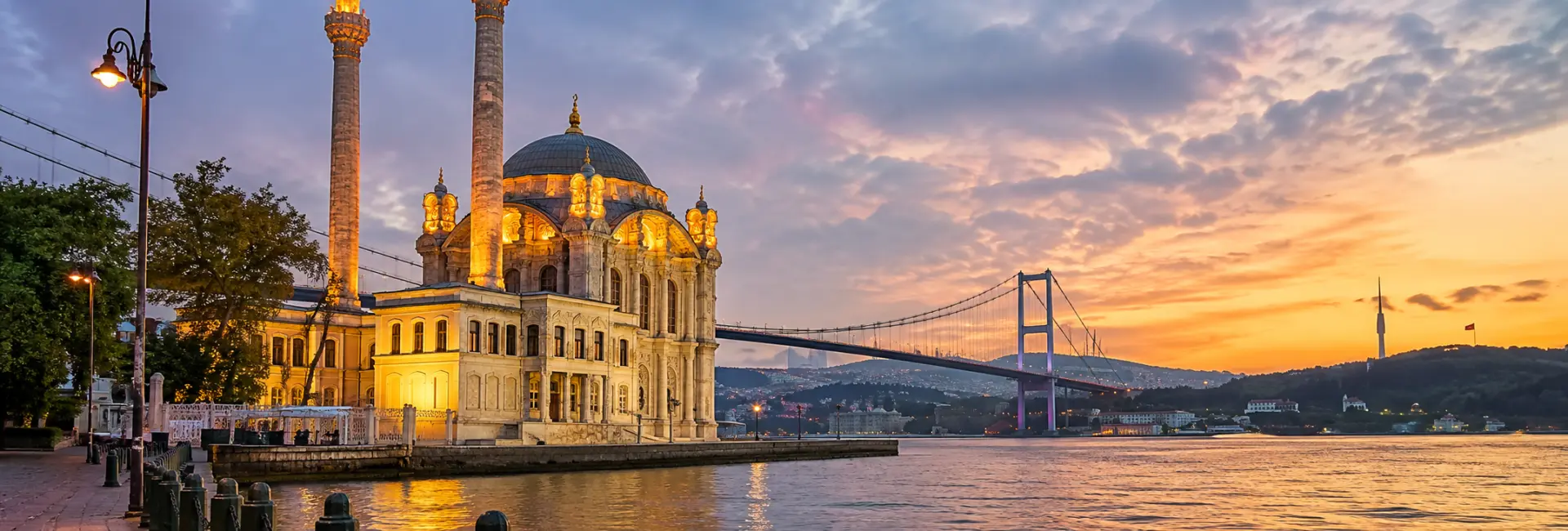
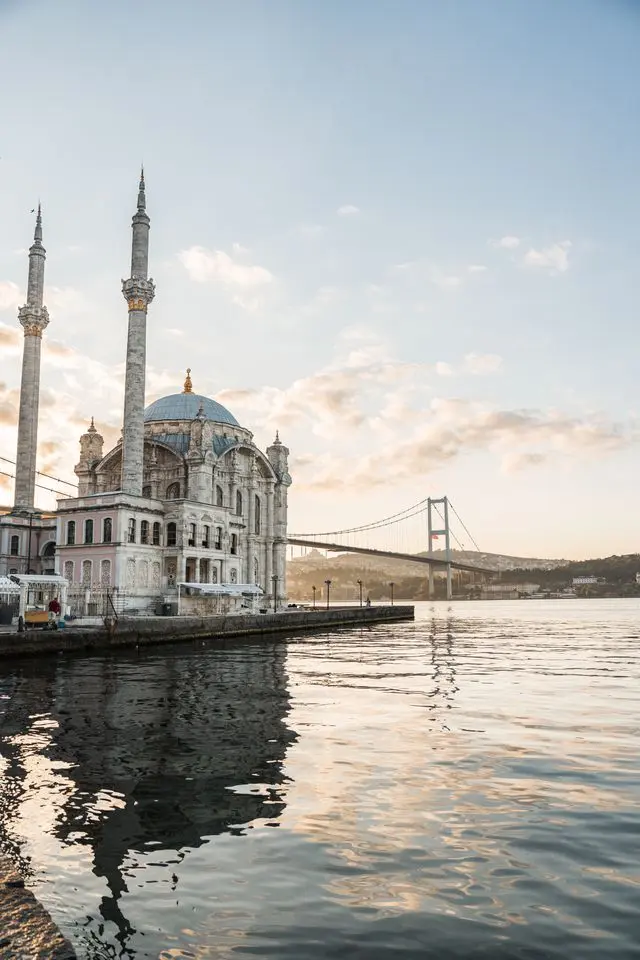
The Büyük Mecidiye Camii, universally known simply as the Ortaköy Mosque, is perhaps the most picturesque and romantically situated place of worship in Istanbul. Poised delicately on the very edge of the water where the Bosphorus Strait meets the European shore, it presents a stunning architectural contrast to the massive, modern steel span of the First Bosphorus Bridge that looms directly behind it.
Unlike the massive, classical imperial mosques of the historic peninsula (like the Blue Mosque or Süleymaniye), Ortaköy Mosque is relatively small and intimate. However, what it lacks in scale, it more than makes up for in elaborate decoration and perfect placement. Built in the mid-19th century in the ornate Ottoman neo-baroque style, the building feels more like a lavish waterfront pavilion than a traditional mosque.
The mosque is the cultural anchor of the Ortaköy neighborhood, an incredibly vibrant area packed with cafes, artisan stalls, and street food vendors. The combination of the beautiful architecture, the dynamic waterfront energy, and the spectacular views across to the Asian side makes visiting Ortaköy an essential Istanbul experience.
History and Construction
The Balyan Family's Design
The mosque was commissioned by Sultan Abdulmecid I, the same modernizing sultan who ordered the construction of the nearby Dolmabahçe Palace. Construction began in 1854 and was completed in 1856. To design this waterfront jewel, the Sultan hired Garabet Amira Balyan and his son Nigoğayos Balyan, prominent members of an Armenian architectural dynasty that defined the late Ottoman architectural aesthetic.
Constant Restoration
Because the mosque sits directly on a quay extending into the Bosphorus, it has constantly battled the elements. Over the last century and a half, the building has suffered significantly from earthquakes, fires, and the relentless dampness and salt of the marine environment. It has undergone numerous structural restorations, most recently a massive, multi-year project that concluded in 2014, which stabilized its foundations and restored the brilliance of its exterior stone carvings.
Neo-Baroque Architecture and Light
The Ornate Exterior
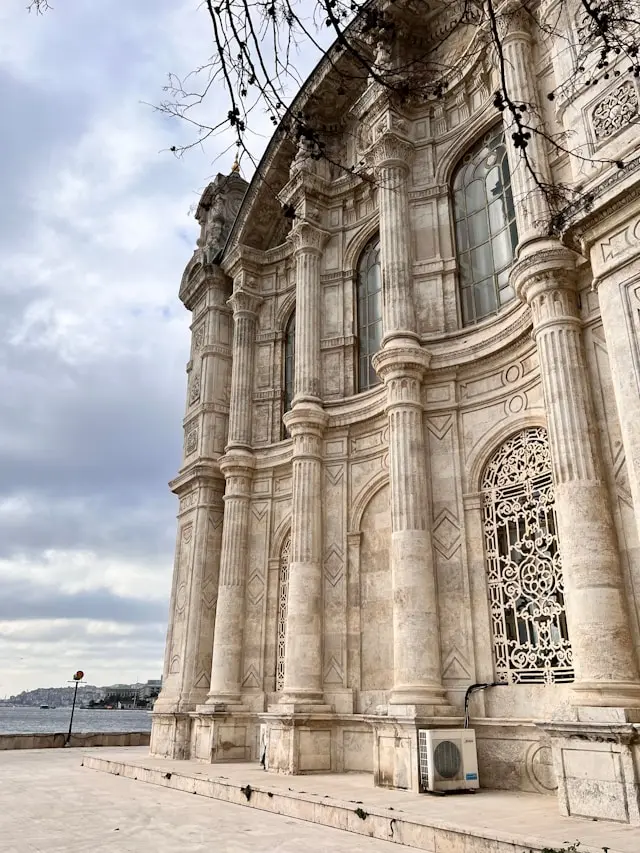
The exterior of the Ortaköy Mosque is highly theatrical. Built using white stone and marble, the facade is covered in intricate, deep relief carvings featuring baroque scrolls, shells, and floral motifs. Its two slender minarets feature fluted shafts and balconies that look almost like delicate lace. The building was designed to be viewed as much from the water by passing boats as from the land.
Mastering Natural Light
The most brilliant aspect of the Balyans' design is the use of natural light. The mosque features exceptionally large, tall windows that wrap around the main prayer hall. These windows were designed not just to let the sun in, but specifically to catch the shifting reflections of the Bosphorus water. As the sun hits the waves outside, shimmering patterns of light dance across the interior dome and the crystal chandeliers, giving the interior a glowing, ethereal quality. Additionally, the beautiful Arabic calligraphy hanging inside the mosque was actually penned by Sultan Abdulmecid I himself, who was a master calligrapher.
The Intersection of Eras: Mosque and Bridge
What makes the Ortaköy Mosque so visually iconic is its physical juxtaposition with the 15 July Martyrs Bridge (the First Bosphorus Bridge). Completed in 1973, this colossal steel suspension bridge stretches from Europe to Asia directly behind and above the 19th-century mosque.
This framing-the delicate, highly ornamented stone mosque in the foreground, with the massive, utilitarian, modern engineering marvel sweeping through the sky in the background-perfectly encapsulates the spirit of Istanbul. It is a visual representation of a city where the ancient and the modern, the East and the West, exist in constant, beautiful tension. This specific angle is one of the most photographed scenes in Turkey.
Ways to Experience It
The Waterfront Vibe and Kumpir
A visit to the mosque is inextricably linked to experiencing the Ortaköy square itself. The cobblestone plaza surrounding the mosque is always bustling. The absolute most popular local activity here is buying a "kumpir" (a massive baked potato mashed with butter and cheese, then stuffed with your choice of dozens of toppings ranging from olives and corn to sausage and Russian salad) or a waffle, and eating it on the benches facing the water and the mosque.
Viewing from the Water
While the interior is beautiful, the exterior architecture is best appreciated from a slight distance. Taking a Bosphorus ferry cruise that passes by the Ortaköy shore allows you to see the mosque exactly as the Sultan intended-as a brilliant white jewel floating on the edge of the blue strait.
Best Time to Visit
The Ortaköy square is lovely in the morning, but the absolute best time to visit is in the late afternoon leading into the evening. As the sun sets, the white marble of the mosque takes on a golden hue. Once it gets dark, the mosque is beautifully illuminated with spotlights, and the massive suspension bridge behind it lights up with dynamic LED colors. The atmosphere in the square is at its peak in the evening, filled with locals socializing and enjoying the waterfront breeze. As always, avoid visiting during the Friday midday prayer when the small mosque is packed with worshipers.
Visitor Tips and Etiquette
Dress Code
Despite its location in a highly modern and tourist-heavy neighborhood, the Ortaköy Mosque is a fully active place of worship. The standard dress code applies: shoulders and knees must be covered for all visitors, and women must wear a headscarf. If you do not have appropriate clothing, the mosque provides free loaner robes and scarves at the entrance. Shoes must be removed before entering the carpeted prayer area.
Getting There
Traffic along the Bosphorus coastal road (Çırağan Caddesi) leading to Ortaköy can be notoriously terrible, especially on weekends. Taking a taxi from the historic center can result in sitting in gridlock. A much more efficient and scenic way to arrive is to take a ferry directly to the Ortaköy dock, or to take the tram to Kabataş and walk the remaining distance along the beautiful tree-lined avenues.
Nearby Attractions
Ortaköy is a fantastic starting point for exploring the Bosphorus waterfront.
- Yıldız Park: Just a short walk up the steep hill behind the neighborhood lies Yıldız Park, a massive, lush, former imperial forest that offers shaded walking paths, waterfalls, and beautiful historic pavilions serving tea.
- Çırağan Palace: A 10-minute walk south along the water brings you past the Çırağan Palace, a spectacular former imperial residence that is now one of the most luxurious hotels in the world.
- Bebek: If you enjoy walking, continuing north along the coastal promenade for a few kilometers brings you to Bebek, an incredibly affluent and chic waterfront neighborhood famous for its upscale cafes and yachts.
FAQs about visiting the Ortaköy Mosque
Is there an entrance fee for the Ortaköy Mosque? +
No, entry to the Ortaköy Mosque is completely free, as it is an active, practicing mosque. Donations are welcomed at the entrance to help maintain the historic building.
When is the mosque closed for prayer? +
Like all mosques in Istanbul, it closes to tourists five times a day for roughly 45 to 60 minutes during the Muslim prayer times. The exact times change throughout the year based on the sun. It is particularly crowded and closed to visitors for a longer period during the Friday midday congregational prayer.
Do I have to wear a headscarf? +
Yes, female visitors must cover their hair with a scarf to enter the mosque. Men and women must also dress modestly, covering their shoulders and knees. Attendants provide free scarves and cover-ups at the door if needed.
Is it easy to take photos of the mosque and the bridge together? +
Yes, this is the classic Ortaköy photo. The best place to take this picture is from the small cobblestone pier and plaza located immediately to the right (south) of the mosque, which allows you to frame the mosque perfectly against the bridge crossing the water.
What is the famous food to eat in Ortaköy? +
The neighborhood is famous throughout Turkey for "Kumpir"-giant baked potatoes stuffed with massive amounts of butter, cheese, and a vast array of toppings. The street leading to the mosque is affectionately known as "Kumpir Alley" because it is lined with dozens of competing stalls selling them.
How much time do I need there? +
The mosque itself is quite small; a visit inside takes only about 15 to 20 minutes. However, you should plan to spend at least an hour to an hour and a half in the area to explore the artisan market in the surrounding alleys, eat a kumpir by the water, and take photos of the Bosphorus.
