
Table of Contents
Overview
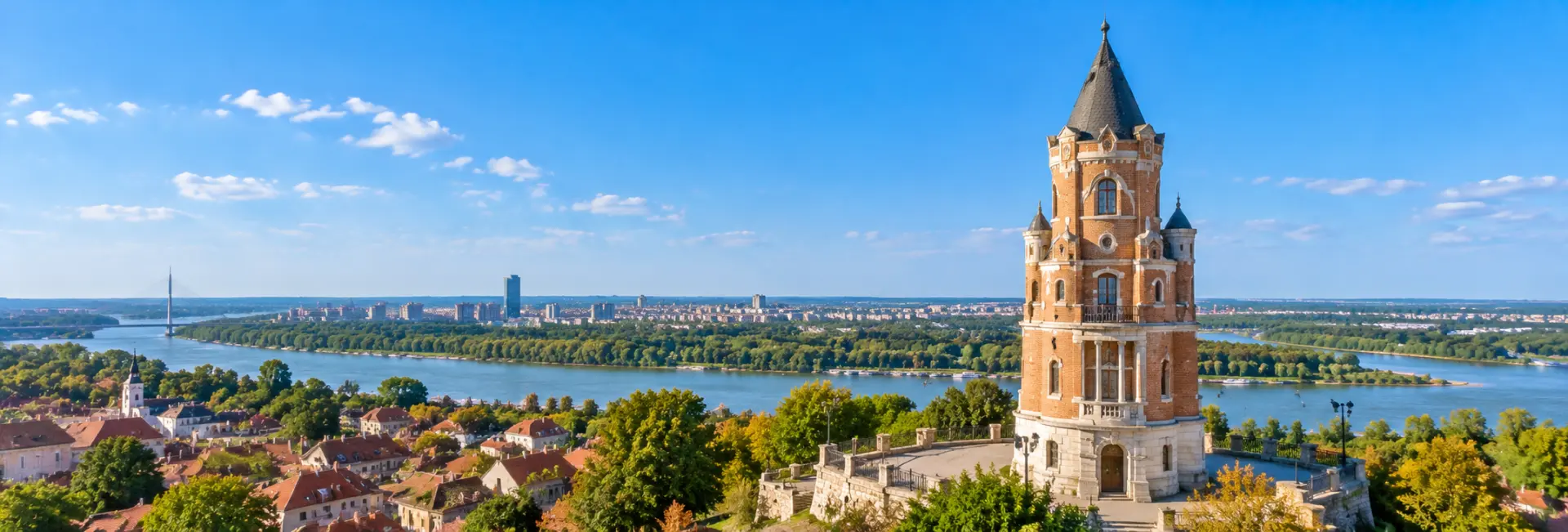
Gardoš Tower rises above the old town of Zemun on a hill beside the Danube, and it is one of the most recognisable silhouettes in Belgrade. Zemun was a separate town for most of its history, and the tower still gives it a distinct identity, even though the district is now part of the Serbian capital.
The monument is also known as the Millennium Tower, or by the popular name Tower of Sibinjanin Janko. It was built in the 1890s as a memorial rather than a defensive structure, so its tall, slightly fairy-tale outline owes more to ceremony and romance than to military needs.
Most visitors come for two things: the atmosphere of the cobbled lanes that lead up the hill, and the panorama from the top. From this vantage point you can follow the Danube, spot the Great War Island, and look across to the skyline of the main city.
History
A Border Town With a Fortress
The hill was fortified long before the tower appeared. Zemun was a strategic frontier settlement, and by the end of the 12th century it was under Hungarian control. Over the following centuries the town and its castle changed hands repeatedly. The Ottomans demolished it in 1397, it was handed to the Serbian despot Stefan Lazarević in 1411, and it again played a role in the defence of nearby Belgrade in the 15th century.
The Millennium Celebrations of 1896
By the late 19th century, Zemun lay on the southern edge of the Hungarian part of the Austro-Hungarian Empire. In 1896 the Hungarian half of the empire celebrated one thousand years since the Magyars settled in the Pannonian Plain, and a series of commemorative monuments was erected across the realm. Gardoš Tower was the southernmost of them.
Construction and Opening
The tower was finished on 5 August 1896 and formally opened fifteen days later, on 20 August. It was designed by Hungarian architects, and the design is commonly attributed to Lajos Zobel. The builders placed it on the ruins of the medieval fortress, which gave it a commanding position and a built-in historical backdrop.
A Working Lookout
Beyond its commemorative purpose, the tower had a practical life. Because the hill is such a natural vantage point, Zemun's firefighters used the structure as a lookout for many years, watching for smoke over the rooftops below.
Restoration
The monument went through a period of neglect before being restored between 2006 and 2010. Later work has also focused on the remains of the surrounding fortress, with the aim of making the hilltop safer and more rewarding for visitors.
Architecture & Design
An Eclectic Landmark
The tower is built from brick and stone and is usually described as eclectic. It mixes historical styles, with Romanesque and romantic features most noticeable. Instead of copying a single medieval building, the designers used battlement-like details, arches and a solid cylindrical form to suggest an imagined medieval watchtower.
Size and Form
Gardoš Tower stands 36 metres tall and has a base diameter of around 18 metres. Because it crowns a hill, it appears much taller from the streets below, and it can be seen from the river and from many parts of the capital's western districts.
Interior and Setting
Inside, the tower is a compact space that has been used for cultural activities and as an art studio at different times. The municipality of Zemun manages the interior, which is why access depends on how the space is being used. Outside, the plateau around the base gives room to step back and appreciate the proportions of the building against the sky.
Part of a Larger Series
The tower belonged to a group of millennium monuments built across the Hungarian lands, which included obelisks, columns and towers in different towns.
Recognition / Status
Gardoš Tower is protected as a monument of culture, and it sits within the Old Core of Zemun, which is classed as a Spatial Cultural-Historical Unit of Great Importance. The tower stands in the middle of the remains of Zemun Fortress, so the whole hilltop is treated as a layered heritage site.
It is worth keeping in mind that the tower itself is only a little over a century old. The fortress it stands in is roughly five centuries older, and visitors who look carefully can still see surviving angular towers and fragments of the defensive wall around the hill.
The Hunyadi Legend
Why It Is Called Sibinjanin Janko's Tower
Many locals call the monument the Tower of Sibinjanin Janko, which is the Serbian name for John Hunyadi, the Hungarian commander who led the Christian forces to victory at the Siege of Belgrade in 1456. Hunyadi is celebrated in Serbian epic songs, and the association between him and the hill proved durable.
Fact and Folk Memory
Historians stress that the tower was not built for Hunyadi himself. It was erected in 1896 to mark the Hungarian millennium, so its link to the 15th-century hero is largely a matter of popular tradition. Hunyadi is, however, historically connected to this area, since the fortress here was an important bastion of the period.
Underground Stories
Zemun is also known for its lagums, the underground corridors dug into the soft loess soil. Their length and layout are the source of many urban legends, and stories about tunnels beneath Zemun add a touch of mystery to any visit.
What to See There
- The tower itself, with its brick-and-stone walls and distinctive crown, best admired from the plateau at its foot.
- The remaining walls and corner towers of the medieval Zemun Fortress around the hill.
- The viewpoint terraces facing the Danube, Zemun's rooftops and the Great War Island.
- The skyline of central Belgrade in the distance, including the Kalemegdan promontory on clear days.
- The narrow, winding streets of old Zemun on the way up, lined with older houses and small gardens.
The surviving fortress corners are easy to overlook, but they reward a short wander. Together with fragments of wall, they hint at the medieval plan of the citadel, and they offer extra viewpoints that are often quieter than the area directly beneath the tower.
The view is the star attraction. Standing on the hill, you can read the geography of the region at a glance: the river flowing past, the marshy green island in the stream, the modern blocks of New Belgrade, and the older core of the city across the water.
Ways to Experience It
Walking Up from the Riverfront
The most atmospheric route begins at the Zemun quay and climbs through the old town. The ascent is steady rather than extreme, and the lanes provide a gradual reveal of the hill and its tower. This approach is also the best choice if you want to combine the tower with a meal or a coffee by the river.
Through the Old Streets
You can also start near the market and the main square of old Zemun, then follow the quiet streets that lead toward the hill. This route gives a stronger sense of the district's character and its history as a separate border town.
By Taxi or Local Transport
If you prefer less uphill walking, a taxi or ride-hailing service can bring you close to the base of the hill. Buses also serve the neighbourhood, so a short ride followed by a brief climb is a practical option.
Photography and Sunset
The hill is a favourite spot for photographers. Late afternoon light warms the brick of the tower and the rooftops of Zemun, and sunset adds colour over the river.
Best Time to Visit
Season
Spring and autumn are ideal because the weather suits the uphill walk and the views are crisp. Summer evenings are pleasant when the heat has faded, and winter days can be clear and quiet, though the hilltop is exposed and often windy.
Time of Day
Morning offers calm and good visibility, while late afternoon and sunset are the most atmospheric. If you want to see the tower and the surrounding streets with fewer people, avoid the middle of the day at weekends.
Weekdays and Weekends
Weekdays are quieter. Weekends bring more locals and visitors, and the nearby quay and cafes are livelier, which suits those who want to pair the hill with a leisurely river walk.
Visitor Tips
- Opening hours, ticket arrangements and access to the interior or the top of the tower can change, so confirm current details locally before you go.
- Wear comfortable shoes, since the route climbs a hill and the lanes near the top can be uneven.
- Bring water in summer and a light jacket in cooler months, as the hilltop is open to the wind.
- Allow about an hour for the hill itself, or half a day if you add a stroll through old Zemun and along the quay.
- The tower is not medieval, so manage expectations accordingly; the real medieval traces are the fortress remnants around it.
- Treat the surrounding area with respect, as it includes residential streets and quiet neighbourhood spaces.
Nearby Attractions
Gardoš sits in the middle of one of Belgrade's most charming neighbourhoods, so it combines easily with other stops.
- Zemun Quay: The riverside promenade, with restaurants and views of the Danube.
- Magistratski Trg: The central square of old Zemun, surrounded by older buildings and a good starting point for walks.
- Great War Island: A green, forested island in the river, clearly visible from the hill.
- Sibinjanin Janko Monument: A statue of the commander placed on the Zemun quay, a good follow-up to the legend of the tower.
- Kalemegdan: The great fortress and park across the water, which makes a natural pairing for a full day of Belgrade sightseeing.
FAQs about visiting Gardoš Tower
What is Gardoš Tower? +
It is a memorial tower in Zemun, Belgrade, built in 1896 to mark one thousand years of Hungarian settlement in the Pannonian Plain. It is also known as the Millennium Tower.
Why is it called the Tower of Sibinjanin Janko? +
Locals link it to John Hunyadi, whom Serbs call Sibinjanin Janko, because of his role in the Siege of Belgrade in 1456. The tower was not actually built for him, so the name comes from folk tradition.
How tall is Gardoš Tower? +
The tower is about 36 metres high. Its hilltop setting makes it look much taller from the streets and the river below.
Can you go inside or climb the tower? +
Access has varied over the years, and the interior is managed separately from the open hilltop. Check current opening hours and any ticket arrangements locally before you visit.
How long should I spend there? +
Plan about an hour for the hill, the views and the fortress remains. If you add a walk through old Zemun and along the quay, half a day is comfortable.
What is the best time to go? +
Late afternoon into sunset gives the warmest light and the best photographs, while spring and autumn offer the most pleasant weather. Weekday mornings are the quietest.
How do I get there from central Belgrade? +
Zemun is a short ride from the centre by taxi or local bus. From the Zemun quay or main square, the tower is a gentle uphill walk through the old streets.
Is it suitable for children and older visitors? +
Children usually enjoy the climb and the views. Older visitors or anyone with mobility concerns may prefer to take a taxi near the base of the hill, because the lanes are uneven in places.
What else can I see nearby? +
Zemun Quay, Magistratski Trg and the Great War Island viewpoint are all close. Many visitors pair the tower with Kalemegdan on the opposite bank for a full day of sightseeing.
