
Table of Contents
Overview
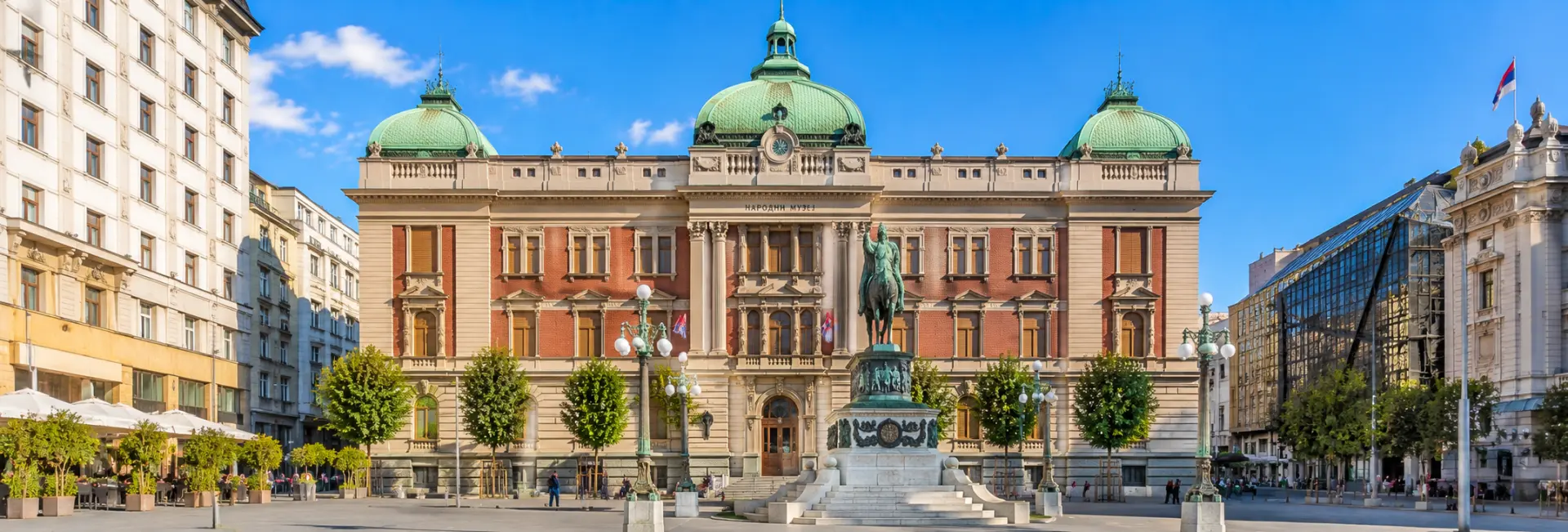
The National Museum of Serbia is the country's oldest and most important museum, and its imposing building anchors Republic Square in the very heart of Belgrade. Its collections hold more than 400,000 objects, which makes it one of the richest cultural storehouses in the Balkans.
The permanent exhibition runs across three floors and moves roughly in chronological order. A visit takes you from the stone-age settlements of the Danube valley, through the Roman and medieval periods, and on to the art of the 18th, 19th and 20th centuries, with a strong emphasis on Serbian heritage alongside works by celebrated European artists.
The museum is also a pleasant way to experience the city's central square from the inside. Its classical halls, wide staircases and high ceilings make the visit feel like an occasion, and the building itself is part of what makes the experience memorable.
For travellers who want to understand the region before exploring the rest of the city, this is a natural first stop. It places the streets, fortresses and churches you see elsewhere in Belgrade within a much longer story.
History of the Museum
Founded in 1844
The institution was established on 10 May 1844, making it the oldest museum in Serbia. Over the following decades it gradually gathered archaeological finds, manuscripts, coins, historical documents and works of art from across the country and beyond.
A Long Search for a Home
Before 1952 the collections were housed in several different places. It was only in 1952 that the museum settled in its present building on Republic Square, which had earlier served a very different purpose as a bank. The official opening took place on 23 May of that year.
Fifteen Years Behind Closed Doors
In 2003 the permanent exhibition was dismantled and the building was closed for reconstruction. The work dragged on for far longer than expected, with long pauses along the way, and the museum stayed shut for about fifteen years. A complete renovation was carried out between 2016 and 2018.
The 2018 Reopening
The museum welcomed visitors again in June 2018 with a completely new permanent display. The renewed galleries were widely noted for presenting the region's cultural development from prehistory to the 20th century in a clear, modern format, and the museum has since regained its place as a leading cultural destination in the capital.
Architecture & Building
A Former Bank Turned Museum
The building dates from 1903 and is a fine example of the monumental public palaces that were fashionable in the late 19th and early 20th centuries. It was originally constructed as a bank, which explains the grand scale, generous halls and the confident, formal façade that faces the square.
Damage and Rebuilding
The structure was badly damaged by bombing during the Second World War. After the war it was rebuilt without its central dome and served banking purposes again for a short time, before the museum took it over. The façade today once more features a central dome, restored as part of later work.
Façade Details
Look for the eagle sculpture in front of the main entrance, the work of the sculptor Risto Stijović. The same artist created bronze portraits of two key figures in the museum's history, Jovan Sterija Popović and Mihailo Valtrović. The façade decoration and interior were originally created by Franja Waldman.
Space and Layout
The interior covers around 5,000 square metres, and the permanent exhibition occupies three levels. In the atrium, the old bank vaults have been adapted into depots for the collections, a neat reminder of the building's earlier life.
Heritage Protection
The building was declared a Monument of Culture of Great Importance in 1979, and it is an architectural attraction in its own right as well as a container for the museum's treasures.
Collections & Exhibits
Archaeology and Prehistory
The ground floor is devoted to archaeology and follows the human story from the earliest traces up to the Roman period. A particular focus is the Neolithic Vinča culture, famous for its distinctive clay figurines, and the museum also holds remains from the Lepenski Vir culture of the Danube gorges, which date back to about the seventh millennium BC.
Ancient and Roman Finds
From later periods come treasures such as the Dupljaja Chariots, bronze-age ritual objects from the second millennium BC, and the golden masks from the necropolis at Trebenište, which belong to the sixth century BC. The Belgrade Cameo, a Roman-era carved gem from the fourth century, is another much-admired piece.
Coins, Applied Art and History
Beyond the headline pieces, the holdings include numismatics, applied art, historical objects and rare manuscripts. These smaller collections are easy to overlook, but they show everyday life, trade and craft over many centuries, and they give useful context to the grand paintings and archaeological discoveries displayed nearby.
Medieval Heritage
The medieval section presents icons, frescoes, manuscripts and objects that show the development of Serbian religious art and literacy. The best-known item is the Miroslav Gospel, a richly illuminated manuscript from the 12th century.
Serbian Art
Upper floors present Serbian painting from the 18th to the 20th century. Work by Uroš Predić, Paja Jovanović, Đura Jakšić, Nadežda Petrović and Sava Šumanović shows how local artists moved from academic realism toward modernism.
European Masters
Alongside national works, the museum displays pieces by internationally known artists, including French Impressionists. A well-known example is a series of pastels by Edgar Degas on the theme of women at their toilette. The breadth of the collection, with more than thirty distinct holdings of archaeology, coins, history and art, is one of its great strengths.
Must-See Highlights
- The Miroslav Gospel, a 12th-century illuminated manuscript commissioned by Prince Miroslav of Hum and listed by UNESCO in its Memory of the World Register in 2005.
- Vinča figurines, which give a vivid sense of prehistoric ritual life.
- Lepenski Vir finds from the Danube gorges, among the oldest remains in the collection.
- The Dupljaja Chariots and the Trebenište golden masks, striking objects from the ancient world.
- Paintings by Paja Jovanović and Uroš Predić, central figures of Serbian academic realism.
- Works by Nadežda Petrović and Sava Šumanović, which trace the arrival of modernism.
- The French Impressionist and European masterworks on the upper floors.
Because older manuscripts are highly fragile, ask at the museum how the Miroslav Gospel is displayed, whether as the original or as a copy, so your expectations match what you will see.
Ways to Experience It
Follow the Chronology
The simplest approach is to start on the ground floor and work upward. Because the displays are arranged in time order, you can follow the story of the region step by step without needing any background knowledge.
Choose a Theme
With limited time, pick a thread to follow. Archaeology fans can spend most of their visit on the ground floor, art lovers can head straight to the Serbian and European painting galleries, and history readers can concentrate on the medieval displays.
Guided Visits and Audio Support
The museum may offer guided programmes and educational activities at various times, and these can add useful context for visitors new to Balkan history. Check the current programme before you go, since offerings change.
Temporary Exhibitions
Alongside the permanent display, the museum hosts temporary exhibitions and cultural events. These can be a good reason to return, and they sometimes focus on particular artists, periods or international collaborations.
Best Time to Visit
Season
The museum is a year-round destination and works particularly well on rainy days, in hot summer afternoons, or in winter when outdoor sightseeing is less appealing. Autumn is also a cultural high season in Belgrade, with many events across the city.
Day and Time
Weekday mornings tend to be calmer, while weekends and any free-entry days can draw bigger crowds. If the museum keeps extended evening hours on some days, those can be a pleasant, quieter alternative.
Plan Around Closing Days
Museum schedules can vary by day, and the museum has traditionally been closed on Mondays. Always confirm the current opening days and hours on the official website before you set out.
Visitor Tips
- Allow two to three hours for the permanent collection and any temporary exhibition, and longer if you enjoy reading the displays in depth.
- Check ticket prices, free-entry days, opening hours and any photography rules on the museum's official site before your visit.
- Start with the ground floor so the chronology makes sense, and save the art galleries for when you still have energy.
- Wear comfortable shoes and plan a break, since the exhibition spreads across three levels.
- Ask at the entrance about accessibility arrangements if anyone in your group has mobility needs.
- Combine the museum with a stroll through the surrounding square and pedestrian streets, which are only steps from the entrance.
The museum is easy to reach on foot from the main pedestrian street, and many tram and bus routes pass through or near Republic Square. Taxis are available around the square as well.
Nearby Attractions
Republic Square is the social centre of Belgrade, so the museum sits among many other sights.
- Republic Square: The lively plaza in front of the museum, a classic meeting point for locals.
- Prince Michael Monument: The equestrian statue on the square, one of the city's best-known landmarks.
- National Theatre: The historic theatre building directly across the square.
- Knez Mihailova Street: The main pedestrian street, lined with shops, cafes and historic façades.
- Skadarlija: The old bohemian quarter, known for its cobbled street and traditional restaurants.
- Kalemegdan: The great fortress and park, within comfortable walking distance.
FAQs about visiting the National Museum of Serbia
What is the National Museum of Serbia? +
It is the oldest and largest museum in the country, founded in 1844. It holds more than 400,000 objects covering archaeology, medieval heritage, art and history.
Where is the museum located? +
The main entrance is on Republic Square in central Belgrade, at Trg Republike 1a. It is a short walk from Knez Mihailova Street and the National Theatre.
Why was the museum closed for so long? +
The permanent exhibition was dismantled and the building closed for reconstruction in 2003, and the work took about fifteen years. The museum reopened with a renewed display in June 2018.
What are the most famous exhibits? +
Highlights include the Miroslav Gospel, Vinča and Lepenski Vir finds, the Dupljaja Chariots, the Trebenište golden masks and paintings by Serbian and French artists. Ask staff how the manuscript is shown on the day you visit.
How long should I spend there? +
Most visitors allow two to three hours. Archaeology and art enthusiasts may want longer, especially if they join a guided tour or visit a temporary exhibition.
Do I need to buy a ticket in advance? +
Tickets are generally bought on site, but arrangements and prices can change. Check the official website for current information, free-entry days and any special offers.
Is the museum suitable for children? +
Yes, particularly for older children who enjoy objects such as prehistoric figurines and ancient masks. Younger children may enjoy it best in shorter visits focused on a few highlights.
When is the best time to go? +
Weekday mornings are usually the quietest. The museum is also a good choice when the weather is very hot, cold or rainy, since the exhibition is entirely indoors.
What else can I do nearby? +
Republic Square, the National Theatre, Knez Mihailova Street and Skadarlija are all close by, and Kalemegdan is a pleasant walk away.
