
Table of Contents
Overview
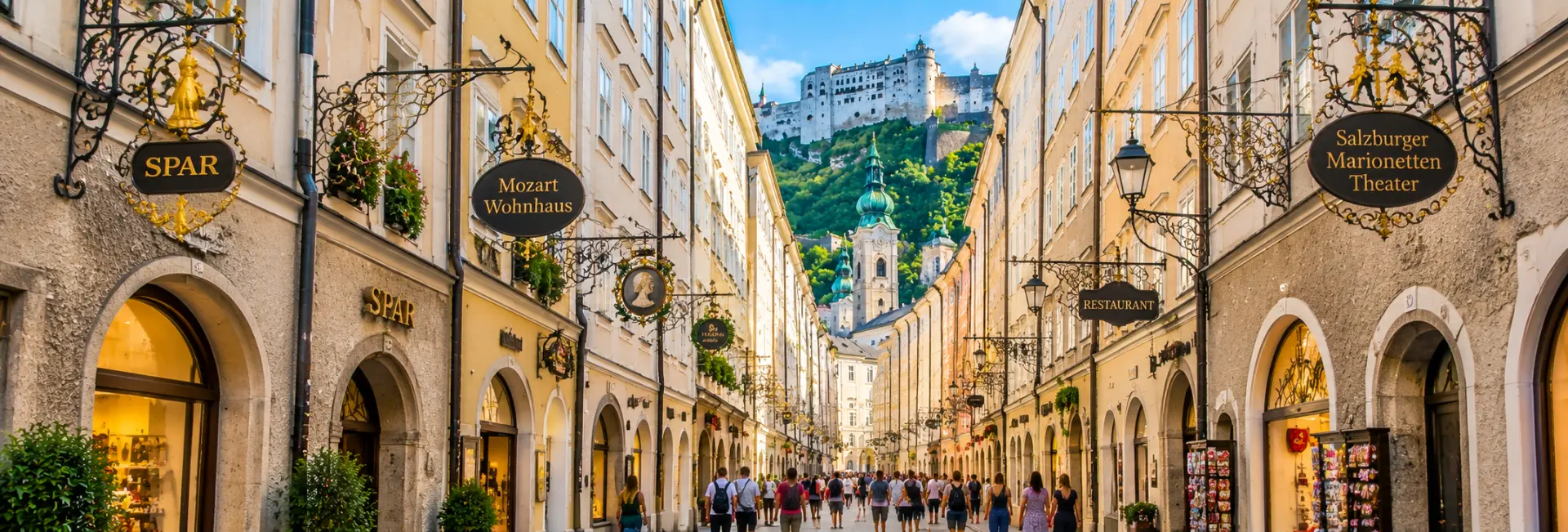
Getreidegasse is the lane most people picture when they think of historic Salzburg. It is a narrow, lively pedestrian street in the old town, lined with tall townhouses whose fronts are decorated with ornate iron signs, painted details and carved window frames. Walk it at a relaxed pace and you pass jewellers, traditional clothing shops, bakeries, cafes and fashion boutiques, all squeezed into medieval and baroque buildings.
The lane runs for roughly 350 metres, a short distance that rewards slow exploring. At its heart sits Mozart's Birthplace at number 9, which turns an ordinary shopping street into a place of pilgrimage for music lovers. The name translates as Grain Lane, though it has little to do with grain, as the history below explains.
Getreidegasse is free to walk, open at all hours and suited to every kind of traveller, whether you want souvenirs, architecture or simply the atmosphere.
History
An Ancient Route
The line of the street follows a very old road. Even in Roman times it served as a through route heading towards Bavaria, and in the Middle Ages it remained one of the main arteries of the town. Its original name was Trabgasse, a word linked to the idea of trotting, and this was gradually reshaped over the centuries into the Getreidegasse we know today. The grain in the name is a later twist of language rather than a reference to a grain market.
Merchants and Patricians
The prince-archbishops granted the townspeople trading privileges in the fourteenth century, and merchants soon lined the street with shops and warehouses. Over time the address became fashionable among wealthy citizens, officials and craftsmen, who built tall houses side by side, each with a shop at street level and living quarters above.
Crowded and Clever Building
Space was always limited, squeezed between the river and the cliffs. A second row of houses was eventually permitted behind the street, and the garden that once lay there gradually disappeared beneath new buildings. That need for density is what created the network of passages and inner courtyards for which the lane is now known.
From Trade Route to Visitor Magnet
As Salzburg became a destination for music and culture, especially after the founding of the summer festival in 1920, the street shifted from a place of daily trade to a showcase of local heritage. Today the city works to keep its character intact, balancing visitor numbers with the needs of residents and traditional shopkeepers.
Recognition and Status
Getreidegasse lies inside the Historic Centre of the City of Salzburg, which has been a UNESCO World Heritage Site since 1996. The lane is considered one of the finest surviving examples of a medieval and early modern merchant street in the region, and it forms one of the central threads of the old town.
Protection comes from both international recognition and local law. A conservation act dating from 1967 safeguards the old town, and the street has been carefully repaved with granite and adapted so that shops can be reached without steps. The aim is to keep the lane lively and practical while preserving its historic appearance.
Because it is so popular, the city also pays attention to the type of shops and signs that appear, encouraging businesses to respect the traditional look of the street.
Architecture and Streetscape
Tall, Narrow Houses
The buildings are typically four or five storeys high and only a few windows wide, packed tightly together so that the street feels like a canyon of painted stone. Sculpted window frames, arched doorways and pastel facades add variety, and the rooflines vary from house to house.
The Wrought-Iron Signs
The most famous feature is the series of ornate wrought-iron signs hanging above shop doors. Many are elaborate pieces of craftsmanship, showing symbols such as animals, crowns, keys or flowers, and some trace their roots back centuries. In the past they told customers what kind of trade was carried on inside, which mattered in an age when many people could not read.
Today even international brands adapt their logos to the local style, creating iron signs that blend into the street rather than clash with it. Looking up and comparing the designs is a pleasant game in itself.
Details to Look For
- Painted symbols and inscriptions on facades naming former owners
- Carved stone window surrounds and ornate doorways
- Iron balconies and decorative grilles
- Glimpses of the fortress and mountain slopes at the end of the street
At the southeastern end, the clock tower of the old town hall adds a charming rococo accent to the view.
Passageways and Courtyards
One of the best-kept secrets of Getreidegasse is how much lies behind the shopfronts. Many of the buildings are connected by through-passages, vaulted corridors that cut from the lane to the street behind. Locals use them as shortcuts, and visitors can duck in to discover quiet courtyards, small galleries, arcades and tiny cafes.
How the Passages Work
A handy rule of thumb is that passages on one side lead towards the river quarter, while those on the other side open out towards the university square. Some are lined with shops, while others are simply old stone corridors with crests, inscriptions and carved columns.
Hidden Surprises
Inside the passageways you may find historic reliefs, painted vaults, wrought-iron gates and steep stairways leading to upper floors. In one entrance near the start of the lane, a whale rib hangs from the ceiling, a curious relic that surprises many visitors.
Taking at least one detour through a passage is highly recommended, as it gives a different perspective on how the old town was built and lived in.
Notable Landmarks and Highlights
- Mozart's Birthplace (number 9): The yellow house where Wolfgang Amadeus Mozart was born in 1756 and where his family lived for many years. It is now a museum and the single biggest draw on the street.
- Hagenauerplatz: A small square that opens the lane near the birthplace, a pleasant place to pause and look back at the facades.
- The Old Town Hall area: Near the southeastern end, the rococo clock tower gives a handsome view down the street.
- Kranzlmarkt and the neighbouring lanes: The small market square and its surrounding streets continue the historic atmosphere and are good for a coffee break.
- University Square: Reachable through some of the passages, it offers a market and a baroque church just a few steps from the busy lane.
Another small local legend is the puppet seller who sat on the lane with a brown basket of marionettes for more than three decades until 2019, a reminder that the street has always been home to craftspeople as well as shops.
Ways to Experience It
Window Shopping and Souvenirs
The street offers a mix of jewellery, traditional costume, leather goods, perfumes, antiques and delicatessens, along with the usual souvenirs. Even if you do not plan to buy, browsing the shop windows is one of the easiest ways to enjoy the atmosphere.
Walk It Both Ways
Many people walk the lane once for a general impression and again for the details. A second pass, looking up at the signs and ducking into passages, often reveals things that were missed the first time.
Coffee, Pastries and Local Bites
Cafes and bakeries along the lane and in its courtyards serve traditional Austrian pastries, coffee and light meals. A break in an inner courtyard is often quieter than sitting on the main street.
Join a Walking Tour
Local guides frequently include Getreidegasse on old town tours, with stories about the guilds, the signs and the family of the composer who made the lane famous.
Seasonal Events
The street is especially festive in the Christmas season, when decorations and nearby markets create a warm, atmospheric mood.
Best Time to Visit
Seasons
Getreidegasse can be enjoyed all year. Spring and autumn offer comfortable walking weather and softer crowds, while summer brings energy and long evenings, and also the largest numbers of visitors. Winter is cold but charming, particularly around Advent, when lights and seasonal stalls fill the old town.
Time of Day
- Early morning, before the shops open, is the quietest time and perfect for photographs without crowds
- Late morning to mid-afternoon is the busiest period, especially around Mozart's Birthplace
- Evening is calmer and the lane glows with warm lighting, although most shops will be closed
If you want to browse the shops, plan to visit on a weekday during regular trading hours.
Visitor Tips
- Allow thirty to sixty minutes for a walk along the lane, and longer if you want to explore passages, shop or visit the museum.
- Look up as you walk. The best details, including many of the iron signs, are above eye level.
- Most shops are open on weekdays and Saturdays, and many close on Sundays, so check hours if shopping is a priority.
- Visit Mozart's Birthplace early or late in the day to avoid the longest queues.
- Wear comfortable shoes, since the granite paving can be uneven and slippery when wet.
- The lane is pedestrian only and generally busy, so keep an eye on bags and belongings in crowded stretches.
- Use the passages to escape the crowds and discover quieter corners of the old town.
- Step-free access to many shops has been arranged, but the narrow lane can be crowded for wheelchairs and strollers at peak times.
FAQs about visiting Getreidegasse
What is Getreidegasse famous for? +
It is Salzburg's best-known historic street, famous for its tall townhouses, wrought-iron guild signs, hidden passages, shops and for being the location of Mozart's Birthplace.
How long is Getreidegasse and how long does it take to walk? +
The lane is roughly 350 metres long, so a simple walk takes only a few minutes. Most visitors allow thirty minutes to an hour to stop, browse and explore the passages.
Where is Mozart's Birthplace on Getreidegasse? +
It is at number 9, in a yellow townhouse that is easy to recognise by the crowds and the modern note design on its facade.
Is Getreidegasse free to visit? +
Yes. The street is a public pedestrian lane that can be walked at any time at no cost. Entry fees apply only to specific attractions such as the museum.
Why is it called Grain Lane? +
Despite the name, the lane was not primarily a grain market. The name developed over time from an older word for the street, and the grain connection is more a quirk of language than of trade.
When are the shops open? +
Most shops open on weekdays and Saturdays during normal daytime hours, with shorter hours on Saturday and many closed on Sunday. Hours vary, so check individual shops if you plan to buy something.
What are the hidden passages? +
They are covered walkways through the buildings that link Getreidegasse with parallel streets and courtyards. Many contain shops, cafes and historic details, and they are open for visitors to explore.
What should I combine with a visit to Getreidegasse? +
It fits naturally with Mozart's Birthplace, the cathedral squares, the University Square market and a walk or funicular ride up to Hohensalzburg Fortress.
