
Table of Contents
Overview
St. Peter's Abbey sits tucked against the cliffs of the Mönchsberg, a short walk from Salzburg Cathedral and the festival halls. Founded in the late seventh century, it is regarded as the oldest monastery in the German-speaking world with an unbroken history, and Benedictine monks still live and work here today.
The complex is far more than a single church. Behind the abbey walls you find a richly decorated church, an atmospheric old cemetery, caves carved into the rock, one of Austria's oldest libraries, a bakery and a restaurant that proudly claims a medieval pedigree. It is one of the most rewarding places in the old town for travellers who enjoy history and quiet corners.
Because it is a living religious community, the abbey has a very different feel from the palaces and museums nearby. The atmosphere is calm and reflective, and the stone courtyards offer a welcome pause from the busy streets.
History
A Foundation in 696
The abbey is traditionally dated to 696, when Rupert, a bishop from Worms, established a monastery here to support his mission in the region. He is remembered as Salzburg's founding saint, and the settlement around the abbey is often described as the oldest part of the city. The abbey was originally led by an abbot who also served as bishop, and this dual role continued for several centuries.
Bishops, Abbots and Growth
Until 987 the abbot of St. Peter was also the bishop of Salzburg, and the abbey remained the bishop's residence until 1110. Over the Middle Ages it became a centre of learning, writing and farming, and its library and workshops grew in importance.
Changing Fortunes
The monastery survived upheavals including the secularisation of church lands in the early nineteenth century. In 1927 it was raised to the rank of archabbey, a mark of the high standing of the community. During the Nazi period the monastic buildings were seized, but the monks returned after the Second World War and resumed their way of life.
A Community That Continues
For well over thirteen centuries, monastic life has gone on here, and the monks still run a range of activities connected to hospitality, education and the care of the abbey's heritage.
Architecture and Design
The Abbey Church
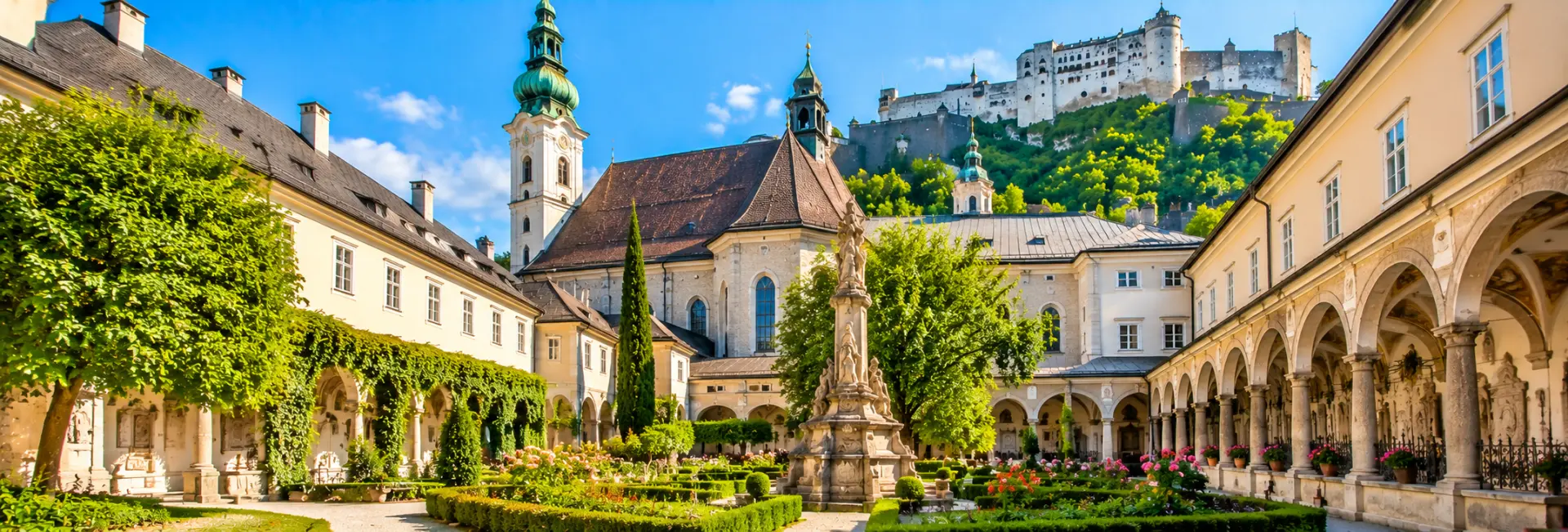
The church has roots in the twelfth century and keeps some Romanesque features, including an old arched portal. Over time it was reshaped, and today its interior is dominated by baroque and rococo decoration, with swirling stucco, carved statues and glowing altar paintings. The mix of styles tells the story of the abbey's long history, from sturdy medieval stone to the lighter, more theatrical tastes of later centuries.
Altars and Paintings
The altars carry paintings by the Austrian artist Martin Johann Schmidt, known as Kremser Schmidt, whose warm colours and expressive figures suit the festive character of the church. Chapels around the edges hold tombs, sculptures and devotional art that reward a slow walk around the nave.
The Tower and Courtyards
A bell tower with a distinctive dome rises above the complex, forming part of the old town skyline. Quiet courtyards and arcades link the buildings and show how the monastery grew over many generations.
Highlights of the Design
- A Romanesque portal that survives from the early church
- Rococo stucco and baroque statuary in the interior
- Altar paintings by a leading Austrian baroque painter
- A tall tower that anchors the abbey's outline against the cliff
Cultural and Religious Significance
A Spiritual Anchor
For Salzburg, St. Peter's is a link to the earliest days of the Christian community. The abbey church is among the oldest in the diocese, and generations of monks have prayed, studied and worked here. Many residents associate it with personal and family milestones, and it remains an active place of worship.
Mozart and Haydn
The abbey has strong ties to music. In 1769, when he was only thirteen, Mozart composed a mass for the abbot of St. Peter, and his Great Mass in C minor is associated with the church as well. The composer Michael Haydn, who served in Salzburg, wrote music connected with the abbey and is buried at St. Peter's. Concerts in the abbey's historic halls keep that tradition alive today.
Learning and Craft
True to Benedictine custom, the abbey has long combined prayer with work. The library, the bakery and the hospitality businesses are modern expressions of an old rule that values study, craft and welcome for guests.
The Cemetery and Catacombs
St. Peter's Cemetery
The cemetery is one of the most beautiful and peaceful spots in Salzburg. It has roots in late antiquity and is older than the abbey itself, and together with the burial ground at Nonnberg Abbey it is among the city's oldest Christian burial places. Graves are decorated with fine wrought-iron crosses, flowers and carved stone, and many are cared for by families who have lived in the city for generations. A small late-Gothic chapel stands at the centre.
Notable Burials
Several well-known figures rest here, including Michael Haydn, the opera singer Richard Mayr and the confectioner Paul Fürst, who created the famous Mozartkugel chocolate. Maria Anna Mozart, known as Nannerl, the composer's elder sister, is also buried in the cemetery.
The Catacombs
Above the cemetery, the cliff face contains small chapels and caves cut into the rock, known as the catacombs. They are not catacombs in the Roman sense, but a series of hollowed chambers and crypts that were used for prayer. A steep stairway leads up to small rooms with altars, faded paintings and old inscriptions, and a modest admission fee applies.
A Film Connection
Fans of The Sound of Music will recognise the setting, as the cemetery and its surroundings are closely associated with the film's graveyard scenes. Visitors should treat the area as a place of remembrance and not a film set, but it is natural to feel the connection.
Other Notable Features
The Library
St. Peter's houses what is described as the oldest library in Austria, with a large collection of manuscripts and printed works built up over many centuries. It is not a general tourist stop, but it reflects the abbey's lasting role in scholarship.
The Museum and Long Gallery
Art and treasures from the abbey can be seen in a museum and a long gallery that are reached through the DomQuartier, the route that links several of the old town's key buildings.
Stiftskulinarium
The abbey's restaurant states that it has welcomed guests since the early Middle Ages, which would make it one of the oldest inns in Europe. Today it serves traditional Austrian dishes in historic rooms, and one of its halls hosts a dinner concert with music by Mozart.
The Abbey Bakery
True to Benedictine tradition, the monastery also runs a bakery, which is a pleasant place to pick up bread or a sweet snack.
Visiting Etiquette and Tips
- Remember that the church, cemetery and catacombs are places of worship and remembrance. Speak softly and dress modestly.
- Photography is generally acceptable in outdoor areas, but check signs inside the church and avoid disturbing worshippers.
- The cemetery can usually be entered free of charge, while the catacombs and some other areas require a small admission fee. Check current details before you go.
- Allow thirty to sixty minutes for the church, cemetery and catacombs, and extra time if you plan to eat or attend a concert.
- Wear sturdy shoes, as the catacomb stairs are steep and the stone can be uneven.
- If you hold a Salzburg Card, check what it covers, as it includes one free entry to certain areas of the abbey.
- Services and events may limit access at certain times, so it is wise to check the schedule in advance.
- Step-free access can be limited in the cemetery and catacombs, so visitors with mobility needs should plan accordingly.
Best Time to Visit
Seasons
The abbey can be visited throughout the year. Spring and summer bring flowers to the cemetery, which is especially lovely in good weather, while autumn adds colour to the trees on the cliff behind. In winter the grounds are quiet and atmospheric, though the catacombs may have limited hours or be closed, so check before you go.
Time of Day
- Morning is usually the calmest time, with soft light across the courtyards
- Midday brings more visitors, especially tour groups
- Late afternoon is pleasant for a coffee or a meal in the restaurant or courtyard
Opening hours differ between the church, the cemetery and the catacombs, so confirm each on the official website.
Nearby Attractions
The abbey stands beside Salzburg Cathedral and the grand squares of the old town, so it is easy to combine with Residenzplatz and the cathedral. The base station of the funicular to Hohensalzburg Fortress is only a few steps away, making it simple to continue your day with a ride to the hilltop.
Mozart's Birthplace and the shops and passages of Getreidegasse are a short stroll away, and the festival halls along the cliff face are right next door. Across the river, Mirabell Palace and its gardens offer a very different, more formal baroque setting.
For a restful day, many visitors begin in the cemetery, move on to the church and finish with a meal or a concert in the abbey's historic halls.
FAQs about visiting St. Peter's Abbey
What is St. Peter's Abbey known for? +
It is known as the oldest monastery in the German-speaking world with an unbroken history, founded in 696. Its church, cemetery, catacombs, library and restaurant make it one of the richest historic sites in Salzburg.
Is St. Peter's Cemetery free to enter? +
The cemetery is generally open to visitors without a charge, while the catacombs and some other areas have a small admission fee. Check the current details before you visit.
Why is the cemetery famous? +
It is one of the oldest Christian burial grounds in Salzburg, known for its elegant wrought-iron crosses, flowers and peaceful atmosphere. It also holds the grave of Mozart's sister Nannerl and the resting places of other notable figures, and it is associated with The Sound of Music.
What are the catacombs? +
They are chapels and caves cut into the Mönchsberg cliff above the cemetery. You can climb a steep stairway to see small chapels with altars and inscriptions inside the rock.
How long should I allow for a visit? +
Plan on thirty to sixty minutes for the church, cemetery and catacombs. Add time if you want to eat at the restaurant or attend a concert.
Is the abbey still a working monastery? +
Yes. Benedictine monks continue to live and work here, and the church remains a place of worship. Visitors are welcome but should be respectful.
Is there a connection to Mozart? +
Yes. Mozart wrote a mass for the abbot of St. Peter as a teenager, and the abbey has long been associated with his music. Dinner concerts featuring his works take place in the abbey's historic hall.
What is nearby? +
Salzburg Cathedral, Residenzplatz, the funicular to Hohensalzburg Fortress and Getreidegasse are all within a few minutes' walk.
