
Table of Contents
Overview
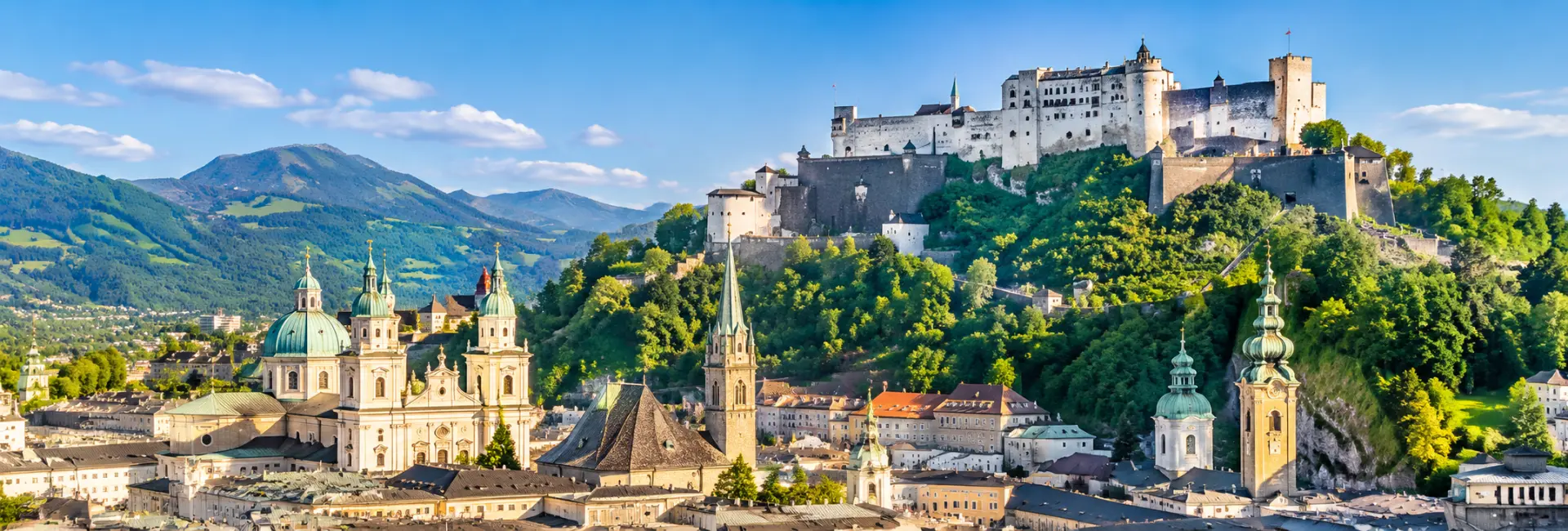
Hohensalzburg Fortress sits on the Festungsberg, a rocky spur above Salzburg's old town, and it is the building you see from almost every street in the city centre. Covering roughly 32,000 square metres of buildings, courtyards and ramparts, it ranks among the largest medieval castle complexes in Europe and is also one of the best preserved.
The fortress was never meant to be merely pretty. It was built to protect the prince-archbishops who ruled Salzburg, to shelter them in times of danger, and to remind the townspeople below who held power. Today that same hilltop position gives visitors some of the finest views in Austria, while rooms inside the walls reveal how rulers lived, fought and worshipped.
A visit combines several experiences in one: a short funicular ride or a steady uphill walk, a tour through lavish late-medieval interiors, a series of museums, and open terraces looking over the Salzach valley and the surrounding Alpine foothills.
History
Origins in the Eleventh Century
Construction began in 1077 under Archbishop Gebhard von Helfenstein, at a time when bishops across the region were caught up in fierce disputes between the Church and the German emperors. The first version was a simple bailey with a timber wall, a modest affair compared with what stands today.
Growth Under the Prince-Archbishops
Over the following centuries successive archbishops enlarged the complex, replacing wood with stone and adding towers, residential quarters and stronger walls. The biggest transformation came under Leonhard von Keutschach, who ruled from 1495 to 1519 and gave the fortress the form that, in essence, survives today.
Sieges, Prisoners and Quiet Decades
The fortress held firm during the peasant uprising of 1525, when Archbishop Matthäus Lang sheltered inside while rebels failed to break through. It also served as a prison, and the former ruler Wolf Dietrich von Raitenau was held here until his death in 1617. In 1800 the garrison handed the fortress to French troops without a fight, and in later years it was used as barracks and a place of detention.
Rebirth as a Visitor Attraction
Restoration from the late nineteenth century onward turned a military relic into a showpiece. The opening of the funicular railway in 1892 made the climb easy for ordinary visitors, and the fortress has been a cornerstone of Salzburg tourism ever since.
Architecture and Defences
The fortress is not a single building but a cluster of structures stacked up the hillside, linked by passages, stairways and courtyards. Thick curtain walls, rounded bastions and sturdy towers reflect centuries of changing military thinking, from late medieval defence to the age of gunpowder.
A Fortress That Doubled as a Palace
Inside, the austere exterior gives way to refined Gothic craftsmanship. Carved timber, painted ceilings and decorative stonework show that the archbishops treated the fortress as a residence as well as a refuge, especially in the years around 1500.
Key Structural Features
- Massive outer walls and bastions built to withstand artillery
- The upper courtyard, which links the main buildings and towers
- Gothic residential quarters decorated for the ruling archbishop
- The Krautturm, a powder tower that now holds one of the fortress's most unusual instruments
- A bell tower, which also contains a lift used for step-free access to part of the complex
Although the interiors are atmospheric, many routes involve stairs, narrow doorways and uneven floors, which is part of the charm of exploring a building that is more than nine centuries old.
Princes' Chambers and Museums
The Princes' Chambers
The most celebrated interiors are the princes' rooms on the third floor, a suite that includes the Golden Hall, the Golden Chamber and a bedchamber. The ceiling decoration is the showstopper, with gilded spheres scattered across a deep blue background to imitate a night sky. A large Gothic tiled stove in the Golden Chamber is another highlight, showing the quality of craft that went into a ruler's private apartments.
Fortress Museum
The main museum traces the story of the fortress and the archbishops who shaped it. Displays cover daily life, justice and punishment, weapons and armour, and the way the complex changed over time. It gives useful context before or after you walk through the princes' rooms.
Marionette Museum
Housed in a vaulted former gun deck, this museum is devoted to puppetry and its place in Salzburg's cultural life. It is a pleasant surprise for visitors expecting only swords and cannons, and it ties in with the city's long tradition of marionette theatre.
Rainer Regiment Museum
Another collection looks at military history and the soldiers who served here, adding a more modern layer to the story of the fortress as a working garrison.
Bastions, Views and the Salzburg Bull
Panoramas Over the City and the Alps
Bastions and terraces around the fortress offer wide-open views across the baroque rooftops, the Salzach River, the neighbouring Mönchsberg and Kapuzinerberg hills, and the mountains beyond. On clear days the outlook stretches far into the countryside, and in the evening the light on the old town's domes and spires is especially atmospheric.
The Salzburg Bull
The Krautturm houses the Salzburg Bull, an aerophon of more than 200 pipes that dates back to around 1502. This mechanical organ is one of the oldest instruments of its kind still making music, and its sound drifts out over the city during scheduled performances in the warmer months.
The Reisszug
One of the fortress's most intriguing features is the Reisszug, an early funicular-style railway that was used to haul goods up to the upper courtyard. It was described in writing in 1515 and stands as a reminder that this was a working stronghold that had to be supplied, not just admired.
Cultural Significance and Status
For Salzburg, Hohensalzburg is more than a monument. It is the city's visual signature, appearing on postcards, in paintings, and in the skyline view that welcomes almost every visitor. Its story is bound up with the long era when Salzburg was ruled by archbishops who held both spiritual and political power.
The fortress forms part of the Historic Centre of the City of Salzburg, which is inscribed on the UNESCO World Heritage List. This recognition applies to the old town as a whole, and the fortress is one of its most prominent anchors.
The site also plays a part in Salzburg's musical identity. Concerts are held within its walls, connecting the fortress to a city that is known worldwide for classical music. Hearing a performance in such a setting adds an extra dimension to an already memorable visit.
Ways to Experience It
Getting Up the Hill
The funicular, known as the FestungsBahn, climbs from the old town to the upper station in about a minute and has been running since 1892. Walkers can take the footpaths instead, a climb of roughly half an hour that rewards you with changing views along the way.
Self-Guided Exploration
Most visitors choose a ticket that includes the museums, princes' chambers and audio guide, then wander at their own pace. Different ticket levels are available, ranging from a basic grounds pass to an all-inclusive option, so it is worth comparing before you buy.
Guided Tours and Special Events
Themed tours, family programmes and seasonal events are held throughout the year, and the fortress calendar is worth checking before you go. Evening concerts are among the most popular options for those who want a different kind of visit.
Dining With a View
A restaurant with a panoramic terrace operates on site, making it easy to pause for a meal or a coffee while taking in the scenery.
Best Time to Visit
Seasons
The fortress is open all year, and each season offers something different. Late spring and early autumn tend to bring pleasant temperatures and clear views, while summer has the longest opening hours and the liveliest atmosphere. Winter is quieter and often beautifully crisp, though the stone interiors can be chilly and the days are shorter.
Time of Day
- Early morning, shortly after opening, is usually the calmest time
- Late afternoon brings warm light over the old town for photography
- Midday in peak season is typically the busiest period, particularly when tour groups arrive
Opening hours change with the season, so check the official site before planning your day.
Visitor Tips
- Allow two to three hours if you want to see the princes' chambers, the museums and the viewpoints without rushing.
- Buy tickets online where possible, since this can save time at the entrance, and confirm current prices and hours on the official website.
- If you are travelling with a Salzburg Card, check what it covers, as it includes a single visit to the fortress.
- Wear comfortable shoes with good grip; courtyards and stairways can be uneven or slippery.
- Bring a light jacket, because it can be breezy on the ramparts even on warm days.
- Visitors with mobility needs should note that the funicular, the panorama terrace and some courtyard areas can be reached without steps, while many interior spaces cannot.
- Check the schedule for the Salzburg Bull and for concerts if either is on your wish list.
Nearby Attractions
The fortress sits at the southern edge of the old town, so it pairs easily with a wider day of sightseeing. Below the hill you can explore the historic streets, squares and churches of the Altstadt, including the area around Salzburg Cathedral and the monastic complex of St. Peter's Abbey.
A walk through Getreidegasse leads to the birthplace of Mozart, while the Mirabell Palace and its gardens, across the river, offer a more elegant stroll in the new town. For another viewpoint, the Mönchsberg heights stretch alongside the fortress and give a different angle of the old town and the castle itself.
Many visitors plan the fortress as a morning or afternoon highlight and then spend the rest of the day wandering the pedestrian lanes below, ending with a meal in one of the traditional Austrian restaurants nearby.
FAQs about visiting Hohensalzburg Fortress
What is Hohensalzburg Fortress known for? +
It is one of the largest and best-preserved medieval castle complexes in Europe, famous for its hilltop position above Salzburg, its lavish princes' chambers, its museums and its panoramic views.
How long does a visit take? +
Plan on two to three hours for a full visit that includes the interiors, the museums and the viewpoints. A short trip focused only on the terraces can be done in about an hour.
How do I get to the fortress? +
The quickest way is the FestungsBahn funicular, which leaves from the old town and takes about a minute. You can also walk up in roughly thirty minutes along the footpaths.
Do I need to buy a ticket? +
Yes, entry to the fortress grounds and interiors requires a ticket, with several levels available depending on what you want to see. Prices and options change, so check the official website before you go.
When is the best time to visit? +
Late spring and early autumn offer comfortable weather and clear views, and early morning is generally the least crowded time of day. Summer has longer hours but more visitors.
Is Hohensalzburg Fortress suitable for children? +
Yes, families generally enjoy it thanks to the funicular ride, the ramparts, the puppet museum and the sense of exploring a real castle. Strollers can be awkward on stairs and cobbles, so a carrier may be easier for very young children.
Is the fortress accessible for visitors with limited mobility? +
The funicular, the panorama terrace and bastion near the top station, and parts of the courtyard and exhibitions via the bell tower lift are accessible without steps. Many interior areas are not, so it is best to check details with the fortress before visiting.
Can I combine the visit with other Salzburg sights? +
Absolutely. The fortress is within walking distance of the cathedral, St. Peter's Abbey and the main old town streets, and many visitors pair it with Mozart's birthplace and the Mirabell Gardens.
