
Table of Contents
Overview
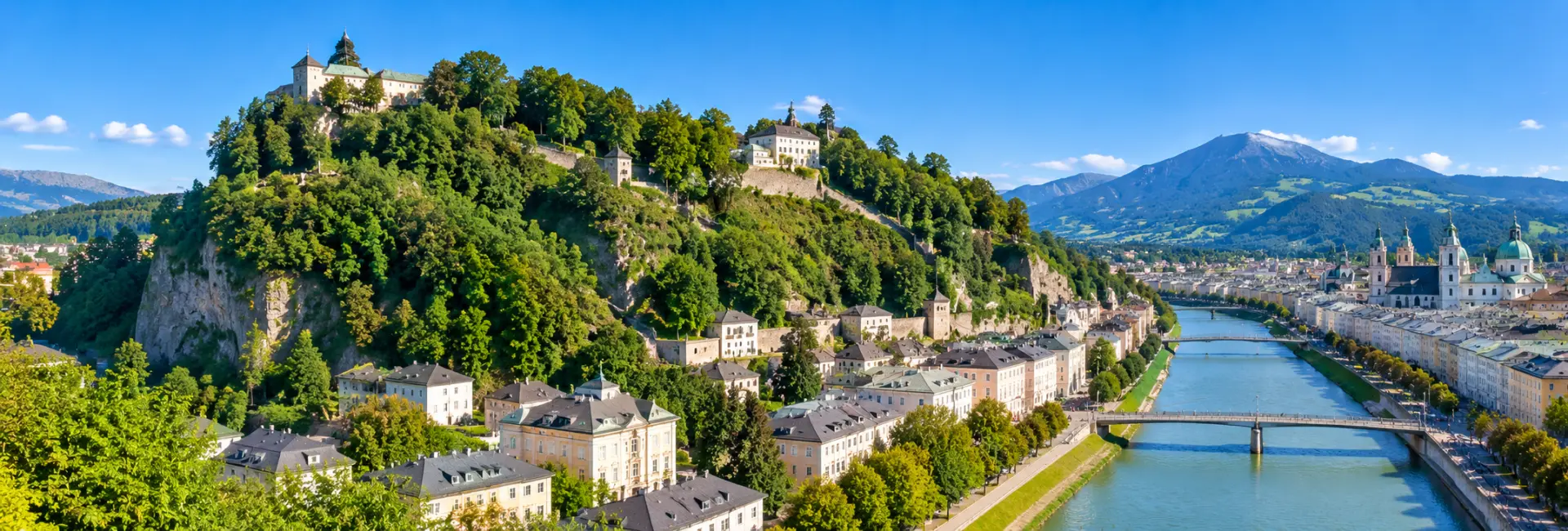
Mönchsberg is the long, wooded ridge that rises directly behind Salzburg's Old Town, and it is the closest thing the city has to a private mountain retreat. Within minutes of the busy lanes below, you can stand on a rocky ledge with the green domes of the cathedral, the towers of the old churches and the Hohensalzburg Fortress spread out in front of you.
The ridge peaks at 508 metres above sea level and stretches for roughly 1.5 kilometres from west to east. Locals use it for morning jogs, family walks and sunset drinks, so it feels lived in rather than staged for tourists.
What makes it special is the mix of experiences packed into such a small area. A modern art museum sits at the edge of the cliff, shaded paths run through old beech and linden woods, and several historic buildings, including a small castle with a one-star restaurant, are tucked among the trees. It is easy to spend a quick half hour here or a full relaxed afternoon.
Natural Setting and Geology
A Mountain Made of Pebbles
Mönchsberg is built from conglomerate, a natural concrete of gravel and pebbles cemented together over time. Geologists place it in the Quaternary period, and its sheer, in places overhanging walls are what give the ridge its dramatic profile above the Old Town. The cliff face drops about 120 metres to the level of the Salzach river valley.
The same rock that makes the views so impressive also makes the mountain restless. Chunks of conglomerate loosen from the face from time to time, which is why the city invests so much effort in watching and cleaning the cliffs.
Woodland on Top
The plateau carries a mixed woodland of beech, sycamore, linden and oak, with paths running between the trees. In spring the canopy turns a fresh green, and in autumn the trails run through deep layers of orange and gold leaves. The quiet is striking, considering how close the city is.
History
A Fortified Ridge
The mountain takes its name from the Benedictine monks of St Peter's Abbey, which stands at its northern foot. Defensive walls on the ridge go back to the thirteenth century, and at the narrowest point the citizens strengthened and raised the wall in 1487. A bastion nicknamed the Katze helped link the fortress defences with the ridge, and fragments of these fortifications can still be spotted along the paths.
The Great Rockslide of 1669
Early on the morning of 16 July 1669, a huge section of the cliff broke away above Gstättengasse and fell on the houses beneath. The slide destroyed St Mark's Church, a seminary, a small chapel and about thirteen houses, and more than 220 people lost their lives. It took the city around ten years to clear away the rubble.
The disaster is still remembered today through the profession of the Bergputzer, or mountain cleaners. These specialists climb the cliffs on ropes to remove loose rock, and they have kept the Salzburg hills safe in an organised way since that tragedy.
The Legend of the Bull Washers
A famous local story dates from a sixteenth-century peasant uprising, when rebels besieged the fortress and tried to starve its defenders into surrender. Supplies dwindled until a single bull was left, and the defenders paraded it along the walls, painting it a different colour each day to suggest that livestock was plentiful. The besiegers gave up, and Salzburgers have been teased as "Stierwascher", or bull washers, ever since.
Recognition / Status
Mönchsberg forms part of the Historic Centre of the City of Salzburg, which UNESCO placed on the World Heritage List in December 1996. The ridge frames the Old Town on its western side and is one of the green backdrops that make the baroque skyline so photogenic.
That status matters for visitors because it explains the care taken over the mountain. Building is tightly controlled and the cliff faces are inspected every year.
The mountain is also one of Salzburg's several city hills, along with the Kapuzinerberg and the fortress hill. Together they give the town its distinctive setting, and Mönchsberg is the one most often chosen for a quick escape from the crowds.
Museum der Moderne and the Viewing Terrace
A Museum on the Cliff Edge
The Museum der Moderne Mönchsberg opened on 23 October 2004 at the top of the lift. It was designed by the Munich architects Friedrich Hoff Zwink and is clad in local Untersberg marble, a choice that ties the building to the geology of the region. Its exhibition spaces cover around 2,300 square metres over three levels, with rotating shows of twentieth and twenty-first century art.
The museum shares its name with a second building in the Old Town, the Rupertinum, and one ticket can cover both locations. The two sites together form the city's main centre for modern and contemporary art.
The Terrace and Restaurant
Even if galleries are not on your list, the terrace in front of the building is a highlight. It sits directly on top of the rock face and gives an open view across the rooftops towards the fortress, the cathedral and the river. The M32 restaurant occupies the same building, and it offers much the same panorama for guests who want to linger over a meal or coffee.
Key Areas, Trails and Viewpoints
The mountain has no single path that you must follow, but a handful of places appear again and again in walkers' plans. Together they make a satisfying ridge walk of an hour or two.
- Museum der Moderne terrace: The most easily reached viewpoint, with a wide outlook over the Old Town and the fortress.
- Richterhöhe: A hilltop spot with a small snack hut, popular for sausages and apple strudel, and a lookout that shows the city as if it were a model.
- Church-spire viewpoint above the Toscaninihof: Reached by the Clemens Holzmeister Steps, this stop looks across the green cathedral domes, St Peter's, the Franciscan Church and the collegiate church.
- Fortress junction: Where the ridge path meets the route to Hohensalzburg, the trails split, and this is also the busiest part of the mountain.
- Mönchstein Castle and the western end: A quieter stretch of the ridge, passing the small castle that houses a one-star restaurant.
Several routes lead up. You can climb from the Toscaninihof on the Holzmeister Steps, come up from Mülln past the church and along the fortification wall, use the path from Nonntal through the Scharte, or start from Kaigasse and Kapitelplatz via the Nonnberg steps. The main paths are even and wide enough for pushchairs.
Ways to Experience It
- Take the lift: Starting at Anton-Neumayr-Platz in the Old Town, the lift climbs 60 metres in about 30 seconds. An earlier version once hung on the rock face, while the modern lift runs inside the mountain, and it is barrier-free.
- Walk up on foot: The stepped routes from the Old Town give you a growing view as you climb.
- Hike the ridge: Follow the paths along the crest, either towards Hohensalzburg Fortress or the quieter western end.
- Visit the museum: Combine a lift ride with admission to the Museum der Moderne, which is also valid at the Rupertinum.
- Eat and drink with a view: Choose from the M32 restaurant, the Richterhöhe buffet, the Stadtalm and the fine-dining room at Mönchstein Castle.
- Finish at the brewery: At the foot of the mountain, the Augustiner Bräustübl has brewed beer since 1621 and is now Austria's largest beer hall.
In practice, many visitors take the lift up, stroll along the ridge towards the fortress and then walk down into the Old Town, which turns a short trip into a satisfying loop.
Best Time to Visit
Mönchsberg can be enjoyed all year, but each season gives it a different mood. Spring brings fresh leaves and birdsong, and the hillside is at its greenest and quietest on weekday mornings. Summer is warm and lively, and long evenings make sunset on the terrace a favourite plan, although the fortress junction becomes crowded at midday.
Autumn is arguably the best season, with clear air, golden leaves and soft light that flatters the Old Town. In winter the paths can be cold and occasionally icy, but small hills on the plateau are used for sledging, and the city view looks beautiful on a bright, frosty day.
For timing within a day, try to stand at a viewpoint around 11:00 or at noon. The Glockenspiel rings across the Old Town at 11:00, and the cathedral bells follow at midday, so the soundtrack to the view is exceptional. Late afternoon is ideal for photography, since the low sun lights up the fortress and the domes.
Visitor Tips
- Stay on marked paths and keep well back from the edge. The mountain has steep drops, and not every cliff is fenced.
- Wear comfortable shoes with grip, because stone steps and leaf-covered paths can be slippery, especially after rain.
- Check the lift's operating hours before you go, since they change by season and it may run later during events or when the restaurant is open.
- A Salzburg Card can include the lift and museum entry, so compare it with individual tickets if you plan several sights.
- Bring water and a light jacket. There are only a few refreshment points on the ridge, and the wind can feel cool above the city.
- Dogs are allowed on the lift if they are leashed and muzzled, and the museum area and main paths are generally accessible for wheelchairs and pushchairs.
- Confirm prices, hours and exhibition details with the Museum der Moderne and Salzburg AG before visiting.
Nearby Attractions
Because the lift drops you right in the Old Town, Mönchsberg pairs easily with several of Salzburg's highlights.
- Hohensalzburg Fortress: A scenic ridge path leads east to the fortress, the hilltop castle that has never been captured.
- Getreidegasse and Mozart's Birthplace: The lift base is only a short walk from the famous shopping lane and the house where the composer was born.
- Salzburg Cathedral and Residenzplatz: Both lie just a few minutes from the foot of the mountain and appear in the views from above.
- Mozartplatz: The Mozart statue square makes a pleasant stop on the way back to the centre.
- St Peter's Abbey and Cemetery: Located at the northern foot of the ridge, this ancient monastery gave the mountain its name.
- Festival Halls and Toscaninihof: The stairway from this quiet courtyard is one of the classic ways up the mountain.
FAQs about visiting Mönchsberg
What is Mönchsberg? +
Mönchsberg is a wooded ridge on the western side of Salzburg's Old Town, rising to 508 metres above sea level. It is known for its viewpoints, walking paths and the Museum der Moderne at the top of the lift.
How do I get up Mönchsberg? +
The quickest way is the Mönchsberg lift from Anton-Neumayr-Platz, which takes about 30 seconds. You can also walk up one of several paths, such as the Clemens Holzmeister Steps from the Toscaninihof or the routes from Mülln and Nonntal.
Is Mönchsberg free to visit? +
The paths and woods are free to enter at any time. You only pay for the lift, the museum and any food or drink you buy, and a Salzburg Card may cover some of these costs.
How long do I need on Mönchsberg? +
Plan on about one to two hours for a ridge walk with a viewpoint stop. If you add the museum or a meal at one of the restaurants, a half day passes easily.
Is Mönchsberg suitable for families and wheelchair users? +
The lift is barrier-free and leads directly to the museum and terrace, and the main paths are wide enough for pushchairs. Children enjoy the viewpoints, but parents should keep them well away from unfenced cliff edges.
Can I walk from Mönchsberg to Hohensalzburg Fortress? +
Yes, a path along the ridge links the two, and it takes you past several viewpoints. Allow extra time in summer, when the junction near the fortress is busy.
What is the best viewpoint on Mönchsberg? +
The terrace of the Museum der Moderne is the easiest and most popular, while Richterhöhe offers a quieter outlook over the rooftops. The viewpoint above the Toscaninihof is the one to choose if you want to pick out the church spires.
Is it safe to walk near the cliffs? +
The main paths are safe, but the mountain has steep drops and not all of them have railings. Stay on marked routes, supervise children closely and be careful in wet or icy conditions.
