
Table of Contents
Overview
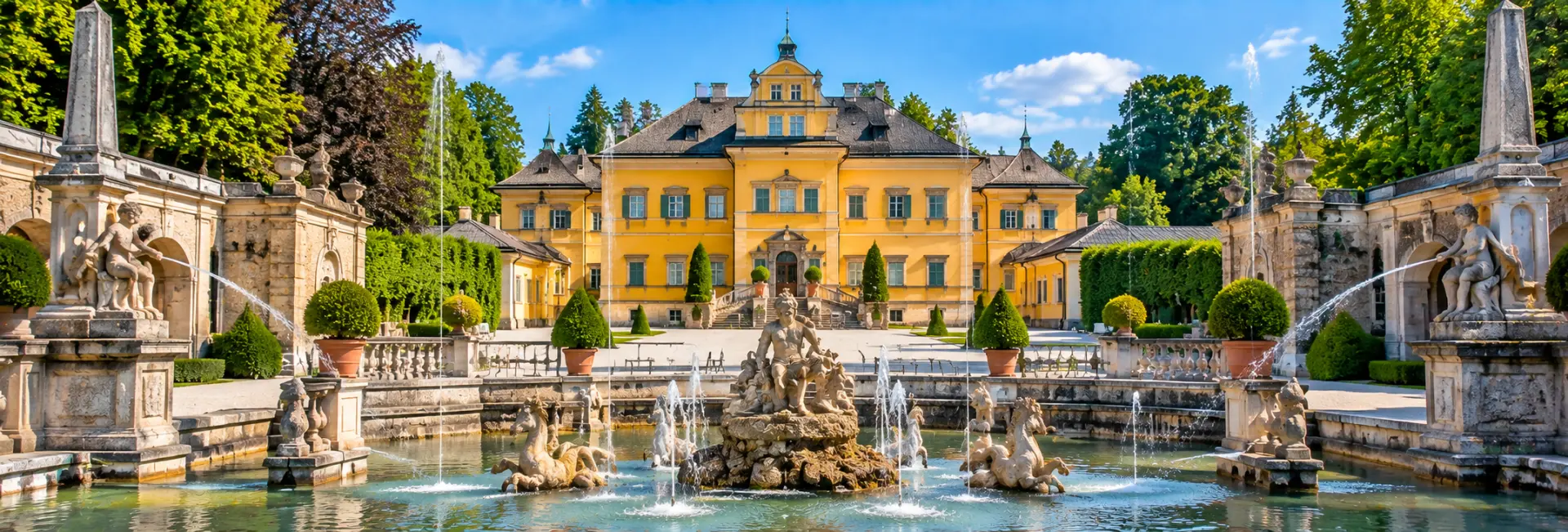
Hellbrunn Palace sits in the green southern outskirts of Salzburg, about four and a half kilometres from the old town. It was created in the early seventeenth century as a place of pleasure for a prince-archbishop who wanted somewhere to entertain guests, escape official duties and show off his sense of humour. The result is part palace, part water park and part theatre, and it is unlike almost anything else in Austria.
The main draw is the set of trick fountains, known in German as the Wasserspiele. Hidden jets, whimsical statues and mechanical figures surprise visitors with sudden sprays of water, all powered by natural springs from the nearby hillside. A guided tour leads you through the grottoes and courtyards, and wet shoulders are very much part of the experience.
Beyond the fountains, the complex includes an elegant villa, a landscaped park with ponds and sculptures, a folk museum and the pavilion made famous by The Sound of Music. It makes an easy half-day outing from the city centre.
History
A Prince-Archbishop's Retreat
Hellbrunn was commissioned by Markus Sittikus von Hohenems, who became Prince-Archbishop of Salzburg in 1612. Work began the following year on a country villa set beside the springs at the foot of the Hellbrunn hill. The name itself refers to a clear spring, which gave the whole estate its character.
Built for Pleasure, Not Sleeping
The main building was designed as a day residence, a place to dine, entertain and relax in summer. Remarkably, it contains no bedroom, because the archbishop returned to his official residence in the city each evening. The architect was Santino Solari, who also designed Salzburg Cathedral, and the project was completed within a few years.
From Court Pleasure Ground to Public Attraction
In the centuries after Sittikus, later archbishops added to the grounds and the entertainments. Over time the estate lost its role as a court retreat, but its gardens and fountains survived and eventually opened to the public. The mechanical theatre, a later addition in the eighteenth century, remains one of the favourite stops on the visitor route.
Architecture and Notable Rooms
An Italian-Style Villa
The palace is an early baroque villa with Renaissance and Mannerist roots, shaped by the Italian ideas of country villas that Sittikus admired. Its yellow-ochre facade looks calm and symmetrical, a deliberate contrast with the mischief hidden in the gardens behind it.
Inside the Palace
The interior reflects the building's purpose as a place of entertainment. Painted halls, decorated ceilings and cheerfully theatrical rooms were made for banquets and gatherings, and one of the best-known spaces is the frescoed main hall. A room decorated with exotic motifs, known as the Chinese Room, adds another layer of playfulness.
What You Can See
- A banqueting hall with painted walls and ceilings
- Rooms that explain the history of the estate and its builder
- A permanent exhibition that explores the palace's story and the idea of pleasure at court
- Views out to the formal gardens and the hillside behind
Visitors can explore the palace independently, often with an audio guide, and the trick fountains are visited separately with a guide.
The Trick Fountains
Water as a Practical Joke
The trick fountains were designed to delight and startle in equal measure. Natural springs flowing down the hill supplied the water, and ingenious channels and hidden nozzles turned that supply into surprises. Statues appear to be harmless until a spray catches you from an unexpected angle, and the guide's calm commentary only adds to the fun.
The Dining Table
One of the most famous tricks is the stone dining table in the garden. Guests who sat at the seats were splashed by water from hidden jets, while the host stayed dry at the head of the table. It captures the humour of the whole estate.
Grottoes and Theatres
- A shell-covered Neptune Grotto with water effects
- A Bird Grotto where mechanical birdsong fills the space
- A small imitation of a Roman theatre, also fitted with watery surprises
- A stone mask with its tongue sticking out, said to be a playful answer to critics
The Mechanical Theatre
The tour ends at a water-powered mechanical theatre from the eighteenth century, where around two hundred small figures act out scenes from a busy baroque town. Moving craftsmen, musicians and townspeople are driven entirely by water, and children and adults alike tend to stand transfixed.
Park, Grounds and Gardens
Around the palace spreads a large, leafy park with ponds, sculptures, shady avenues and clipped hedges. It is a peaceful place to walk, particularly after the busier fountain tour, and much of it is free to enter and open until dusk.
The Sound of Music Pavilion
Among the trees stands the small glass pavilion where a famous scene from the 1965 film The Sound of Music was shot, the song Sixteen Going on Seventeen. It was moved to Hellbrunn after filming, and fans of the movie often make a pilgrimage to see it, recreate the dance moves and take photographs.
Folk Museum and Hillside Features
A small castle on the hillside above the park houses a museum of regional folk culture, with costumes, tools and everyday objects from the Salzburg region. Nearby, a natural stone theatre set into the rock recalls the open-air entertainments of the baroque age.
The Zoo Next Door
A zoo borders part of the grounds and offers a family-friendly extension to a visit, especially for those travelling with children.
Cultural Significance
Hellbrunn is a rare example of an early baroque pleasure ground that survives largely as its creator intended. The Mannerist water features are considered unusual in the world today, and they demonstrate how engineering, art and humour were combined at an archbishop's court.
For Salzburg, the estate shows a lighter side of the prince-archbishops, who are often remembered for grand cathedrals and fortresses. Here the same rulers appear as hosts with a mischievous streak, willing to soak their own visitors in the name of entertainment.
The palace has also found a place in popular culture through The Sound of Music, which has drawn fans from around the world to the gardens. Today, the contrast between a courtly baroque estate and a Hollywood pavilion makes Hellbrunn a distinctive stop on any Salzburg itinerary.
Ways to Experience It
Guided Trick Fountain Tour
The fountains can only be visited with a guide, in groups that depart at regular intervals during the season. The tour lasts roughly an hour and covers the grottoes, the dining table, the stone theatre and the mechanical theatre.
Palace and Exhibition
The palace interior can be explored at your own pace, often with an audio guide, and a permanent exhibition adds context about the estate's history.
Wandering the Park
Spend time strolling among the ponds, sculptures and avenues, and visit the pavilion for photographs. Benches and shaded paths make it easy to slow down.
Getting There by Bus or Bicycle
Hellbrunn is easy to reach by public bus from the old town, and a pleasant bicycle route follows the river for much of the way. The ride takes around twenty to twenty-five minutes, which makes it a lovely outing in good weather.
Seasonal Events
In the run-up to Christmas the grounds host an Advent market, giving the estate a very different, festive atmosphere.
Best Time to Visit
Seasons
The palace and trick fountains operate on a seasonal schedule, generally from late March to early November, because the water features cannot run in freezing weather. Late spring, summer and early autumn are the best times, with green gardens and warm days that make a splash feel welcome. The park itself can be visited outside the main season.
Time of Day
- Morning tours are usually calmer and cooler
- Midday and afternoon can be busy in summer, so book or arrive early
- In peak summer, extended evening hours may be offered for a different atmosphere
Check the official Hellbrunn website for the current opening hours before you go.
Visitor Tips
- Expect to get wet. Wear clothes and shoes that will dry quickly, and avoid carrying anything delicate such as paper or electronics in an open bag.
- Follow the guide's instructions during the tour, since some spots are designed to surprise, and the guide will signal where it is safe to stand.
- Allow two to three hours for the full visit, including the fountains, the palace and a walk through the park.
- Arrive early or book ahead in summer, as tour groups can fill up quickly.
- Bring a light jacket or a spare layer, particularly in spring and autumn.
- The park and fountains are generally accessible to wheelchair users, but the palace interior is not. Confirm access details in advance.
- Check what a Salzburg Card covers, as it can include entry to the palace and fountains.
- Combine the visit with a picnic or a break in the park, as there are plenty of shaded spots.
Nearby Attractions
The zoo next to the grounds is a short walk away and appeals to families. The wooded hillside of the Hellbrunn mountain offers paths and a viewpoint, and the Salzach riverside lanes lead back towards the city.
Back in the centre, Mirabell Palace and its gardens provide a more formal baroque counterpart to Hellbrunn's playful spirit, while the cathedral, the old town and Mozart's Birthplace complete a classic day in Salzburg. Hohensalzburg Fortress, high above the rooftops, is another natural pairing.
Many visitors combine Hellbrunn with a themed tour of the filming locations of The Sound of Music, which often stops at the pavilion and at other sites around the city.
FAQs about visiting Hellbrunn Palace and Trick Fountains
What is Hellbrunn Palace famous for? +
It is famous for its trick fountains, a set of water jokes and mechanical effects created in the early seventeenth century for a prince-archbishop. It is also known for its mechanical theatre and for the pavilion from The Sound of Music.
Will I really get wet on the trick fountain tour? +
Yes, that is part of the fun. Hidden jets spray water at unexpected moments, so wear quick-drying clothes and expect at least some splashes.
Can I visit the trick fountains without a guide? +
No. The fountains are fenced and can only be seen on a guided tour, which lasts about an hour.
How far is Hellbrunn from Salzburg's old town? +
It lies about four and a half kilometres to the south. You can reach it by bus in roughly twenty minutes or by bicycle along the river.
When is Hellbrunn open? +
The palace and trick fountains operate seasonally, generally from late March to early November, with longer hours in high summer. The park is more widely accessible, but check the official website for current times.
How long should I allow for a visit? +
Plan on two to three hours to see the fountains, the palace and part of the park. Add time if you want to visit the folk museum or the zoo.
Is Hellbrunn suitable for children? +
Yes, children usually love the fountains and the mechanical theatre. The surprise sprays can startle very young children, so it helps to prepare them in advance.
Where is the Sound of Music pavilion? +
It stands in the palace park. It was moved there after filming, and visitors can walk to it freely as part of a park stroll.
