
Table of Contents
Overview
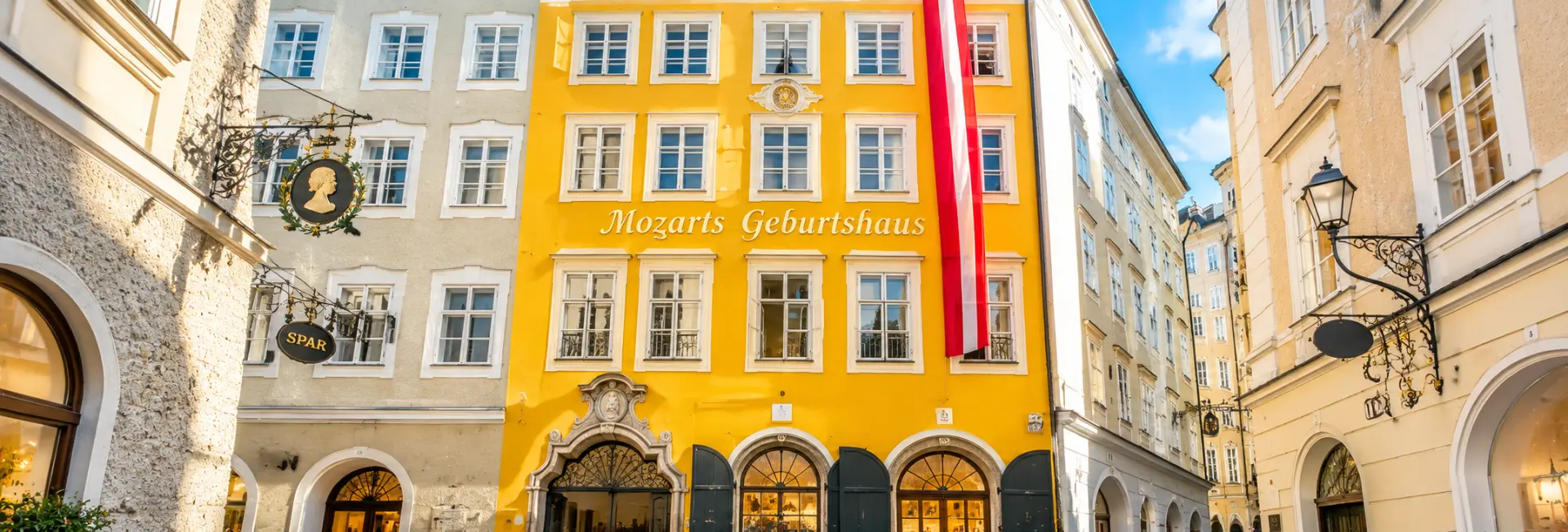
On Salzburg's busiest shopping lane, a tall yellow townhouse draws a steady line of visitors. This is Getreidegasse 9, the building where Wolfgang Amadeus Mozart was born on 27 January 1756 and where his family lived for more than a quarter of a century. Today it is a museum, and it ranks among the most visited in Austria.
The experience is intimate rather than grand. Instead of palace halls, you climb through the narrow rooms of an ordinary merchant's house, seeing the instruments, portraits and letters that belonged to a musical family. It is one of the best places in the city to understand Mozart as a child, a son and a young musician growing up in Salzburg.
The house also tells a quieter story about the city itself. Salzburg is now closely identified with its most famous son, with festivals, concerts and even chocolates carrying his name. Yet the composer left for Vienna as a young man, and Salzburg was not always generous to him in his lifetime. Standing in his childhood rooms makes that contrast especially vivid.
Because the house sits in the middle of the old town, it is easy to visit as part of a walking day. Most people allow about an hour inside.
History of the House and Museum
The Hagenauer House
The building is also known as the Hagenauer House, named after the merchant family who bought it in 1703. Johann Lorenz Hagenauer, a trader in groceries and spices, became both landlord and friend to the Mozarts, and he later supported the family during their long concert journeys.
A Family Home
Leopold Mozart, a court musician, moved into an apartment on the third floor in 1747 with his wife, Anna Maria. Of the seven children the couple had, only Wolfgang and his older sister Nannerl survived infancy, and both grew up in these rooms. Leopold was an exacting teacher and a published author on violin technique, and the home was filled with music lessons, practice and rehearsal.
Leopold recognised his children's talent early and took them on extended tours of the courts and cities of Europe, with Wolfgang and Nannerl performing for aristocratic audiences. These trips kept the family away from Salzburg for long periods, and the apartment on Getreidegasse remained their base throughout. Letters sent home from the road, many of them preserved, give the museum much of its human warmth.
In 1773 the family moved to a larger home across the river, which is now known as the Mozart Residence. Wolfgang later left Salzburg for Vienna, where he built his career and where he died in 1791.
From Home to Museum
The International Mozarteum Foundation opened the first museum in the house in 1880, long before mass tourism arrived. Since then the displays have been expanded and renewed many times, and the museum has become a place of pilgrimage for admirers of the composer from all over the world.
Architecture and Building
From the street, the house blends into the surrounding row of tall, narrow buildings, with its yellow facade and the shop doorways at ground level typical of Getreidegasse. The home's design is a classic example of a town house for a prosperous middle-class family in eighteenth-century Salzburg, with several floors of compact rooms stacked above a commercial base.
Inside the Rooms
The interior retains the proportions of a family apartment rather than a stately palace. Low ceilings, small windows and creaking staircases give a sense of how crowded and lively family life must have been, especially with a household built around music.
A Modern Touch on the Facade
Since March 2024 the front of the building has carried a contemporary artwork by the Salzburg artist Andreas Feldinger. Translucent red notes on a white background, based on a Mozart manuscript of the variations on a French melody better known as Twinkle, Twinkle, Little Star, seem to drift across the facade as the light and wind change.
Collections and Exhibits
The museum draws on a rich collection assembled by the International Mozarteum Foundation, including items acquired from Mozart's widow, Constanze, and their sons. The exhibition covers his childhood as a prodigy, his years of travel across Europe, his operas and his time in Salzburg and Vienna.
What You Will See
- Historic musical instruments, including Mozart's own violins and a clavichord
- Original portraits of the Mozart family
- Letters, certificates and other documents that trace his life and career
- Early editions of his music and facsimiles of manuscripts
- Period furniture and household objects that recreate the atmosphere of the 1700s
Why the Objects Matter
Many of the items on display are small and personal, which is exactly what makes them affecting. A child-sized violin, a handwritten note or a family portrait carries more emotional weight than a grand monument, because it shows the composer as a person who lived in a real home with a real family.
The collection also corrects a common impression. Mozart is often imagined as a distant genius, but the exhibits show a working musician shaped by his father's ambition, his sister's talent and the demands of life at a court. Reading the labels with this in mind turns the visit into a story rather than a list of objects.
Themes by Floor
Different floors are devoted to different themes. One level looks at Mozart's lifelong passion for opera, another follows his boyhood and family, and a changing exhibition explores a fresh angle on his life and work, so repeat visitors often find something new.
Must-See Highlights
Mozart's Violins
Seeing the instruments that the composer played as a child and as a young adult is the emotional high point for many visitors. They remind you that the genius began as a small boy who practised for hours under his father's watchful eye.
The Clavichord
The museum displays a clavichord associated with the composer's later work, and it is traditionally linked to the creation of The Magic Flute. Even if you are not a keyboard enthusiast, the delicate instrument gives a sense of how music was written and rehearsed at home.
Family Portraits and Letters
Portraits of Leopold, Anna Maria, Nannerl and Wolfgang put faces to the names, while handwritten letters show the warmth, humour and sometimes tension within the family.
The Opera Rooms
The floor devoted to opera shows how central the stage was to Mozart's creativity, with material linked to some of his best-known works.
Ways to Experience It
Self-Guided Visit
Most visitors tour the museum at their own pace using the information provided in the rooms. A full circuit takes roughly an hour, though music lovers may want to linger.
Combined Ticket
A combined ticket is available that covers both the birthplace and the Mozart Residence, the later family home. Seeing both helps you follow the family's story from the early years to the more prosperous period.
As Part of a City Walk
Many guided walks of the old town stop outside the building, and some tours include the museum interior. It fits naturally into a day that also takes in the cathedral squares, the river and the hilltop fortress.
Music in the City
Salzburg offers concerts in historic venues, and an evening performance is a good companion to a daytime museum visit. The International Mozarteum Foundation also organises an annual Mozart Week festival, held each winter around the composer's birthday.
Best Time to Visit
Seasons
The museum is open throughout the year, so you can visit in any season. Summer, particularly during festival time, is the busiest period, with queues and crowded rooms. Spring and autumn are more relaxed, while winter can be pleasantly quiet, especially outside the Christmas and Mozart Week periods.
Time of Day
- Right after opening is usually the calmest time to go in
- Late afternoon can also be quieter as tour groups leave
- Midday often brings the longest waits, especially in summer
Opening hours and ticket details can change, so check the official Mozarteum website before you go.
Visitor Tips
- Allow around an hour for the visit, and longer if you enjoy reading every label.
- Buy tickets online if possible to save time at the entrance, and consider the combined ticket if you also plan to see the Mozart Residence.
- If you are using a Salzburg Card, check what it includes, as it provides one free entry to the museum.
- Expect stairs and narrow passages. The museum is not accessible by wheelchair, so visitors with limited mobility should plan accordingly.
- Dogs are not permitted, apart from assistance dogs.
- Take photos of the facade from the lane, where you can see the colourful artwork and the line of guild signs along the street.
- Arrive early in high season, as the building is small and fills up quickly.
Nearby Attractions
The Mozart Residence on Makartplatz, where the family lived after 1773, is a pleasant walk across the river and offers a fuller picture of the household in later years. Nearby, the Mozarteum buildings continue the musical theme.
Within a few minutes of the birthplace you can reach the cathedral and the grand squares of the old town, as well as St. Peter's Abbey, one of the oldest monasteries in the German-speaking world. Getreidegasse itself is worth a stroll, with its iron shop signs and hidden courtyards.
For a change of scene, Mirabell Palace and its gardens sit across the Salzach River, and Hohensalzburg Fortress rises above the old town, rewarding walkers or funicular passengers with wide views.
FAQs about visiting Mozart's Birthplace
Where is Mozart's Birthplace? +
It is at Getreidegasse 9 in the old town of Salzburg, on the city's best-known shopping street. The yellow facade is easy to spot among the surrounding buildings.
When was Mozart born and how long did his family live in the house? +
Mozart was born in the house on 27 January 1756. His family occupied an apartment on the third floor from 1747 until they moved to a larger home in 1773.
How long does a visit take? +
Most people spend about an hour inside, which is enough to follow the exhibition at a comfortable pace. Dedicated fans may want to stay longer.
What can I see inside? +
The museum shows family portraits, letters, early editions of his music and period furnishings, along with historic instruments including Mozart's violins and a clavichord.
Do I need to book tickets in advance? +
It is not always essential, but buying online can save time, especially in summer. Combined tickets with the Mozart Residence are available, and the Salzburg Card includes one entry.
Is the museum suitable for wheelchair users? +
No. The house has narrow stairways and no step-free route to the exhibition floors, so it is not wheelchair accessible. Visitors with limited mobility should check with the museum in advance.
Is it worth visiting with children? +
Many families enjoy it, particularly children who play an instrument or love stories about child prodigies. The rooms are small and can get crowded, so choose a quiet time of day.
What else should I see nearby? +
The Mozart Residence, the cathedral squares, St. Peter's Abbey and the rest of Getreidegasse are all close by, and Hohensalzburg Fortress and Mirabell Palace are an easy walk or short ride away.
