
Table of Contents
Overview
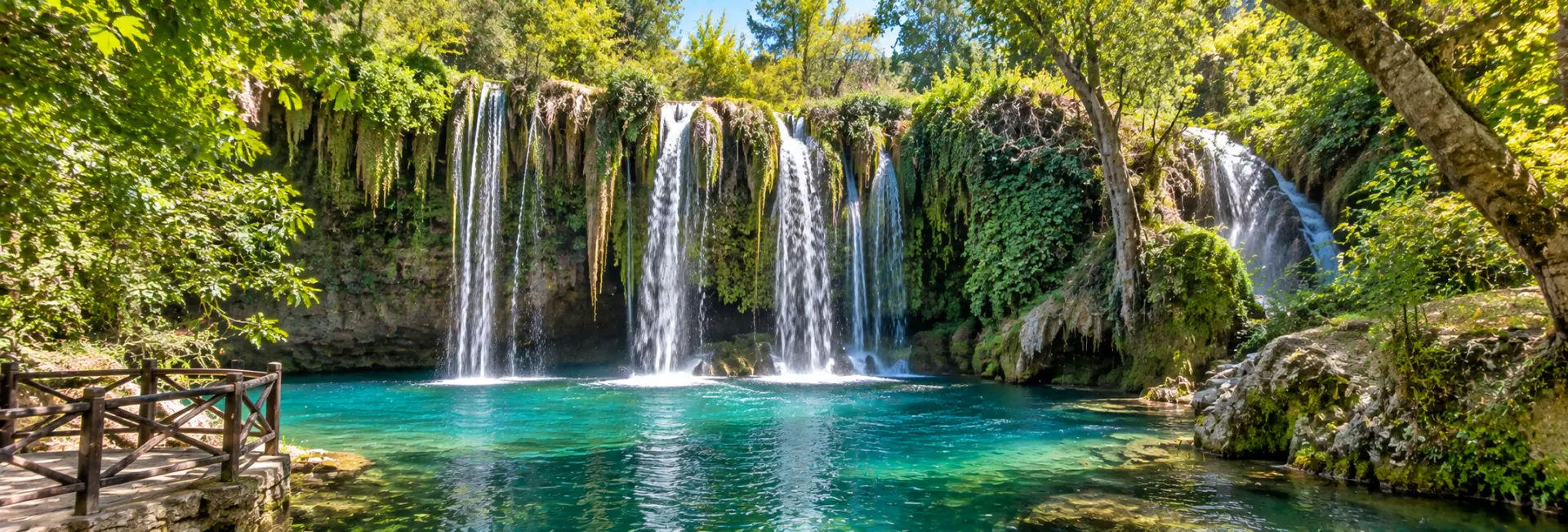
Kurşunlu Waterfalls sit inside a protected pine forest a short drive northeast of central Antalya, where a tributary of the Aksu River drops roughly 18 metres over a limestone ledge into a chain of small pools below. The waterfall and the two-kilometre canyon that holds it were set aside as a nature park in the 1980s, and the surrounding area was later expanded and given formal nature-park protection, making it one of the more accessible natural escapes for visitors based in the city or along the nearby coast.
Unlike the region's larger, more dramatic waterfalls, Kurşunlu is a quieter, walkable spot built around a series of seven interconnected ponds rather than a single towering drop, with wooden walkways and viewing platforms threaded through the forest so visitors can follow the water's course from pool to pool.
Its combination of shade, running water, and easy walking paths has made it a popular half-day escape both for visitors staying along the Antalya coast and for local residents looking for relief from the summer heat, without needing to travel far from the city.
Formation and Natural History
The waterfall formed where one of the tributaries of the Aksu River crosses a step in the limestone terrain as it descends from Antalya's inland plateau toward the coastal plain. Over time, the water has cut through the rock in stages rather than a single sheer face, producing the string of seven small ponds and connecting cascades that now define the canyon, each pool sitting slightly lower than the one before it.
Because the flow depends heavily on rainfall and snowmelt from the surrounding highlands, the waterfall's character changes markedly through the year: it runs full and forceful during the wetter winter and spring months, then narrows to a comparatively gentle trickle by the height of summer. This seasonal swing is a defining feature of a visit here, and it means the waterfall can look strikingly different depending on when you arrive.
The name Kurşunlu, meaning "leaden" in Turkish, is generally linked to old lead-related mining activity once carried out in the surrounding hills, a detail that has stuck to the site's name long after that activity ended.
The site remained a largely undeveloped natural feature for a long period before local authorities began managing it for visitors: an initial section was set aside as a recreation area in the late 1970s, and the boundaries were later expanded and upgraded to full nature-park status as interest in the site grew through the 1980s and early 1990s.
Flora and Fauna
The nature park sits within a forest dominated by red and Turkish pine, interspersed with eastern plane trees, laurel, carob, wild olive, mastic, willow, and fig, giving the canyon a noticeably lush, layered look compared to the drier scrubland found elsewhere around Antalya. Thyme and hawthorn grow along parts of the trail, and one notable Lebanon cedar in the park, a species capable of living for a thousand years, is pointed out to visitors as one of its older natural landmarks.
- Birdlife: reportedly over 100 recorded bird species use the park's forest and water sources
- Mammals and reptiles: visitors commonly spot rabbits, squirrels, hedgehogs, and tortoises along the trails
- Vegetation: red pine forest mixed with plane, laurel, carob, mastic, and willow trees, plus wild thyme and hawthorn undergrowth
The combination of shade, water, and varied plant life supports considerably more wildlife activity than the open countryside around it, which is part of why the park has become a popular stop for casual birdwatching and nature walks rather than just a photo stop at the waterfall itself.
The dense canopy along parts of the trail also creates noticeably cooler microclimates than the surrounding open country, which is one reason the park draws so many visitors during the hottest stretch of the Mediterranean summer even as the waterfall itself is running at its lowest.
Key Areas Along the Canyon
Kurşunlu is arranged around a roughly two-kilometre canyon, with a network of wooden walkways and paths connecting its main points of interest rather than a single view of the falls.
The Seven Ponds
The main waterfall feeds a sequence of seven small ponds linked by smaller cascades, each with its own character and viewing points. Wooden walkways and platforms run alongside much of this stretch, letting visitors follow the water downstream at an easy pace.
The Historic Water Mill
A stone water mill built by local villagers roughly two centuries ago still stands within the park and remains one of its most visited features. It is one of the relatively few historic mills in the region still in a recognisable, intact state, and it gives the otherwise natural setting a layer of local history.
The Cave Behind the Falls
A small cave sits tucked behind part of the main waterfall, reachable by a short section of trail, and it draws steady interest from visitors as one of the park's more unusual features, offering a different vantage point looking out through the falling water.
Viewing Terraces and Picnic Grounds
Several raised terraces near the main waterfall give an elevated view over the ponds and canyon, and these tend to be the busiest spots in the park during peak hours. Away from the terraces, shaded picnic grounds spread through the surrounding pine forest offer a quieter alternative for visitors who want to linger rather than move on quickly.
Ways to Experience It
Most visits to Kurşunlu centre on a relaxed walk through the canyon rather than any strenuous activity, which makes it a comfortable outing for a wide range of visitors, including families with children.
- Walking the main forest trail, a loop that typically takes around 45 minutes at an easy pace
- Photographing the waterfall, ponds, and a shaded plant tunnel along part of the trail that is popular with photographers
- Picnicking at the designated tables and grassy areas set aside within the park
- Wildlife and birdwatching along the quieter stretches of trail away from the main viewing platforms
- Joining an off-road jeep safari tour, a popular add-on activity organised in the surrounding countryside year-round
Because the site is compact and mostly flat, it works well as a half-day outing rather than a full day trip, and it is frequently combined with visits to nearby ancient sites as part of a longer day out from Antalya. Guided tours from the coast often build in an hour or two here as a green, water-cooled break between stops at more strenuous archaeological sites.
Best Time to Visit
The waterfall is at its fullest and most dramatic in late winter and spring, when rainfall and snowmelt from the surrounding hills keep the flow strong; by contrast, it can slow to a modest trickle during the driest part of summer, so visitors specifically hoping to see a powerful cascade should aim for the cooler, wetter months.
For comfort rather than water volume, spring and autumn offer the most pleasant conditions for walking the trails, with milder temperatures than the height of summer. Arriving early in the day, particularly in the warmer months, generally means a quieter visit before tour groups and day-trippers from the coast arrive in larger numbers later on.
Summer still has its own appeal despite the reduced water flow: the shaded canopy keeps the canyon noticeably cooler than the open coast, which is exactly why so many visitors choose to come precisely when the waterfall itself is at its weakest.
Visitor Tips
- Wear comfortable walking shoes, since the main loop covers wooden walkways, steps, and some uneven forest paths
- Visit in winter or spring for the strongest waterfall flow, or expect a much gentler trickle in high summer
- Arrive early in the day to avoid the busiest hours, especially if visiting as part of a wider day tour from the coast
- Bring cash for small kiosks and the on-site restaurant, since not all vendors may accept cards
- Camping and open fires are not permitted within the park, in keeping with its protected status
- Check current opening hours and any admission fee before setting out, since these can change seasonally
- Bring insect repellent in the warmer months, since the shaded, water-fed environment can attract more insects than the open coast nearby
Nearby Attractions
Kurşunlu's location between Antalya and the region's major ancient sites makes it easy to combine with a broader day trip inland from the coast.
- Perge, an extensive Roman-era archaeological site with a well-preserved stadium and colonnaded street, a short drive away
- Aspendos, home to one of the best-preserved Roman theatres in the world, reachable within the same day trip
- Central Antalya and Kaleiçi, roughly 25 to 30 minutes away by car for those basing themselves in the city
Because Kurşunlu sits along the general route between Antalya and these inland ancient sites, many organised day tours pair a stop at the waterfall with one or both of them rather than treating it as a standalone destination. Its position also makes it a convenient stop for visitors staying in the Belek resort area on the coast east of Antalya, since the drive there is comparably short.
FAQs about visiting Kurşunlu Waterfalls
How far is Kurşunlu Waterfalls from Antalya? +
It's roughly 20 to 25 kilometres from central Antalya, about a 25 to 30 minute drive, in the Aksu district northeast of the city.
How high is Kurşunlu Waterfall? +
The main waterfall drops from a height of approximately 18 metres into a series of seven connected pools below.
Is Kurşunlu Waterfall dry in summer? +
It can slow considerably in the hottest, driest months, since its flow depends on rainfall and snowmelt; it's fullest and most dramatic in winter and spring.
How long does it take to visit Kurşunlu Waterfalls? +
The main walking loop through the canyon takes about 45 minutes at an easy pace, though many visitors spend two to three hours in total with photography stops and a picnic.
Is Kurşunlu Waterfalls suitable for families and children? +
Yes, the terrain is relatively easy and the walkways are well maintained, making it a comfortable outing for families, though some steps and uneven sections call for suitable footwear.
Can you swim at Kurşunlu Waterfalls? +
Swimming is generally not permitted in the ponds, since the site is managed as a protected nature park rather than a swimming spot; visitors come mainly to walk, picnic, and view the falls.
What else is there to see besides the waterfall? +
The park includes a two-centuries-old water mill, a small cave tucked behind part of the falls, and a shaded plant tunnel along the main trail, alongside its wider forest and wildlife.
Can Kurşunlu Waterfalls be combined with other sights in one day? +
Yes, it's commonly paired with visits to the nearby ancient sites of Perge and Aspendos, since all three sit along a similar route inland from Antalya.
