
Table of Contents
Overview
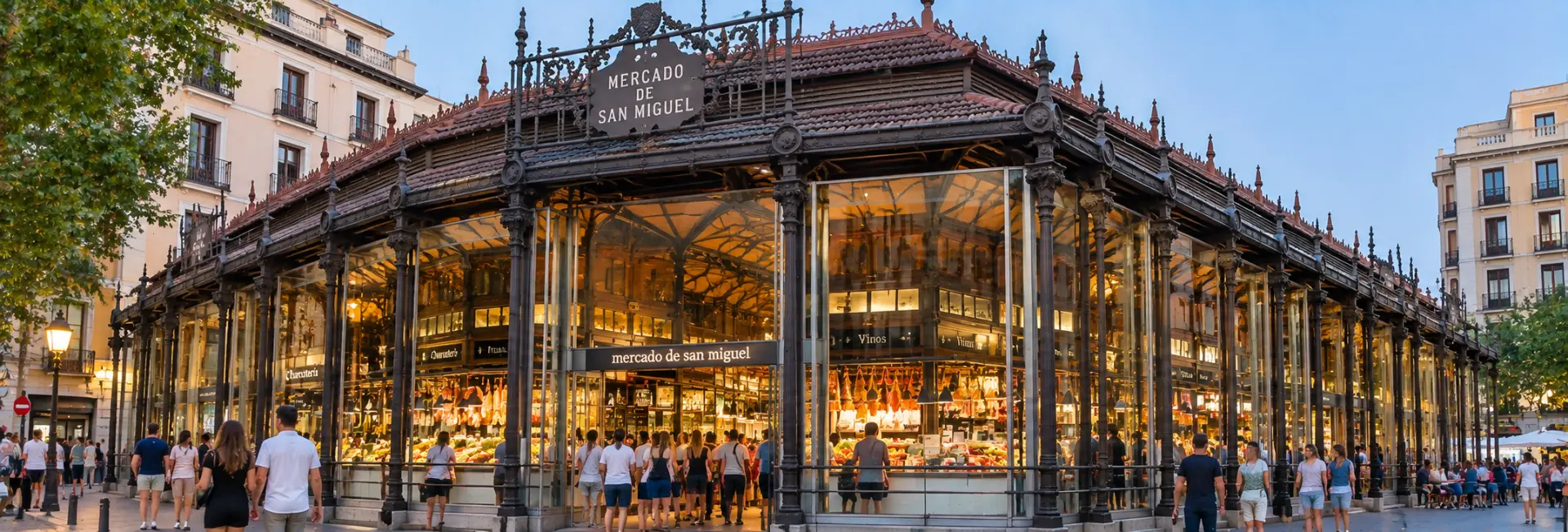
Mercado de San Miguel is a restored early 20th-century iron market hall just steps from Plaza Mayor, now operating as one of Madrid's most popular gourmet food markets. Its glass-and-iron structure, the last surviving example of its kind in the city, houses dozens of small stalls selling everything from Iberian ham and fresh seafood to wine, pastries, and tapas from across Spain.
Originally built to serve the everyday grocery needs of Madrid's old town, the market has since become as much a tourist destination as a place locals actually shop, drawing millions of visitors each year who come to graze between stalls rather than fill a shopping basket.
History
A Modern Market for a Growing City
Plans for a proper covered market on the site date back to the late 19th century, when city officials sought to replace an unregulated open-air fish market that had grown increasingly unsanitary. Construction of the new building began in 1913 under the architect Alfonso Dubé y Díez, who looked to the great iron-framed market halls already standing in cities like Paris and Barcelona for inspiration.
The market opened its doors in May 1916, offering a clean, modern space for fishmongers, butchers, and grocers serving the surrounding old town. It quickly became an important part of daily life in the neighborhood, and later, during the Spanish Civil War, the sturdy structure reportedly served as a shelter for local residents.
From Decline to Rebirth
As supermarkets spread through Madrid over the following decades, the traditional market gradually lost its customer base, and by the late 20th century it had fallen into disrepair, with dwindling numbers of vendors and visitors. Its future looked uncertain until 2003, when a group of private investors acquired the building with plans to restore and reinvent it.
Following an extensive renovation, the market reopened in May 2009 as Madrid's first dedicated gourmet food market, preserving the original iron-and-glass structure while replacing its traditional grocery stalls with a curated mix of tapas bars, wine counters, and specialty food vendors. The model proved influential, inspiring similar gourmet market conversions across Spain and beyond.
Architecture & Design
The market occupies a roughly 1,760-square-metre building constructed from wrought iron and glass, with granite flooring quarried from sites near Madrid. Its light, airy interior and visible iron framework reflect the industrial-era market halls that inspired its original design, giving it a distinctly different atmosphere from the older stone buildings that surround it in Madrid's historic center.
As the only surviving iron market hall left in the city, the building holds a protected heritage designation recognizing its architectural significance. The 2009 renovation was careful to preserve this historic shell while reworking the interior layout into a series of small individual stalls arranged around communal standing tables.
What to Eat & See
- Iberian ham and cured meats from stalls specializing in Spain's most prized cuts, often sliced to order.
- Fresh seafood and tapas, including oysters, anchovies, and daily catches brought in from Galicia on Spain's northwest coast.
- Regional specialties from across the country, including rice dishes, cheeses from Castile, Asturias, and the Basque Country, and pastries and baked goods from small producers.
- Wine and vermouth counters offering tastings and glasses to accompany a stroll between stalls.
- The market's original iron structure itself, still visible throughout the building and worth a look upward between stops at the stalls.
Ways to Experience It
Most visitors treat Mercado de San Miguel as a grazing experience rather than a sit-down meal, moving between several stalls to sample small plates and drinks rather than ordering a single large dish. There's no seating assigned to individual vendors, so food and drinks are typically enjoyed standing at shared tables scattered throughout the hall.
- The market regularly hosts wine tastings, cooking demonstrations, and other food-focused events throughout the year.
- Its central location makes it an easy add-on to a walking tour of Madrid's historic Austrias quarter.
- Extended evening hours on Fridays and Saturdays make it a popular stop for a late tapas crawl rather than only a daytime visit.
Best Time to Visit
Weekday mornings tend to be the calmest time to visit, with easier access to individual stalls and better light for photographing the market's iron-framed interior. Lunch hours and weekend afternoons bring the heaviest crowds, when both tourists and locals fill the standing tables.
Evenings offer a livelier atmosphere for a pre- or post-dinner drink, particularly on Friday and Saturday nights when the market stays open later than the rest of the week.
Visitor Tips
- Arrive early or during off-peak hours if you want to move easily between stalls without long lines, since the market gets busy during lunch and dinner hours.
- There's no dedicated seating for most stalls, so be prepared to eat standing at communal tables or find space along the market's edges.
- Prices at individual tapas and drink stalls add up quickly if sampling from several vendors, so it's worth budgeting for a grazing-style meal rather than a single fixed price.
- The market can get loud and crowded at peak times, so those looking for a quieter meal may prefer a visit outside of lunch and dinner rushes.
- Cash and cards are both generally accepted, though it's worth having some cash on hand for smaller stalls.
Nearby Attractions
Mercado de San Miguel sits at the edge of Plaza Mayor, in the heart of Madrid's historic Austrias district, making it easy to pair with several other central sights.
- Plaza Mayor, Madrid's grand 17th-century square, is directly adjacent to the market.
- Puerta del Sol, Madrid's bustling central square, is a short walk away through the surrounding old town streets.
- The Royal Palace and Almudena Cathedral are within easy walking distance to the west.
- Plaza de la Villa, one of Madrid's oldest and best-preserved medieval squares, sits just a few minutes away on foot.
FAQs about visiting Mercado de San Miguel
Is there an entrance fee for Mercado de San Miguel? +
No, entry is free — visitors pay only for the food and drinks they order at individual stalls.
What kind of food can I find there? +
The market specializes in Spanish tapas and gourmet products, including Iberian ham, fresh seafood, regional cheeses, wine, and pastries from vendors across the country.
Is there seating inside the market? +
Seating is mostly limited to communal standing tables rather than assigned seats per stall, so most visitors eat and drink standing up while moving between vendors.
When is the best time to visit to avoid crowds? +
Weekday mornings tend to be the quietest, while lunch hours and weekend afternoons and evenings draw the biggest crowds.
How far is the market from Plaza Mayor? +
It's directly adjacent to Plaza Mayor, just a short walk from one of the square's entrances.
Why is the building considered historically significant? +
It's the last surviving iron-and-glass market hall in Madrid, built in 1916, and carries a protected heritage designation recognizing its architecture.
How do I get to Mercado de San Miguel by public transport? +
The Ópera and Sol metro stations are both a short walk away, and several bus routes stop nearby as well.
What else can I combine with a visit to the market? +
Plaza Mayor, Puerta del Sol, the Royal Palace, and Plaza de la Villa are all within easy walking distance.
