
Table of Contents
Overview
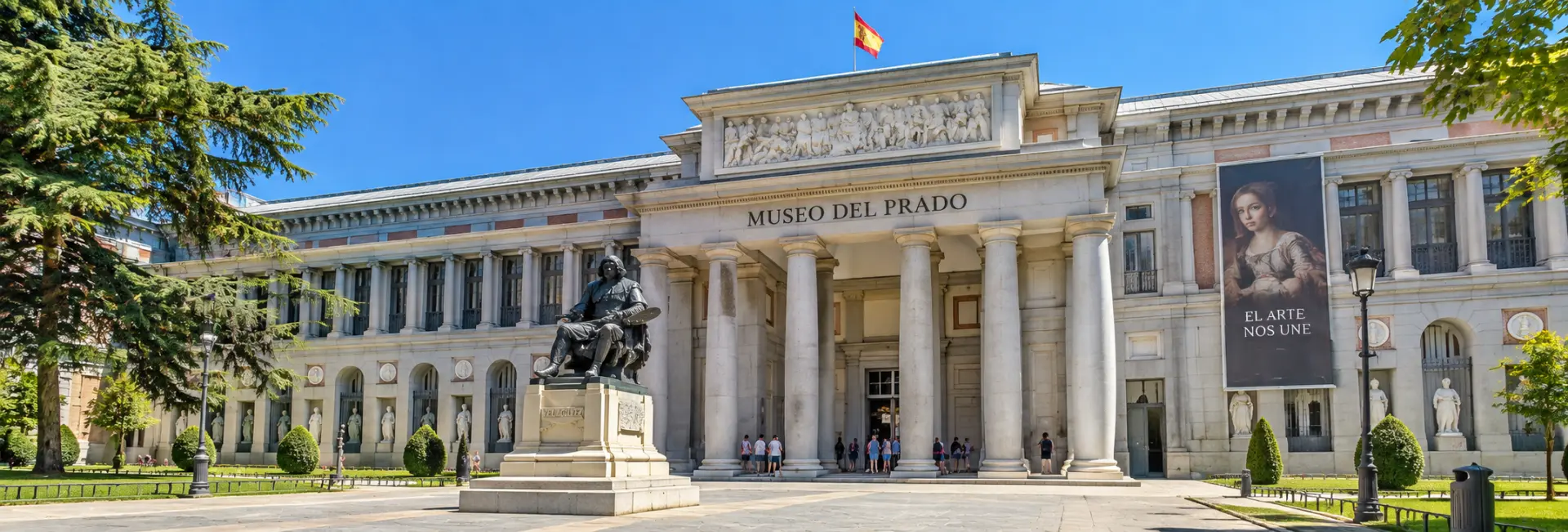
The Prado Museum is Spain's national art gallery and one of the most important painting collections anywhere in the world, built around three centuries of works gathered by the Spanish crown. Its long Neoclassical façade sits on the Paseo del Prado, a tree-lined boulevard that also gives the museum its name, at the anchor of what locals call Madrid's "Golden Triangle of Art."
Inside, the museum is best known for its unmatched holdings of Spanish painting — Velázquez, Goya, and El Greco chief among them — alongside major Flemish and Italian collections built up by Habsburg and Bourbon monarchs who had both the taste and the resources to acquire Europe's finest artists. A single visit rarely covers it all, so most travelers plan their route around a short list of must-see rooms rather than trying to see everything.

History
From Natural History Cabinet to Royal Museum
The building that now houses the Prado was never designed as an art museum at all. King Charles III commissioned it in 1785 as a Natural History Cabinet, part of a wider plan to turn the area around the Paseo del Prado into a showcase of Enlightenment science and learning, alongside the nearby Royal Botanical Garden.
Construction was interrupted by the Peninsular War in the early 19th century, and the building suffered damage during the French occupation of Madrid. It was eventually repurposed rather than used for its original scientific function, reopening in 1819 as the Royal Museum of Painting and Sculpture under King Ferdinand VII and his wife, Queen Maria Isabel of Braganza, who is credited with pushing the project through.
Growth Into a National Collection
The museum's holdings grew steadily through the 19th and 20th centuries as royal, monastic, and private collections were absorbed into the national holdings, including a major expansion of works after Spain's 1830s disentailment laws transferred church-owned art to state hands. By the early 21st century, the collection had grown well beyond the original building's capacity, leading to the addition of a large modern extension completed in 2007.
Architecture & Building
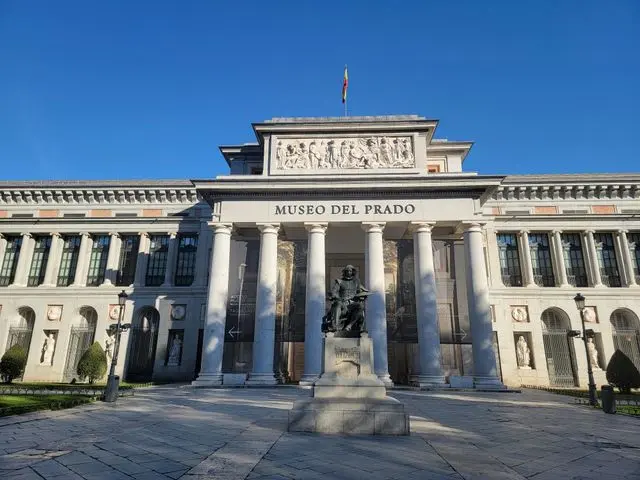
The original building was designed by the Enlightenment-era architect Juan de Villanueva, and its long, symmetrical stone façade with Doric columns is considered one of the finest examples of Spanish Neoclassical architecture. Villanueva's design deliberately favored calm, ordered lines over the ornamentation typical of earlier royal building projects, reflecting the rationalist spirit of the era it was built in.
The Jerónimos Extension
In 2007, the Spanish architect Rafael Moneo completed a major expansion that added tens of thousands of square metres of new gallery, storage, and public space behind the original building. The extension incorporates the surviving cloister of the adjoining Jerónimos monastery, a Gothic structure dating back centuries, reassembled inside a contemporary brick-and-glass wing that connects seamlessly to Villanueva's original galleries.
Together, the two buildings — along with the Casón del Buen Retiro, a separate annex used for part of the 19th-century collection — form a complex of more than a hundred rooms spread across multiple floors, linking Enlightenment-era architecture with a 21st-century addition under one roof.

Collections & Highlights
The Prado's collection runs into the tens of thousands of works, but a handful of paintings consistently draw the biggest crowds and anchor most visitors' routes through the museum.
- Diego Velázquez's "Las Meninas" — widely considered the single most studied painting in the collection, built around a complex play of perspective that places the viewer where the king and queen once stood.
- Francisco Goya's "The Third of May 1808" and "The Second of May 1808," depicting Spanish resistance during the Napoleonic occupation, along with his later, darker "Black Paintings" series.
- Hieronymus Bosch's "The Garden of Earthly Delights," a large triptych of paradise, earthly excess, and hell that remains one of the most analyzed works in Western art history.
- El Greco's portraits, including "The Nobleman with His Hand on His Chest," representing the museum's deep holdings of Spanish Renaissance and Mannerist painting.
- Major Flemish and Italian works, including pieces connected to Rubens, Titian, and Dürer, reflecting centuries of royal collecting across the wider European art world.
The collection is arranged chronologically and by school across the Villanueva building's two main floors, with the 19th-century Spanish collection held separately in the Casón del Buen Retiro annex.
Ways to Experience It
Most first-time visitors follow a focused route through a short list of highlight rooms rather than attempting the full collection in one visit, since even a fast-paced walk through the essentials takes a few hours. An official audio guide, available through the museum's app, adds context to the main galleries without requiring a live tour group.
- Guided tours, typically an hour or so, focus on the core highlights and are a popular add-on for visitors short on time.
- Tickets can be booked online in advance, which is worth doing on weekends and during peak season to avoid long queues.
- Photography is not permitted anywhere in the permanent collection, so the visit is built around close, unmediated looking rather than picture-taking.
- A combined pass covering the Prado, the Thyssen-Bornemisza Museum, and the Reina Sofía is available for visitors planning to see all three of Madrid's major art museums.

Best Time to Visit
Weekday mornings, particularly Tuesday and Wednesday shortly after opening, tend to be the calmest time to see the most popular rooms before tour groups arrive in the mid-morning. The museum also offers free entry during a daily window in the late afternoon and early evening, though this period draws long queues since it's the best-known way to visit without paying.
Weekends, especially Saturday afternoons and the last weekend of any month, are consistently the busiest, so travelers with flexible schedules generally find a quieter, more comfortable visit by aiming for a weekday slot instead.
Visitor Tips
- Book tickets online ahead of time, especially for weekend visits, since same-day tickets can sell out or require a long wait.
- Photography is banned throughout the permanent collection and is actively enforced, so plan to view the art rather than photograph it.
- Wear comfortable shoes — the galleries span multiple floors and hard flooring, and a thorough visit involves a fair amount of walking.
- The museum's free entry hours are genuinely free but come with the longest queues of the day, so budget extra waiting time if using them.
- Same-day re-entry isn't permitted, so plan any breaks, meals, or coat check needs to happen without leaving the building.

Nearby Attractions
The Prado anchors Madrid's so-called Golden Triangle of Art, a stretch of the Paseo del Prado that holds three major museums within easy walking distance of one another.
- The Thyssen-Bornemisza Museum, a short walk north, houses a major private collection spanning medieval to modern European painting.
- The Reina Sofía Museum, a short walk south near Atocha station, is home to Picasso's "Guernica" and Spain's leading collection of modern and contemporary art.
- Retiro Park, Madrid's grand 19th-century public park, sits directly behind the museum and is a popular spot to unwind after a gallery visit.
- The Royal Botanical Garden borders the museum to the south, offering a quieter green space with a more scientific, curated layout than Retiro Park.
FAQs about visiting the Prado Museum
What is the Prado Museum most famous for? +
It's best known for the world's leading collection of Spanish painting, including Velázquez's "Las Meninas," Goya's "Third of May 1808" and Black Paintings, and El Greco's portraits, alongside major Flemish and Italian works such as Bosch's "Garden of Earthly Delights."
How much time should I plan for a visit? +
A focused visit to the main highlights takes around two to three hours, while art lovers wanting to see more of the collection, including the Casón del Buen Retiro annex, often plan for three to four hours or more.
Is there free entry to the Prado? +
Yes — the museum offers free entry during a window in the late afternoon and early evening most days, though this slot draws the longest queues of the day and isn't bookable online in advance.
Can I take photos inside the museum? +
No, photography is not permitted anywhere in the permanent collection, and the rule is actively enforced by museum staff.
Should I book tickets in advance? +
It's strongly recommended, particularly for weekend visits or peak season, since online booking lets you skip the ticket-office line and secure a specific entry time.
What's the best time to visit to avoid crowds? +
Weekday mornings shortly after opening, especially Tuesday or Wednesday, tend to be the quietest. Saturday afternoons and the final weekend of the month are typically the busiest.
How do I get to the Prado by public transport? +
The Banco de España metro station, on Line 2, is a short walk away, and the museum is also well served by nearby bus routes and the Atocha train and metro hub to the south.
Can I combine a Prado ticket with other Madrid museums? +
Yes — a combined pass covering the Prado, the Thyssen-Bornemisza Museum, and the Reina Sofía Museum is available for visitors planning to see all three of Madrid's major art collections.
What else is nearby that I can pair with a museum visit? +
Retiro Park sits right behind the museum, and the Thyssen-Bornemisza and Reina Sofía museums are both within easy walking distance along the Paseo del Prado.