Table of Contents
Overview
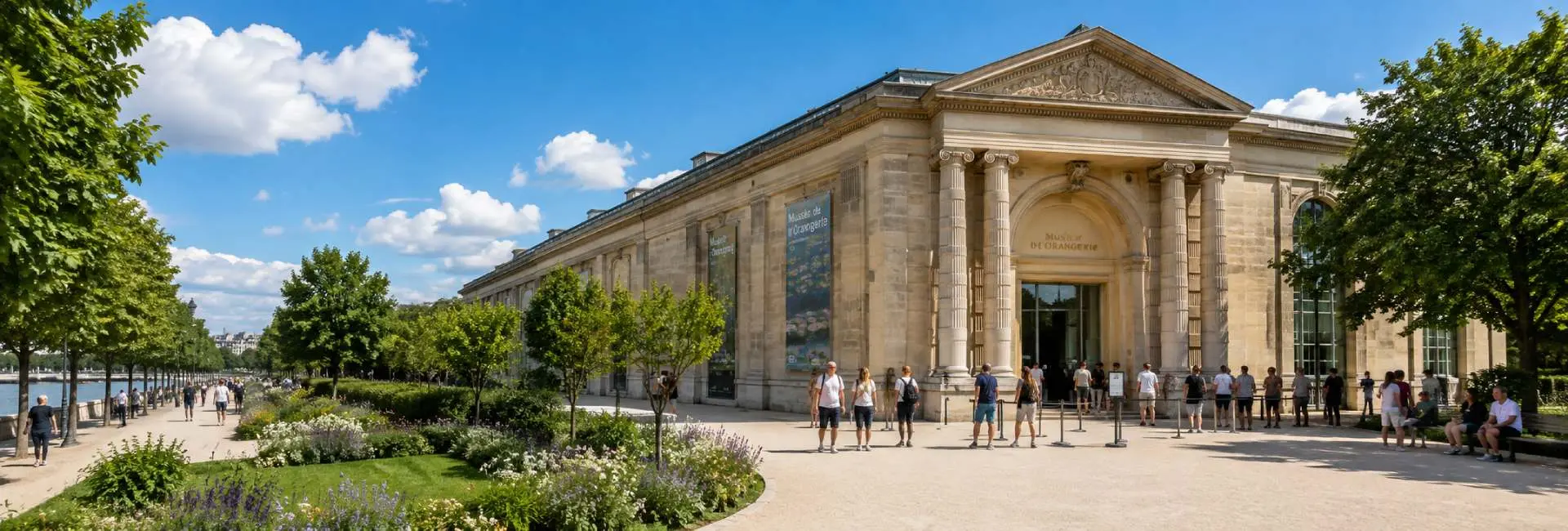
The Musée de l'Orangerie is a compact but extraordinary art museum tucked into the western corner of the Tuileries Garden in Paris, just steps from the Place de la Concorde. It is best known as the permanent home of Claude Monet's monumental Water Lilies murals, displayed exactly as the artist intended in two specially designed oval rooms. Beyond the Water Lilies, the museum also holds the Walter-Guillaume collection, a remarkable gathering of Impressionist and early modern paintings by artists such as Cézanne, Renoir, Matisse, and Picasso.
Unlike Paris's larger museums, the Orangerie can be fully explored in a couple of hours, making it a favorite for visitors who want a deep, unhurried encounter with a small number of masterpieces rather than a marathon through endless galleries.
History
The Musée de l'Orangerie is a historic art museum located in the western corner of the Tuileries Garden in Paris, near the Place de la Concorde. Built in 1852 during the reign of Napoleon III, the building was originally designed as an orangery to shelter the orange trees of the Tuileries Garden during winter. It was later transformed into an art gallery and became famous as the permanent home of Claude Monet's monumental Water Lilies paintings.
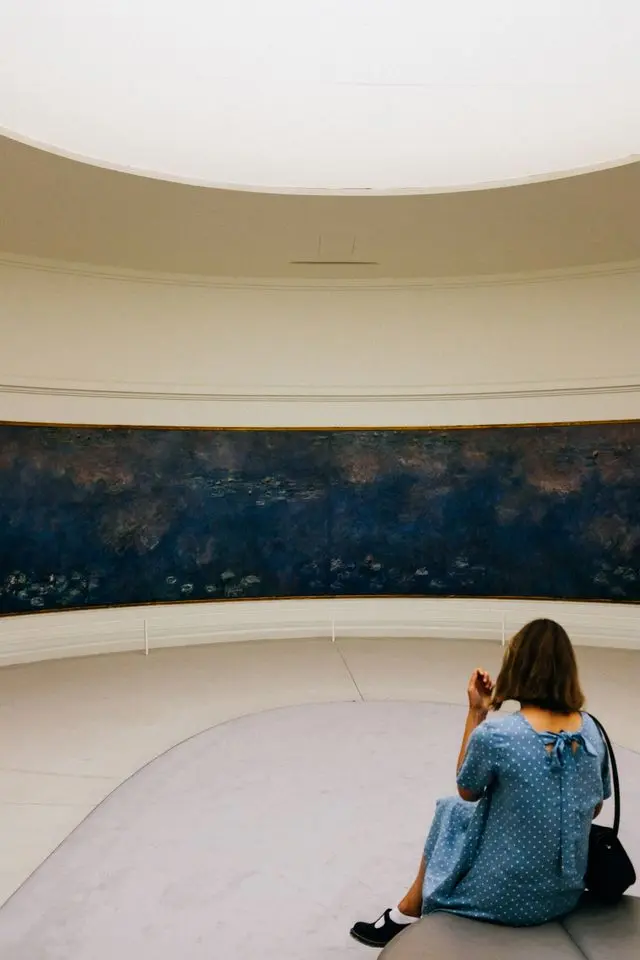
Monet's Water Lilies were installed in two specially designed oval rooms, creating an immersive experience that the artist envisioned as a peaceful environment for contemplation. The museum also houses the Walter-Guillaume collection, featuring important works by artists including Cézanne, Renoir, Matisse, Picasso, Modigliani, and Rousseau. Today, the Musée de l'Orangerie is one of Paris's most distinctive museums, offering visitors an intimate encounter with some of the finest works of Impressionist and early modern art.
The Water Lilies by Claude Monet
Thirty Years in the Making
The Water Lilies, or Nymphéas, occupied Monet for nearly three decades, from the late 1890s until his death in 1926. The series grew out of the water garden he created at his home in Giverny, Normandy, which became an obsessive subject as he studied how light and reflection shifted across the pond's surface throughout the day and across seasons.
Two Oval Rooms
Eight panels, each about two meters high and spanning a combined 91 meters in length, wrap around two oval rooms arranged to form the shape of an infinity symbol. Walking through them places visitors inside the paintings rather than simply in front of them, an immersive effect Monet designed deliberately, down to the placement of skylights that let daylight animate the color and texture of each canvas.
The Walter-Guillaume Collection
From Art Dealer to Collection
Paul Guillaume was a self-made art dealer who, guided early on by poet and critic Guillaume Apollinaire, became deeply connected to the Parisian avant-garde. After his death, his widow Domenica married architect Jean Walter, and the collection the couple assembled eventually passed to the French State, forming the second pillar of the Orangerie's holdings.
What's on Display
- Twenty-five paintings by Pierre-Auguste Renoir and fifteen by Paul Cézanne
- Twelve works by Pablo Picasso and ten by Henri Matisse
- Paintings by Amedeo Modigliani, Henri Rousseau, Alfred Sisley, and Paul Gauguin
- A significant group of works by André Derain, Maurice Utrillo, and Chaïm Soutine
Because gallery space is limited, works are rotated periodically, so the exact paintings on view can vary from one visit to the next.
Architecture & Design
The Orangerie's architecture is defined by contrast: a nineteenth-century greenhouse structure repurposed to hold some of the most quietly radical paintings of the twentieth century. The two oval rooms built for the Water Lilies remain the architectural heart of the building, among the earliest gallery spaces anywhere designed entirely around a single artist's vision.
The museum's compact footprint, set directly against the Seine at the edge of the Tuileries Garden, means the building itself never competes with the art. Natural light, carefully controlled through skylights, remains central to how the Water Lilies are experienced today, much as Monet intended.
Architecture & Design
The Orangerie's architecture is defined by contrast: a nineteenth-century greenhouse structure repurposed to hold some of the most quietly radical paintings of the twentieth century. The two oval rooms built for the Water Lilies remain the architectural heart of the building, among the earliest gallery spaces anywhere designed entirely around a single artist's vision.
The museum's compact footprint, set directly against the Seine at the edge of the Tuileries Garden, means the building itself never competes with the art. Natural light, carefully controlled through skylights, remains central to how the Water Lilies are experienced today, much as Monet intended.
Ways to Experience It
- Self-guided visit: explore the Water Lilies rooms and the Walter-Guillaume collection at your own pace
- Guided tours: themed tours led by museum staff dive deeper into Monet's technique and the collection's history
- Temporary exhibitions: the museum regularly hosts shows that place the permanent collection in dialogue with other artists or movements
- Workshops and talks: periodic public programs are aimed at both adults and families
Best Time to Visit
The Musée de l'Orangerie is open daily except Tuesday, generally from 9am to 6pm. Because it is one of the more intimate major museums in Paris, it can still fill up, particularly around the Water Lilies rooms during midday and early afternoon.
Arriving close to opening time tends to offer the calmest experience, especially for anyone hoping to spend unhurried minutes inside the oval galleries. Weekday mornings are generally quieter than weekends, and visiting outside peak summer tourist season can make a noticeable difference.
Visitor Tips
- Book a timed entry slot in advance, especially during peak season, since visitor numbers are managed
- Set aside one to two hours to see both the Water Lilies rooms and the Walter-Guillaume collection without rushing
- Photography is generally allowed without flash, but flash and tripods can disrupt the intimate viewing experience for others
- Pair your visit with a walk through the adjoining Tuileries Garden before or after
- Check current hours and any temporary exhibition details on the official website before visiting, as these can change
Common Questions about Musée de l'Orangerie
What is the Musée de l'Orangerie famous for? +
It is best known for permanently displaying Claude Monet's Water Lilies murals in two oval rooms designed specifically for them, alongside the Walter-Guillaume collection of early modern French paintings.
How much time should I plan for a visit? +
Most visitors comfortably see the full museum, including the Water Lilies and the Walter-Guillaume collection, in one to two hours.
Do I need to book tickets in advance? +
Advance booking of a timed entry slot is recommended, particularly during busy periods, since the museum manages visitor flow to protect the viewing experience.
Is the museum suitable for kids and visitors with limited mobility? +
The compact, single-level layout of the main galleries makes it manageable for families and visitors with mobility needs, though it's worth checking current accessibility details before your visit.
What's the best time of day to visit? +
Arriving near opening time on a weekday morning generally offers the quietest experience, especially inside the Water Lilies rooms.
Is the Musée de l'Orangerie the same as the Musée d'Orsay? +
No, they are separate museums. The Orangerie is smaller and focused on its permanent Monet and Walter-Guillaume holdings, while the Orsay across the river houses a much larger Impressionist and Post-Impressionist collection.
What else can I combine with a visit? +
The surrounding Tuileries Garden, the Place de la Concorde, and the Louvre are all within easy walking distance, making it simple to build a longer itinerary around the museum.
Do the paintings on display ever change? +
The Water Lilies installation is permanent, but works within the Walter-Guillaume collection are rotated periodically, so the exact paintings on view can vary between visits.