Table of Contents
Overview
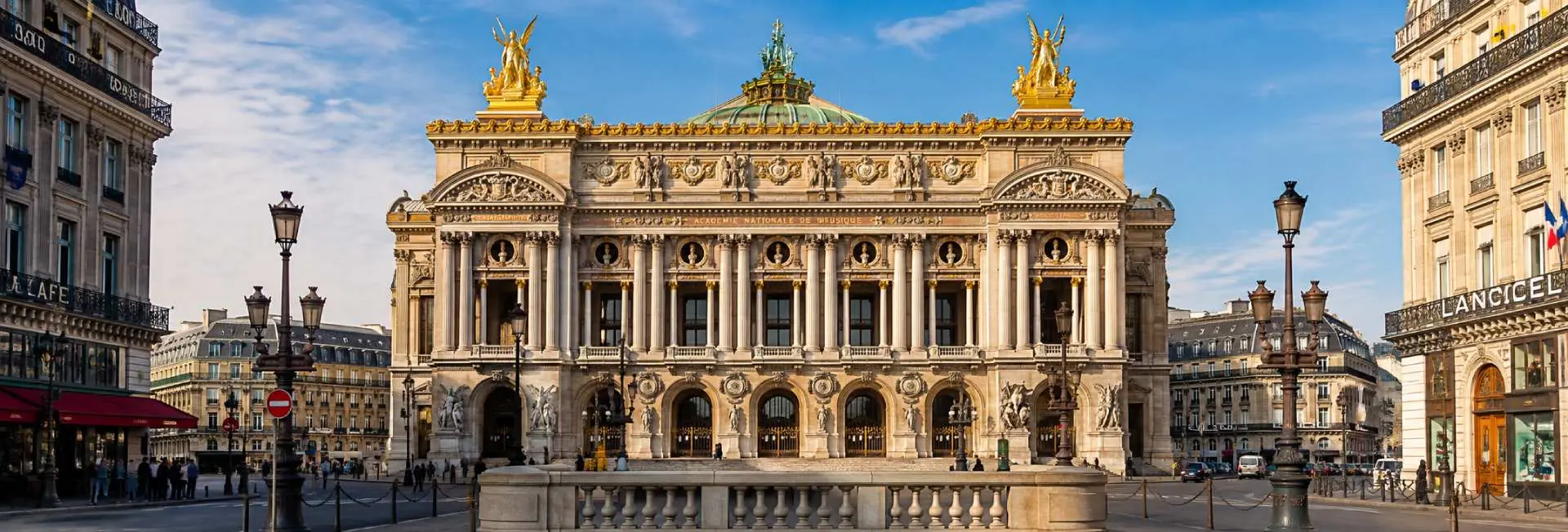
The Palais Garnier is one of Paris's most extravagant landmarks, a 19th-century opera house whose gilded halls and sweeping marble staircase have made it as famous for its architecture as for the performances staged inside. Commissioned under Napoleon III and designed by a then-unknown architect named Charles Garnier, it opened in 1875 as the grandest theatre Europe had seen.
Today it remains the home of the Paris Opera Ballet and one of the city's most visited monuments, drawing travelers who come as much to admire the building itself as to catch a performance. Its blend of theatrical excess and genuine artistic craftsmanship has inspired everything from Gaston Leroux's Phantom of the Opera to countless retellings on stage and screen.
History
Origins of the Project
The idea for a new Paris opera house grew out of Emperor Napoleon III's larger plan to modernize the city alongside urban planner Baron Haussmann. An 1858 attack on the emperor's carriage outside the old opera house on Rue Le Peletier added urgency to the project, since the new building was designed with greater security and grander ceremonial spaces in mind.
A Young Architect Wins the Competition
In 1861, a design competition for the new opera house was won unexpectedly by Charles Garnier, a 35-year-old architect with no major buildings to his name. His proposal stood out for combining classical, Baroque, and Renaissance influences into a single, richly decorated whole, an approach that would later be described as Beaux-Arts eclecticism.
Construction and Delays
Building work began in 1861 but was repeatedly interrupted, first by unstable, water-logged ground beneath the site, and later by the Franco-Prussian War and the political turmoil of the Paris Commune. Napoleon III, who had championed the project, was forced from power in 1870 and never lived to see the finished building.
Opening
The Palais Garnier finally opened to the public in January 1875, more than a decade after construction began. It became the thirteenth theatre to house the Paris Opera company since its founding by Louis XIV in 1669, and for decades afterward it stood as the largest opera house in the world.
Architecture & Design
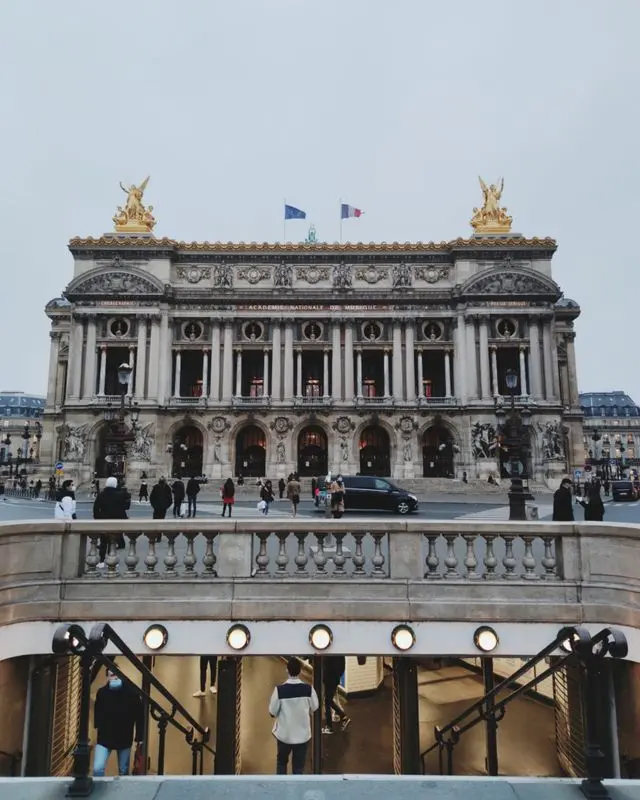
Garnier described his own style as drawing on "all the periods" of architectural history, and the Palais Garnier reflects that philosophy at every turn. Its exterior mixes columns, arches, and sculpted busts of composers with an exuberant use of color and ornament, while the interior pushes the opulence even further with imported marble, onyx, and gold leaf throughout.
The building was designed as much as a stage for Parisian high society as a venue for performances. Garnier planned grand public spaces where audiences could see and be seen before a show even began, a deliberate choice that shaped the building's dramatic staircases and oversized foyers.
- Built using around thirty different types of marble sourced from multiple countries
- Blends Baroque, Renaissance, and classical architectural elements into a single eclectic style
- Designed with a functioning stage that remains among the largest in Europe
- Sits on a concrete foundation built to counter the site's naturally high water table
Inside the Palais Garnier
The Grand Staircase
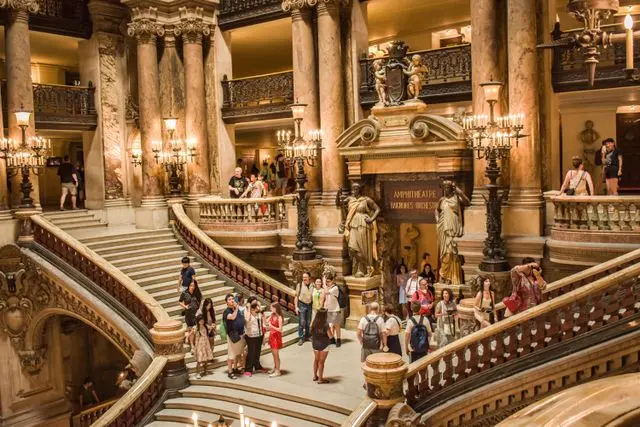
The building's centerpiece is its Grand Staircase, a sweeping structure of white marble with balustrades in red and green marble. Statues, carved figures, and ornate lighting line the stairwell, which was designed so visitors would experience their own dramatic entrance on the way to their seats.
The Grand Foyer
Modeled loosely on the Hall of Mirrors at the Palace of Versailles, the Grand Foyer is a long, mirrored gallery covered in gilding, painted ceilings, and chandeliers. It was intended as a promenade space where audiences could mingle during intermissions, and it remains one of the most photographed rooms in the building.
The Auditorium and the Chagall Ceiling
The horseshoe-shaped auditorium seats close to two thousand people across several tiers of velvet-draped boxes and balconies. Above the audience hangs a bronze and crystal chandelier weighing several tonnes, and above that sits a ceiling painted in 1964 by Marc Chagall, added over the original 19th-century artwork by Jules-Eugène Lenepveu, which is still preserved beneath it.
Notable Highlights
- The Grand Staircase and its sculpted figures, lamps, and marble balustrades
- The Grand Foyer, with its gilded ceilings and Versailles-inspired mirrored gallery
- The auditorium chandelier and the colorful Chagall ceiling above it
- The Bibliothèque-Musée de l'Opéra, a library and museum holding costumes, set models, and historical memorabilia from the Paris Opera
- Rooftop beehives that have produced honey on the building for decades
- Sculptural details on the facade, including busts of composers and mythological figures
Cultural Significance & The Phantom of the Opera
The Palais Garnier's reputation for mystery is almost as strong as its reputation for beauty. A cistern of water beneath the building, built to stabilize the foundation against underground water, gave rise to legends of a hidden lake beneath the opera house, while a real accident in 1896, when a chandelier counterweight broke loose and fell into the audience, added to the building's eerie mythology.
These stories fed directly into Gaston Leroux's 1910 novel The Phantom of the Opera, which is set inside the building and later inspired stage musicals and films around the world. Visitors today can still see a door marked for the "Phantom's box," a nod to the legend that has become part of the building's identity.
Ways to Experience It
- Self-guided daytime visits, which allow access to most public areas including the Grand Staircase, Grand Foyer, and auditorium when it isn't in rehearsal
- Guided tours focused on the building's architecture and history
- Specialty tours centered on the Phantom of the Opera legend and other building lore
- Evening performances by the Paris Opera Ballet, which remains the building's primary resident company
- Visits to the Bibliothèque-Musée de l'Opéra for a closer look at costumes and historical artifacts
Best Time to Visit
Weekday mornings tend to be the quietest time for a daytime visit, since tour groups and weekend crowds are lighter. Arriving shortly after opening hours generally means shorter lines and a better chance to see the auditorium before it's closed for rehearsals.
For those hoping to attend a performance, the ballet season generally runs from autumn through late spring, giving visitors more evening options during those months. Summer visits are popular for daytime sightseeing but can bring larger crowds throughout the day.
Visitor Tips
- The auditorium is sometimes closed to visitors during rehearsals, so daytime access to that specific room isn't always guaranteed
- Booking tickets in advance, especially for guided tours or performances, is recommended during peak travel seasons
- Comfortable shoes are worth it, since the building involves a fair amount of walking and stairs across multiple levels
- Photography is generally allowed in public areas, though flash and tripods may be restricted
- Current opening hours, ticket prices, and performance schedules should always be checked against the official Paris Opera website before a visit, since these details change regularly
Nearby Attractions
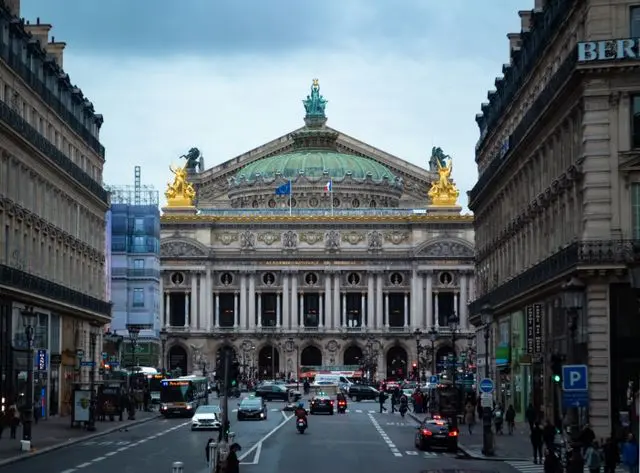
The Palais Garnier sits in the 9th arrondissement, within easy walking distance of several other Paris landmarks. Galeries Lafayette Haussmann, known for its own Art Nouveau glass dome, is just a few minutes away and makes a natural pairing with a visit to the opera house.
- Galeries Lafayette Haussmann – historic department store with an ornate glass dome
- Printemps – another grand Parisian department store nearby
- Grands Boulevards – a strip of theaters, cafés, and shopping streets
- Place de la Madeleine and the Église de la Madeleine, a short walk to the southwest
- Musée Grévin – a wax museum located along the nearby Grands Boulevards
Common Questions about Palais Garnier
What is the Palais Garnier? +
It's a 19th-century opera house in Paris designed by architect Charles Garnier, known for its lavish interiors and as the home of the Paris Opera Ballet.
Is the Palais Garnier the same as the Paris Opera? +
The Paris Opera company today performs across two venues, the Palais Garnier and the more modern Opera Bastille, with the Palais Garnier now used mainly for ballet and the Bastille hosting most operas.
Do I need a ticket to see the inside during the day? +
Yes, a general admission ticket is required for daytime self-guided or guided visits, separate from tickets to evening performances, and it's worth checking official sources for current pricing before you go.
How much time should I plan for a visit? +
Most self-guided visits take around one to one and a half hours, while a guided tour focused on the building's history or the Phantom of the Opera legend may run a bit longer.
Will I always be able to see the auditorium? +
Not necessarily, since the auditorium is sometimes closed to visitors during rehearsals or performance setup, so it's a good idea to check on arrival if seeing that room is a priority.
Is the Palais Garnier suitable for kids or visitors with mobility needs? +
The building is generally family-friendly and includes elevators for some levels, though the layout involves a lot of stairs and walking, so visitors with mobility concerns may want to check accessibility options in advance.
What inspired the Phantom of the Opera? +
The novel drew on real elements of the building, including a hidden water cistern beneath the foundation and a real 1896 accident involving a falling chandelier counterweight, both of which fed into the story's legend of a masked figure haunting the opera house.
What's the best way to combine a visit with other sights? +
Because it sits close to Galeries Lafayette, Printemps, and the Grands Boulevards, many visitors pair a Palais Garnier visit with shopping or a walk through the surrounding 9th arrondissement.