Table of Contents
Overview
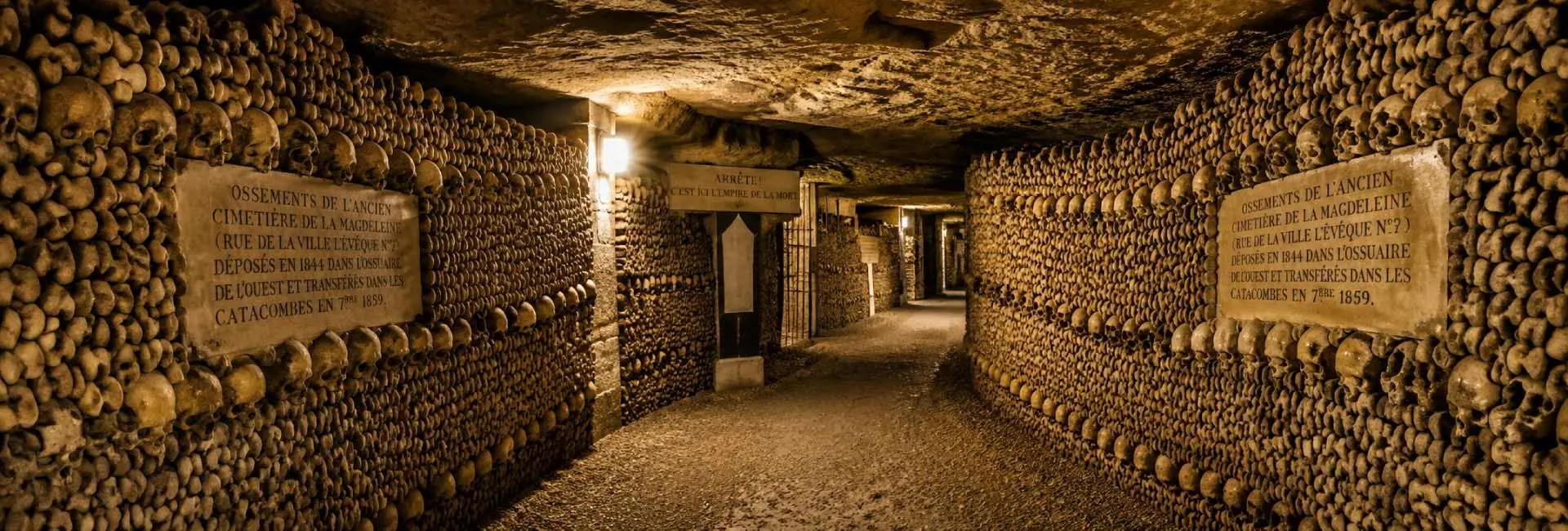
Beneath the streets of Paris lies one of the world's most unusual attractions: a vast ossuary built inside the tunnels of abandoned 18th-century limestone quarries. The Catacombs hold the skeletal remains of around six million people, stacked and arranged along roughly 1.5 kilometers of underground galleries that visitors can walk through today.
What began as a practical solution to an overflowing public health crisis has become one of the most atmospheric historical sites in Europe. Visitors descend 20 meters below ground into cool, dimly lit tunnels lined with skulls and femurs, walking a route that blends engineering history, macabre spectacle, and genuine reflection on mortality.
History
Origins in the Quarries
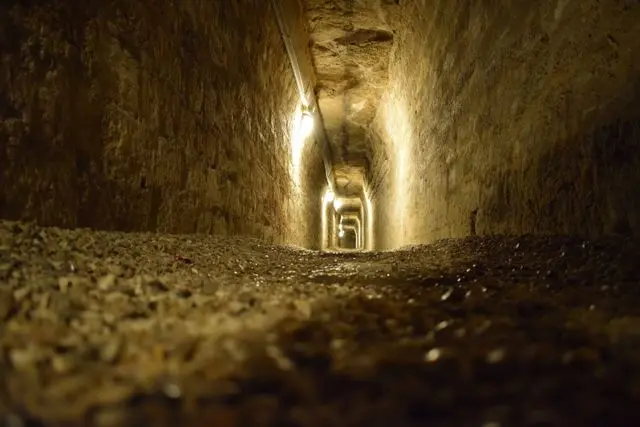
The tunnels that now house the Catacombs were originally limestone quarries, some dating back to at least the 15th century, used to supply the stone that built much of Paris. By the late 1700s these quarries had been abandoned, and decades of unregulated tunneling had left the ground beneath parts of the city dangerously unstable, prompting the creation of a dedicated Quarry Inspection service in 1777 to shore up the collapsing network.
A Solution to a Public Health Crisis
At the same time, Paris faced a separate emergency above ground: its cemeteries, especially the centuries-old Saints-Innocents cemetery, were dangerously overcrowded and contributing to disease outbreaks in surrounding neighborhoods. City authorities settled on a solution that solved both problems at once, using the stabilized quarry tunnels as a new resting place for the displaced remains.
Consecration and Public Opening
Bones were transferred by torch-lit cart at night, beginning in 1785, to avoid alarming residents. The site was formally consecrated as the Paris Municipal Ossuary in 1786, and further transfers continued for decades as more cemeteries were cleared, including major waves during the Haussmann-era renovation of Paris in the mid-1800s. The Catacombs opened to public visitors in 1809, quickly becoming a subject of fascination for both Parisians and foreign travelers.
The Ossuary
How the Bones Are Arranged
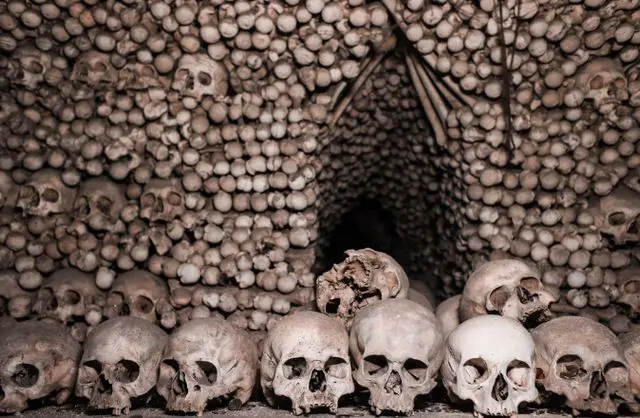
In their earliest years, the transferred bones were simply piled loosely in the tunnels. That changed in the early 19th century under Inspector Louis-Étienne Héricart de Thury, who reorganized the ossuary into the arrangement visitors see today: femurs and skulls stacked into deliberate wall-like facades, with the smaller, less presentable bone fragments packed behind them.
Scale of the Site
The ossuary itself covers roughly 11,000 square meters. It represents only a small fraction of the wider quarry network beneath Paris, which extends across an estimated 800 hectares and roughly 320 kilometers of tunnels, though only around 1.5 kilometers of galleries are open to the public on the official tour route.
Recognition & Records
The Paris Catacombs are widely recognized as the largest underground ossuary in the world, and one of only a handful of ossuaries located entirely below ground rather than in surface crypts or chapels. They are managed today as one of the City of Paris's official municipal museums, drawing visitors from around the globe as one of the most distinctive heritage sites in France.
Key Areas of the Tour Route
The Descent
The visit begins with a spiral staircase of around 130 steps leading down to the tunnels, setting the tone for the atmospheric route that follows.
Highlights Along the Way
- Sections of the old quarry passages, with inscriptions marking the streets above and the work of the original quarry inspectors
- The entrance to the ossuary itself, marked by an inscription warning visitors they are crossing into the "Empire of Death"
- Long galleries of bone facades arranged in geometric and decorative patterns, including crosses, hearts, and barrel-like formations
- Historical plaques and monuments installed by 19th-century inspectors documenting the site's construction
- The exit staircase, which climbs back to street level at a different point from the entrance
Cultural Significance & Legends
The Catacombs have long captured the public imagination, inspiring generations of writers, filmmakers, and urban explorers. Their eerie combination of engineering, history, and mortality has made them a recurring subject in horror fiction and popular culture.
The wider quarry network beyond the official tour route has its own underground subculture: "cataphiles," unofficial explorers who navigate the unlit tunnels beyond the public path, a practice that is illegal but persistent. During the Second World War, sections of the tunnels were reportedly used by the French Resistance, adding another layer to the site's layered, often clandestine history.
The 2026 Renovation
The Catacombs underwent a major renovation that closed the site from November 2025 to April 2026, part of a broader restoration program launched in 2023 to protect the fragile historic tunnels and modernize visitor facilities.
The work upgraded the site's electrical, ventilation, and safety systems and introduced a new exhibition design, including an updated audio guide with dramatized narration exploring the site's history. The Catacombs reopened to the public on April 8, 2026, with the improved route and technical upgrades now in place.
Best Time to Visit
Weekday mornings, right when the site opens, tend to be the quietest time to visit, before tour groups and midday crowds build up. Afternoons and weekends are typically busier, especially during the summer high season and French school holidays.
Because the Catacombs sit underground, the temperature stays cool and fairly constant year-round, so the site is a comfortable option regardless of the season above ground, making it a popular choice on hot summer days or during rainy weather.
Visitor Tips
- Tickets must be booked online in advance for a timed entry slot; there is no walk-up ticket office at the entrance
- Check the official Catacombs website close to your visit date for current opening hours, ticket prices, and booking windows, as these details are updated regularly
- The visit involves roughly 130 steps down and around 100 steps back up, so it is not recommended for visitors with mobility limitations
- The site is not suitable for young children, and it is not wheelchair accessible given the stairs and narrow passages
- There is no cloakroom, so bring only a small bag, and expect security screening before entry
- The tour route is a one-way path with no re-entry, so plan to see everything in a single pass
Nearby Attractions
The Catacombs sit at Place Denfert-Rochereau in the 14th arrondissement, within easy reach of several other Paris landmarks. The Montparnasse Cemetery, resting place of numerous French writers and artists, is just a short walk away, as is the Jardin du Luxembourg, one of the city's most popular parks.
Visitors can also combine a Catacombs visit with a trip up the nearby Montparnasse Tower for panoramic views of the city, or explore the lively cafes and bookshops of the Montparnasse and Latin Quarter neighborhoods.
FAQs about The Catacombs in Paris
What exactly are the Paris Catacombs? +
They are a vast underground ossuary built inside former limestone quarries, holding the skeletal remains of around six million people who were transferred there from Paris's overcrowded cemeteries starting in the late 1700s.
How many people are buried in the Catacombs? +
Estimates put the number of individual remains at roughly six million, transferred over several decades starting in 1785, making it the largest ossuary of its kind in the world.
How long does a visit take? +
The official route takes most visitors around 45 to 60 minutes to walk, covering about 1.5 kilometers of tunnels, plus additional time for security checks and stairs.
Is it suitable for children or people with mobility issues? +
It's generally not recommended for young children given the somber subject matter, and the roughly 230 combined steps down and up make it unsuitable for visitors with mobility limitations or wheelchairs.
Do I need to book tickets in advance? +
Yes. The Catacombs operate on a timed-entry system with no walk-up ticket sales, so tickets should be booked online ahead of your visit, and it's worth checking the official site for current pricing and availability since these details change.
What should I know before going, in terms of physical conditions underground? +
The tunnels stay cool and humid year-round regardless of the weather above ground, and the passages can feel narrow and enclosed, so the visit may be uncomfortable for anyone with claustrophobia.
Are the Catacombs currently open? +
The site closed for a major renovation from late 2025 into early 2026 and reopened in April 2026 with upgraded facilities and a new exhibition design; it's still worth confirming current hours on the official website before visiting.
What else can I see nearby? +
Montparnasse Cemetery and the Jardin du Luxembourg are both within walking distance, and many visitors pair the Catacombs with a trip up the Montparnasse Tower for city views.