
Table of Contents
Overview
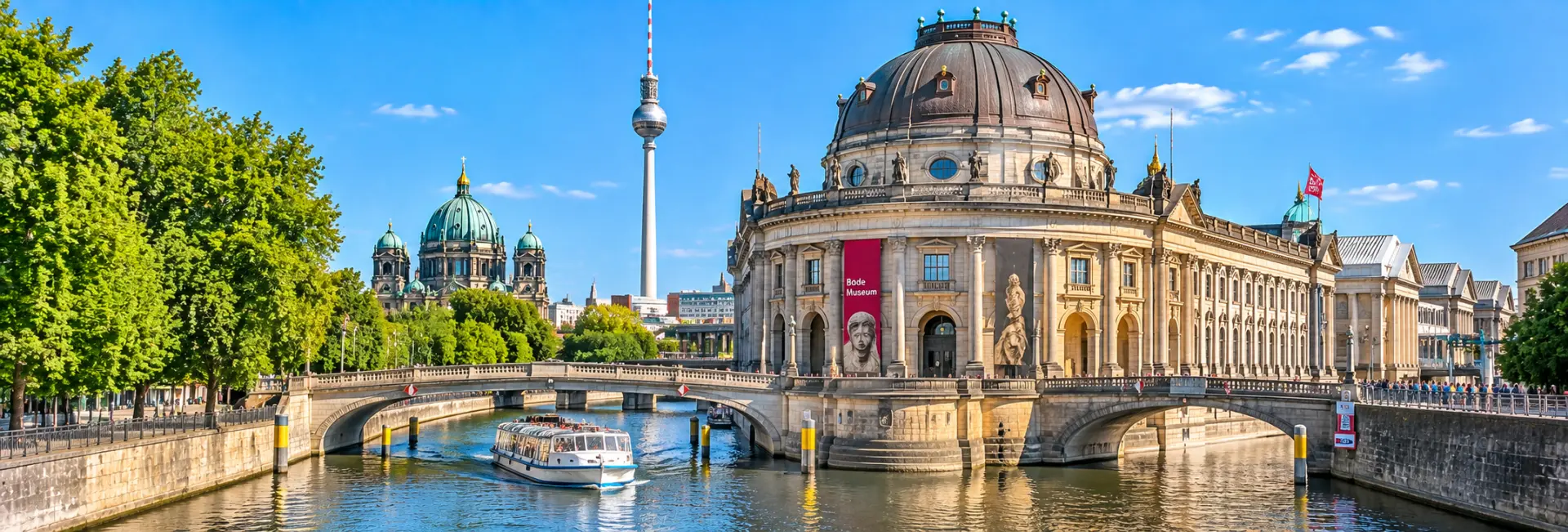
Museum Island (Museumsinsel) is a cluster of five state museums built over roughly a century on the northern tip of an island in the Spree river, right in the historic heart of Berlin. The island takes its name simply from being a small stretch of land dedicated almost entirely to museums, cut off from the rest of central Berlin by two arms of the river. Beginning with the Altes Museum in 1830 and ending with the Pergamonmuseum in 1930, the five buildings together hold one of the most significant collections of art and antiquities anywhere in Europe, spanning ancient Egypt, classical Greece and Rome, Byzantine sculpture, and 19th-century European painting. Declared a UNESCO World Heritage Site in 1999, the ensemble has been undergoing a decades-long restoration and reconnection project, the most visible recent addition being the James-Simon-Galerie, a striking new entrance building that opened in 2019 and now serves as the main gateway to the whole complex. Not every museum on the island is fully open at any given time, since several buildings have been under renovation for years as part of this long-term plan, so it's worth checking current status before planning a visit around a specific collection.
History
Building an Island of Museums
The idea of turning the northern tip of the Spree island into a dedicated cultural quarter began under Prussian King Friedrich Wilhelm III, whose 1830 Altes Museum, designed by Karl Friedrich Schinkel, was the first public museum built specifically to display the royal art collections. Over the following century, four more museums were added to the same stretch of land: the Neues Museum in 1859, the Alte Nationalgalerie in 1876, the Kaiser-Friedrich-Museum (later renamed the Bode-Museum) in 1904, and finally the Pergamonmuseum in 1930, built specifically to house large-scale reconstructed monuments excavated by German archaeologists abroad.
War Damage and Divided Berlin
Allied bombing during the Second World War badly damaged several of the buildings, and the Neues Museum in particular was left a ruin for decades afterward. Because the island fell within East Berlin during the Cold War, restoration under the cash-strapped East German government was slow and often incomplete, and some buildings remained closed or only partly usable for much of the postwar period.
Reunification and a Long-Term Master Plan
After German reunification, a comprehensive "Museumsinsel Masterplan" was drawn up to restore all five museums and physically connect them through an underground Archaeological Promenade, allowing visitors to move between buildings without stepping back outside. The Neues Museum, rebuilt to a design by architect David Chipperfield that deliberately left war damage visible alongside new construction, reopened in 2009 after decades as a shell.
A New Entrance and an Ongoing Project
The James-Simon-Galerie, also designed by David Chipperfield, opened in 2019 as the island's central entrance, ticketing point, and event space, named after the Jewish businessman and philanthropist whose donations helped build much of the founding collections a century earlier. Work on the Pergamonmuseum, the last and largest of the five buildings, is still underway: the museum closed completely in October 2023, with its North Wing and central hall due to reopen in June 2027 and its South Wing, home to the Ishtar Gate, not expected to reopen until 2037.
Recognition & UNESCO Status
Museum Island was inscribed on the UNESCO World Heritage List in 1999 in recognition of the ensemble's architectural evolution over more than a century and the way its five buildings collectively reflect the development of museum design itself, from Schinkel's neoclassical Altes Museum to the 20th-century Pergamonmuseum. UNESCO's listing specifically credits the site for illustrating how art and architecture were used to shape public education across the 19th and early 20th centuries. The island, covering roughly 8.6 hectares with a wider buffer zone, is managed by the Stiftung Preußischer Kulturbesitz (Prussian Cultural Heritage Foundation) through the Staatliche Museen zu Berlin (National Museums in Berlin). Across 2025 and 2026, the island has been marking its 200th anniversary, tied to the 1830 opening of the Altes Museum.
- UNESCO World Heritage Site since 1999
- Managed by the Staatliche Museen zu Berlin, under the Stiftung Preußischer Kulturbesitz
- Celebrating its 200th anniversary across 2025 and 2026
The Five Museums
Each museum on the island specializes in a different part of the collection, and together they form one continuous cultural district rather than a single building.
- Altes Museum (1830) – Greek, Roman, and Etruscan antiquities, housed in Schinkel's neoclassical rotunda building overlooking the Lustgarten
- Neues Museum (1859, rebuilt 2009) – Egyptian and prehistoric collections, including the bust of Nefertiti
- Alte Nationalgalerie (1876) – 19th-century painting and sculpture, from German Romanticism to early Impressionism
- Bode-Museum (1904) – European sculpture, Byzantine art, and one of the world's largest coin collections
- Pergamonmuseum (1930) – large-scale reconstructed antiquities, including the Pergamon Altar and the Ishtar Gate, currently closed for renovation
- James-Simon-Galerie (2019) – the island's shared entrance, ticket hall, and temporary exhibition space
Architecture & the Masterplan
A Century of Changing Styles
Walking across the island moves visitors through nearly a hundred years of museum architecture, from the strict neoclassical symmetry of the Altes Museum to the heavier, more monumental style of the Pergamonmuseum built a century later. The buildings were laid out deliberately as an ensemble rather than as separate, unrelated commissions, with shared courtyards, colonnades, and sightlines connecting them.
The Archaeological Promenade
A central feature of the ongoing masterplan is an underground passage, the Archaeological Promenade, designed to link the basements of the Pergamonmuseum, Neues Museum, Altes Museum, and Bode-Museum so visitors can move between them without going back outside. Sections of the promenade have opened as each connected building's renovation has been completed, with the remaining links tied to the Pergamonmuseum's ongoing work.
The James-Simon-Galerie
The newest building on the island, the James-Simon-Galerie, uses a colonnade echoing the older museum facades while functioning as a modern hub for ticketing, cloakrooms, a café, and access to the Archaeological Promenade beneath the island.
Ways to Experience It
Most visitors buy the combined Museumsinsel ticket, which covers the Altes Museum, Neues Museum, Alte Nationalgalerie, Bode-Museum, Pergamonmuseum. Das Panorama, and PETRI Berlin for one day, rather than paying for each museum separately. Because the Pergamonmuseum's main building is closed for renovation, "Pergamonmuseum. Das Panorama," a nearby exhibition hall with a large panorama installation and related artifacts, currently stands in for a visit to the Pergamon collection. Because the island covers several large buildings, allow a full day if you want to see more than two or three of the collections properly rather than rushing between them.
- Combined day ticket covering all currently open museums on the island
- Individual museum tickets for visitors who only want to see one collection
- Free entry to the sections of the Archaeological Promenade open to the public
- Audio guides available at each museum, and guided tours of the island's history and architecture bookable through the Staatliche Museen zu Berlin
Best Time to Visit
Weekday mornings, shortly after opening, tend to be the quietest time to visit, especially at the more popular Neues Museum and Alte Nationalgalerie. Most museums on the island are closed on Mondays, with some closed Tuesdays as well, so it's worth checking each museum's specific schedule before planning a multi-museum day. Because the Pergamonmuseum remains closed until 2027, visitors specifically hoping to see its collections should confirm what is currently on view at Pergamonmuseum. Das Panorama before arriving.
Visitor Tips
- A combined Museumsinsel ticket is usually cheaper than paying for each museum separately if you plan to visit more than one
- Most museums are closed on Mondays; check individual hours, since they vary slightly by building
- The Pergamonmuseum's main building has been closed since October 2023 and won't partially reopen until June 2027, so check current status before visiting for that collection specifically
- The James-Simon-Galerie is the main entry point for tickets, cloakrooms, and the Archaeological Promenade linking several of the buildings
- The nearest stations are Museumsinsel or Hackescher Markt (S-Bahn) and Museumsinsel (tram M1), plus a short walk from several U-Bahn stations
- All five museum buildings are wheelchair accessible, and cloakroom service is available for coats and bags
Nearby Attractions
The island sits at the center of historic Berlin, within easy walking distance of several other major sights.
- Berlin Cathedral (Berliner Dom), directly on the island next to the Lustgarten
- Humboldt Forum, in the reconstructed Berlin Palace just south across the Spree
- Friedrichswerdersche Kirche, a branch of the Alte Nationalgalerie housed in a restored 19th-century church, a short walk south of the island
- Nikolaiviertel, Berlin's reconstructed old town quarter, a short walk to the southeast
- Unter den Linden and the Brandenburg Gate, a short walk to the west
FAQs about visiting Museum Island
What is Museum Island? +
It's a UNESCO World Heritage cluster of five state museums on an island in the Spree river in central Berlin, built between 1830 and 1930 and covering everything from ancient antiquities to 19th-century European painting.
Is the Pergamon Museum open? +
The main Pergamonmuseum building has been closed since October 2023 for renovation; its North Wing and central hall are due to reopen in June 2027, while the South Wing, home to the Ishtar Gate, isn't expected to reopen until 2037. In the meantime, "Pergamonmuseum. Das Panorama" nearby offers a related exhibition.
How much does it cost to visit? +
A combined Museumsinsel day ticket covers all currently open museums on the island for one price, which usually works out cheaper than buying tickets for each museum separately if you plan to see more than one.
How long should I plan for a visit? +
Set aside a full day if you want to properly see more than two or three of the museums; a single museum can typically be covered in two to three hours.
Which museum should I prioritize if I only have time for one? +
The Neues Museum, home of the Nefertiti bust and major Egyptian and prehistoric collections, is usually the top pick, followed by the Alte Nationalgalerie for 19th-century painting.
How do I get to Museum Island? +
Hackescher Markt (S-Bahn) and the Museumsinsel tram stop (M1) are the closest public transport options, with several U-Bahn stations also within walking distance.
Are the museums accessible? +
Yes, all five museum buildings on the island are wheelchair accessible, and cloakroom service is available for coats and bulky items.
