
Table of Contents
Why Visit Berlin
Few cities have reinvented themselves as many times as Berlin. It has served as the seat of the Prussian kings, the capital of a unified German Empire, the epicenter of the Cold War's most visible divide, and now the capital of a reunified, culturally restless country. That layered past is still visible on nearly every block, from imperial facades to Cold War scars to the glass-and-steel government quarter rebuilt after 1990.
What makes Berlin worth visiting isn't just the history, though. It's a compact, walkable, and unusually green capital where world-class museums sit a short bike ride from techno clubs, flea markets, and some of Europe's most diverse food scenes.

Top Historic Landmarks
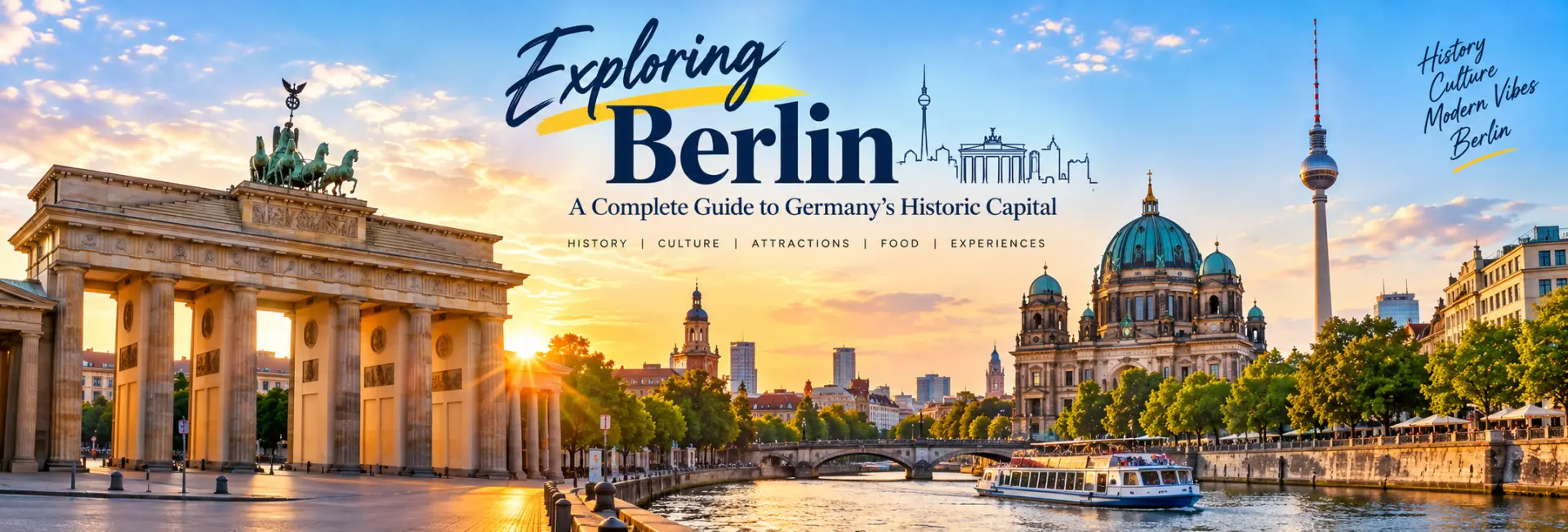
Brandenburg Gate
Completed in 1791 as a city gate, the Brandenburg Gate later became Berlin's most recognizable symbol of division and reunification. During the Cold War it stood stranded in the no-man's land between East and West Berlin, and it was here that crowds gathered when the Wall fell in 1989.
Reichstag Building
Home to Germany's parliament since the 1890s, the Reichstag is best known today for its glass dome, added during a 1990s renovation. Visitors can climb a spiral ramp inside the dome for panoramic views over the government district, though a free visit slot typically needs to be reserved ahead of time.
Berlin Cathedral
Sitting on Museum Island, the Berliner Dom is a grand Protestant cathedral completed in the early 1900s, with an ornate dome and a crypt holding the tombs of the Hohenzollern royal family.
Museum Island
This UNESCO World Heritage site clusters five major museums on a small island in the Spree river, making it one of the densest concentrations of art and antiquities anywhere in Europe.
Berlin Wall & Cold War History
East Side Gallery
The longest surviving stretch of the Berlin Wall, running over a kilometer along the Spree, was turned into an open-air gallery in 1990 when international artists painted its eastern face. Its most famous mural depicts a satirical kiss between Soviet and East German leaders.
Berlin Wall Memorial
Along Bernauer Strasse, this memorial preserves an original section of the Wall complete with a restored watchtower and death strip, alongside a documentation center explaining how the border was built and enforced.
Checkpoint Charlie
Once the best-known crossing point between East and West Berlin for foreigners and diplomats, Checkpoint Charlie is now a popular photo stop, with a nearby museum detailing Cold War escape attempts.
Topography of Terror
Built on the former site of Gestapo and SS headquarters, this documentation center combines outdoor ruins with an indoor exhibition on the machinery of Nazi-era persecution and terror.

Best Museums & Cultural Attractions
Pergamon Museum Area
Famous for monumental reconstructions like the Ishtar Gate, the Pergamon Museum has had sections closed for a long-running renovation in recent years, so it's worth confirming which halls are open before planning a visit.
Neues Museum
This museum houses Berlin's Egyptian collection, most notably the bust of Nefertiti, alongside prehistoric and early history exhibits.
Jewish Museum
Designed by architect Daniel Libeskind in a striking zigzag form, the Jewish Museum traces two thousand years of Jewish life in Germany, including its devastation during the Holocaust.
DDR Museum
A hands-on museum near Museum Island, the DDR Museum recreates daily life in communist East Germany, from cramped apartments to Trabant cars, through interactive displays rather than glass cases.
Neighborhoods to Explore
Mitte
Berlin's historic and political core, Mitte packs in many of the city's major landmarks, government buildings, and upscale shops within easy walking distance of each other.
Kreuzberg
Known for street art, a large Turkish community, and an alternative streak, Kreuzberg offers some of the city's best casual food and nightlife.
Prenzlauer Berg
Once a rundown East Berlin district, Prenzlauer Berg has become a leafy, family-friendly neighborhood of restored 19th-century buildings, cafes, and weekend markets.
Friedrichshain
Home to the East Side Gallery and the RAW-Gelände nightlife complex, Friedrichshain draws a younger crowd with its clubs, bars, and repurposed industrial spaces.
Parks & Outdoor Spaces
For a capital city, Berlin is remarkably green, and its parks range from formal royal gardens to a repurposed airport runway.
- Tiergarten: a former royal hunting ground turned sprawling central park, home to the Victory Column and shaded walking paths.
- Tempelhofer Feld: the runways of Berlin's decommissioned Tempelhof Airport, now a vast open space for cycling, skating, kite-flying, and picnicking.
- Treptower Park: a riverside park along the Spree, notable for its massive Soviet War Memorial commemorating the Battle of Berlin.

Food & Local Specialties
Berlin's food scene reflects its history of migration as much as its German roots, and a few dishes are practically mandatory for first-time visitors.
- Currywurst: sliced bratwurst topped with curry-spiced ketchup, invented in Berlin after World War II and still sold at street stalls across the city.
- Döner kebab: a Turkish-German creation widely credited to Berlin's Turkish immigrant community, now one of the city's most popular fast foods.
- Berliner Pfannkuchen: a jelly-filled doughnut traditionally eaten around New Year's and Carnival, often simply called a "Berliner."
- Traditional German cuisine: heartier dishes like schnitzel, eisbein (pork knuckle), and sauerbraten are served at old-school Kneipen (pubs) across the city.
Practical Travel Tips
Where to Stay
Mitte suits travelers who want to walk to major sights, while Prenzlauer Berg offers a quieter, family-friendly base with good cafes. Kreuzberg and Friedrichshain work well for visitors prioritizing nightlife and budget accommodation.
Getting Around
Berlin's public transport network of U-Bahn, S-Bahn, trams, and buses covers the city extensively, and single tickets or day passes cover all four. The city is also very bike-friendly, with dedicated lanes on most major streets.
Best Time to Visit
Late spring and early autumn bring mild weather and thinner crowds. Summer is warm with an active festival calendar, while winter is cold but brings Christmas markets throughout the city.
Shopping & Nightlife
Kurfürstendamm and Friedrichstrasse cover upscale shopping, while the Sunday flea market at Mauerpark draws bargain hunters. Berlin's nightlife is internationally famous for techno clubs like Berghain, though queues and entry policies can be unpredictable, alongside a wide range of more casual bars.
Day Trip Ideas
Potsdam, roughly half an hour away by train, offers the Sanssouci Palace and gardens. The Sachsenhausen Memorial provides a sobering look at a former Nazi concentration camp, and the Spreewald biosphere reserve offers canals and countryside for a change of pace.
Frequently Asked Questions
What is Berlin best known for? +
Berlin is best known for its layered history, spanning imperial Germany, Nazi rule, the Cold War division, and reunification, alongside a thriving contemporary arts, food, and nightlife scene.
How many days do you need in Berlin? +
Three to four days is usually enough to cover the major landmarks, one or two major museums, and a couple of neighborhoods without rushing.
Is Berlin expensive to visit? +
Berlin is generally cheaper than cities like London or Paris, with affordable public transport, food, and mid-range accommodation, though prices have risen in recent years and should be checked against current sources when budgeting.
What is the best way to get around Berlin? +
Public transport, including the U-Bahn and S-Bahn networks, covers the city efficiently, and many visitors also rent bikes to move between neighborhoods.
When is the best time to visit Berlin? +
Late spring (May–June) and early autumn (September) offer the best balance of mild weather and manageable crowds.
Do you need to book museum tickets in advance? +
For popular sites like the Reichstag dome and major Museum Island museums, booking ahead is strongly recommended, especially during peak season.
Is Berlin safe for tourists? +
Berlin is generally considered safe for tourists, with the usual precautions around petty theft in crowded areas and nightlife districts.
What food should I try in Berlin? +
Currywurst and döner kebab are the two most iconic Berlin street foods, alongside a Berliner pastry for something sweet.