
Table of Contents
Overview
The Old Town of Bucharest, known to most locals as Centrul Vechi and to many visitors simply as Lipscani, is the oldest part of the capital and the district where the city's story began. It sits in the middle of Bucharest, bounded roughly by the Dâmbovița River to the south, Calea Victoriei to the west, Bulevardul Brătianu to the east and Regina Elisabeta to the north.
The area takes its name from Strada Lipscani, the main commercial street of the old merchant quarter. Around it stretches a web of narrow lanes, courtyards, historic inns, churches and small squares. Many streets are now pedestrian-only, and the district has become the city's liveliest place for dining, drinking and wandering.
The Old Town works at two speeds. By day it is a place for history, architecture, bookshops and long coffee breaks. After dark it becomes the heart of Bucharest's nightlife. Either way, it is the best single place to feel the layers of the capital's past and present side by side.
History
A princely court and a trading hub
By the time of Vlad the Impaler's first reign in the late 1450s and early 1460s, a princely palace and court stood in this area, and the town grew up around it. The compound was renamed Curtea Veche, the Old Court, in 1775, during the reign of Alexandru Ipsilanti. Its ruins and the church beside it are among the oldest traces of the city's early development.
The merchants of Lipscani
The street name comes from "lipscan", the term for traders who brought goods from Western Europe, especially from Leipzig, known in old Romanian as Lipsca. The street is first documented in 1589 under the name Ulița Mare, the Great Street. Its importance grew under the 17th-century ruler Constantin Brâncoveanu, and from then until the early 19th century it was the most important commercial area of Bucharest and of Wallachia.
The streets around it were named after trades and guilds, such as the saddle-makers, furriers and hatters, and the area filled with shops, workshops and inns. Merchants from many origins traded here, and the district was a place for business rather than for living.
Fire, decline and neglect
The area suffered badly in the Great Fire of Bucharest, which swept through the crowded, largely wooden city in 1847 and damaged several of the commercial streets. In the 20th century the district fell into long decline. Many properties were nationalized in 1948, and the buildings were left to deteriorate for decades.
A revival
From the early 2000s the Old Town was reborn. Restored buildings, new restaurants and bars, and a growing nightlife scene turned a neglected zone into the city's leading entertainment district. The revival was not without setbacks: after the Colectiv nightclub fire in 2015, tougher safety rules led to the closure of venues in buildings judged to be at risk. Even so, the district remains a major draw for locals and visitors alike.
Architecture & Streetscape
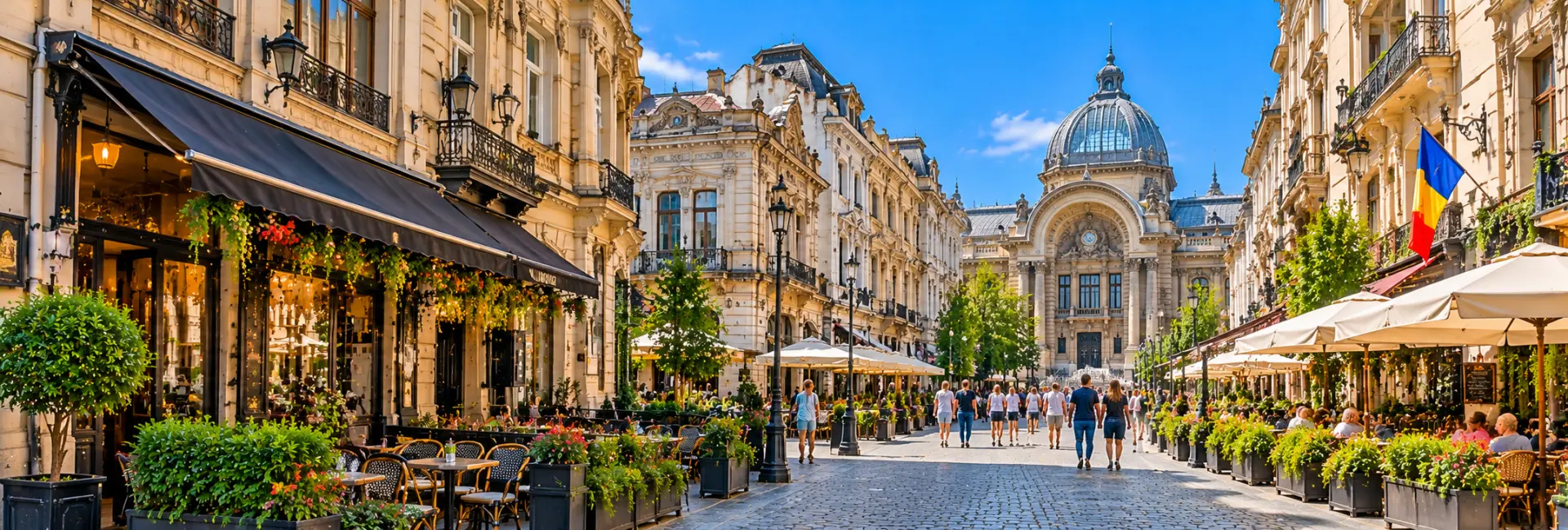
Walking through the Old Town feels like leafing through a catalogue of Bucharest's building styles. Eclectic façades stand next to baroque and neoclassical townhouses, traditional Brâncoveanu-style details appear in older structures, and there are even touches of more modern and brutalist architecture that remind you the district kept evolving. The result is a patchwork rather than a single unified look.
Merchants' houses and inns
The classic building here is the shop-house, with a trading space at street level and rooms above. Larger inns, known as hanuri, were arranged around courtyards where merchants could stable animals, store goods and sleep. Several of these courtyards survive and still shelter cafés, galleries and restaurants, so it is worth peeking through archways as you go.
Cobbles, courtyards and hidden finds
Many streets are cobbled and narrow, with historic façades closely lined up on both sides. Look out for the glass panels set into the ground in places, which reveal the remains of an old inn below street level. These small details add to the sense that the past is just beneath your feet.
Buildings in transition
Some façades are beautifully restored, while others still show their age, and a few remain closed and awaiting renovation. This contrast is part of the character of the district, and it explains why the Old Town can feel simultaneously polished and rough around the edges.
Key Streets & Areas
The Old Town is compact, and a handful of streets hold most of the interest. Brătianu Boulevard cuts through the area from north to south and divides it into two roughly equal halves.
- Strada Lipscani: the namesake street, under a kilometer long, that runs between Anghel Saligny and Calea Moșilor. It is lined with shops, cafés and bars, and it holds several of the district's most photographed buildings.
- Strada Stavropoleos: a short street with an elegant mix of restaurants and cafés and the small church that gives it its name.
- Strada Franceză: one of the busiest dining streets, packed with restaurants, terraces and bars.
- Strada Smârdan: a busy street where a narrow walkway leads through to the Old Court.
- Șelari, Covaci, Doamnei and Șepcari: side streets named after old trades that now hold a mix of eateries, galleries and boutique shops.
- The southern edge: near the Old Court and Manuc's Inn, the district opens toward the river and quieter surroundings.
Notable Landmarks
Curtea Veche (the Old Court)
The ruins of the old princely palace are a small open-air archaeological site, and the adjoining Old Court Church is among the oldest churches in the city. The complex gives an easy introduction to the earliest chapter of Bucharest's history. A later complex called Curtea Nouă, the New Court, was built on the site and burned in 1812.
Manuc's Inn (Hanul lui Manuc)
Completed in 1808 and named after the Armenian merchant Manuc-bei, this inn was built on land that had once belonged to the royal court. It is one of the oldest and best-preserved inns in the city, and important political meetings were held within its walls. Today it houses a restaurant and other venues around a large courtyard.
Stavropoleos Church
This small 18th-century church sits on a quiet side street in the middle of the bustle and is a tranquil place to stop. It is admired for its architecture and its calm atmosphere, so it makes a good break from the crowds.
Hanul cu Tei
One of the best-known inns in the district, this courtyard building on Strada Lipscani carries its construction year of 1833 in stone above the entrance. It once hosted visiting dignitaries and is a good example of the merchant inns that once filled the quarter.
Cărturești Carusel
At Strada Lipscani 55, a restored 19th-century building that once housed a bank now holds a famous six-floor bookshop. It opened in 2015 after a long renovation and has a gallery, a basement multimedia space and a bistro on the top floor. Even if you are not buying books, it is worth stepping in for the architecture alone.
Banking palaces
On the edge of the district stand the old National Bank of Romania palace and the former Dacia Insurance Company palace, two grand buildings that show the area's importance for finance as well as trade.
Food, Drink & Nightlife
The Old Town is where Bucharest comes to eat and drink. Streets such as Franceză, Smârdan and Stavropoleos are packed with restaurants, cafés and terraces, and you will find everything from traditional Romanian cooking to international menus. Courtyards and covered passages add atmospheric spots to sit.
The historic beer hall Caru' cu Bere, open since 1879, is one of the best-known traditional restaurants in the district and a popular stop for Romanian dishes in a richly decorated setting.
At night the area turns into the center of the city's nightlife, with pubs, cocktail bars and clubs side by side, plus live music and street entertainment on warm evenings. Venues change often, and the district gets very busy on weekend nights, so it is worth booking ahead if you want a table at a popular place for dinner.
If you prefer something quieter, look for the cafés tucked into courtyards or the bistro at the top of a bookshop, where music is gentler and the pace slower.
Ways to Experience It
Self-guided stroll
The easiest way to enjoy the district is simply to walk it. Start at Calea Victoriei, wander along Strada Lipscani, then follow the side streets toward the Old Court and the river. Allow a few hours if you want to look inside the churches, bookshop and courtyards.
Guided walking tours
Many walking tours cover the Old Town, and some combine history with food and dessert stops. A guide can help connect the buildings with the stories behind them, which are not always obvious from the street.
Museum and history stop
For deeper context, add a visit to the Old Court site or to the National Museum of Romanian History, which holds major archaeological and historical collections not far from the district.
An evening out
For a full taste of local life, plan dinner in one of the courtyard restaurants and follow it with a drink in one of the bars. The atmosphere after dark is the district's signature experience.
Best Time to Visit
Mornings and early afternoons are best for history, architecture and photography. The lanes are quieter, shops and attractions are open, and you can examine façades without the crowds that fill the streets later.
Late afternoon and evening suit those who want the full social atmosphere. Terraces fill up, music starts and the lanes light up. Warm months bring the biggest crowds and the liveliest outdoor scene, while spring and early autumn offer comfortable temperatures for walking.
Weekend nights can be loud and packed. If you want a quieter experience, visit on a weekday or stay in the district earlier in the evening. In colder months, the many indoor venues keep the area inviting, though outdoor terraces are less used.
Visitor Tips
- Getting there: the district is in the middle of the city and easily reached by bus, tram or metro. The Universitate and Piața Unirii metro areas are among the closest, and many visitors simply walk in from Calea Victoriei.
- Wear comfortable shoes: cobbles and uneven surfaces are common, so sturdy footwear helps.
- Book ahead for dinner: popular restaurants fill quickly, especially on weekends and in high season.
- Check opening hours: churches, bookshops and museums keep their own schedules, and venues open and close often, so confirm times before you head out.
- Watch your belongings: as in any busy tourist area, keep bags and phones secure, especially in crowds and at night.
- Be mindful of noise: the area is a nightlife hub, so light sleepers may prefer a hotel outside the busiest streets.
- Accessibility: cobbled streets and old buildings can be challenging for wheelchairs and strollers, so plan routes carefully and check access at individual venues.
FAQs about visiting the Old Town (Lipscani) in Bucharest
What is the Old Town of Bucharest known for? +
It is the historic heart of the capital, known for its narrow lanes, old inns, the ruins of the Old Court and a lively scene of restaurants, bars and cafés. It is also the oldest part of the city's commercial core.
Why is it called Lipscani? +
The name comes from "lipscani", the traders who brought goods from Western Europe, particularly Leipzig. Strada Lipscani was the main commercial street of the old merchant quarter, and the name spread to the whole area.
Is the Old Town free to visit? +
Yes, walking the streets costs nothing. You pay only for individual attractions, food and drink.
How much time do I need? +
A couple of hours is enough for a walk and a few sights. Plan half a day if you want to visit the Old Court, a church and the bookshop, and add an evening for dinner and drinks.
When is the best time to go? +
Mornings are quietest and best for sightseeing, while evenings are best for atmosphere. Weekend nights can be very crowded and loud.
How do I get there? +
It is in the city center and reachable by metro, bus or tram, or on foot from Calea Victoriei. The Universitate and Piața Unirii metro areas are among the closest.
Is it safe? +
It is a busy central area with plenty of people around, but as in any tourist district, keep an eye on your belongings, particularly at night and in crowds.
What else is nearby? +
Calea Victoriei and the Macca-Vilacrosse Passage are right next to the district, and the National Museum of Romanian History is within walking distance. The Palace of Parliament is a longer walk or short ride away.
