
Table of Contents
Overview
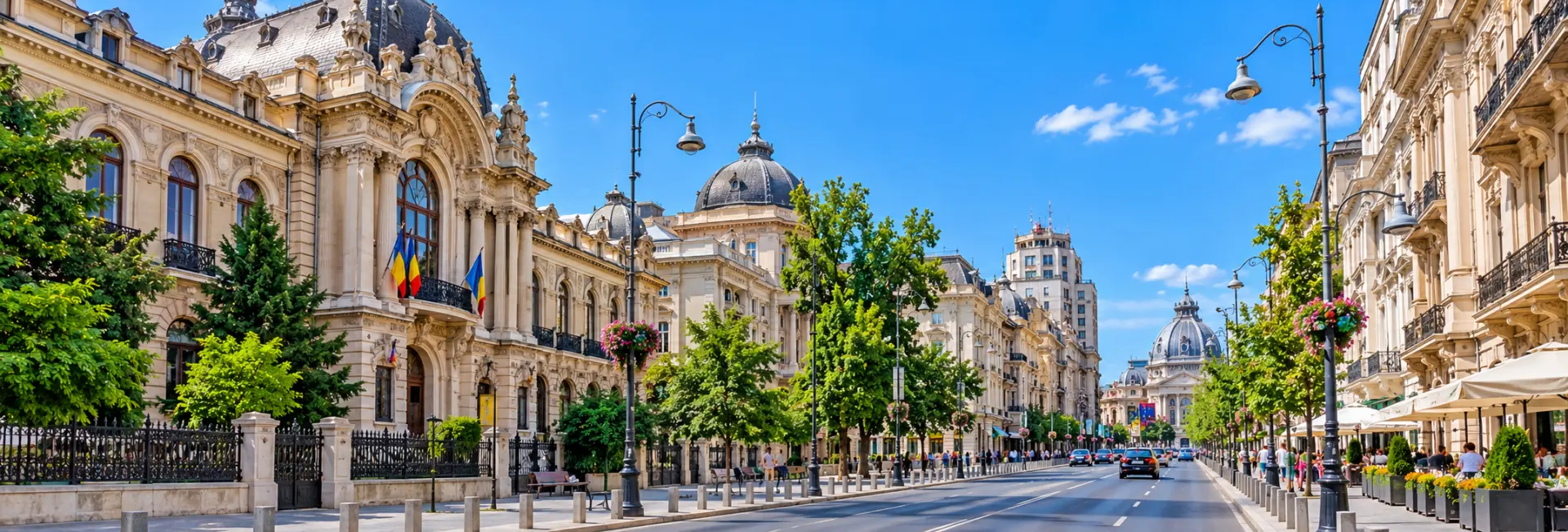
Calea Victoriei, or Victory Avenue, is the street that best captures the story of Bucharest. Running for about 2.7 kilometres through the centre of the city, it links the old commercial quarter near the Dâmbovița River with Victoriei Square to the north. Along the way it passes royal palaces, grand hotels, museums, churches, concert halls and some of the city's most elegant cafes.
It is not simply a pretty boulevard. For more than three centuries, this has been the road where Bucharest showed off its ambitions, from the wooden-paved lane of a Wallachian prince to the fashionable promenade of the interwar years. Walking its length is one of the easiest ways to understand how the city changed and what it has kept.
Today the avenue mixes restored mansions with boutiques, galleries, terraces and busy modern traffic. It rewards slow exploration, and it is also the natural backbone for almost any sightseeing day in the capital.
The avenue also remains a place where Bucharesters themselves come to meet, shop, attend concerts and take part in public events. That everyday life is part of its appeal, because you are not just looking at monuments but sharing the street with the people who use it. Whether you have an hour or a whole day, it offers a rich and rewarding introduction to the city.
History
From Trade Route to Princely Road
The avenue began as a main street known as Ulița Mare, part of the trade route that connected Bucharest with Brașov in Transylvania. In 1692, the ruler Constantin Brâncoveanu paved it with oak timber and straightened parts of it so that it reached his palace at Mogoșoaia. The street was renamed Podul Mogoșoaiei, the Mogoșoaia Bridge, after its wooden surface.
At a time when many Balkan roads turned to mud in spring and autumn, a wooden road was a major engineering feat and a point of local pride.
The Boyars Move In
The new road quickly became the most fashionable address in the city. By 1775, dozens of boyar mansions stood along it, and it was the first street in Bucharest to be lit at night, with candles in 1814. In the later nineteenth century, electric lighting was installed near the Royal Palace, another first for the capital.
A New Name
The road took its present name in 1878, after Romania's victory in the War of Independence, when triumphant troops entered the capital. From then on, major cultural and state institutions were built along it, many designed by French architects or by Romanians trained in France.
Golden Age and Decline
Between the world wars, Calea Victoriei was the showpiece street of Bucharest, full of elegant shops, hotels and cafes. The communist decades brought neglect and, in December 1989, fighting damaged several buildings around Revolution Square. Since then, restoration has returned much of the avenue to its former elegance, a process that is still continuing.
Architecture & Streetscape
A Mix of Styles
The architecture is wonderfully varied. Neoclassical palaces stand beside Beaux-Arts hotels, Art Nouveau townhouses and sleek interwar buildings. Wide pavements, decorative balconies and ornate facades give the avenue a Parisian flavour, which suits the city's old nickname as the Paris of the East.
French Influence
French taste shaped the avenue more than any other. Many of its important buildings were designed by French architects or by Romanians who trained in Paris, and the result is a street where grand public monuments and private mansions share a common elegance.
A Street Under Renewal
Walking along the avenue, you will notice buildings at very different stages of repair. Some, such as the Telephone Palace, have been fully restored, while others still wait for work. This unfinished quality is part of the charm and gives a candid view of the city's ongoing recovery.
Public Space
The avenue has a dedicated cycle lane, and during summer weekends a large stretch of it is closed to cars so that pedestrians can take over. Campaigners have also called for the whole avenue to become fully pedestrian, which shows how much locals treasure it.
Key Stretches of the Avenue
The Northern Stretch
Near Victoriei Square, the avenue feels more residential and calm. Here you will find the Cantacuzino Palace, a lavish mansion that today houses the George Enescu Museum. Sculpted doorways and tree-lined side streets make this a good place for quiet photography.
Around Revolution Square
The middle of the avenue is its cultural heart. Revolution Square, the former Palace Square, is surrounded by the Romanian Athenaeum, the National Museum of Art of Romania in the old Royal Palace, the Central University Library and the Kretzulescu Church. The Memorial of Rebirth, a tall monument that commemorates the 1989 revolution, rises in the square itself.
The Southern Stretch
Heading south, the avenue becomes busier and more commercial. The Telephone Palace, the Odeon Theatre and the historic Casa Capșa stand along this section, followed by the National Military Circle and the glass-roofed Macca-Vilacrosse Passage. Near the end, the road meets the lanes of the Old Town and the streets around Lipscani.
Notable Landmarks
- Cantacuzino Palace: a richly decorated mansion that now holds the George Enescu National Museum.
- Romanian Athenaeum: the domed concert hall opened in 1888 and home of the George Enescu Philharmonic.
- National Museum of Art of Romania: housed in the former Royal Palace, with Romanian and European collections.
- Kretzulescu Church: a small brick church from the eighteenth century that sits beside the museum.
- Revolution Square and the Memorial of Rebirth: the setting for the events of December 1989.
- Central University Library: a handsome building across from the former palace.
- Telephone Palace: a landmark of interwar modernism, restored in the 2000s.
- Casa Capșa: a famous historic cafe and hotel that has long been a meeting place for writers and artists.
- National Museum of Romanian History: the former Postal Palace, with a statue of Trajan and the she-wolf on its steps.
- CEC Palace: a domed, glass-roofed bank headquarters that is one of the most photographed buildings on the avenue.
Several historic hotels also line the route, including the Athénée Palace Hilton, the Grand Hotel du Boulevard and the Continental, all of which reflect the avenue's long tradition of hospitality.
Ways to Experience It
Walk the Whole Avenue
The classic way to explore is to walk from one end to the other. The distance is only about 2.7 kilometres, but stops at museums, cafes and shops can easily turn it into a half-day or full-day outing. Many visitors start at Victoriei Square and finish in the Old Town.
Join a Guided Walking Tour
Local guides regularly lead tours that follow the avenue and explain the stories behind its mansions and monuments. This is an easy way to find out about hidden courtyards and the people who once lived in them.
Museum Hopping
With the Art Museum, the History Museum and the Enescu Museum all on or near the avenue, it is a good place to plan a culture-focused day. Combine one or two museums with a concert or a coffee break.
Cafe and Terrace Stops
The avenue is lined with places to sit, from historic cafes to modern coffee bars. Taking a break on a terrace is one of the best ways to enjoy the architecture and watch city life.
By Bike or Public Transport
If you prefer to move quickly, you can cycle along the dedicated lane or use the metro stations at either end. Both options make it simple to cover the full length and return.
Best Time to Visit
Seasons
Spring and early autumn are ideal, with mild weather and pleasant light on the facades. Summer weekends can be especially lively, as part of the avenue becomes car-free and hosts events, though afternoons can be hot. Winter is quieter and cold, but festive lighting and warm cafes give it a special mood.
Time of Day
Mornings are calm and best for photographs without crowds. Late afternoon and evening are lively, particularly around the concert hall and the restaurants, so plan accordingly if you want to dine or attend a performance.
Visitor Tips
- Wear comfortable shoes, since pavements can be uneven in places and you will probably walk further than you expect.
- Keep an eye on traffic when crossing, as the avenue is busy outside pedestrian periods.
- Check opening hours and ticket details for museums and concerts before you go, as these change and some venues close on certain days.
- Pay attention to your belongings in busy areas, as you would in any big city centre.
- Divide the avenue into stretches rather than trying to see everything at once.
- Look up as well as ahead. Many of the best details are on upper floors, balconies and rooflines.
- Look for the car-free summer weekend arrangements if you prefer a quieter walk, and confirm the current schedule locally.
Nearby Attractions
Calea Victoriei connects directly with many of Bucharest's other highlights. At its southern end, the Old Town and Lipscani district offer narrow streets, bars and restaurants, while the small Stavropoleos Monastery is only a short detour from the avenue.
To the north, Victoriei Square leads toward Herăstrău Park and the Triumphal Arch along Kiseleff Road, a natural continuation for those who want a leafy walk. In the other direction, the Palace of the Parliament is around two kilometres from the Athenaeum area and can be reached by taxi or a longer walk through the centre.
FAQs about visiting Calea Victoriei
What is Calea Victoriei famous for? +
It is Bucharest's most historic avenue, lined with palaces, museums, grand hotels and cafes. It also played a central role in the city's social life from the eighteenth century through the interwar years.
How long is Calea Victoriei? +
The avenue is about 2.7 kilometres long, running from the area near the Dâmbovița River in the south to Victoriei Square in the north. Walking it end to end takes under an hour without stops, but most visitors spend several hours exploring.
Why is it called Calea Victoriei? +
It was renamed Victory Avenue in 1878 after Romania's win in the War of Independence, when victorious troops marched into the capital. Before that it was known as Podul Mogoșoaiei.
What are the must-see sights? +
The Romanian Athenaeum, the National Museum of Art in the former Royal Palace, Revolution Square, the CEC Palace and the National Museum of Romanian History are the best known. Casa Capșa and the Cantacuzino Palace are also worth a visit.
Is Calea Victoriei pedestrian only? +
Not entirely. Traffic runs on much of it, but part of the avenue becomes car-free on summer weekends. The schedule can change, so check locally before planning around it.
Is it safe to walk there? +
It is a busy central area and generally comfortable to walk. As in any large city, keep an eye on your belongings and be careful when crossing streets.
What is the best time of day to walk it? +
Mornings are quietest for photographs, while late afternoon and evening bring more atmosphere, with terraces and concerts. Weekends in warm months are the liveliest.
How do I get to Calea Victoriei? +
The avenue is in the middle of Bucharest and has metro stations near both ends, as well as many bus, tram and taxi options. Since the sights are close together, it is easy to combine it with the Old Town and Revolution Square.
