
Table of Contents
Overview
Few places in Bucharest let you travel across an entire country in a single afternoon. The Dimitrie Gusti National Village Museum, usually called simply the Village Museum, is an open-air ethnographic park where hundreds of rural buildings from every corner of Romania have been carefully moved and rebuilt beside Herăstrău Lake.
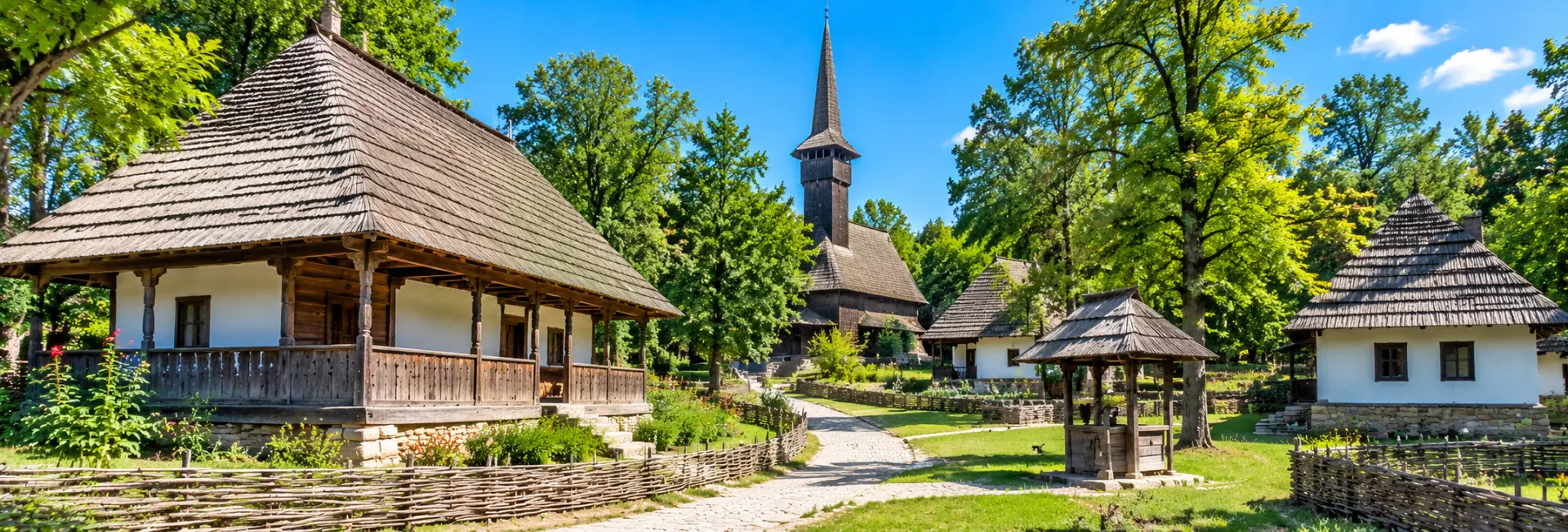
Wooden churches with steep belfries, thatched farmsteads, windmills, watermills and workshops stand along shaded lanes, each one labelled with the place it came from. It feels less like a conventional museum and more like a village that has been assembled from many villages, which is exactly what its founder intended.
The museum is a favourite for families, photographers and anyone curious about how Romanians lived before modern times. It is a peaceful break from the capital's traffic, and it offers a hands-on understanding of regional traditions that can be hard to find in a gallery.
History
A Sociologist's Idea
The museum grew out of the work of Dimitrie Gusti, a sociologist who founded the Bucharest Sociological School and spent years studying village life. Gusti did not want a romantic or decorative display. He described his vision as a sociological museum of the Romanian village of today, a single "village-museum" that would summarise rural life across the whole country.
Opening in 1936
The museum opened officially on 10 May 1936 in the presence of King Carol II, and it welcomed the public a week later. Its layout was planned by the writer and director Victor Ion Popa with the set designer Henri H. Stahl, and funding came from the Royal Cultural Foundation. At the time, it was only the fourth open-air museum in Europe, following Skansen in Stockholm, the Norwegian Folk Museum in Oslo and the ethnographic museum at Hoia Forest in Cluj.
The first version covered a small area with about thirty houses. It has grown steadily ever since as new buildings were collected and added.
Growth and Change
During the mid twentieth century the site served at times as temporary shelter for refugee families and later went through major repairs and expansion. Today it stretches across a large part of the lakeside park and is recognised as one of the leading open-air museums in the region, with a collection that includes heritage-listed objects.
Layout & Regions
A Map of Romania on the Ground
The site is arranged to echo the geography of the country, with buildings grouped by region so that a walk around the lanes feels like a tour through Romania's provinces. You pass from the hills of Transylvania to the plains of Oltenia, then on to Moldavia and the coast of Dobrogea, with each area showing its own building methods and decoration.
Regional Contrasts
- Maramureș: carved wooden gates, tall timber churches and steep roofs designed for heavy snow.
- Transylvania and the hill regions: sturdy farmsteads with wide eaves and decorated porches.
- Oltenia and the southern plains: homesteads shaped by a warmer climate and a farming economy.
- Moldavia: farmsteads and churches that reflect the traditions of the eastern provinces.
- Dobrogea and the Danube Delta: brightly painted dwellings from the coast and the delta.
Each building has a sign that names its original location, which makes it easy to follow a theme or simply wander at random.
Building Traditions
Materials from the Land
Almost every structure in the museum was made from whatever the local landscape offered. Forested regions favoured timber, while open plains and wetlands produced reed and straw for roofs. In some places earth was packed and plastered to form walls, and stone was used where it was easy to quarry. Looking at the different materials side by side is one of the quickest ways to understand how geography shaped village life.
Roofs, Porches and Gates
Roof shapes change from region to region. Steep pitches shed snow in the mountains, while broad thatched roofs shelter porches and walls in other areas. Porches, often held up by carved posts, served as the place where families worked, gathered and received guests. In Maramureș, the carved gates and doorways are especially elaborate, and they show how decoration could express status and pride.
Moved and Rebuilt
The buildings you see are not copies. They were taken from their original villages and reassembled on the museum grounds, so the timbers, carving and finishes are authentic. This approach lets visitors see genuine rural buildings rather than modern reconstructions, and the labels beside each one tell you exactly which village it came from.
Churches and Community Life
The village churches are some of the most important buildings on the site. They were centres of community life as well as places of worship, and their painted icons, carved details and modest scale give an insight into the beliefs and values of the people who built them.
Must-See Highlights
The Maramureș Wooden Church
The tall wooden church from Maramureș is often seen as the museum's centrepiece. Its slender belfry rises above the lanes, and the interior holds faded painted icons that give a sense of village worship in past centuries.
Carved Homesteads from Berbești and Moișeni
Among the oldest houses are the Berbești homestead, dating from 1775 and admired for its intricately carved entrance, and the Moișeni homestead from 1780. Both show the skill of village carpenters and the care that went into everyday buildings.
The Earth Houses of Straja
Some of the most unusual structures are dwellings dug partly into the ground and topped with thatch. They show how people adapted to harsh conditions with the simplest materials.
Mills and Workshops
Windmills, watermills and fulling mills demonstrate how villages processed grain and cloth, while workshops such as a nineteenth-century cooper's shop show how barrels and tools were made. Together they reveal the working side of rural life that is easy to overlook.
Painted Houses of the Danube Delta
The colourful cottages from the delta region add a bright contrast to the darker timber buildings elsewhere and make popular photo stops.
Collections & Traditional Crafts
Inside the Houses
Many buildings are furnished with period objects, from woven rugs and embroidered textiles to painted chests, ceramics and kitchen tools. Stepping into a room gives a quick feel for how families lived, cooked, slept and celebrated.
A Large Heritage Collection
Beyond the buildings, the museum looks after tens of thousands of items, including costumes, pottery, carpets, icons painted on wood and glass, and objects tied to customs and festivals. It also keeps a large archive of photographs, documents and recordings, which makes it an important research resource.
Living Traditions
Craft demonstrations and workshops are held from time to time, with artisans showing skills such as pottery and weaving. The site also stages folk dancing and theatrical events, so it is worth checking what is on during your visit.
Ways to Experience It
Self-Guided Stroll
The easiest option is to wander at your own pace, using the labels on each building to understand where it came from. Most visitors spend around one to two hours, although keen photographers and architecture lovers can easily stay longer.
Guided Tours
Guided visits are available for those who want more explanation about regional building styles, religious customs and the museum's history. A guide can also help you find the most interesting corners and answer questions about how the houses were moved.
Events and Workshops
Seasonal festivals, craft markets, concerts and even open-air screenings are held on the grounds, depending on the time of year. These add colour and give a closer look at living traditions.
Food and Souvenirs
The site has a shop selling traditional handicrafts and sweets, as well as a restaurant set in a restored old inn. It is a good place to try Romanian dishes before or after your walk.
Best Time to Visit
Seasons
Spring and early autumn are especially pleasant, with mild weather and fresh colours in the surrounding park. Summer is lively and often brings events and cultural activities, but it can be hot in the afternoon. Winter has a quiet, atmospheric charm, though cold weather and shorter days make the outdoor visit less comfortable.
Day and Time
Weekdays and mornings are typically calmer, while weekends and school holidays can bring families and groups. Opening hours vary by season, and the interiors of the houses are often closed on certain days, so confirm the current schedule before you go.
Visitor Tips
- Wear comfortable shoes, as the paths cover a large area and some surfaces are uneven.
- Check the official website for current opening hours, ticket information and special events before your visit.
- Remember that the grounds may be open on days when the house interiors are closed.
- Bring water, sun protection and a light layer, since much of the walk is outdoors.
- Take your time reading the labels, because each building has its own story and place of origin.
- Be respectful in the wooden churches and avoid touching fragile objects or decoration.
- Allow time to combine the visit with a stroll in the neighbouring park, as the two sit side by side.
Nearby Attractions
The museum sits on Kiseleff Road beside Herăstrău Park, also known as King Michael I Park, one of the city's largest green spaces with a lake, paths and cafes. It is easy to turn the visit into a half-day outing by walking along the water afterwards.
A short distance south, the Arch of Triumph and Victoriei Square mark the beginning of Calea Victoriei. The Romanian Peasant Museum offers a complementary indoor look at folk art, while the Primăverii district and the former Ceaușescu residence are also within easy reach by taxi or on a longer walk.
FAQs about visiting the Village Museum
What is the Village Museum in Bucharest? +
It is an open-air ethnographic museum that displays traditional Romanian houses, churches, mills and workshops brought from villages across the country. It opened in 1936 and sits beside Herăstrău Lake.
How long does a visit take? +
Most visitors spend between one and two hours, but you can stay longer if you enjoy photography, craft demonstrations or a meal on site. Allow extra time for events.
Can you go inside the houses? +
Many houses can be entered and are furnished with period objects, though access can vary by day and season. Always check the current schedule, as interiors may be closed on certain days.
Is the Village Museum suitable for children? +
Yes, it is a popular family outing, with plenty of space to walk, interesting buildings to explore and open-air surroundings. Children often enjoy the windmills, the dug-in earth houses and the steep wooden church belfry.
What is the best time of year to visit? +
Spring and early autumn offer comfortable weather and pleasant light for photographs. Summer brings more events, while winter is quiet and best suited to those who do not mind the cold.
Is there somewhere to eat or shop? +
Yes, there is a souvenir shop with crafts and sweets, and a restaurant set in a restored inn. You can also find cafes and restaurants in the nearby park.
How do I get to the Village Museum? +
It is located at Șoseaua Kiseleff 28-30, in the northern part of the city near Herăstrău Park. You can reach it by taxi or public transport, or on foot from Victoriei Square if you do not mind a longer walk.
Can I combine it with other sights? +
Absolutely. The museum is close to Herăstrău Park, the Arch of Triumph and Victoriei Square, so it fits well into a day that also includes a stroll along the lake or a visit to nearby museums.
